ThinkPad × JIDOU Technology: Reconstruct the boundary between people and vehicles, and accompany the thinkers.
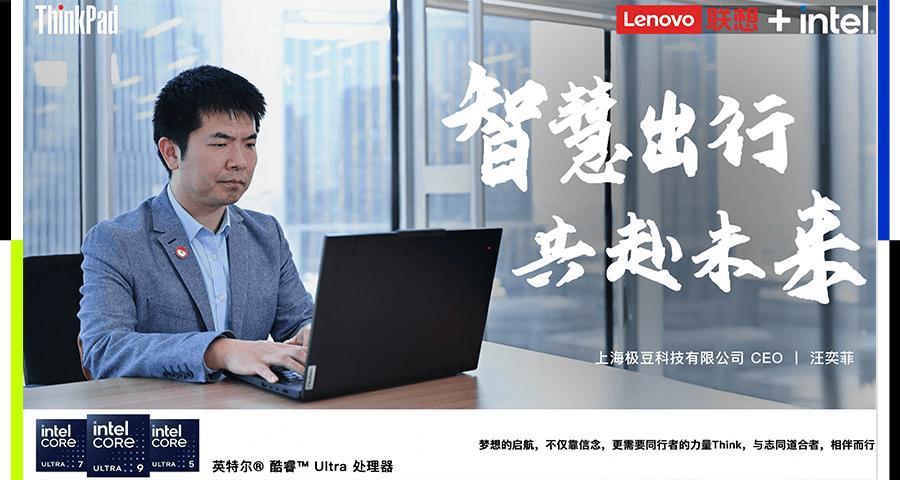

ThinkPad Empowers Jidou Technology
Redefining the Relationship between Humans and Vehicles with Self-developed AI Large Model


In the past decade, although the automotive cockpit has evolved from physical buttons to touchscreens, the interaction logic has fallen into a "command maze". Functions are fragmented, data is isolated, and the user experience is pieced together. More fundamentally, the system lacks a contextual understanding of humans: it can execute commands like "lower the temperature" but fails to understand the real physical sensations when sunlight shines through the car window.
The transformation begins with cognitive reconstruction. As the cockpit shifts from a "functional container" to a "digital neural network", comprehensive technological upgrades drive a qualitative leap: multi-modal perception enables the cockpit to "see" expressions and "hear" emotions; emotional computing captures state changes; the scenario engine understands travel contexts; and the large model ultimately endows the system with the cognitive ability to understand complex intentions.
In Jidou Technology's practice, the self-developed "Canghai Large Model" is turning this vision into reality. It fuses and processes multi-modal data streams from cameras, microphones, and biosensors in real-time. The emotional engine analyzes subtle emotional changes, and the scenario engine predicts potential needs. "We are no longer satisfied with just having the cockpit 'understand commands'; we want it to 'understand human hearts,'" explained Wang Yifei, CEO of Jidou Technology. "When the system senses driving fatigue, it will coordinate the lighting, audio, air conditioning, and navigation systems, actively brighten the ambient lighting, turn on the air conditioning fragrance, play invigorating melodies, and suggest the nearest rest area, providing a caring solution full of warmth rather than a mechanical functional response."

From a Car Enthusiast to an Industry Disruptor
On Wang Yifei's office desk, there still lies the ThinkPad he used at the beginning of his entrepreneurial journey in 2014. The keyboard has been polished shiny, and the body bears traces of time. "It witnessed my transformation from a car enthusiast to an entrepreneur," Wang Yifei recalled. "During those days, this ThinkPad hardly ever shut down. It accompanied me through the most crucial starting phase, recording every product iteration and every technological breakthrough."
As a seasoned car enthusiast, Wang Yifei's entrepreneurial journey began with a profound sense of "dissatisfaction." In 2014, when he sat in a high - end car and faced a slow - responding and laggy central control screen, what welled up inside him was not just disappointment but also a strong urge to change the status quo. "Smartphones have already provided a smooth experience, but the automotive, as the core mobile terminal, seems to be stuck in the feature - phone era."
This experience gap quickly translated into business insights. Wang Yifei realized that the root of the problem lies in the industry's structural dilemma: traditional in - vehicle systems are dominated by Tier - 1 suppliers who are good at hardware manufacturing but lack Internet product thinking and the ability for rapid iteration; car manufacturers themselves are constrained by long development cycles and strict safety standards. This precisely creates opportunities for startups - "We don't have to carry the traditional burdens and can define the intelligent cockpit with a new mindset. More importantly, with the clear trends of electrification and intelligence, the cockpit experience is becoming the core battlefield for brand competition."
From founding PPTV to venturing into automotive intelligence, the challenges of cross - industry entrepreneurship far exceeded expectations. "Moving from the Internet to the automotive industry, we went through a 'peeling - off - several - layers - of - skin' adaptation process," Wang Yifei admitted. At that time, he often stayed up late modifying plans and organizing his thoughts, with the ThinkPad always by his side. "During those uncertain days, its stability gave us great security, allowing us to focus on innovation itself."
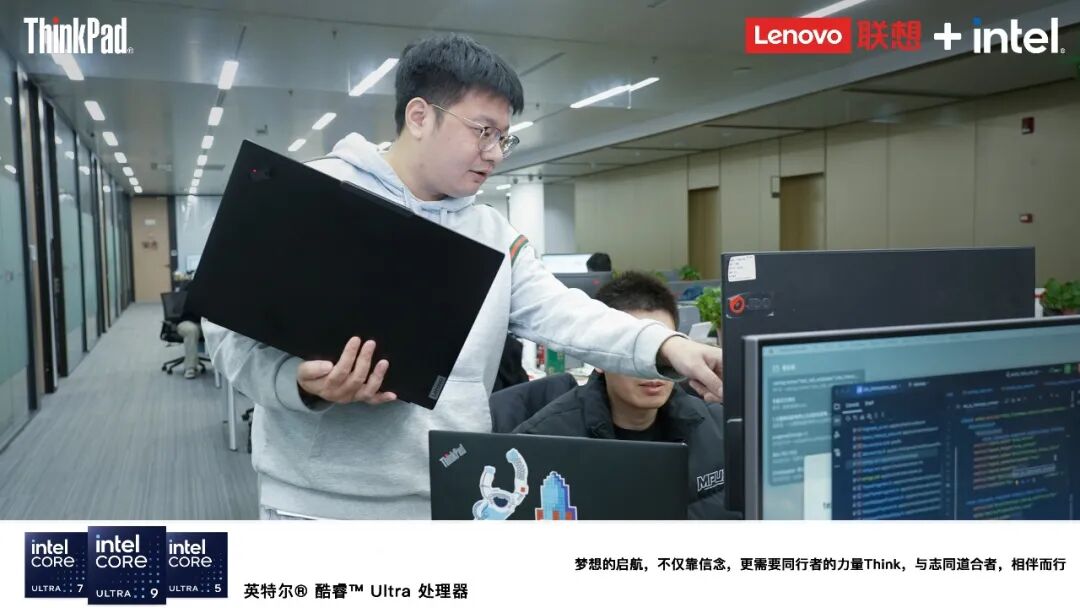

The Reliable Foundation for ThinkPad's Intelligent R & D
For Jidou Technology, every innovation in intelligent interaction starts with respect for two "bottom lines": the absolute reliability of data security and the absolute controllability of the R & D process. This is not only a requirement for industry compliance but also a lifeline deeply rooted in the automotive industry's genes.
"What we handle is not ordinary data; it's the life status during driving, private conversations inside the car, and the most core engineering secrets of our partners." Wang Yifei is well aware of its importance. The cooperation agreements with car manufacturers have set the highest - level requirements for data security - all data must be processed in physically isolated or highly controlled environments, and any form of unauthorized data leakage is strictly prohibited.
This means that the R & D tools themselves must be a trustworthy "safe house." The ThinkPad P16v workstation is built based on these strict standards. Its hardware - level security chip lays the foundation for physical identity authentication; the full - link encryption technology ensures that data, whether in storage, transmission, or computing states, is as secure as if it were in a safe. The local AI inference ability supported by the integrated "Lenovo Tianxi Personal Super Intelligent Agent" is the key to solving the problem - it allows Jidou's algorithm team to complete model training and optimization of sensitive data on the local workstation without accessing the cloud, eliminating the risk of data leakage from the source.
"Controllability is more important than just high performance. ThinkPad allows us to dynamically configure security policies according to the 'confidentiality level' of the project. When dealing with the most core original driving data, we can disable all network ports and external interfaces with one click and enable the highest - intensity encryption. In the general algorithm development stage, we can achieve a flexible balance between security and efficiency. This seamless switching between the 'guard mode' and the 'development mode' allows us to strictly adhere to the boundaries without restricting the hands and feet of innovation."
The trust built on security was transformed into the confidence to break through bottlenecks when Jidou faced extreme pressure. The famous "48 - hour battle" in the third quarter of 2024 is a case in point. When the team was urgently developing a multi - modal system for a European car manufacturer, the biggest enemies were time and the uncertainty of computing power. In the traditional training process, a single iteration could take dozens of hours, and any system instability or crash would mean a complete reset of the progress.
The urgently deployed ThinkPad P16v high - performance workstation became the key variable to turn the tide. It is not just a powerful machine but also a R & D foundation that provides "certainty." Its Intel® Core™ Ultra 7 processor and up to 96GB of DDR5 memory form a powerful performance that can "swallow" massive video, audio, and sensor data for parallel processing, enabling the continuous and high - speed operation of complex model training. The professional - grade graphics card specializes in accelerating visual algorithms, reducing the rendering time that used to be long - awaited to the shortest.
"It gave us a 'luxurious' certainty. We no longer had to worry about the device suddenly breaking down and could focus all our energy on the algorithm itself. In the end, we not only met the deadline but also used the surplus computing power and stable environment to overcome three performance bottlenecks that were considered unsolvable in the short term. At that moment, we realized that top - level tools liberate not only productivity but also the team's innovative imagination."
The "certainty" brought by the unified and reliable hardware platform extended to the collaboration level when Jidou faced challenges. When the teams in Shanghai, Beijing, and Europe needed to collaborate across time zones, the intelligent meeting system and the globally consistent hardware performance of the ThinkPad P16v high - performance workstation eliminated the interference of environmental differences. The high - definition camera and AI noise - canceling microphone made technical discussions as if the team members were in the same room; and the completely consistent development environment ensured that the models trained in Shanghai could be seamlessly connected and further optimized on the computers of engineers in Munich.
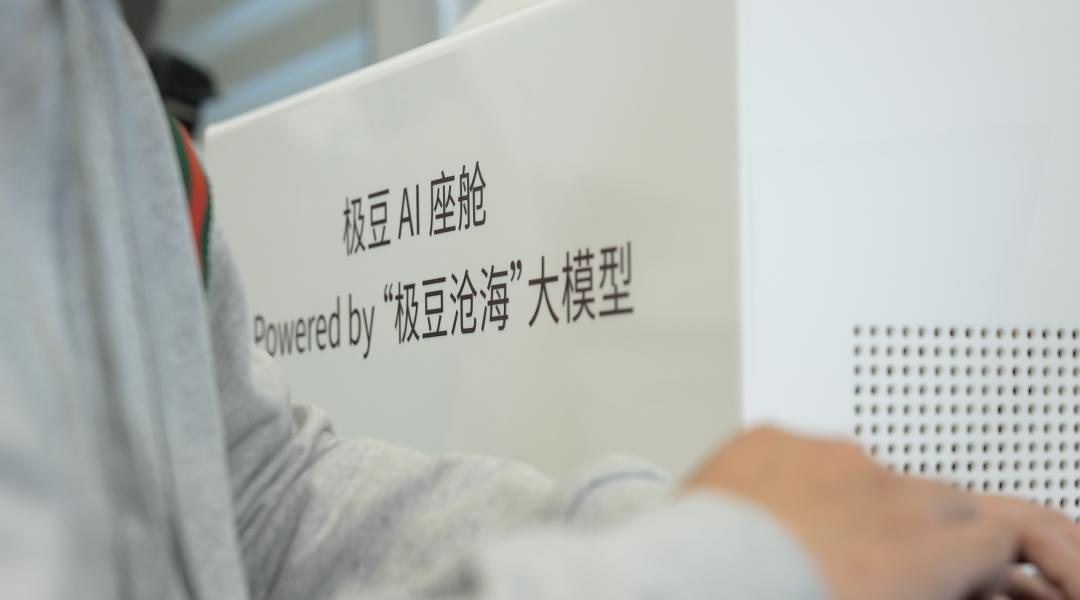

Letting the Machine Learn to "Understand" with the Canghai Large Model
"True intelligence is not just a superposition of functions but enabling the machine to learn to understand," Wang Yifei defined the technological pursuit. Traditional voice assistants based on rule - matching can only respond to preset commands, while an intelligent cockpit based on a large model can understand the complete context behind the words. When a user says "I'm a bit cold," the system will comprehensively consider multiple dimensions such as the in - car temperature, the user's health data, and weather information to make the most appropriate response.
Jidou's self - developed "Canghai Large Model" is the carrier of this understanding ability. This model with hundreds of billions of parameters, which is deeply optimized for automotive scenarios, has learned from millions of hours of real - vehicle interaction data and mastered the intentions, emotions, and scenario logics behind the language. However, deploying the large model on the vehicle side faces severe challenges: it needs to achieve millisecond - level responses under limited computing power and strict power consumption. Through innovative technologies such as model distillation, an efficient inference engine, and dynamic precision adjustment, the team successfully achieved high - quality intelligent interaction on the vehicle side.
The ThinkPad P16v became the core battlefield for this battle. The team built a complete vehicle - side simulation environment on it and conducted intensive "training - compression - testing" iterations every day. Its powerful computing power and stability enabled the originally time - consuming verification process to run continuously at high speed, helping the algorithm complete 90% of the optimization before being put into real vehicles.
Emotional computing is a further breakthrough. The system can identify the driver's "long - distance fatigue" or "traffic - jam anxiety" through voice intonation, micro - expressions, and postures and make considerate responses. This is not only an upgrade of the user experience but also a safety necessity. For models equipped with this function, user satisfaction has increased by more than 20%, and the accuracy of fatigue warnings has been significantly improved.
From executing commands to providing proactive care, technology is moving the relationship between humans and vehicles towards true "understanding." Behind every algorithm iteration that makes the machine understand humans better, there is a stable and powerful R & D foundation.
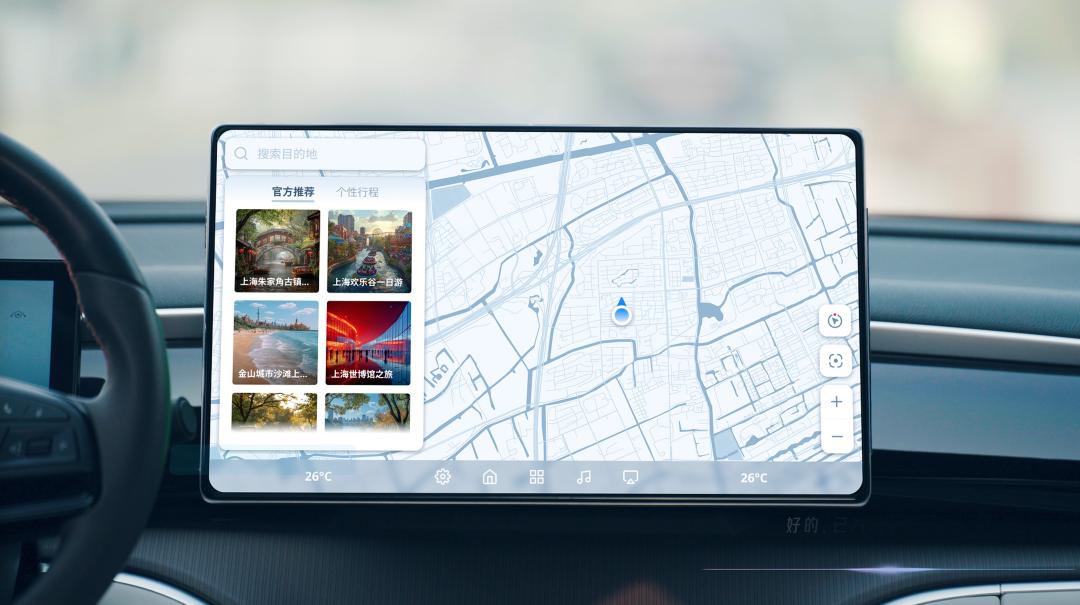

The Global Journey of Chinese Wisdom
Jidou Technology's development trajectory is a microcosm of the rise of China's automotive intelligence industry. In the initial stage, the company mainly served domestic car manufacturers, accumulating technical capabilities and industry knowledge through individual projects. As its capabilities improved and its reputation was established, Jidou began to enter the supplier systems of global luxury car manufacturers.
"The threshold for entering the international market is very high," Wang Yifei admitted. "There is zero tolerance for quality issues, and great importance is attached to processes. We need to reach the top - level in technology, comply with international standards in processes, and understand cultural differences in communication."
In 2024, Jidou Technology achieved an international breakthrough. It successively reached cooperation agreements with several European luxury brands, providing intelligent cockpit solutions for their new - generation electric vehicles. In the same year, it also made important progress in the Southeast Asian market, providing customized intelligent systems for local car brands.
In November 2025, Jidou Technology announced the completion of a