The perfect integration of technology and humanity! The Brain-Computer Interface Chess Dream Realization Open Tournament was successfully held.
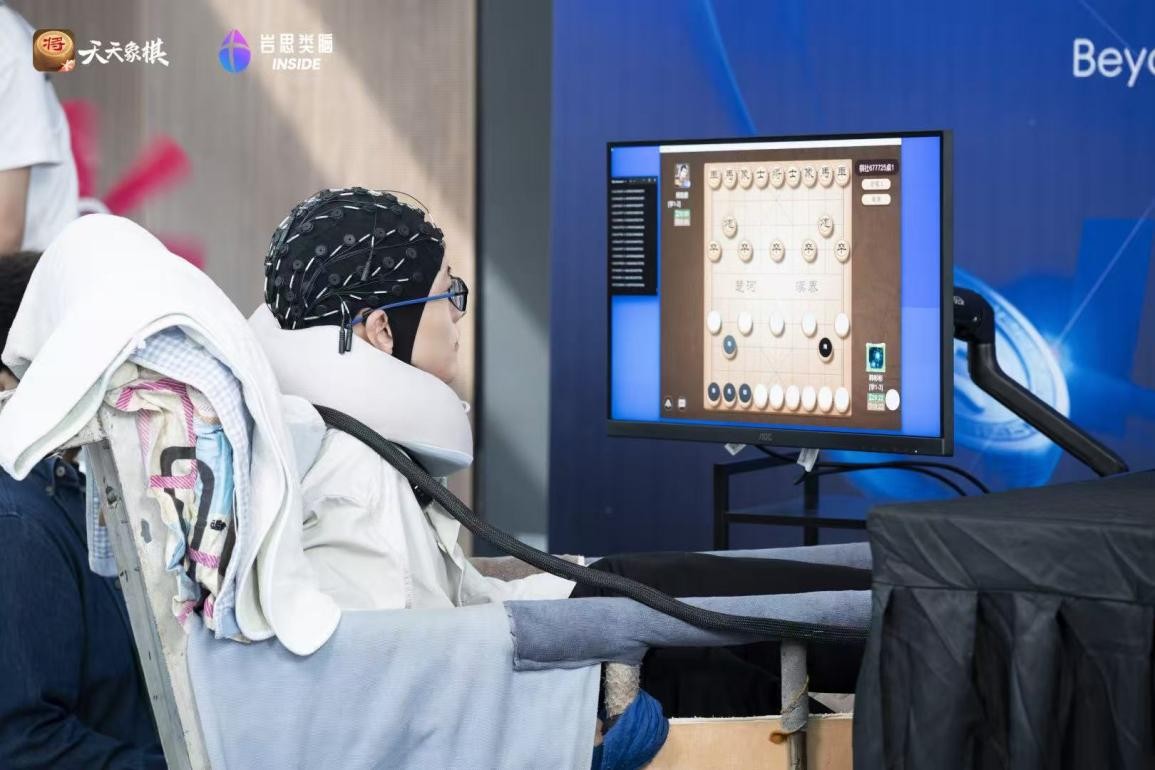
On December 29th, at the site of the annual finals of the "Tian Tian Chinese Chess Cup" organized by the Chinese Chess Association held in Hainan, a special chess game caught everyone's attention. Han Binbin, a chess player with cerebral palsy from Chongqing, wearing a lightweight head device, stared at the chessboard and moved the pieces solely with his "mind", competing against Meng Chen, a chess grandmaster and his idol and role model. This is the world's first successful application of non-invasive brain-computer interface technology in a national-level public sports event for a competitive match.
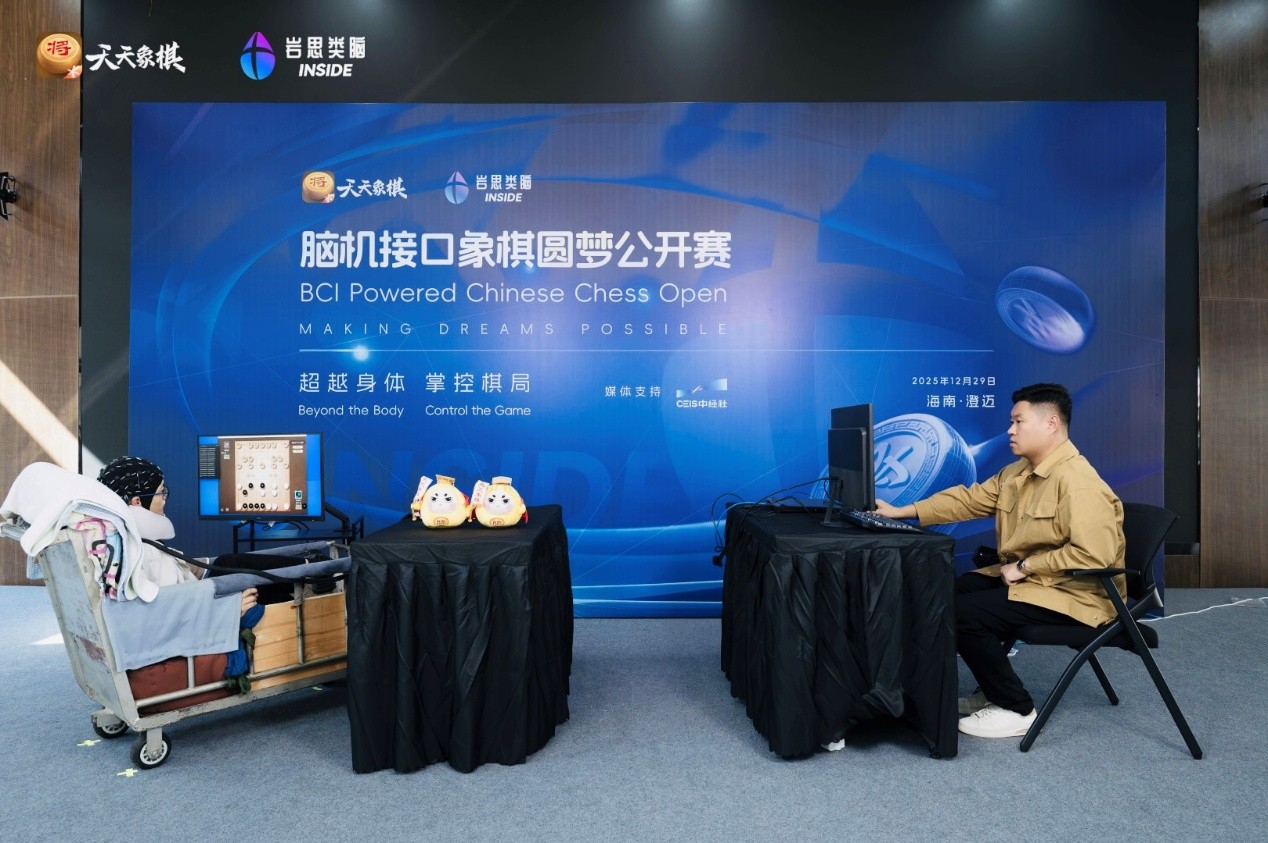
The "Brain-Computer Interface Chinese Chess Dream Realization Open Tournament" is jointly presented by Yansi Brain-like Artificial Intelligence Research Institute (hereinafter referred to as Yansi Brain-like) and Tencent Tian Tian Chinese Chess. It is not just a competition but also a "stress test" for cutting-edge technology to move from the laboratory to real scenarios, marking a crucial step forward in the practicality, stability, and popularization of non-invasive brain-computer interface technology.
From the "tip of the nose" to "mind control", a chess player's moment of realizing his dream
Han Binbin is a special chess player. He has suffered from congenital cerebral palsy since childhood, with severely limited mobility and expression. In the past decade or more, he has relied on touching the mobile phone screen with the tip of his nose to study, play chess, and live-stream online, growing into a quite capable Chinese chess enthusiast. "Playing chess with the tip of the nose" is his unique way of fighting against fate and pursuing intellectual equality. On the path of chess, Meng Chen, a Chinese chess grandmaster and an international master of sports, has become his idol and role model.
"This is the first time I can play chess without using my nose, and it's a face-to-face match with my idol," Han Binbin expressed his feelings after the game. "It feels like my thinking is directly connected to the chessboard, like having an extra pair of invisible hands, allowing me to more intently enjoy the joy of this intellectual sport itself." From "touching with the tip of the nose" to "controlling with the mind", the intervention of brain-computer technology has opened a brand-new door for him to express himself.
Li Meng, the chief scientist of Yansi Brain-like, said: "All along, our goal has been to use the most cutting-edge technology to create the most popular products. Helping a young man with limited mobility realize his dream today is a very valuable and meaningful thing for us. The ultimate goal of technology is not to show off but to empower. In the future, we will continue to promote the evolution of the electroencephalogram (EEG) large model and expand brain-computer interface technology to broader inclusive fields such as rehabilitation training, health monitoring, and intelligent interaction, enabling each of us to enjoy the possibilities brought by the free exchange of information between the mind and devices."
Driven by the EEG large model, creating an "operating system" for brain-computer interfaces
Behind the realization of "placing a piece with the mind" is the EEG decoding algorithm framework independently developed by Yansi Brain-like based on artificial intelligence, and it is also the world's first EEG large model with 5 billion parameters trained on human intracranial EEG data. The institution focuses on the interdisciplinary research of artificial intelligence and brain science, aiming to explore the essence of intelligence and promote the popularization of technology. Currently, Yansi Brain-like has achieved global technological breakthroughs in multiple brain-computer interface application scenarios, both invasive and non-invasive.
Different from traditional brain-computer interfaces that are customized for single tasks, single individuals, and single uses, Yansi Brain-like's EEG large model has strong generalization ability across systems, users, tasks, and scenarios through pre-training on massive multimodal EEG data and fine-tuning with small samples in task states. "It can be understood as the 'operating system' in the field of brain-computer interfaces," Li Meng explained. "It learns the universal 'intention language' behind brain signals. Therefore, when Han Binbin wears the device, the system can quickly understand his mental instructions of 'selecting a piece', 'choosing a position', and 'placing a piece' and convert them into precise control signals without months of specialized training."
At the event site, with just an ordinary non-invasive brain-computer interface, the weak electrical signals generated by the visual cortex of the brain were accurately and real-time decoded by Yansi Brain-like's algorithm, and then through the communication protocol deeply integrated into the "Tian Tian Chinese Chess" platform, the control of the chess pieces was finally realized. Throughout the process, excellent stability and smoothness were maintained in the high-pressure environment of the public event.
From the sports field to daily life, the inclusive future of brain-computer interfaces
The success of this open tournament clearly verifies the usability of non-invasive brain-computer interface technology in real and complex scenarios and paves a visible path for the future application of this technology. Yansi Brain-like is also building a full-chain innovation model of "basic research - technology transformation - product development", deeply integrating resources from industry, academia, research, and medicine to create a globally leading brain-computer interface technology platform, promoting cutting-edge brain science technology to move out of the laboratory and create tangible social value.
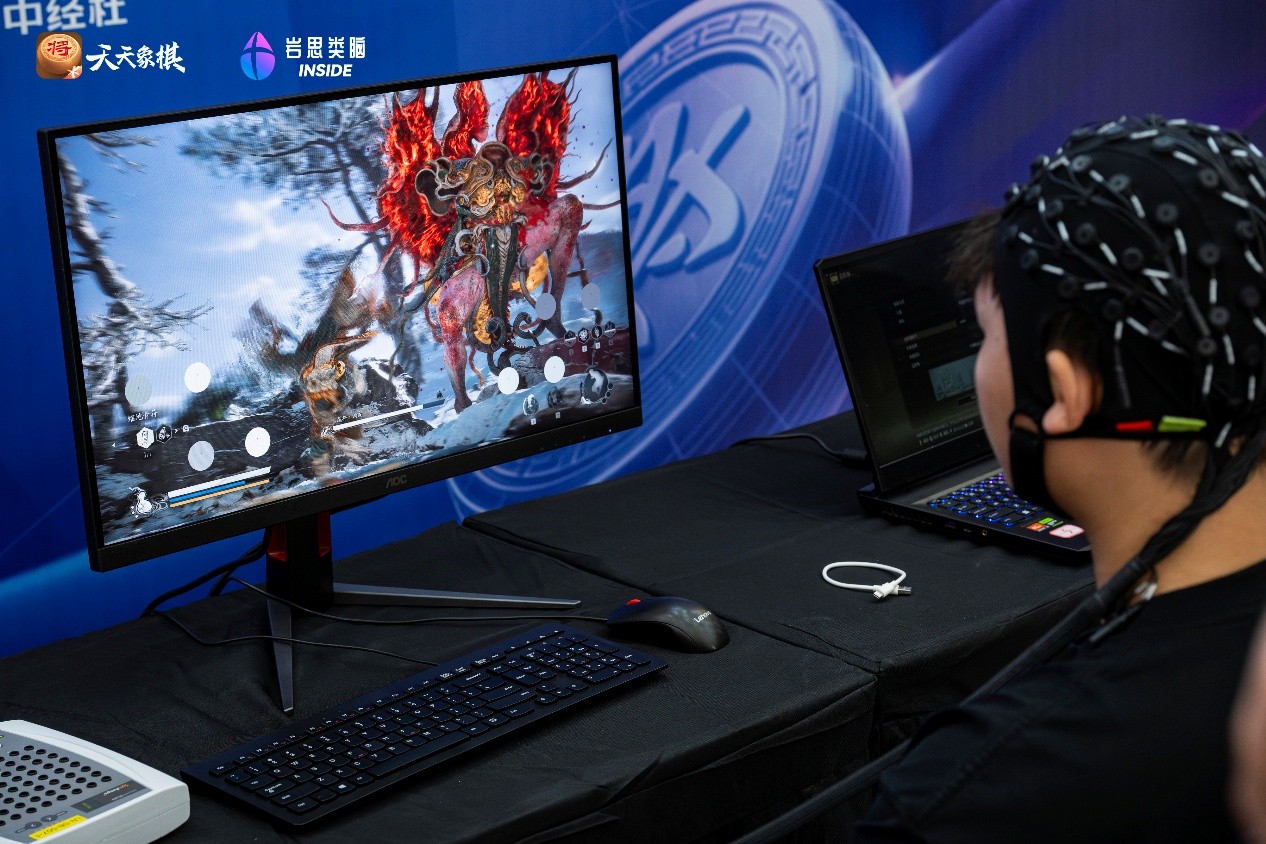
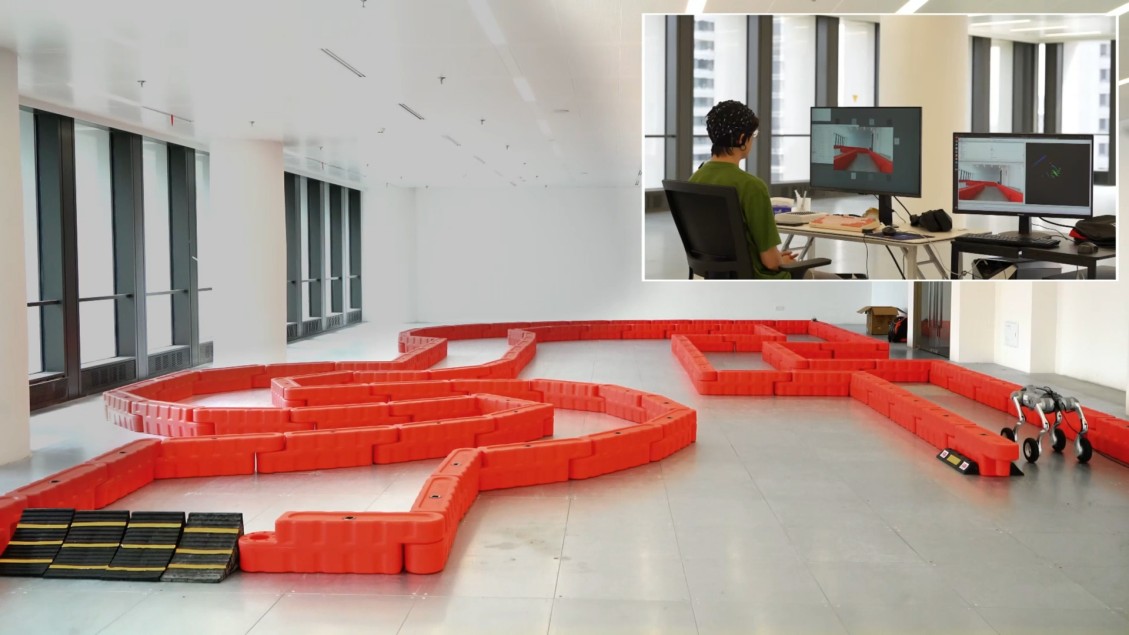
Currently, Yansi Brain-like's EEG large model has shown potential in multiple fields: in the medical assistance scenario, the model outperformed traditional algorithms in 28 non-invasive EEG disease screening experiments; in the interactive entertainment field, it has achieved a 97% operation accuracy, a refresh rate of less than 60 milliseconds, and a brain control experience with more than 10 degrees of freedom, enabling smooth control of 3A games; in terms of daily assistance, technologies such as remote fine brain control of robotic dogs provide new possibilities for people with limited mobility; in the field of smart homes, non-invasive brain-computer interfaces can also become the universal key to a room... These applications were also open for display to participants at the event site.
"The warmth of technology lies in whether it can truly serve people," said Huang Shixing, the producer of Tencent Tian Tian Chinese Chess. "From the 'color enhancement mode' to help people with color weakness, to the 'barrier-free version' for the blind, and now to helping people with limited mobility 'play chess with the mind', we have always been committed to making the chess sport cover a wider range of people. Our cooperation with Yansi Brain-like is another important practice in our exploration of inclusive technology."
With inclusive technology, Yansi realizes dreams. A special Chinese chess game, promoted by a special technology. As the boundaries of thinking are gently expanded, the pioneer Yansi Brain-like is breaking the traditional boundaries between humans and machines, driving humanity towards a more inclusive, equal, and intelligent digital future.