A $1.5 trillion money-grabbing battle: SpaceX and OpenAI are pushing hard for IPOs
While companies are still cheering for valuations in the hundreds of billions, three super giants are plotting a major move.
According to insiders, SpaceX, OpenAI, and Anthropic are all approaching an unprecedented scale - a trillion - dollar Giga - IPO.

This is destined to be one of the most watched listing tides in human history.
However, different from the past, the purpose of these three protagonists going public is no longer to celebrate with a bell - ringing, but more like a life - and - death "money - grabbing" battle.
OpenAI plans to invest up to $1.4 trillion in computing power in the next few years; SpaceX's Starship is also a huge money - guzzler.
Computing power, rockets, and data centers, these systems that cannot be paused once started, push them towards the same question:
Is going public a celebration of the future or a search for fuel to keep going?
Are the super giants being "discouraged" by private capital?
What is driving SpaceX, OpenAI, and Anthropic to accelerate their sprint towards IPO is no longer impulse, but the structural change in the capital supply.
The money they need has exceeded the long - term bearing capacity of the private market.
Let's first look at the demand side: OpenAI has publicly stated that its investment in computing power in the next few years could be as high as $1.4 trillion.

This is a continuous and endless infrastructure arms race: data centers, electricity, chip iteration, and operation and maintenance. Any interruption could directly affect the leading position of their AI models.
The same goes for SpaceX's Starship.
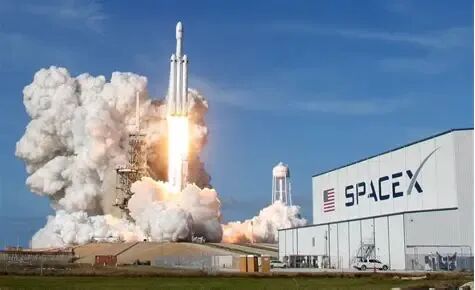
Greater carrying capacity means a longer R & D cycle, higher failure costs, and continuous high - level investment.
If Anthropic wants to compete at the same level, there are hardly any low - cost options.
Once these super projects are launched, they are doomed to run without slowing down.
Along with the change in capital demand, there are also the boundaries of private capital itself.
After years of expansion, the global private asset management scale has remained at a plateau of about $20 trillion.
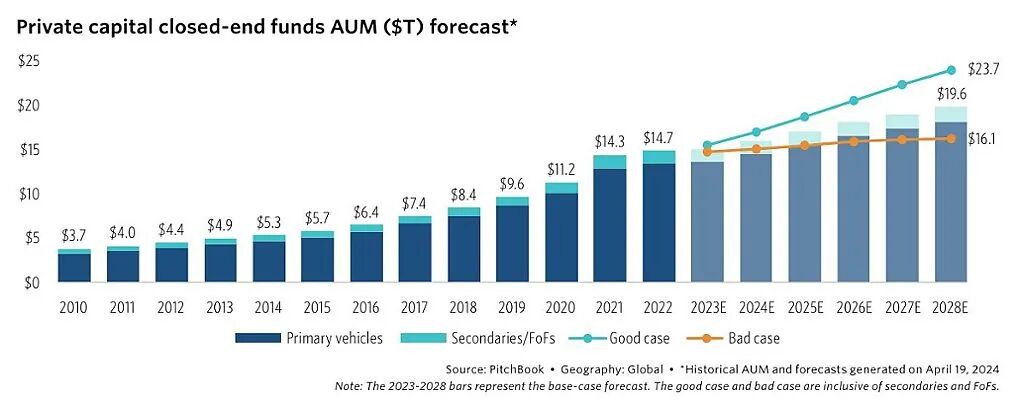
Data from Preqin and PitchBook shows that the global private equity/alternative investment scale has grown rapidly in recent years and has approached or may even exceed $20 trillion.
The scale of private equity has not continued to expand, but the scale of single - round financing has been breaking records.
OpenAI's latest round of financing reached $40 billion, a figure that has exceeded the scale of any previous IPO.
The biggest problem this brings is that the participants are highly concentrated, and the risks are completely exposed to a very small number of institutions.
When the scale and risks of private equity financing are approaching those of the public market, venture capitalists can't help but ask: How long can this high - risk concentration last?
For these giants that require long - term, high - frequency, and non - stoppable capital expenditure, the private market is showing structural limitations.
In this way, the public market is the only "living water". Its advantage lies not in valuation, but in its scale and dispersion.
The total market value of the global stock market is as high as about $130 trillion. This means there are more extensive sources of funds and a longer capital relay chain, which can dilute the risks of individual institutions.
For these companies with trillions of dollars in expenditure, IPO is no longer a reward for a mature enterprise, but a necessary condition to maintain the ability to expand.
From this perspective, this "Giga - IPO" is actually an inevitable result of scale expansion.
Cutting the "leeks" before making a profit, with an irresistible reason
If the first pressure comes from the limit of capital scale, then the second pressure comes from a more abnormal reality:
When these super giants move towards IPO, they do not have the traditional profit - making foundation.
The "bleeding schedule" of AI giants: Profits will arrive in 2030
Taking OpenAI as an example, many media have cited its financial forecast, saying that the company is still in a state of high - level losses, with annual losses in the tens of billions of dollars.
Even in the most optimistic internal forecast, stable profitability will not be achieved until around 2030.
Before that, continuous investment in computing power, data centers, and R & D is still an unavoidable prerequisite.

Anthropic's pace is slightly faster, but in essence, there is no difference: before achieving break - even, it still needs to bear long - term investment in the tens of billions of dollars.
This means that even if these companies successfully enter the public market, they will be difficult to get rid of the financial structure of "high investment, low return" in the short term.
Experience fails: Alibaba and Aramco were not like this back then
Putting this situation in the historical context will make it seem even more abnormal.
Alibaba achieved a net profit of about $4 billion in the year before its IPO in 2014; Saudi Aramco had a profit of as high as $111 billion in the year before its IPO in 2019.
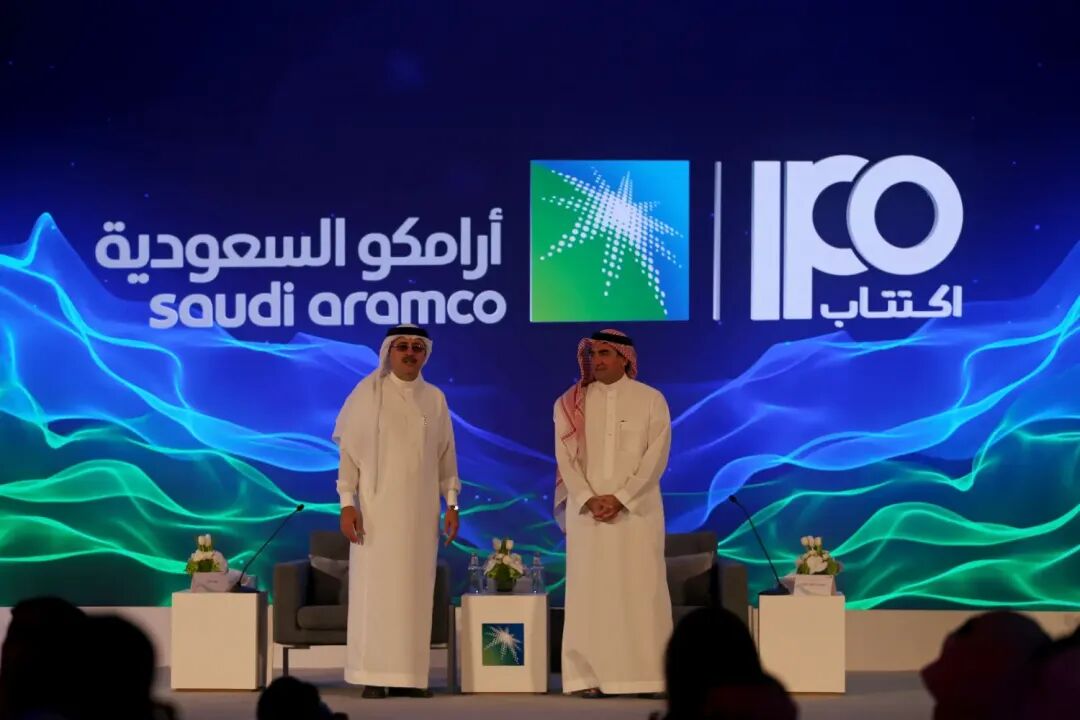
Even in the wave of technology company IPOs in 2019, the market still ultimately took profitability or a clear profit path as the core of pricing.
In contrast, the IPO logic of SpaceX, OpenAI, and Anthropic has been completely subverted: it is based on the "imagination" of future demand and scale expansion.
Going public no longer means that the business model has been realized, but that the capital consumption will continue for a long time.
IPO transfers uncertainty to the world
Against this subversive background, the function of IPO is redefined - it is more like a risk - transfer mechanism.
It transfers the long - term uncertainty originally concentrated in the hands of a few private equity investors to the more dispersed public market around the world.
What investors are buying is a grand assumption:
As long as the technological path is valid, today's losses can be covered by future explosive growth.
This makes the Giga - IPO itself more like an ultimate bet on time, scale, and patience.
Life - and - death race: IPO becomes the ticket to compete for the future
Even if the problems of capital and losses can be endured for the time being, there is not much time left for these super giants.
Because in their fields, competition is accelerating at an unprecedented speed.
Arms race: Slow down and you're dead!
For these giants, their expansion pace is their strongest moat.
For SpaceX, Starship is not a technological experiment that can be stretched indefinitely.
Competitors such as Blue Origin are continuously advancing their heavy - lift rocket projects. Once the technological gap narrows, SpaceX's first - mover advantage will quickly turn into cost pressure.
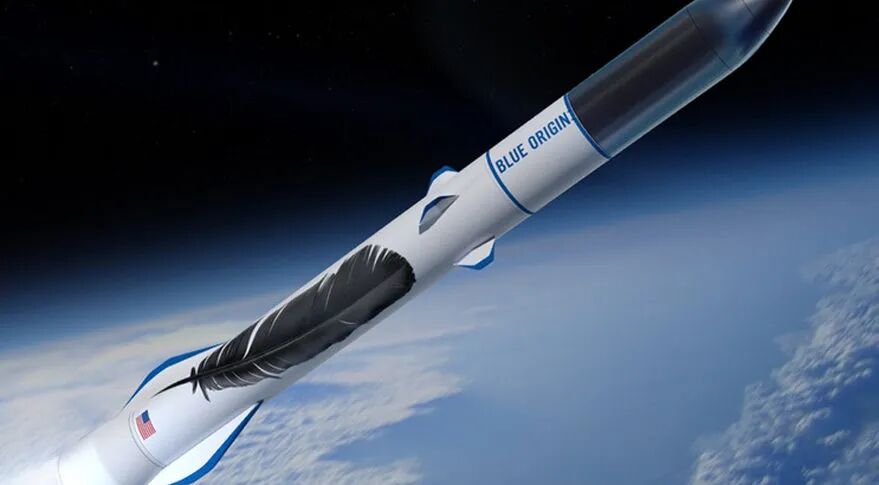
Blue Origin's reusable rocket
Therefore, continuous large - scale investment is necessary to maintain a generational lead over competitors.
The competition in the AI field is even more brutal. The improvement of model capabilities has highly relied on computing power scale and training frequency. The gap between new - generation models is measured in quarters or even months.
For OpenAI and Anthropic, slowing down the investment speed is almost equivalent to voluntarily giving up the leading position.
The idea of "going public after making a profit" doesn't work in reality. Once they choose to be conservative, they may be surpassed by more aggressive competitors in terms of technology and scale.
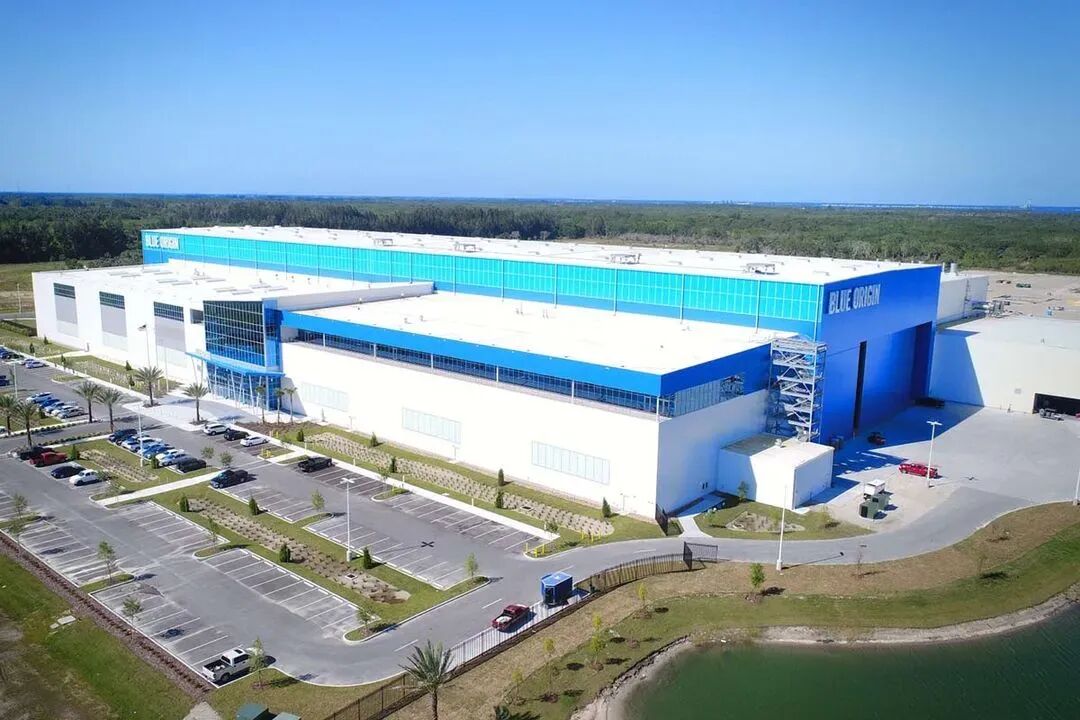
Blue Origin's rocket manufacturing factory in Florida
In a capital - intensive competition, losing the rhythm is often more fatal than bearing losses.
IPO is not for "landing on shore", but for survival
In such an extremely competitive environment, the meaning of IPO is further sublimated.
It is not only a financing channel, but also a strategic tool for these giants to compete for time.
Through the larger - scale and more continuous capital supply of the public market, companies can: lock in global computing power, electricity, and infrastructure resources in advance.
The focus of competition is also upgraded from "who can save more money" to "who can persevere longer".
This also explains why these companies start to seriously consider the public market before establishing a stable profit - making model.
The answer is simple: not because the conditions are mature, but because the technological window for them is closing rapidly.
This is the cruel law of the AI and space age, where speed is supreme.
A bet on the future of humanity
Putting all the logical lines together, you will find that SpaceX, OpenAI, and Anthropic are moving towards Giga - IPO and have no way back.
They have to bear astronomical costs in advance like infrastructure companies; but they have to wait for the late - coming profits in uncertainty like startups.
In the reality where private capital is approaching its limit and the competition rhythm is accelerating, the public market has become the only option for continued financing.
This upcoming wave of "Giga - IPO" shows an unprecedented abnormal meaning.
It is no longer a confirmation of existing achievements, but a bet on future scale; no longer a way to cash in returns for shareholders, but a way to buy time for the company.
Capital can of course continue to bet, but the object of the bet has changed fundamentally.
What investors are buying is a grand assumption: that is, whether humanity's desire for interstellar travel and AGI is really enough to cover all the seemingly out - of - control costs today.
When these companies truly enter the public market, the test is just beginning.
In this era of extreme anxiety and eagerness for short - term returns, how far can the market go with these "long - term uncertainties" that can change the fate of humanity?
We will all be witnesses to this high - stakes bet on money, technology, and faith.
Reference materials:
https://www.economist.com/business/2025/12/16/spacex-openai-anthropic-and-their-giga-ipo-dreams
This article is from the WeChat official account "New Intelligence Yuan", author: New Intelligence Yuan, editor: Qing Qing, published by 36Kr with authorization.