Behind the listing of the robotics company founded by Li Zexiang, an eight-year journey with a 700-fold return.
Author | Huang Nan
Editor | Yuan Silai
Compared with the myths of many AI startups "making it" within just a few years of establishment, the investment stories of hardware companies often seem plain, boring, and long - drawn - out.
Peng Shuxue, the founder of Xuyuan Capital, still clearly remembers that he almost missed the Woan project.
At the end of 2017, Peng Shuxue was still working at Qifu Capital. That year, the entire investment market environment was complex, and he was extremely cautious in making investments.
While going through his emails, he found a business plan (BP) signed by "What the Fuck Technology" (the former name of Woan Technology). Although Peng Shuxue would check his emails, that email with a strangely - named company had been sitting in his inbox for three months.
The email was from a team composed of several alumni from Harbin Institute of Technology. In their early years at school, they had formed a team to participate in various technology competitions. This time, they targeted the smart home track and developed a prototype of a "switch robot" product. Through the automated control of traditional home switches, it could achieve a simple transformation of smart homes.

Co - founders from right to left: CTO Pan Yang, CEO Li Zhichen, VP Liu Guohui, VP Liu Yanfei (Source/Internet)
Before meeting Peng Shuxue, founder Li Zhichen and the team had approached many funds, but no one was willing to invest.
At their first meeting, Li Zhichen and CTO Pan Yang took out a switch robot the size of a matchbox from a plastic bag and demonstrated it to Peng Shuxue. He told Peng Shuxue that they were working on Bluetooth networking technology.
It belongs to the category of Internet of Things technology and can connect devices such as air - conditioners, washing machines, switches, and curtains in a single space into a network. It is suitable for home scenarios with large areas and few residents. For example, in a duplex room, through Woan's solution for grouped management, it is possible to turn off the air - conditioners, lights, and curtains upstairs and downstairs simultaneously. More importantly, Li Zhichen and Pan Yang only took one year to develop the product and sold over 600,000 sets.
Peng Shuxue then realized that this was a company not to be missed. He said to Li Zhichen, "I must invest in you."
However, when the project was being promoted within Qifu Capital, it faced intense doubts. Eventually, at an investment decision - making meeting composed of five people, Peng Shuxue convinced three of them to vote in favor. One of these votes was the important one from Fu Zhekuan, the chairman of Qifu Capital.
It had only been less than a week since their meeting, and the payment had already been completed. The post - investment valuation was 20 million yuan. Woan Technology also became one of Peng Shuxue's only two angel investment projects that year.
Woan's growth rate has proven Peng Shuxue's judgment. In Li Zhichen's plan, Woan's valuation target is to double every year. The company has successively received tens of millions of yuan in financing from several institutions, including the Songshan Lake Robotics Research Institute led by Li Zexiang, Yinghu Intelligence, and Dongguan Yunhe.
In mid - 2020, Woan received an investment intention from Hillhouse. Although the company had already completed a round of financing and had no plan to raise funds again in the short term, the valuation offered by the other party far exceeded expectations, reaching 400 million yuan.
After that, Hillhouse, as an important institutional investor, participated in multiple rounds of financing for Woan. Leading institutions such as Brizan Ventures V under Gao Bingqiang, Source Code Capital, Zero2IPO Group, and Fortune Capital also participated.
On the eve of submitting the prospectus, in May 2025, Woan Robotics completed its Series C financing, with a post - investment valuation of 4.05 billion yuan. This was 200 times the 20 million yuan valuation after Peng Shuxue's first investment.
On December 30, Woan Robotics (6600.HK) was listed on the Hong Kong Stock Exchange, officially becoming the "first stock of AI embodied home robots."
The offering price for this IPO was HK$73.8 per share, with a total of 22,222,300 shares issued. It opened at HK$73.80 per share, with a market capitalization of HK$16.4 billion, and reached a daily high of HK$75. As of 16:00 Beijing time on the 30th, Woan Robotics closed at HK$73.85.
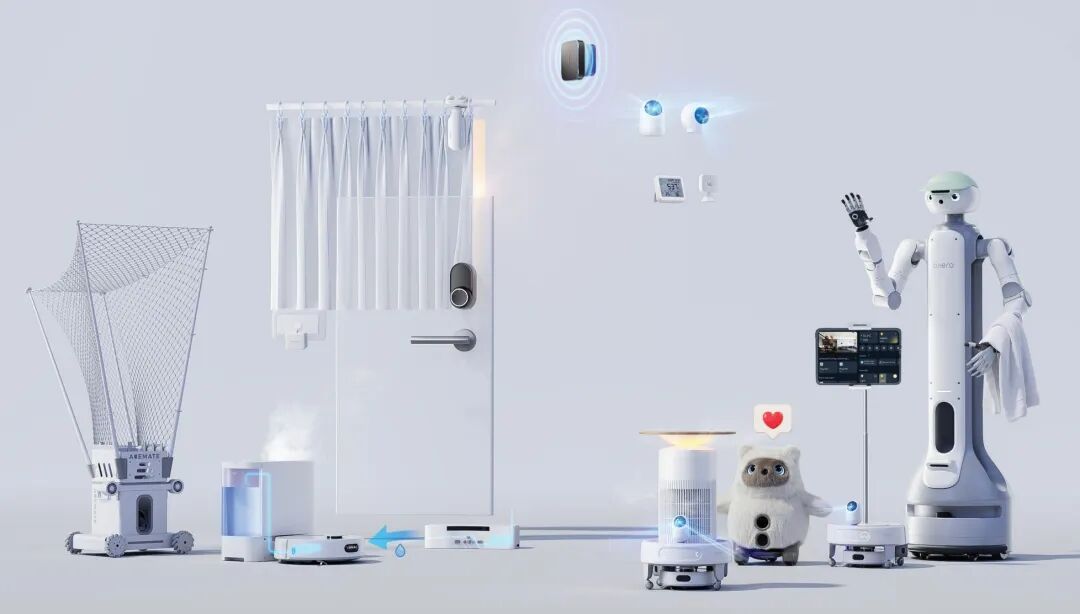
Product matrix of Woan Robotics (Source/Enterprise)
Woan Robotics has verified a clear and definite growth path for hard - technology startups: in a sufficiently focused scenario, making the product in - depth is itself a scarce barrier.
For the primary market, the story of Woan Technology also has an enlightening meaning.
Hardware is by no means a track where returns can be seen in the short term. Among the investors flocking to the cafes in Nanshan District, Shenzhen in 2025, only those with enough patience and resilience can get the final results.
Penetrating the Japanese Market
The financial data of the past three years outline two aspects of Woan Robotics. One is the rapidly expanding revenue scale and profitability, and the other is the ever - present losses and concerns.
The prospectus shows that from 2022 to 2024, Woan Robotics' revenue increased from 275 million yuan to 610 million yuan, with a compound annual growth rate of 49%; the gross profit margin climbed from 34.3% to 54.2%, indicating enhanced cost control and product pricing capabilities.
However, behind the eye - catching growth curve, Woan's rapid growth has consumed a large amount of resources. During the reporting period, Woan's cumulative losses reached 106 million yuan. But in the first half of 2025, the company turned a profit, with revenue reaching 396 million yuan, a year - on - year increase of 44.1%, and a net profit of 27.903 million yuan.
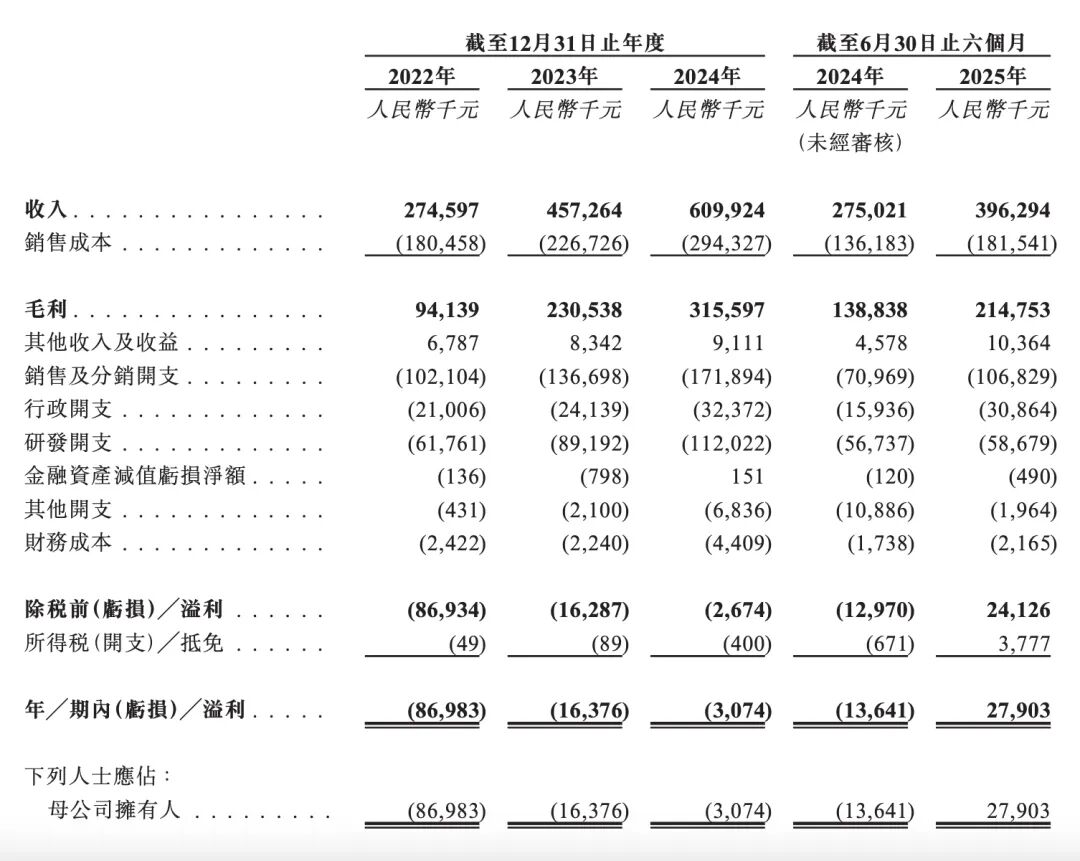
Revenue data of Woan Robotics from 2022 to the first half of 2025 (Source/Enterprise)
Behind today's achievements lies Woan Robotics' highly focused market strategy. Given the limited resources and energy of a startup in its early stage, instead of adopting a scatter - gun approach, it made a precise and bold bet by investing most of its resources in the Japanese market.
"In the hardware track, no enterprise doesn't want to target the global market, but many can't even penetrate a regional market. Woan's smart move is that while others are focusing on markets like Europe and the United States, which have broad prospects but actually high thresholds, they first concentrated on opening up every 'capillary' in the Japanese market." Peng Shuxue, the founder of Xuyuan Capital, commented.
The Japanese home scenario has its own characteristics. Japanese society is aging, living spaces are compact, and consumers have a high acceptance of refined and automated products. At the same time, they are extremely sensitive about privacy. Simply transplanting general smart home solutions from the European and American markets often doesn't work here.
Woan's approach is "in - depth customization." It re - defines the product form based on local living habits, consumer psychology, and even architectural standards.
For example, for the sliding curtain rails commonly found in traditional Japanese apartments, Woan developed a "curtain robot" with strong adaptability. It can be installed without drilling holes, which solves the pain point for renters who can't easily modify the infrastructure. Its "finger robot" series sticks to traditional switches and uses a mechanical arm to press for automation, bypassing the resistance of Japanese families to wall - chiseling and circuit - rewiring or replacing the original circuit system, precisely targeting the "intelligent transformation of old houses" as a real - need scenario.
Official data shows that from 2022 to 2024, the Japanese market contributed about 60% of Woan's revenue. By the first half of 2025, this proportion increased instead of decreased, reaching 67.7%, with a growth rate of over 60%.
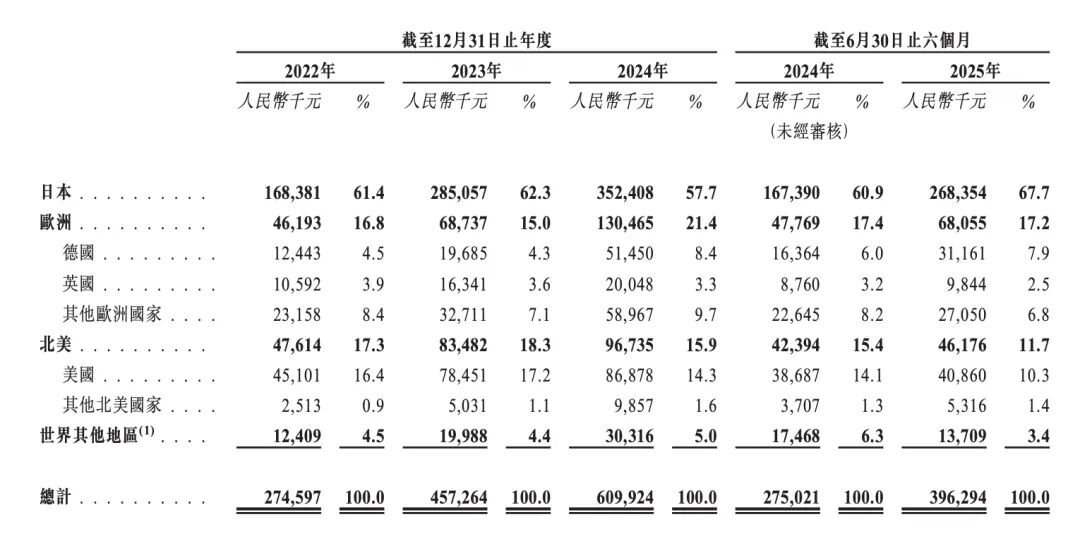
Revenue share of Woan Robotics in different countries and regions (Source/Enterprise)
For a long time, the Japanese smart home market has been highly monopolized by local giants such as Panasonic and Sony. Consumers have extremely high brand loyalty, and the entry threshold for offline channels is very strict. Woan chose to break through from the online channel first.
During the reporting period, the revenue generated by Woan Robotics through the Amazon platform, including the SC seller model and the VC supplier model, accounted for as high as 81.9%, 65.2%, and 64.2% respectively. Data from the Amazon Japan site shows that in 2024, Woan's finger robot and curtain robot consistently ranked among the top 3 in category sales. The SwitchBot brand ranked among the top 3 in the search volume of the "smart home automation" category, seizing a considerable share from local giants.
"The brilliance of Woan's products lies in its ability to always seize the regional characteristics of the Japanese market for extended innovation. On the basis of maintaining core advantages such as product lightweightness, no - installation required, and high adaptability, it can always come up with some unexpected detailed designs, which can only be achieved by being rooted in the local area and having a sufficient understanding of users." An engineer from an innovative hardware company told Yingke.
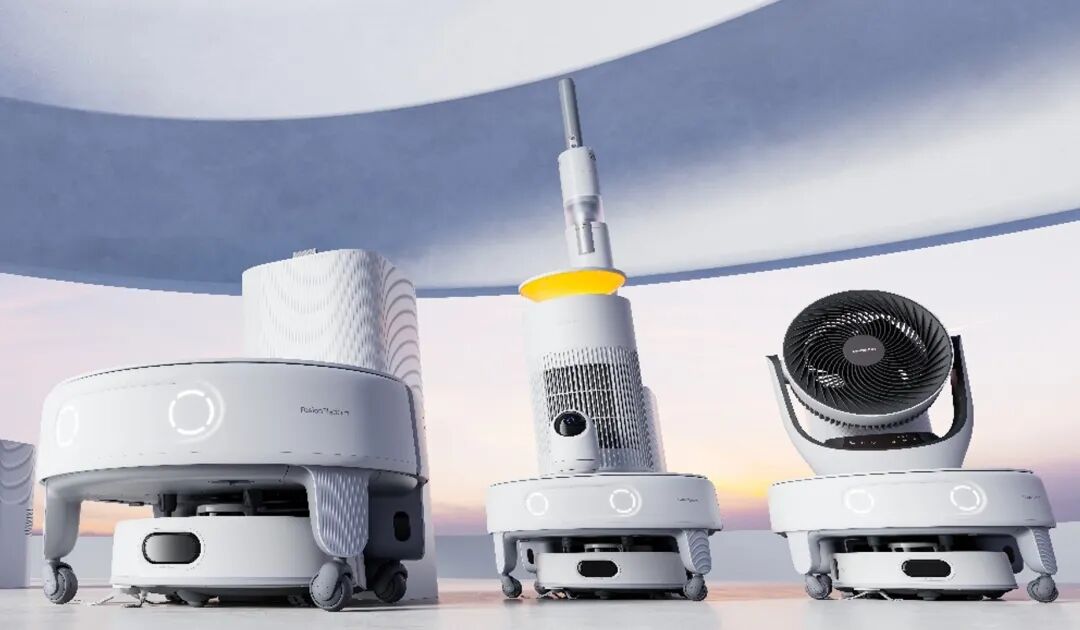
The world's first modular home robot K20+ Pro launched by Woan (Source/Enterprise)
Of course, the more focused the market, the more concentrated the risks. Woan Robotics' high growth and high gross profit are largely deeply tied to the single - market label of "Japan," which also constitutes its greatest uncertainty in the future.
Currently, its revenue structure is also bringing multiple pressures. The most direct ones are the tariff barriers from the United States and the possible stricter data regulations in Japan. At the same time, Japanese robot giants such as Fanuc and Yaskawa Electric have also been launching small - scale robots for home scenarios in recent years. Relying on local brand trust and channel advantages, they will, to some extent, divert Woan's high - end customers.
In addition, although Woan's revenue share from Amazon has been decreasing year by year, it still highly depends on this channel. Over - reliance on third - party platforms makes the company's operation vulnerable to changes in platform rules, commissions, and traffic policies, which may directly damage sales and profits. Moreover, long - term reliance will weaken the channel bargaining power, making it difficult to control user data and marketing links, and limiting profit improvement.
Although the scale of the Japanese home robot market is expanding, its growth rate has shown signs of fatigue. According to Frost & Sullivan data, the market size of Japan's AI embodied home robots in 2024 was about 2.8 billion yuan, with a year - on - year growth rate of 15%, far lower than the 35% growth rate of the global market.
If Woan cannot break through the growth ceiling of the Japanese market and further optimize its channel structure, its overall revenue growth rate will face pressure.
Layout in the Sports, Companionship, and Humanoid Robot Tracks
Woan Robotics has realized that the future of a single smart home product has its clear boundaries.
This is confirmed by the company's product structure and financial data. Its small - scale execution products such as finger robots, curtain robots, and door lock robots have an average selling price ranging from 120 to 350 yuan, targeting high cost - effectiveness. Their core function is to quickly cover home intelligent control scenarios, accumulate a user base, and seize scenario penetration.
Enhanced mobile robots such as the laser sweeping robot SwitchBot K10+ target the mid - to high - end market, with an average selling price of 1,800 to 2,100 yuan, achieving higher product premiums through technological barriers and functional complexity.
The prospectus shows that the revenue of its SwitchBot K10+ in 2023, 2024, and the first half of 2025 was 56.7 million yuan, 110 million yuan, and 64.1 million yuan respectively, driving the continuous increase in the revenue share of the enhanced mobile robot category. The company's gross profit margin also increased from 50.4% in 2023 and 51.7% in 2024 to 54.2% in the first half of 2025.
It can be said that the continuous increase in the revenue share of the "enhanced mobile robot" category in the high - price range is not only the key to optimizing the company's profit structure but also intuitively reveals a core fact: The "small and precise" products in the startup period are no longer sufficient to support the growth ceiling of a future - oriented global robot enterprise alone.
Currently, Woan has begun to transfer its technology to tracks with more room for imagination, such as emotional companionship, physical energy release, and labor liberation.
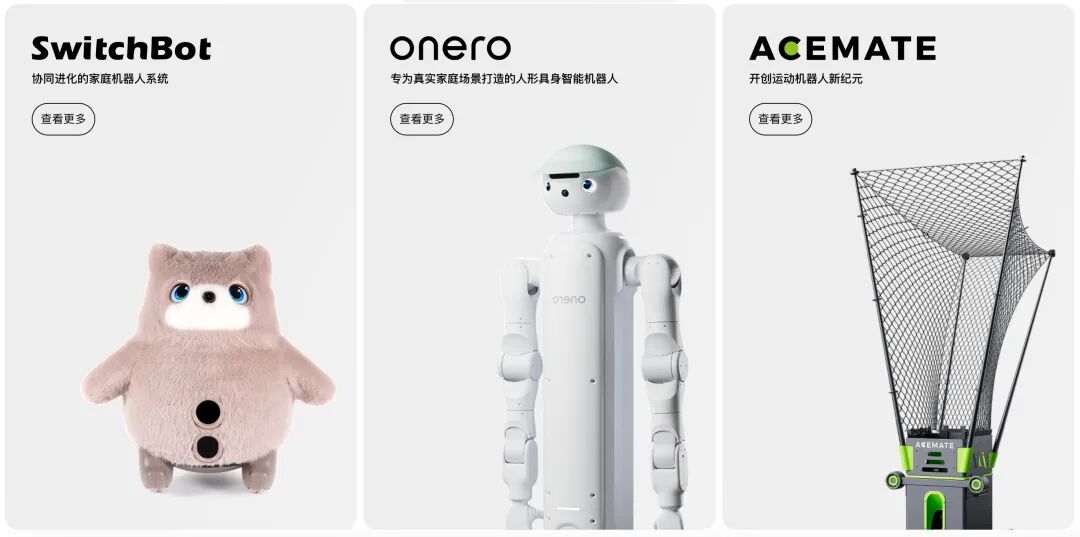
Companion robots, humanoid embodied intelligent robots, and sports robots of Woan (Source/Enterprise)
In terms of technology, from the finger robot for operating switches, to the Acemate tennis robot for real - person matches, and then to the planned humanoid household robot H1, they are all based on the capabilities of autonomous mobile chassis, environmental perception and understanding, and AI - driven task planning at the underlying level. For example, the precise control technology of the finger robot can be upgraded to provide the Acemate with the ability to move