Is AI the driving force behind Li Xiang's venture into glasses, He Xiaopeng's foray into robotics, and Li Bin's entry into the mobile phone market?
The reach of new car - making forces extends further than expected.
Recently, Li Auto unexpectedly launched an AI smart glasses named Livis, officially entering the battle in the smart wearable device market. This pair of glasses, developed in cooperation with Zeiss, is positioned as a "wearable robot". The price starting from 1,699 yuan after subsidies further demonstrates Li Auto's determination to enter the consumer electronics field. This is not an isolated case. From NIO's launch of mobile phones to XPeng's foray into humanoid robots, the boundaries of the technology industry are becoming increasingly blurred.
Li Xiang, the founder of Li Auto, high - profilely launched the Livis AI smart glasses. Li Bin, the founder of NIO, has been deploying its own - brand mobile phones. XPeng has extended its reach to the field of humanoid robots. These new - force car companies, which once had "car - making" as their sole mission, are now leaving the traditional automotive path and venturing into the consumer electronics, artificial intelligence, and even robotics sectors.
This may not be a short - lived cross - border attempt but a strategic shift driven by the reconstruction of underlying technological logic, the competition for user ecosystems, and the evolution of business models. China's new car - making forces are trying to redefine the boundaries of "automobile enterprises".
From "Transportation Tools" to "Mobile Intelligent Terminals"
Over the past decade, the rise of smart electric vehicles has not only changed the power system but also completely reshaped the essential attributes of automobiles. Traditional cars are closed mechanical products, while today's smart electric vehicles are open, iterable "wheeled intelligent terminals". The core of this transformation lies in the fact that cars are no longer just transportation tools from point A to point B but mobile digital spaces integrating computing, perception, interaction, and services.
Li Xiang, the CEO of Li Auto, has repeatedly emphasized that "future cars will be the largest intelligent terminals." Behind this judgment is the full integration of computing power platforms, operating systems, sensor arrays, and large AI models into vehicles. Take the Li L series as an example. The dual NVIDIA Orin chips it is equipped with provide up to 508 TOPS of computing power. Coupled with lidar, high - definition cameras, and millimeter - wave radars, it builds a powerful environmental perception ability. The self - developed operating system, "Li OS", supports continuous OTA upgrades, enabling the continuous evolution of vehicle functions.
When cars have the computing architecture and software ecosystem potential of smartphones, car companies are naturally no longer satisfied with just focusing on "four - wheeled" vehicles. They start to think: since users spend several hours in the car every day, why not extend the smart experience outside the car? Thus, building a seamlessly connected smart ecosystem around the user's full - scenario life has become the common strategic goal of new - force car companies.
Li Auto's launch of the Livis AI glasses is an extension of this logic. This pair of smart glasses, developed in cooperation with the optical giant Zeiss, is positioned as a "wearable robot". It is equipped with a Qualcomm AR1 chip, binocular Micro - OLED display, and a spatial audio system, and is deeply integrated with Li Auto's self - developed large AI model. Users can check the vehicle status and plan routes through the glasses before driving. After getting out of the car, the glasses continue to serve as a personal assistant, providing services such as navigation, translation, and information reminders. A data closed - loop is formed between the car and the glasses, achieving intelligent collaboration among "people - car - wearable devices".
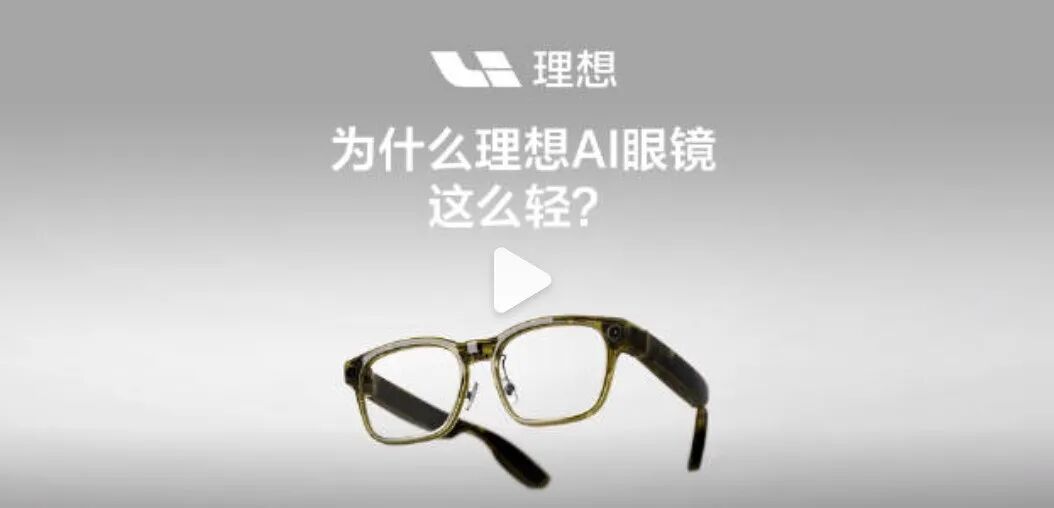
This "decentralized" terminal layout marks the transformation of car companies from single - hardware manufacturers to "full - scenario smart life service providers".
Large AI Models Become the "Universal Engine" for Cross - border Integration
If smart cars are the starting point for new - force car companies, then large AI models are the "universal technological foundation" for their cross - border expansion. Since 2023, self - developed large models by car companies, represented by Li Auto's "MindGPT", XPeng's "XNGP large model", and NIO's "NIO AI", have been successively launched. These models not only optimize autonomous driving algorithms but also endow products with intelligent capabilities across different terminals and scenarios.
The key value of large AI models lies in their generalization ability and context understanding ability. A well - trained language or visual model can be applied to multiple terminals, such as mobile phone voice assistants, AR interfaces of glasses, and behavior decision - making of robots, with only minor adjustments. This means that car companies do not need to build AI systems from scratch for each new product category. They can quickly launch new products by reusing the core model and making adaptations according to the hardware characteristics.

Take XPeng's humanoid robot "IRON" as an example. Its motion control, environmental understanding, and human - machine interaction all rely on the perception - decision - execution technology stack that XPeng has accumulated in the field of autonomous driving. The balance control algorithm for bipedal walking is highly similar to the dynamic stability control logic of vehicles on complex road conditions. The understanding and response to human instructions directly utilize the capabilities of the in - vehicle voice large model. In essence, the humanoid robot is an "autonomous driving system without wheels".
Similarly, the reason why NIO's mobile phones can be deeply interconnected with models such as the ET7 and ET5, enabling functions like "one - click vehicle control", "keyless unlocking", and "cross - screen relay", is also due to the unified architecture of its NIO OS and AI engine. Li Bin once said bluntly: "Making mobile phones is not for making money from selling hardware but for ensuring that users can enjoy a complete NIO experience outside the car."
It can be seen that large AI models have become the core technological fulcrum for new - force car companies to achieve "integration of hardware and software, coordination between terminals and the cloud, and linkage among multiple terminals". They lower the cross - border threshold, accelerate ecosystem expansion, making "making glasses", "making mobile phones", and "making robots" no longer wild fantasies but strategic initiatives that can be engineered and implemented.
The Ultimate Competition for User Time and Data Entries
In today's era of dwindling traffic dividends, the competition among technology giants has shifted from single products to ecosystem systems. Apple has firmly locked in high - end users globally with its "walled garden" built by iPhone + iPad + Mac + Watch + AirPods. Huawei has created a "full - scenario smart life" by connecting mobile phones, in - vehicle infotainment systems, and smart home devices through the HarmonyOS ecosystem.
Facing this situation, China's new - force car companies are well aware that if they only focus on vehicle sales, they will eventually become hardware contract manufacturers, losing user stickiness and data sovereignty. Therefore, they must take the initiative to build their own "smart ecosystem moats".
Li Auto's launch of the Livis glasses may seem like an entry into the wearable device market on the surface, but in fact, it is a competition for the user's "window - level entry". The eyes are the main channel for humans to obtain information, and AR glasses are expected to become the next - generation mainstream interactive interface after mobile phones. Once users get used to receiving information and controlling devices through Livis, Li Auto will gain another high - frequency contact point besides the in - vehicle infotainment system, thereby enhancing brand stickiness and service monetization ability.
NIO's foray into mobile phones is about controlling the "digital key" and "identity authentication" entries. In the mobile ecosystem dominated by Android and iOS, car companies are often restricted by system permissions and cannot achieve deep in - vehicle infotainment system interconnection. For example, although Apple CarPlay is widely used, NIO cannot obtain key user data such as location and schedules. NIO's self - brand mobile phones can be pre - installed with NIO OS, connecting account systems, payment systems, service subscriptions, etc., to form a closed - loop experience.
XPeng's bet on humanoid robots is more forward - looking. Although humanoid robots are still in their early stages, their potential application scenarios - home care, logistics distribution, and industrial collaboration - have natural synergies with intelligent mobility. In the future, a family may own both XPeng cars and XPeng robots, which share map data, user preferences, and security strategies, forming a true "mobile + stationary" intelligent agent network.
The essence of this ecosystem war is the competition for users' full - life - cycle data. Whoever controls more terminals, more scenarios, and more high - frequency interactions can train more accurate AI models, provide more personalized services, and ultimately achieve a transformation from the "product - selling" business model to the "user - operating" business model.
The Uncharted Waters after Leaving the Traditional Path
Although the prospects for cross - border integration are broad, the "off - road" journey of new - force car companies also faces multiple risks.
Notably, there is a contradiction between resource dispersion and strategic focus. Car - making itself is a capital - and technology - intensive industry, with R & D investment often reaching tens of billions. Li Auto's R & D expenses exceeded 12 billion yuan in 2024, and XPeng's also exceeded 9 billion yuan. Investing in new tracks such as mobile phones, glasses, and robots on top of this can easily lead to an over - stretched front line and scattered energy. Once there are fluctuations in the main business (car sales), the side businesses may become a heavy burden.
In addition, there is fierce competition in the consumer electronics market. The mobile phone market is monopolized by giants such as Apple, Huawei, and Xiaomi, making it extremely difficult for new brands to break through. Although NIO's mobile phones are targeted at car owners, their sales volume in 2024 was less than 300,000 units, far from achieving economies of scale. Although the Livis glasses are priced affordably (starting from 1,699 yuan after subsidies), they need to face competition from professional AR manufacturers such as Meta Ray - Ban, XREAL, and Rokid, and consumers' trust in "car companies making glasses" still needs to be established.
Technical integration and user experience will also face challenges. Although multi - terminal collaboration sounds appealing, it actually places extremely high requirements on system stability, data security, and privacy protection. Frequent disconnections of glasses, slow - running mobile phones, or misoperations of robots can damage the brand's reputation. Moreover, the user groups of different terminals may be misaligned - car owners may not necessarily be willing to buy mobile phones or glasses of the same brand, and the ecological synergy effect may not be as significant as expected.
Regulatory and ethical risks cannot be ignored either. Humanoid robots involve personal safety, AR glasses involve visual privacy, and mobile phones involve communication compliance. As product forms become increasingly complex, car companies will face cross - regulatory supervision from multiple departments such as the Ministry of Industry and Information Technology, the Cyberspace Administration of China, and the State Administration for Market Regulation, significantly increasing compliance costs.
The "diversion" of Li Xiang, Li Bin, and He Xiaopeng reflects the blurring of corporate boundaries in the intelligent era. When AI becomes a general - purpose technology, when data becomes the core asset, and when user experience becomes the focus of competition, any enterprise that sticks to a single track will face the risk of being marginalized.
The term "automobile enterprise" is losing its traditional meaning. In the future, Li Auto, NIO, and XPeng may be more appropriately called "intelligent mobile technology companies" or "full - scenario AI life platforms". Their product portfolios will cover wheeled robots (cars), bipedal robots (humanoid), wearable robots (glasses), handheld robots (mobile phones)... All terminals will be driven by the same AI brain, serving the same user identity.
This is a high - stakes gamble and an inevitable move. Because in this era of intelligent everything, the real competition is no longer on the roads but in users' lives, data, and the boundaries of future imagination.
Leaving the traditional path is not getting lost but rather heading towards a broader intelligent world.
This article is from the WeChat public account "BT Finance", author: Yuan Fang. Republished by 36Kr with permission.