Is it possible to install a camera on headphones?
The booming AI devices need new consensus.
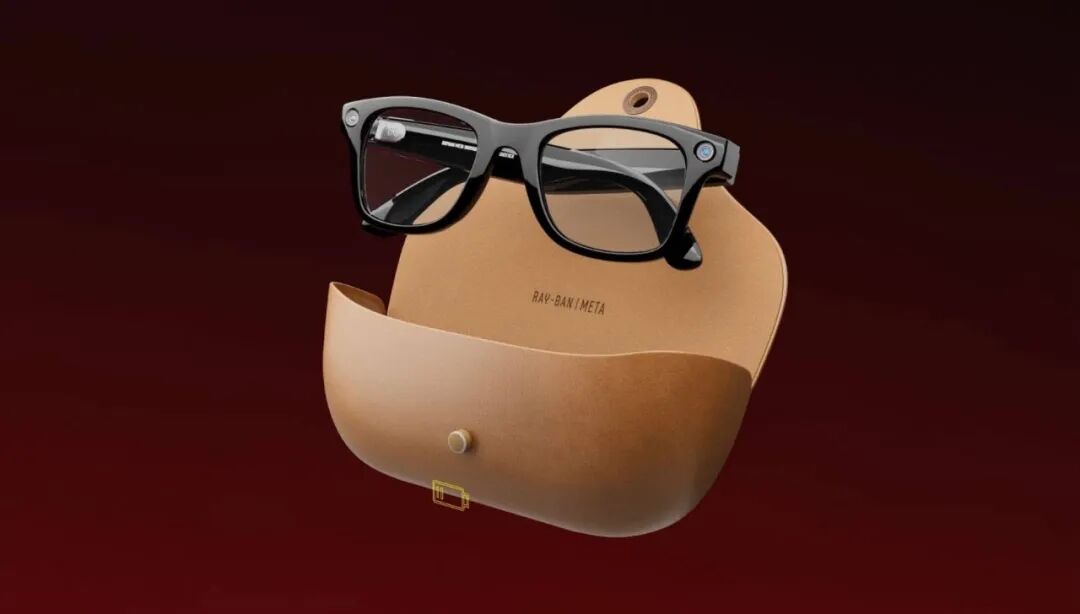
In 2025, two consensuses emerged in the booming AI device market: AI glasses have become a definite track. There are two pieces of evidence. The annual shipment volume of Ray-Ban Meta exceeded 4 million units. According to industry insiders, Xiaomi and Quark have also passed the 100,000-unit threshold. Second, all major manufacturers are accelerating their entry into the market. Besides Alibaba and Li Auto, there are also ByteDance and others. "There are at least two or three dozen companies in the queue."
"Actually, this track has already seen a surge in volume," the aforementioned insider told Phoenix Tech. "Meta's demand for the supply chain next year should be 10 million units."
Another consensus is about the dark horse company Plaud from China, whose overseas shipment volume has also exceeded one million units.
But are these the only answers for AI hardware? According to incomplete statistics, besides the above two categories, the native product categories being explored this year at least include AI toys, AI rings, AI necklaces, and AI makeup mirrors.
The hardware team that OpenAI is betting on has secretly incubated a product that is essentially a pair of headphones with a camera. In mid-December, Phoenix Tech contacted a domestic company, Guangfan Technology, which is also promoting a similar solution - the Lightwear AI full-sensory wearable device, which includes an open-ear AI headphone and a smartwatch. Its original intention is to create an "AI assistant" hardware with the capabilities of "full perception, all-weather, and active AI". During the on-site experience, Phoenix Tech found that by using the wake-up word "Hey, Xiaofan", it can achieve functions such as hailing a taxi, adding products to the shopping cart, image recognition, restaurant recommendation and queuing, travel arrangement for flights and hotels, intelligent message reminder and forwarding, etc.
The highlight of Lightwear is not only to enable the model to "see". It also advocates being independent of the mobile phone and becoming an independent existence in the AI era. But what is the possibility for it to grow into the terminal product of the next era?
01
A pair of headphones with a camera: innovation or gimmick?
During the interview, Dong Hongguang, the founder of Guangfan Technology, told us that the mobile phone was the first product excluded during the R & D period of Guangfan Technology. Because in the AI era, the mobile phone would make the interaction more complicated. With simple communication, the wearable device can let the AI help you do many things like a personal assistant.

Considering that large models have extremely high requirements for computing power, the current solution has to decouple interaction and computing power. The computing power runs in the cloud, while the interaction takes place at the edge. Therefore, a combined solution is more appropriate.
In Dong Hongguang's view, glasses are less suitable than headphones. In addition, to enable the model to have perception ability, the solution of headphones with a camera was finally selected.
The camera with only 2 million pixels is not mainly for taking pictures. Its core function is to help the large model have "eyes", so that it can see the surrounding environment and recognize objects. To reduce the power consumption pressure, a low-definition solution is adopted. Considering the current privacy issues, this camera adopts a "shoot-and-delete" working mode, which not only saves storage pressure but also reduces privacy pressure.
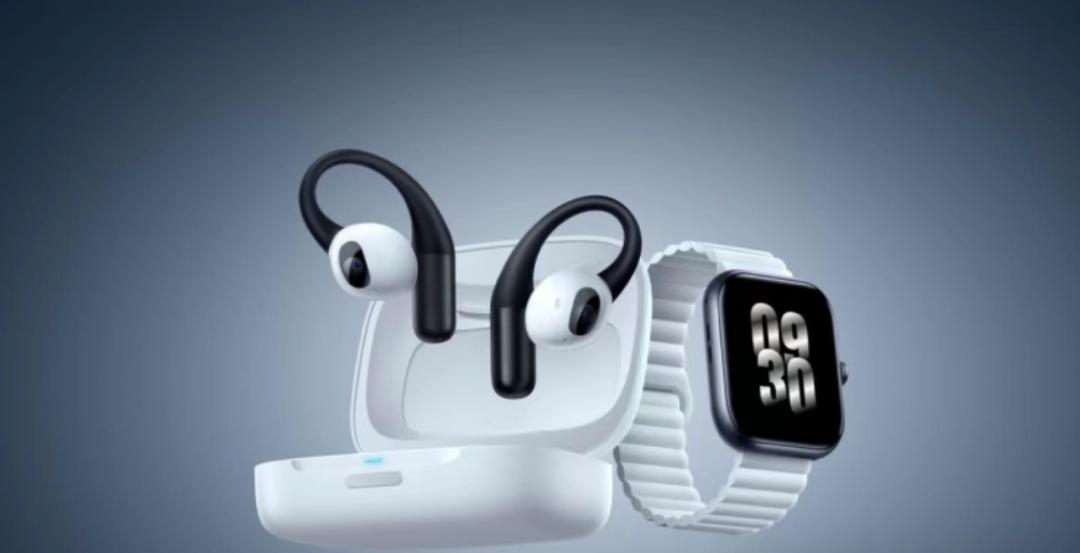
Of course, Guangfan is not the only player in the track. Also this month, Mobvoi released TicNote Pods, which is equipped with the dual engines of "4G eSIM" and "Shadow AI" and is also positioned as an independently operating AI terminal.
"For a product like TicNote Pods, the ready-made solutions in Huaqiangbei can be directly modified," the aforementioned industry insider said.
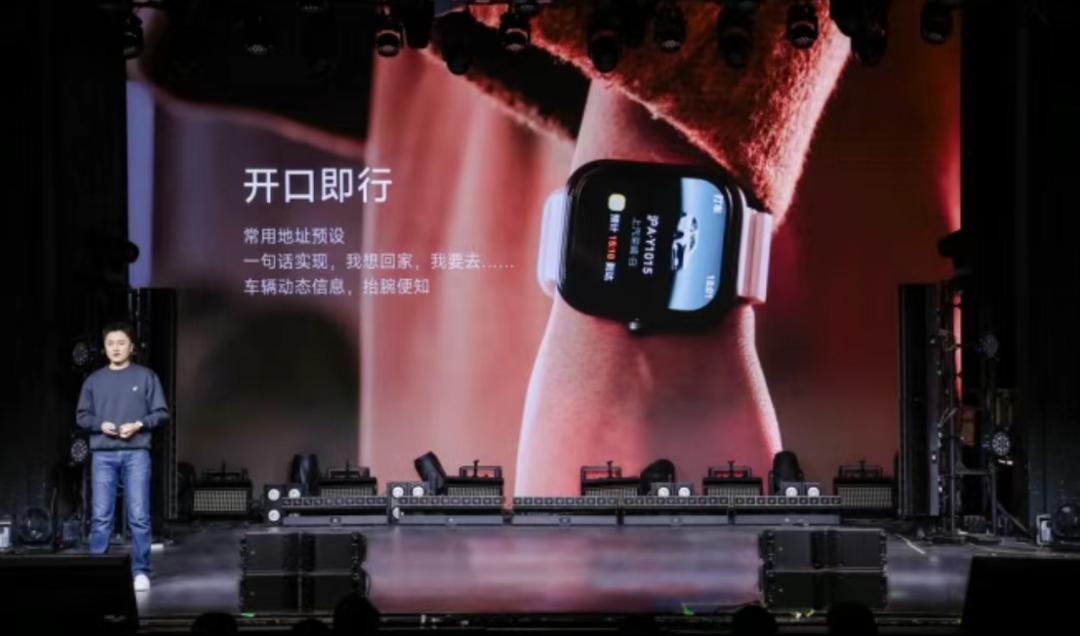
Phoenix Tech tried out some functions of Lightwear on-site. After putting on the headphones, we entered the dialogue state by using the wake-up word "Hey, Xiaofan" and first tested the taxi-hailing function. It first recognized "my location" and the "destination" I dictated. After confirming the route, it directly hailed a taxi and soon got a Didi Express. Throughout this process, the user did not need to touch the mobile phone at all.
We also tested the shopping function. We asked "What is this?" while pointing at a canned Coke on the table. After the camera recognized it, it gave the answer. When I continued to say "Add it to my shopping cart", it directly added the product to the shopping cart. According to the on-site staff in charge of the experience, since the product is still in the iterative process at this stage, Guangfan will improve the functions until it can complete the payment.
In addition, Guangfan also demonstrated functions such as checking the itinerary of the booker while booking a flight ticket and creating a memo at the press conference.
Like the recently popular Doubao phone, it will also face privacy disputes. Dong Hongguang told us in the interview that in the AI era, data collection shows a diversified trend, but the industry is still exploring corresponding norms at this stage. Besides not storing data, Guangfan will also remind users of the working status of the device to the greatest extent and has a more enhanced privacy protection strategy in the cloud.
02
Star entrepreneurs flocking to the field
At the 2024 CES, the rabbit R1 made a stunning debut. Once launched, it sold 100,000 units, which not only represented the industry's expectations but also announced the start of the AI hardware entrepreneurship era. At the same time, the screenless wearable device AI PIN developed by the Silicon Valley startup Humane also received wide attention.
But the setbacks came quickly. Rabbit R1 was found to be an Android-based product, and the company later faced financial difficulties. AI PIN also disappeared quickly due to its low product completion rate.
In 2022, when Luo Yonghao announced his last entrepreneurial venture, he founded Fine Red Line and bet on smart products for the next era.

As a star entrepreneur in the track, Luo Yonghao has strong appeal. He can not only attract star capital but also recruit talents, and the supply chain is also enthusiastic about him. According to several colleagues who co-founded the company with him at that time, Luo Yonghao did not lack resources in the AR project.
However, the development of the engineering prototype was not optimistic. They designed a hardware product with complete functions but encountered many difficulties in the software aspect. Phoenix Tech previously learned that in early 2024, the AR project of Fine Red Line was suspended and shifted to AI software research.
This product was secretly named AI Jarvis overseas, directly targeting Jarvis, the butler in "Iron Man". But in the end, this product failed to be released as scheduled. A person close to Luo Yonghao told Phoenix Tech that, similar to the era of Smartisan, Luo still has very high requirements for products and is a perfectionist. His functional ideas are too advanced, which also adds difficulties to the development.
In early 2025, Luo Yonghao's AI hardware team was also adjusted, and the recruitment of talents related to large models was strengthened. According to relevant people, the new product that Luo Yonghao will release during the New Year's Eve this time will be mainly targeted at the overseas market and may be positioned as an AI efficiency tool.
As a member of the early startup team of Xiaomi, Dong Hongguang left Xiaomi at the end of 2024. During his 14 - year tenure at Xiaomi, he first participated in the creation of MIUI as the R & D leader of the OS. Later, as the business leader, he led the incubation and implementation of core OS and application ecosystem businesses such as the fast - app ecosystem, Xiaomi's self - developed mobile phone and automotive OS.
In early 2025, his startup company, Guangfan Technology, made its debut and received investments from Borui Capital, AfterShokz, Tongge Venture Capital under Goertek, Qinghui Investment under Zhu Yiming of GigaDevice, and Lingyi Venture Capital. The cumulative financing in two rounds reached 130 million yuan. Another source said that it recently completed a new round of financing, and its valuation has reached 1 billion yuan. The investors bring more than just money. AfterShokz occupies more than 50% of the bone - conduction and open - ear headphone market, Goertek is the leading ODM for wearable devices, and GigaDevice is the leading storage company. To some extent, Guangfan bears the expectations of these giants.
The entrepreneurship boom in AI hardware also reached its peak in 2025.
A senior hardware practitioner told Phoenix Tech that the core moat of today's AI hardware companies should be the model. "The key is whether you can develop a model that runs locally to improve the user experience." In his opinion, in terms of cloud models, it is already the territory of large companies like ByteDance and Alibaba. Start - up companies can only create value at the edge. "Even fabricating a chip that can run edge - side models."
Dong Hongguang told Phoenix Tech that the moat of Guangfan lies in the comprehensive capabilities of hardware scheduling, software scheduling, and human - machine interaction. The core is whether it can handle the problems of edge - side communication and edge - cloud collaboration well. He believes that if the intelligence is completely entrusted to large models at this stage, the ceiling of the user experience will be determined by the upper limit of the model. But if the communication between devices and human - machine interaction can be well - handled, the problem of low product completion rate can be solved to a certain extent. However, he also said that it is still very far from being perfect and mature at present, and it can only be regarded as taking the first step.
Judging from the current completion rate, it will be a huge challenge for this product to achieve Product - Market Fit (PMF). You know, all the success of today's AI glasses is thanks to Zuckerberg's huge losses. In the past few years, Zuckerberg has spent tens of billions of dollars chasing virtual reality (VR) and augmented reality (AR) technologies and produced several generations of failed products.
Finally, he turned things around with Ray - Ban Meta. After that, the domestic market quickly reached a consensus and entered the market. Meta's expectation for the supply chain next year is 10 million units. There are already dozens of players in the domestic market ready to enter. AI glasses have become a definite track, but there are also no new opportunities.
"The probability of creating a new product category is extremely low, but we can't deny the possibility of success," a senior industry practitioner commented.
03
The race for the next iPhone moment
Since the birth of the iPhone, there has been no revolutionary innovation in the global mobile phone industry for more than a decade.
When Luo Yonghao had a conversation with Liu Jingkang, the CEO of Insta360, in the latest podcast, he mentioned a hardware entrepreneurship obsession: "You see, the AI revolution has been going on for more than three years, but neither Apple and Samsung in the international market nor Huawei, Xiaomi, OPPO, and VIVO in China have come up with any innovative products combining AI. With the arrival of this wave of AI, there are still plenty of opportunities for the combination of software and hardware."
What everyone is looking for is nothing but the next iPhone moment. This has led global technology giants to launch a non - stop war in the field of AI hardware.
After suffering hundreds of billions of dollars in losses, Meta finally learned incremental innovation. In September 2025, after achieving success with Meta Ray - Ban, Meta officially launched Meta Ray - Ban Display, which added a color monocular display screen compared with the previous model. In terms of innovation in interaction methods, it also released the Neural Band, a neural wristband controlled by electromyographic signals. The final price of this product is $799 (about 5,700 yuan), which is twice as expensive as the model without a display, and also significantly reduced its shipment expectation.
With this release, Meta completed its product portfolio of AR/VR products. They are the photographic AI glasses, the display AI glasses pioneered by Meta Ray - Ban Display, and the augmented reality glasses, three major product series.
Google announced its high - profile return to the battlefield at the end of 2025. Thirteen years have passed since the release of its first failed Google Glass. This time, it brought a roadmap for glasses driven by the Gemini large model and the Android XR operating system. The most eye - catching one is Project Aura, jointly developed with the Chinese AR company XREAL.
Google's core advantage lies in its ecosystem. The Android XR system aims to solve the long - standing problem of the lack of applications for XR devices, allowing developers to easily adapt existing Android applications to the AR environment. This is a platform - based thinking: by defining the operating system standards and integrating the global hardware manufacturing capabilities (especially the Chinese supply chain) to respond to the hardware innovation of competitors.
The AI giants are also not to be outdone. In 2025, OpenAI launched a blitz in the hardware field. In May 2025, it acquired the AI hardware company io Products founded by Jony Ive, the former chief designer of Apple, for $6.5 billion. An even bolder move was to directly "poach" the core talents of Apple. It is reported that it has recruited more than 25 experts in the hardware field, including the former design leaders of the iPhone and Apple Watch. At the same time, the news of its cooperation with Apple's supply chain giants such as Luxshare Precision and Goertek also shocked the capital market.
Multiple sources indicate that the product it is about to release is also a pair of headphones with a camera.
In the domestic market, ByteDance is also increasing its hardware layout and has specially established a hardware team called Ocean. It adopts three models: external investment, cooperation with hardware manufacturers, and self - research. Centered around the Doubao large model, it has successively connected or self - developed hardware products in multiple categories, including mobile phones, cars, robots, smart glasses, and learning machines.
Even more, it has taken a path quite similar to that of Meta. It has successively acquired the VR company PICO, the R & D team of Smartisan, and the headphone manufacturer Oladance.
However, the difference is that ByteDance is more inclined to the token business. In