Pricing is the core technology of AI glasses.
"Is it worth spending 2,000 to 4,000 yuan on an uncertain future?"
This is the most core question in the minds of all potential consumers when evaluating AI glasses. The industry is still in its infancy, and consumers can list a thousand reasons not to buy.
However, some people are starting to think differently - shifting from "Why not buy?" to "Why should I buy?" They will find that what drives early adopters is not speculation or curiosity, but rather the desire to "get a ticket to the future life" and keep up with the trend.
Give me a reason to buy AI glasses
AI glasses can't just rely on their looks to be as popular as Zeiss glasses. Their fate is that if they don't have a standout function, they'll just sit in the warehouse.
Currently, with the mainstream market price ranging from 2,000 to 4,000 yuan, what consumers first want to know is: what practical functions can they get for this price?
Wang Jian, an office worker, found that the biggest necessity after buying AI glasses was its ability to perform "multi - tasking in a covert way".
"I use it to read novels or other long documents without others noticing." It might even make the boss think that this guy is listening so attentively.

Image | Is AI reading another form of slacking off?
Fei Yang, a cyclist, wore nearly 4,000 - yuan AI glasses and cycled in the cyber - maze of Chongqing. He found that at least at that moment, it outperformed mobile phone navigation - no need to take out the phone while cycling and miss a popular hot pot restaurant on the roadside. "The charm of AI glasses lies in seamless and continuous experience."
Chen Hao, a skiing enthusiast, quickly ditched the selfie stick in Zhangjiakou and used AI glasses to shoot "the first - person view of the Chongli ski slopes". He named this experience "the sense of presence in the first - person view".
It can take photos, shoot videos, and project. The common point of these moments is the paradigm shift of technology devices from "hand - held to wearable".
It's a fact that the eyes are more efficient than hands. Unpacking boxes, petting cats, or enjoying a nice day on the roadside are better opportunities to showcase the "instant recording" ability of AI glasses.
However, AI glasses also bring some "confusing doubts", manifested in situations like AI - related social embarrassment, AI cheating, and even AI voyeurism.
Some people say they'll be scared to see someone wearing black - framed glasses in a bathhouse. Others suggest that when going on a date, couples should check each other's glasses first before proceeding.
The translation function of some AI glasses is currently limited to "static text". When used in real - time translation scenarios, the translation accuracy decreases. "If there are one or two critical errors, trust will collapse."
In a speech scenario, some users said that they could see light leakage from somewhere on the AI glasses, and they would "face social embarrassment". Some netizens also said that when making a payment by scanning a code with voice operation, everyone around would stare.
People are far from reaching the point where "they can't live without a pair of AI glasses". But indeed, by paying 2,000 to 4,000 yuan, some aspects of life experience have changed.
Are AI glasses like buying a house?
In 2025, major companies like Xiaomi, Xiaodu, and Quark have all released AI glasses.
In addition to internet giants, automobile brands, AR/VR intelligent hardware companies, and traditional mobile communication providers entering the market, the industry is in a state of "hundred - glasses battle", and some products are becoming homogeneous.
But there are also differences. This difference lies in the digital world connected behind each pair of AI glasses. It's said that choosing a pair of glasses is like "choosing a house" in the digital life world.
The Quark AI glasses backed by Alibaba are deeply integrated with Alipay and support over 80% of offline payment scenarios. Consumers no longer need to hold a coffee in one hand and rummage for their phone in the other. It's said that Quark AI glasses will also support WeChat Pay in the future.
To some extent, when consumers choose Quark, they are linking to a 'payment center'.
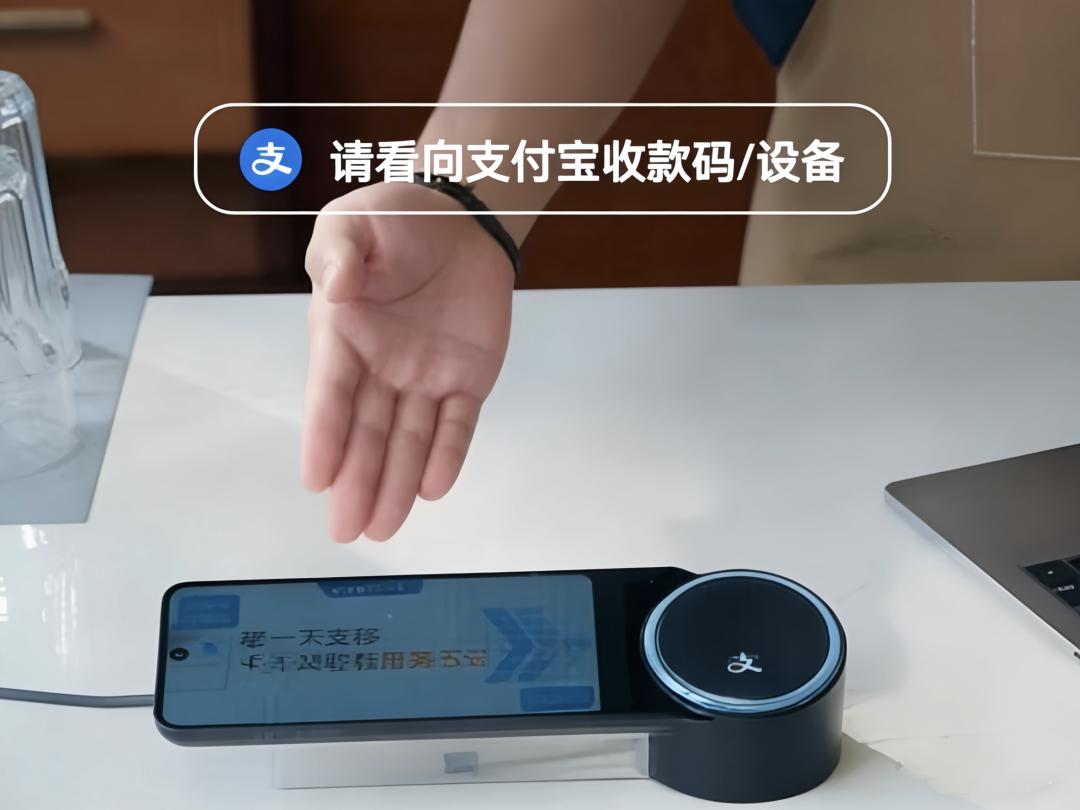
Image | Paying with AI glasses
Moreover, Alibaba's ecological scenarios such as Taobao, Fliggy, and Gaode Map are also core functions of Quark AI glasses. With a pair of these glasses, it's like having access to surrounding shopping malls, travel agencies, and convenience guides.
If you buy Xiaomi AI glasses, consumers can connect to the "Mi Home ecosystem" through "Xiaomi Xiaoai". It's like having a huge electrical appliance store at your disposal, from air conditioners and humidifiers to lights and curtains, all controllable via AI glasses.
Importantly, Lei Jun has also applied the "Redmi strategy" to Xiaomi AI glasses. Priced at 1,999 yuan per pair, they target the sinking market with high cost - performance.
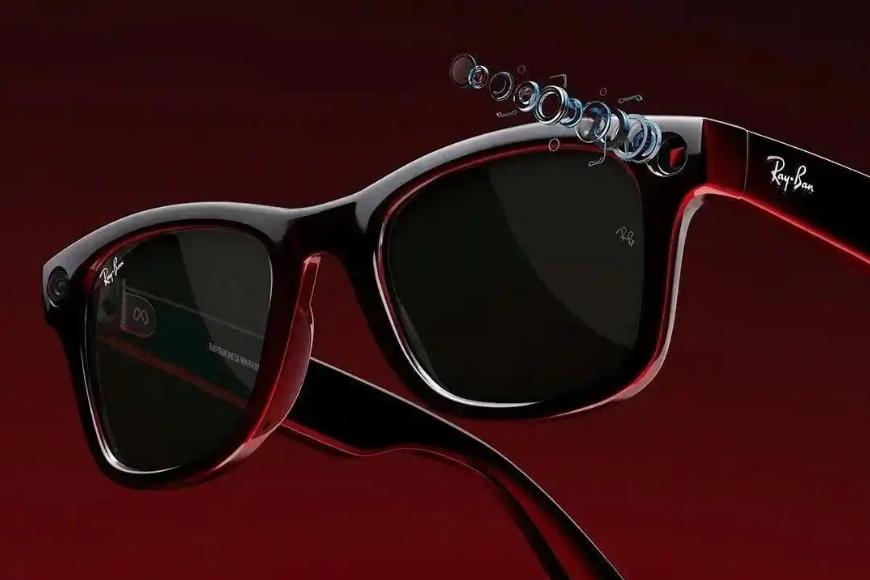
Image | Now there are also light - blocking stickers for AI glasses to avoid disturbing others
Li Auto's AI glasses are designed as an intelligent accessory for its cars, aiming to serve its million - plus car owners and achieve car - glasses coordination.
Users can control the car's lights, horn, air conditioning, trunk, etc. without using their hands through AI glasses. Since there's no need for a screen display function, the starting price of Li Auto Livis glasses is controlled at 1,999 yuan. It's said that they were sold out on the night of the launch.
There are also many players in the second - tier who have their own ecological niches.
Roborock, mainly known for its intelligent cleaning products, recently released a Roborock AI glasses focusing on health functions - 24 - hour monitoring of health indicators such as body temperature, heart rate, and blood oxygen.
Roborock's ecosystem is definitely not as strong as that of big companies. This might make it take an unconventional approach and position its selling point as a "sports bracelet on the eyes".
Rokid's AI glasses know they have an advantage in hardware, but competing solely in AI large - language models isn't their forte. So, it simply "supports access to all domestic AI large - language models", like building a free - trade port, emphasizing convenience in connection and adaptation.
According to Rokid's official data, only 5 days after the launch of Rokid Glasses, 40,000 pairs were sold across all channels.
It can be seen that each pair of AI glasses is not an independent entity but has its own ecosystem behind it.
As a consumer's choice, it largely depends on: Do you want to live more frequently in Alipay's ecosystem, Xiaomi's smart home, or do you need a pair of glasses specifically for your car?
Your needs determine which "digital community" you're willing to buy into.
Behind the price, you're buying the supply chain
Price isn't just a number. In the AI glasses industry, it also reflects the technological path and the quality of the supply chain.
Currently, AI glasses can be roughly divided into three price ranges: below 2,000 yuan, between 2,000 - 3,000 yuan, and above 3,000 yuan. Pricing isn't just a sales strategy; there are also product differences behind it.
Those below 2,000 yuan are mostly AI audio glasses. AI audio glasses have no screen display and only interact with users through an AI voice assistant, similar to a combination of glasses, headphones, and a sports camera (not necessarily included). Xiaomi, Xiaodu, and other AI glasses fall into this category, usually priced below 2,000 yuan, and some white - label products can even cost as low as 500 yuan.
Those in the 2,000 - 3,000 yuan range are mostly AI screen - display glasses. Once the screen - display function is added, the price of AI glasses will exceed 2,000 yuan. For example, Quark has launched two models of AI glasses. The G1 model, without a display and focusing on portability and fashion, starts at 1,999 yuan; the S1 model, with a display and more comprehensive functions, has a minimum price of 3,799 yuan.
Those above 3,000 yuan are mostly AR immersive glasses. They are more like projecting in front of your eyes, focusing on immersive movie - watching. Not only do they look significantly different from the previous two types, but their AI support is also relatively weaker at present, with a higher entertainment value than practicality in daily life. The XREAL 1S glasses, starting at 3,299 yuan, promote the idea of "wearing a 500 - inch giant screen on your eyes".

From this perspective, a higher price not only means clearer display but also likely means deeper brand involvement in the supply chain. After all, there are different levels of OEM manufacturing.
Some white - label AI glasses priced around 500 yuan mostly use "public - mold and re - branding". Manufacturers mainly focus on marketing and sales. Slightly stronger brands will define some requirements and participate in part of the design with OEM factories.
According to publicly available market information, currently, Quark AI glasses are the most deeply involved in the supply chain, essentially transforming the supply chain from "OEM" to "co - construction".
Quark collaborated with Kangnate (headquartered in Shanghai), an established enterprise in the Chinese optical lens field, to achieve an integrated fit of optical waveguides, display modes, and myopia lenses. This technology is leading in the industry. It also worked with Zhige Technology (headquartered in Beijing) to optimize the two - dimensional grating technology, doubling the light efficiency, reducing the thickness by more than 50%, and achieving a "rainbow - free" solution - eliminating the rainbow effect in the field of vision.
Driven by end - user demand, the OEM factories of AI glasses are gradually shifting from a "manufacturing mindset" to a "solution mindset". This value of supply - chain co - construction is actually an invisible form of infrastructure.
For consumers, paying a premium is partly for better technological integration and quality control.
The AI glasses market is currently still a "small - scale" market. In the first 11 months of 2025, the shipment of smartphones in China was about 250 million units, while the shipment of AI glasses was less than 3 million units.
But looking back at history, the early stages of each new computing platform (PC, smartphones) were accompanied by clumsiness, doubts, and a stage of seeking meaning.
The essence of consumers buying AI glasses today is to participate in a 'habit - forming experiment' at an affordable cost in advance.
It's not a necessity, but it's a technological option for a new way of life.
This article is from the WeChat official account "Zhengu Research Lab" (ID: zhengulab). Author: Liang Xiang, Editor: Gong Zheng. Republished by 36Kr with permission.