Banu can't become Haidilao.
Author | Zhang Fan, Huang Yida
Editor | Huang Yida
Cover Source | Visual China
After Banu Hot Pot submitted its prospectus for the first time in June this year, the China Securities Regulatory Commission (CSRC) raised "nine questions" regarding the company's core operational issues in August, requiring the company to supplement relevant materials and make them public. This was detailed in our previous article "The CSRC's Nine Questions Point to the Core, and Banu's IPO Process May Face Uncertainties".
On December 17th, Banu submitted its prospectus to the Hong Kong Stock Exchange for the second time. It provided targeted explanations for issues such as social insurance arrears, equity structure, and large - scale dividends that the CSRC had previously concerned about. It also disclosed its performance data for the first three quarters of 2025, attempting to dispel market doubts in a more transparent manner and pave the way for its bid to become the "third hot pot stock".
Is Hot Pot a Lucrative Business?
From the current capital market perspective, among Chinese cuisine listed companies, Haidilao has the largest scale, with a market value of over HK$80 billion (as of December 24, 2025). It is also one of the few companies in the capital market that can compete with several major tea - beverage companies in terms of scale.
Looking at the hot pot segment where Haidilao operates, public data shows that in 2024, the hot pot market had a scale of over 600 billion yuan, accounting for approximately 14.5% of the Chinese cuisine market. It is not only the largest sub - segment in Chinese cuisine but also far exceeds other major categories and cuisines in terms of market share. There are two main reasons for hot pot leading the Chinese cuisine market:
1. The main process of hot pot is ingredient preparation, which reduces the cooking process by chefs and achieves "semi - prefabricated" standardized meal service. The cooking subject shifts from the catering enterprise to the customers. Therefore, it circumvents one of the biggest bottlenecks in standardizing traditional Chinese cuisine, which is chef - based cooking. Coupled with faster food delivery, hot pot chain enterprises can achieve faster expansion.
2. In terms of consumption scenarios, the on - site cooking atmosphere of hot pot endows it with a strong social attribute and effectively shields it from the impact of the take - out channel. In contrast, most catering categories have to offer low - profit take - out packages to maintain sales volume in the wave of the rise of take - out. By comparison, hot pot has become a sub - segment in the catering industry with a relatively high profit level.

Chart: Proportion of take - out channel from January to August 2025; Source: Red Meal Big Data, 36Kr
From the development law of the catering industry, high - frequency fast - food consumption is more likely to give rise to industry giants. For example, McDonald's is the world's largest catering enterprise, and the Hong Kong stock market has a greater preference for new tea - beverage brands represented by Mixue Bingcheng. Due to the strong social attribute of hot pot, its table - turnover rate is relatively low, which limits its expansion ability.
In the Name of "Tripe"
A common strategy among catering enterprises is to create a core product or a characteristic service as the iconic label of their brand. For example, Tai Er specializes in pickled fish with sauerkraut, Hot Pot Cucu features free refills of duck blood and tofu + milk tea, and the core feature of Haidilao is high - quality service.
The popular signature dishes of Banu Hot Pot are tripe + mushroom soup base.
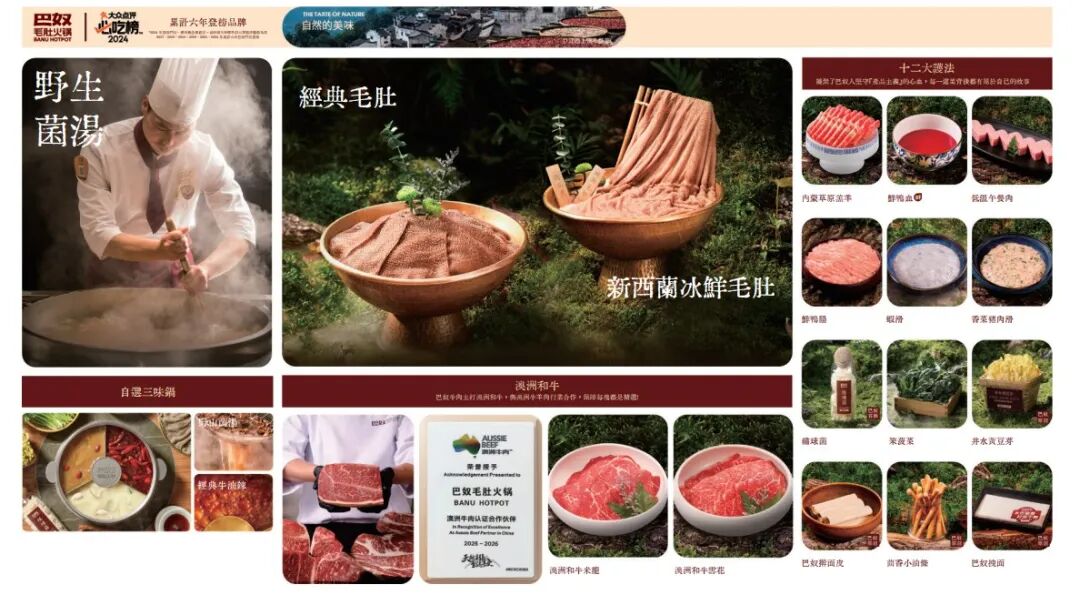
Chart: Banu's signature tripe and mushroom soup; Source: Company official website, 36Kr
From the product side, Banu's signature tripe uses the green and safe "papain" tenderizing technology to replace the traditional caustic soda treatment. On the premise of ensuring food safety, it can ensure a crispy, tender, and chewy texture. As a "must - order" item in Sichuan and Chongqing hot pot, making it a popular signature dish is a good choice. The mushroom soup is freshly brewed daily, and wild mushrooms directly supplied from Yunnan are selected to emphasize the fresh and mellow original flavor. In terms of brand promotion, Banu emphasizes non - excessive service, forming a contrast with Haidilao.
In terms of price range, due to the high - quality ingredients of Banu Hot Pot, its prices are far higher than its competitors. According to 2024 data, the average customer spending at Banu exceeds 140 yuan, nearly 20 yuan higher than that of Cucu, which specializes in Taiwanese - style hot pot. During the same period, the average customer spending at Haidilao was 95.7 yuan.
Reflected in the ingredient cost, according to the 2024 financial report, the proportion of raw materials and consumables to revenue for Banu and Haidilao was 32.1% and 37.9% respectively. Based on their corresponding average customer spending, we can roughly calculate that the ingredient cost per customer per consumption at Banu and Haidilao was 45 yuan and 36 yuan respectively. Banu's ingredient cost is 25% higher than that of Haidilao, which just confirms Banu's brand positioning as a "quality hot pot".
In the hot pot industry, there is usually an inverse relationship between price and table - turnover rate. Therefore, low - price hot pot needs a high table - turnover rate to support revenue, while a higher average customer spending means a lower table - turnover rate. Banu has achieved a relatively high table - turnover rate despite its high pricing. Public data shows that in 2024, Banu's table - turnover rate was 3.2, significantly higher than Cucu's 1.6 and slightly higher than Song Hot Pot's 2.9.
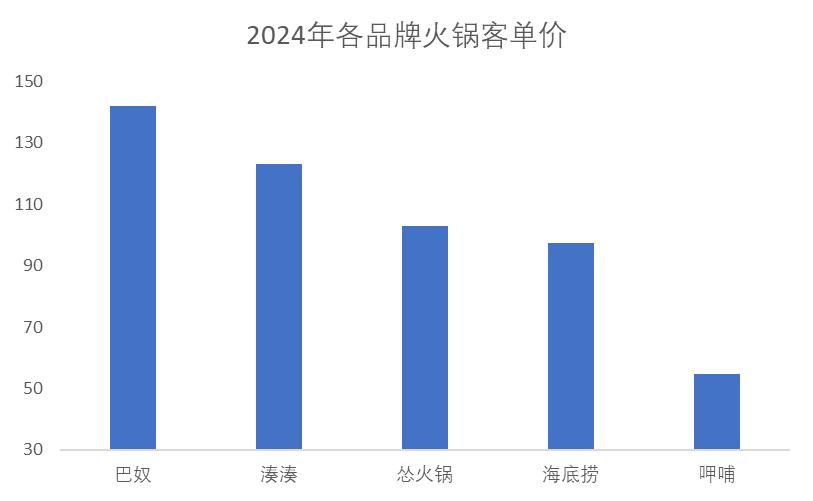
Chart: Average customer spending of various hot pot brands in 2024; Source: Company announcements, 36Kr
The reason why Banu can achieve a high table - turnover rate while having high pricing is probably related to its small number of stores. According to the company's financial report data, at the end of 2024, Banu Hot Pot only had 144 stores, mainly concentrated in Henan, where Banu originated. The geographical distribution is extremely unbalanced, and its expansion to other regions is still in the initial stage.
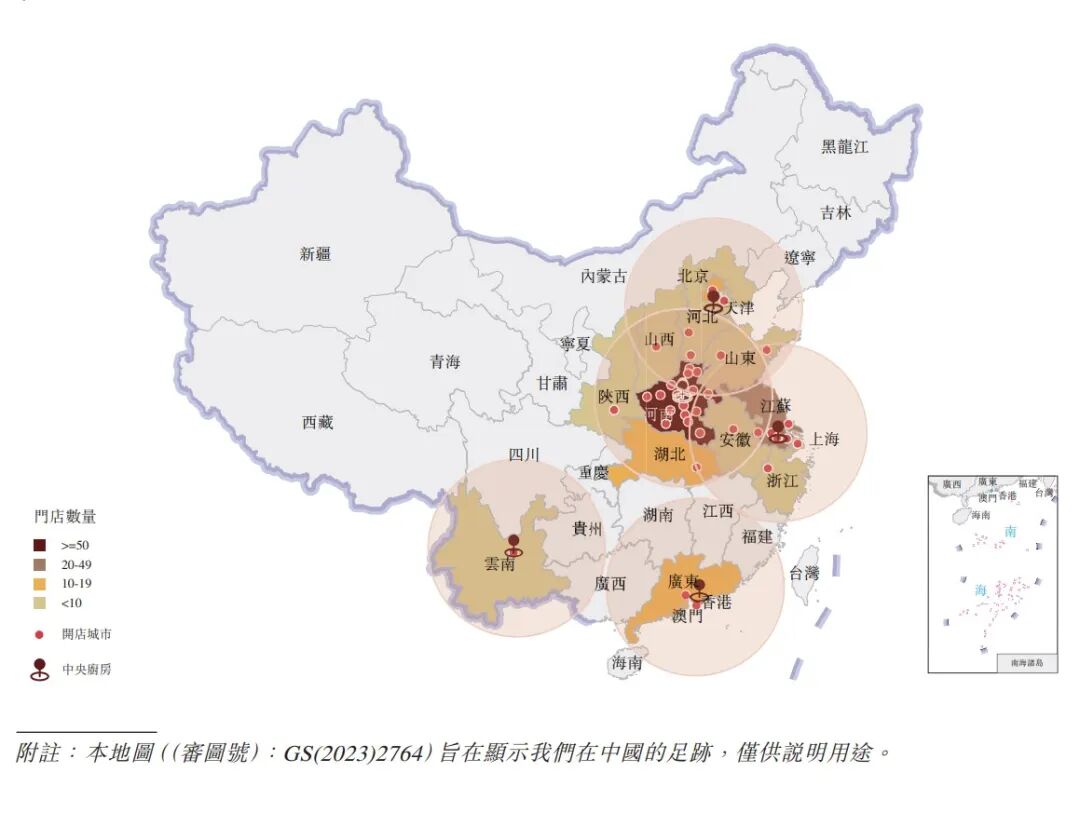
Chart: Geographical distribution of Banu stores; Source: Company prospectus, 36Kr
However, referring to Cucu's development experience, Banu's current development potential may not be as high as the market expects. In 2019, Cucu had 99 stores. With continuous expansion, the number of stores reached a peak of 243 in 2023. The increase in the number of stores also led to a decline in the table - turnover rate. Coupled with the impact of the decline in average customer spending, Cucu began to continuously close stores after 2023. As of the first half of 2025, the number of stores had dropped to 158.
Behind Cucu's decline from its peak, on the one hand, the excessively high average customer spending suppressed consumer demand, and on the other hand, the "hot pot + tea break" model was no longer novel. From a business development perspective, the rapid development of the tea - beverage industry has led to a significant increase in the distribution density of tea - beverage stores. Coupled with the popularity of take - out, the attractiveness of the "hot pot + tea break" model has decreased significantly. It is more cost - effective and offers a wider choice to order a cup of milk tea from the neighboring milk tea shop while having hot pot.
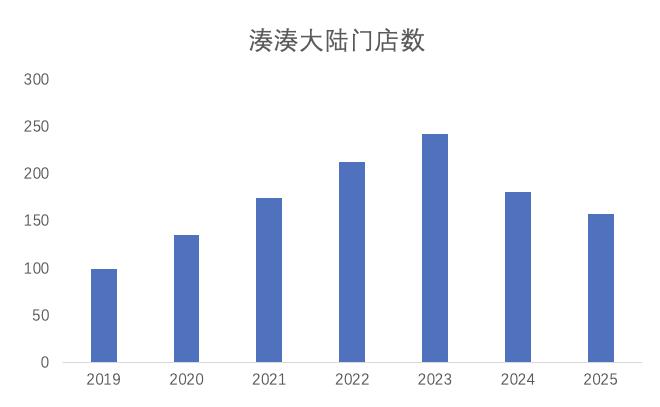
Chart: Number of Cucu hot pot stores in China; Source: Company announcements, 36Kr
This also returns to the core issue of competition in the hot pot industry: Since the complex cooking process by chefs is omitted, and the industry generally lacks a supply - chain system with significant barriers, hot pot is a sub - segment with an even lower threshold in the catering industry, which already has a relatively low entry barrier. Therefore, almost all hot pot enterprises are seeking differentiation, that is, the "hot pot +" model. As mentioned above, Haidilao features "hot pot + service", and Cucu is a combination of "hot pot + milk tea".
Then, is Banu's differentiation strategy of emphasizing ingredient quality an inherent attribute of hot pot or an additional one?
Previously, Song Hot Pot also emphasized the freshness of ingredients. Different from Banu's tripe, Song Hot Pot's signature product is freshly sliced yellow beef, mainly emphasizing the freshness of ingredients. It uses the model of on - site slaughter and immediate delivery to ensure quality. However, the number of Song Hot Pot stores has never exceeded 80.
Haidilao, which focuses on service, had as many as 1,363 stores in the first half of 2025. As a hot pot restaurant with an average per - capita consumption of over 90 yuan, it also provides additional services such as manicures and hand care. If a manicure costs 60 yuan, regardless of whether customers can enjoy the manicure service, for hot pot with a high social attribute, if there are several girls at a table, the additional benefit of the manicure is likely to be included in their mental accounting. Thus, the cost - effectiveness of Haidilao is highlighted.
In terms of valuation, although Banu has always signaled to the market that it should be valued with reference to Haidilao, its business model is most similar to Song Hot Pot of Jiu Mao Jiu.
The continuous adjustment of Jiu Mao Jiu's stock price in recent years is mainly due to the simultaneous decline of core indicators such as the table - turnover rate and same - store sales of its sub - brands, coupled with the concentrated store closures, which ultimately led to performance pressure. Among them, limited by the inverse relationship between the number of stores and the table - turnover rate, the core operational data of Song Hot Pot has fluctuated for a long time. For investors, the model of Song Hot Pot clearly has a higher reference value for valuing Banu, which is in the business expansion stage.
*Disclaimer:
The content of this article only represents the views of the author.
The market is risky, and investment should be made with caution. Under no circumstances do the information in this article or the opinions expressed constitute investment advice to anyone. Before making an investment decision, if necessary, investors must consult professionals and make careful decisions. We have no intention of providing underwriting services or any services that require specific qualifications or licenses to the parties involved in the transaction.