The cost of a trillion-dollar valuation: OpenAI is losing its architects
Editor: Dinghui
Steve Jobs once compared "Fairchild Semiconductor" to a mature dandelion. When the wind blows, its seeds fly in all directions, take root, and grow into a forest (Silicon Valley). OpenAI might be the Fairchild Semiconductor of the AI era. The price OpenAI pays for reaching a trillion - dollar valuation could be "losing everyone who built it."
On the road to a trillion - dollar market value, the most expensive ticket OpenAI has to pay might be its founding team.
OpenAI, once dedicated to the concept of "Open," has transformed from an idealistic laboratory into a commercial giant.
As of December 2025, among the original 11 - member founding team of OpenAI, only CEO Sam Altman and President Greg Brockman still remain in the management.
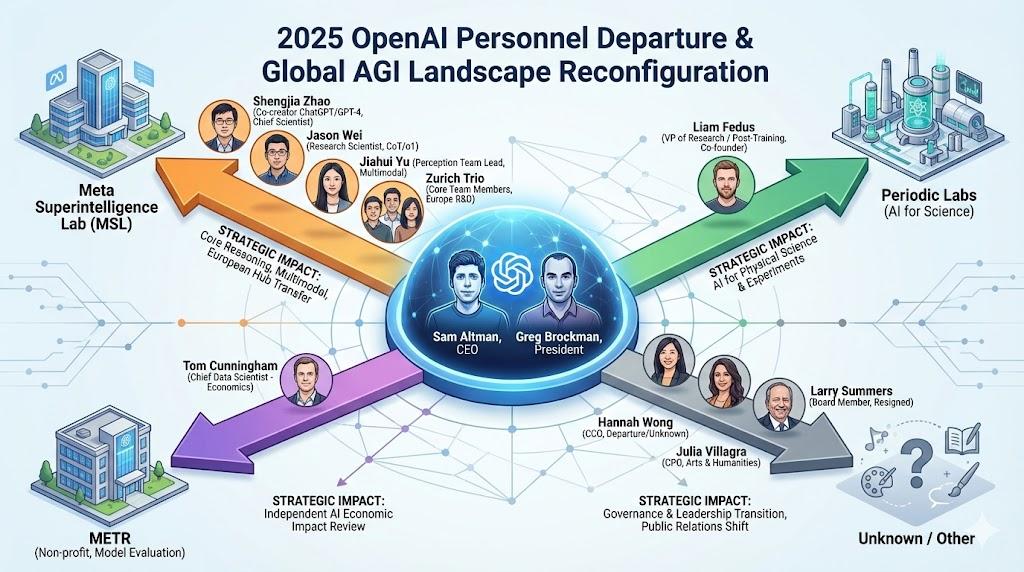
Statistics by foreign media on the management and key researchers who left OpenAI in 2025
Resources originally used for pure exploratory research are increasingly being tilted towards the iteration and maintenance of products like GPT - 5.2.
This atmosphere of "products overriding research" is the underlying reason for the wave of high - level departures at OpenAI in 2025.
Coupled with Mark Zuckerberg acting as the "talent - poaching catfish," most people choose to join Meta's Super Intelligence Laboratory.
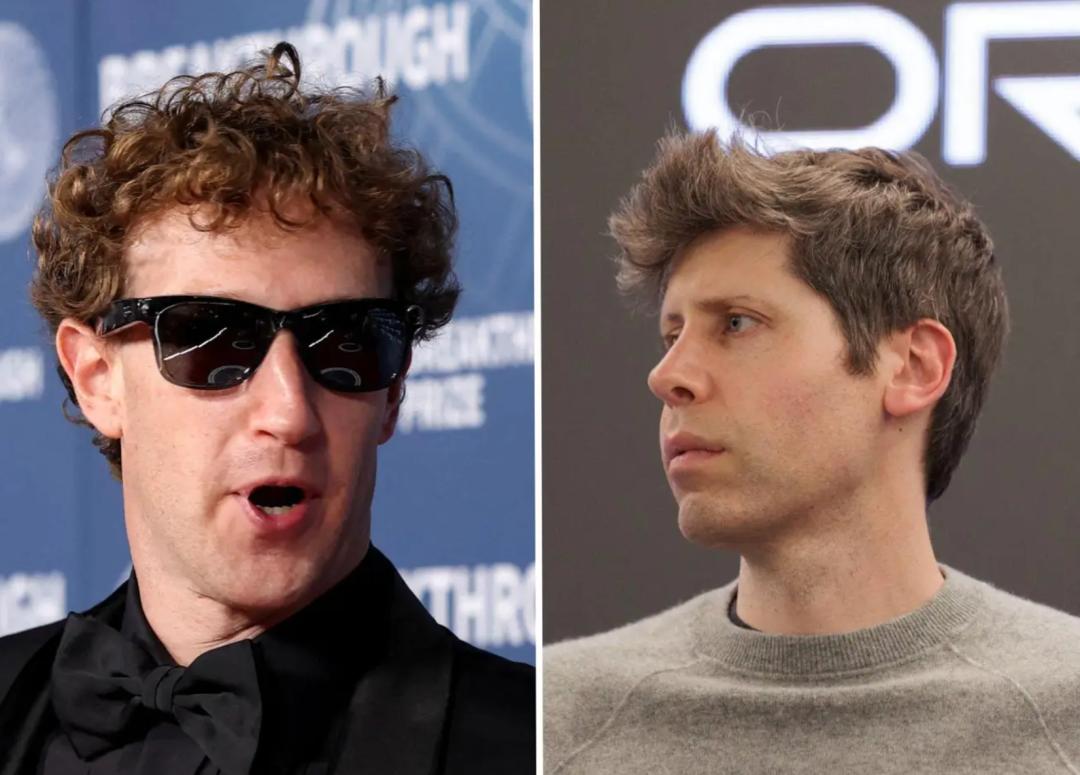
Mark Zuckerberg and Sam Altman
By the end of 2025, OpenAI had completely transformed from a non - profit research laboratory into a "closely - guarded, opaque for - profit organization."
With the advancement of the IPO plan, OpenAI has introduced senior corporate executives such as Sarah Friar (CFO) and Kevin Weil (CPO).
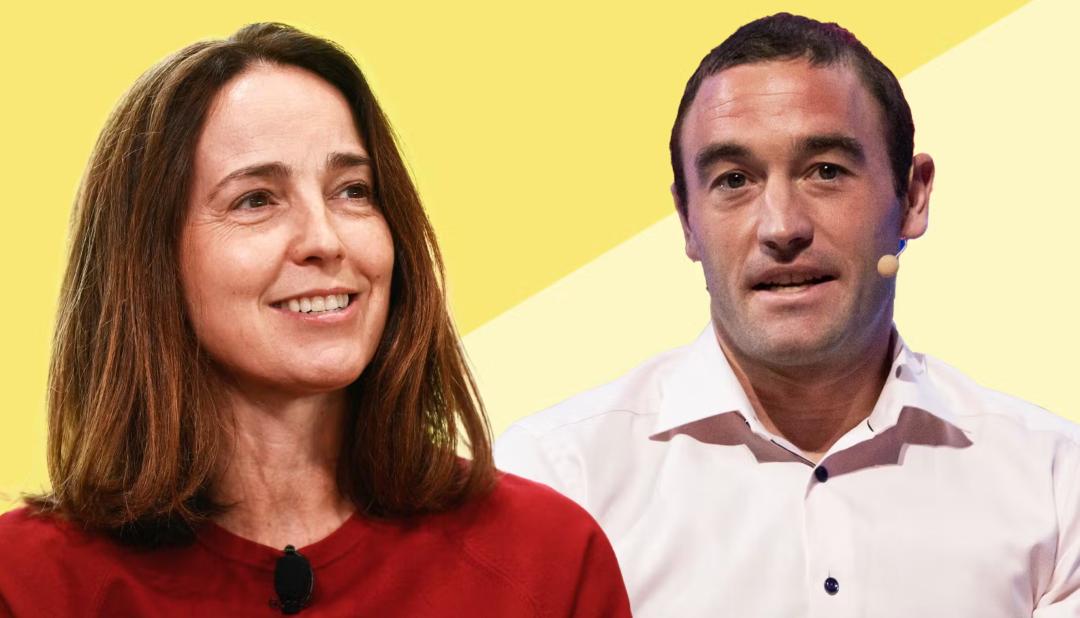
Sarah Friar and Kevin Weil
This maturation (or bureaucratization) of the organizational structure inevitably dilutes the early "hacker - style" spirit of exploration.
In the history of Silicon Valley, there was the famous "PayPal Mafia," where early employees of PayPal left and founded a series of giants such as Tesla, LinkedIn, and Palantir.
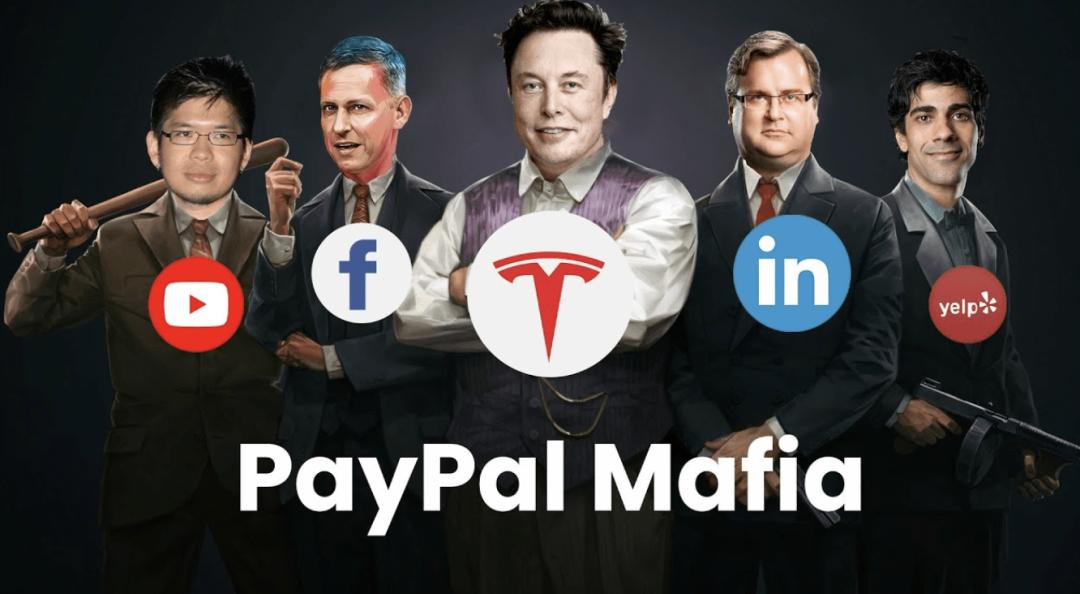
PayPal Mafia
In 2025, OpenAI is experiencing a similar moment. However, the difference is that this dispersion is happening when OpenAI is at its absolute peak (of course, it got a bit of a blow from Google at the end of the year).
This means that the external temptations have exceeded the marginal benefits of continuing to climb within OpenAI.
Although OpenAI's brand is still at its peak, at the technical DNA level, it is already a new Ship of Theseus.
If the departures of Ilya Sutskever and Mira Murati in 2024 were the first wave of impact, then losing numerous top researchers and executives in 2025 has caused a continuous loss of OpenAI's intellectual assets.
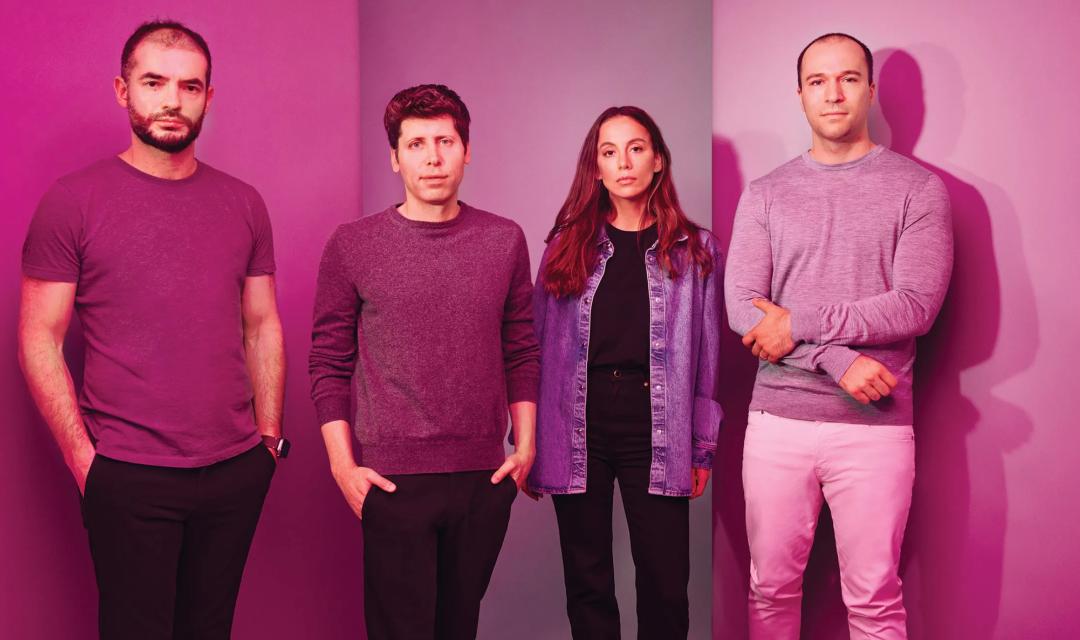
Sam Altman and the team
Meta's "Super Intelligence" Offensive and Targeted Talent Harvest
The most prominent feature of the talent flow in 2025 is Meta's systematic poaching of OpenAI's technical backbones.
Under the direct command of Mark Zuckerberg, Meta reorganized its AI department, established the "Meta Super Intelligence Laboratory," and with almost unlimited resources and an aggressive compensation strategy, has become the largest recipient of OpenAI's former employees.
Strategic Fulcrum: The Evolution from FAIR to MSL
Meta's strategic core in 2025 was to integrate its scattered AI forces, including the long - standing FAIR (Fundamental AI Research), the GenAI product group, and the infrastructure team, into a unified entity:
The Meta Super Intelligence Laboratory!
The mission of this department is very clear: to develop artificial general intelligence (AGI) and consumer - oriented "personal super intelligence."
To lead this ambitious plan, Meta hired Alexandr Wang, the founder of ScaleAI, as the Chief AI Officer.
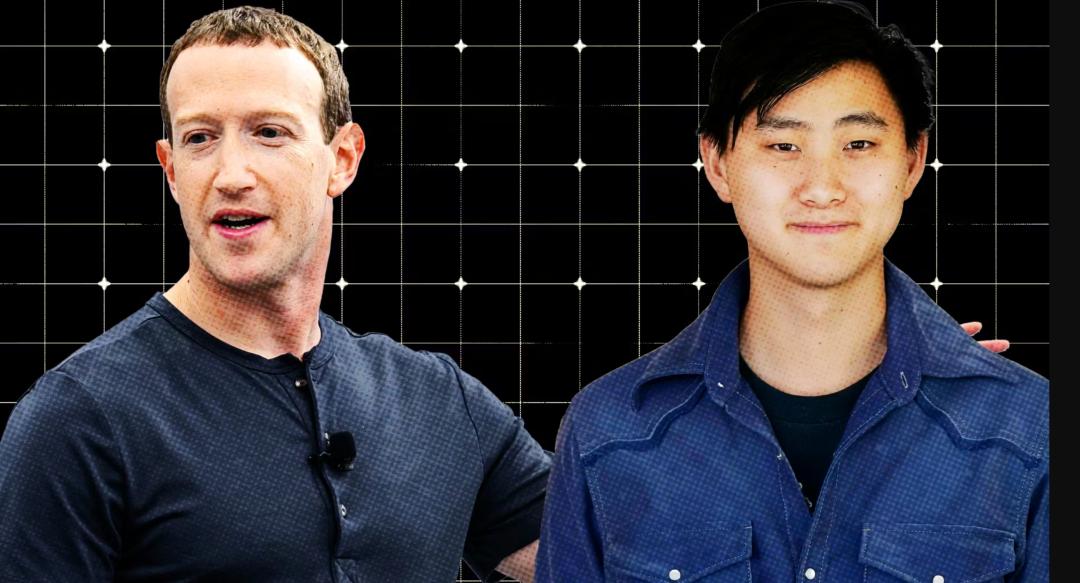
Mark Zuckerberg and Alexandr Wang
Wang's arrival brought a strong data - engineering mindset and the execution ability of a startup, which complemented the academic - oriented FAIR.
Under Wang's leadership, former OpenAI core figures such as Shengjia Zhao have been given a high degree of technical decision - making power.
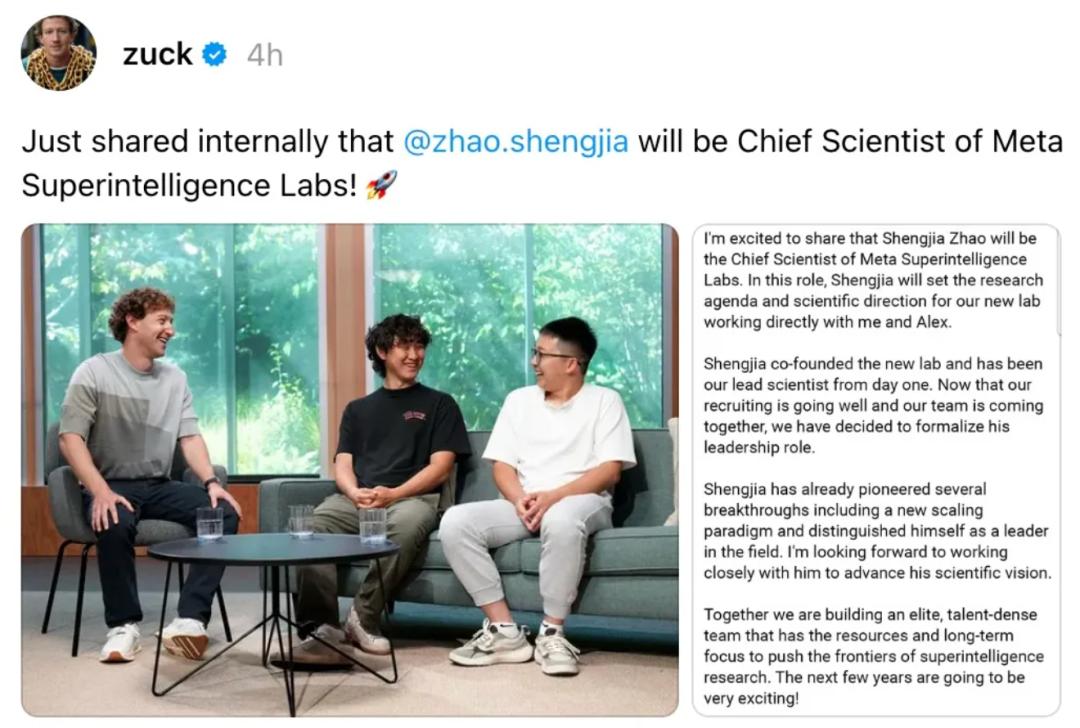
Mark Zuckerberg's social media
"Zuckerberg's Hunt"
According to multiple reports, Meta's recruitment offensive has a strong personalized touch.
Mark Zuckerberg not only personally sends emails to candidates but also carefully reads their research papers and even invites them to his home.
This kind of attention from the founder is extremely appealing to researchers who feel neglected in OpenAI's large bureaucratic system.
Mark Zuckerberg's list of key technical talents:
Meta is not poaching blindly but is conducting a surgical and precise strike against OpenAI's core technical moats: Inference, Multimodality, and Post - training.
Shengjia Zhao: The Architect Behind OpenAI's Large Models
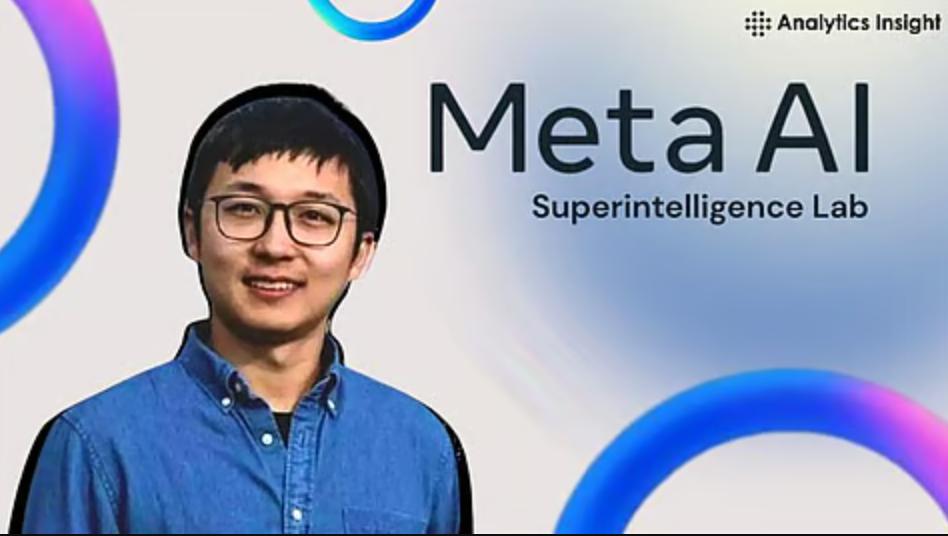
Shengjia Zhao
As one of the co - creators of ChatGPT and GPT - 4, Shengjia Zhao held a pivotal position at OpenAI.
He made groundbreaking contributions to the infrastructure of synthetic data and dialogue models.
In July 2025, he joined Meta as the Chief Scientist of MSL, reporting directly to Mark Zuckerberg.
This means that Meta has gained a top - level architect who has experienced the entire iteration cycle from GPT - 3 to GPT - 4, which can greatly accelerate the progress of the Llama series of models in logical coherence.
Jason Wei: The Father of Chain - of - Thought
Jason Wei is a well - recognized star in the field of AI research.
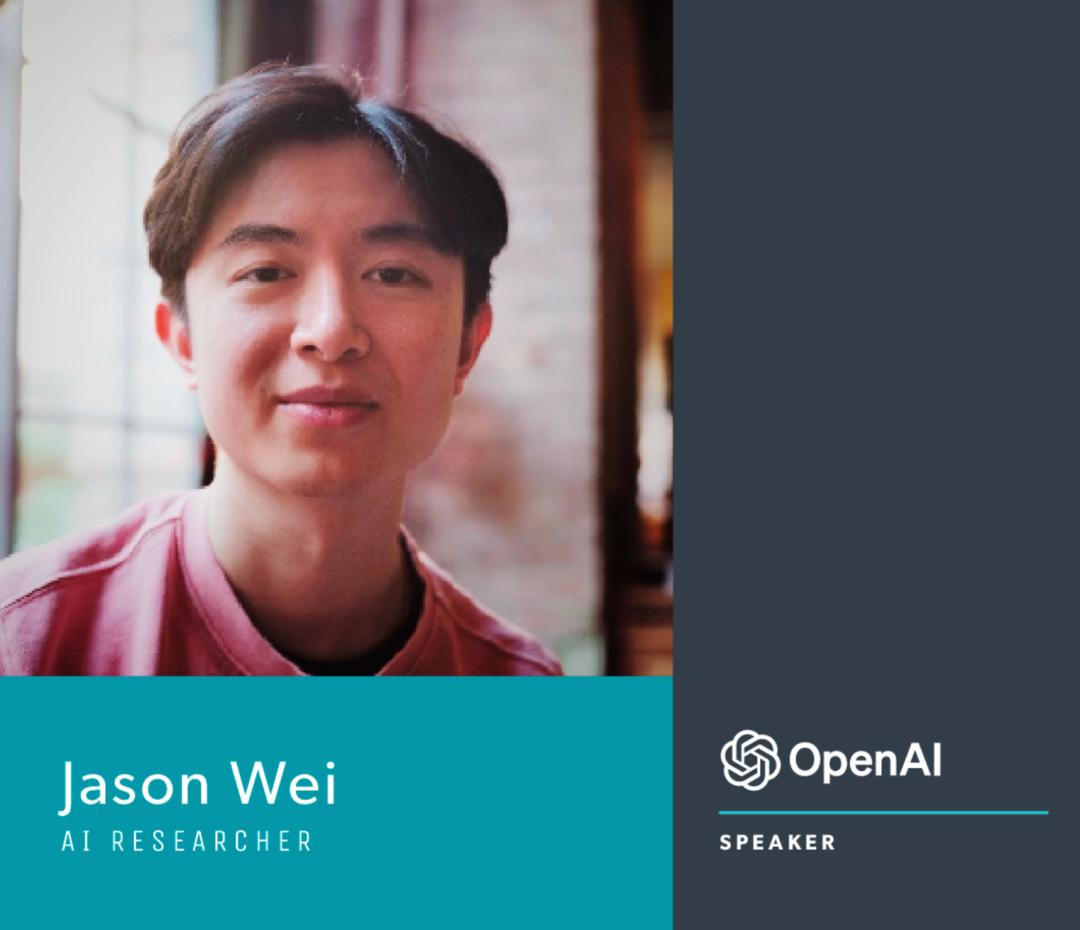
Jason Wei
During his time at Google Brain, he promoted the "Chain - of - Thought" prompt engineering, which fundamentally unlocked the complex reasoning ability of large language models.
At OpenAI, he was a key contributor to the o1 inference model and in - depth research models.
In July 2025, Jason Wei joined Meta.
Losing Jason Wei means that OpenAI has lost a pioneer with the most intuitive understanding of "how the model thinks," while Meta has obtained a key piece to catch up with OpenAI's o1 series of inference capabilities.
Trapit Bansal and the Strengthening of Reinforcement Learning
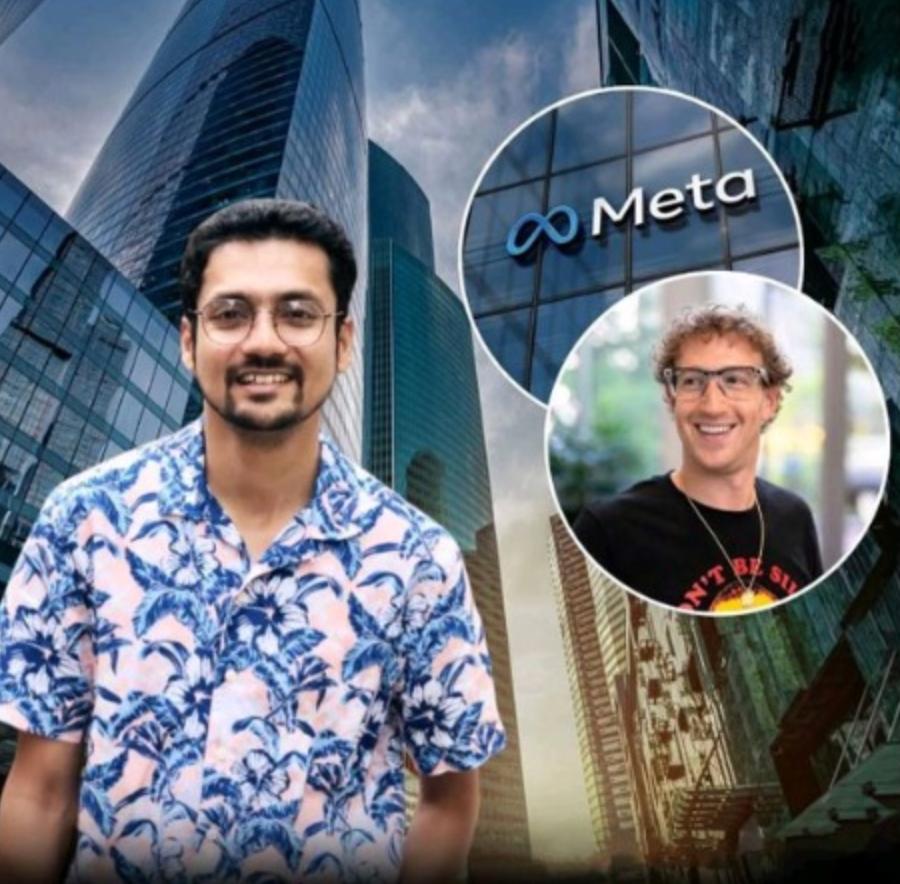
Trapit Bansal
Trapit Bansal is a senior researcher in the field of reinforcement learning at OpenAI and laid the foundation for the inference mechanism of the o1 model.
His joining indicates that Meta is fully committed to overcoming the technical challenges of the transformation from RLHF to more advanced self - play and reasoning reinforcement.
Jiahui Yu: Endowing AI with Vision and Hearing
Jiahui Yu
Jiahui Yu was the former head of OpenAI's perception team and played a core role in endowing large language models with image and audio processing capabilities.
The real - time voice dialogue and visual understanding capabilities of GPT - 4o are inseparable from the breakthroughs of the perception team.
Hongyu Ren & Shuchao Bi: Core Contributors to GPT - 4o
These two researchers are core contributors to the GPT - 4o (Omni) project, focusing on multimodal post - training.
Their departures occurred in the summer of 2025, during the critical optimization period after the release of GPT - 4o.
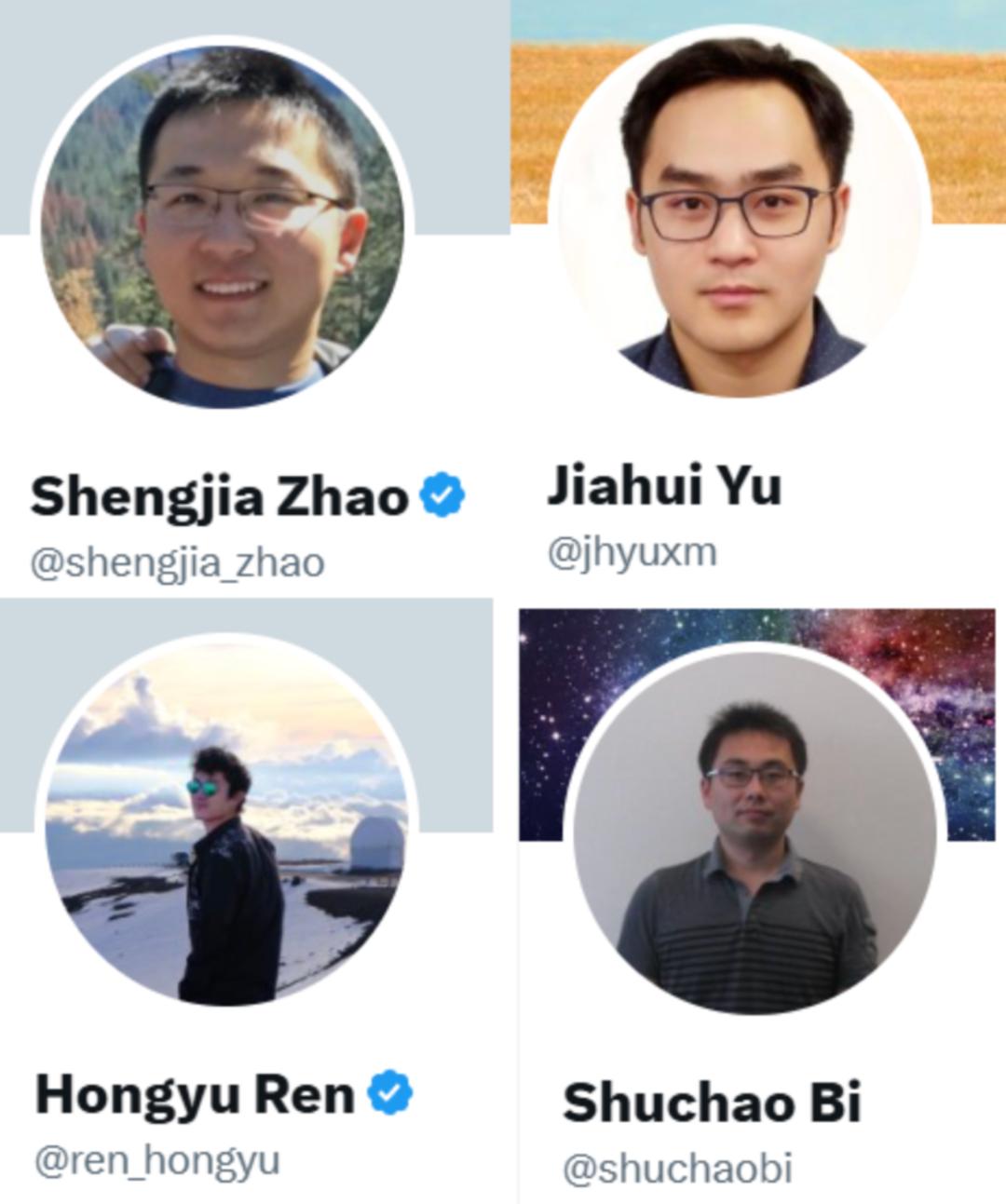
Hongyu Ren & Shuchao Bi
Perhaps the most shocking is the collective defection of the core members of OpenAI's Zurich office.
Lucas Beyer, Alexander Kolesnikov, and Xiaohua Zhai were originally colleagues at Google DeepMind and later jointly established OpenAI's Zurich branch.
They are titans in the field of computer vision, famous for developing the Vision Transformer (ViT) and large - scale image models.
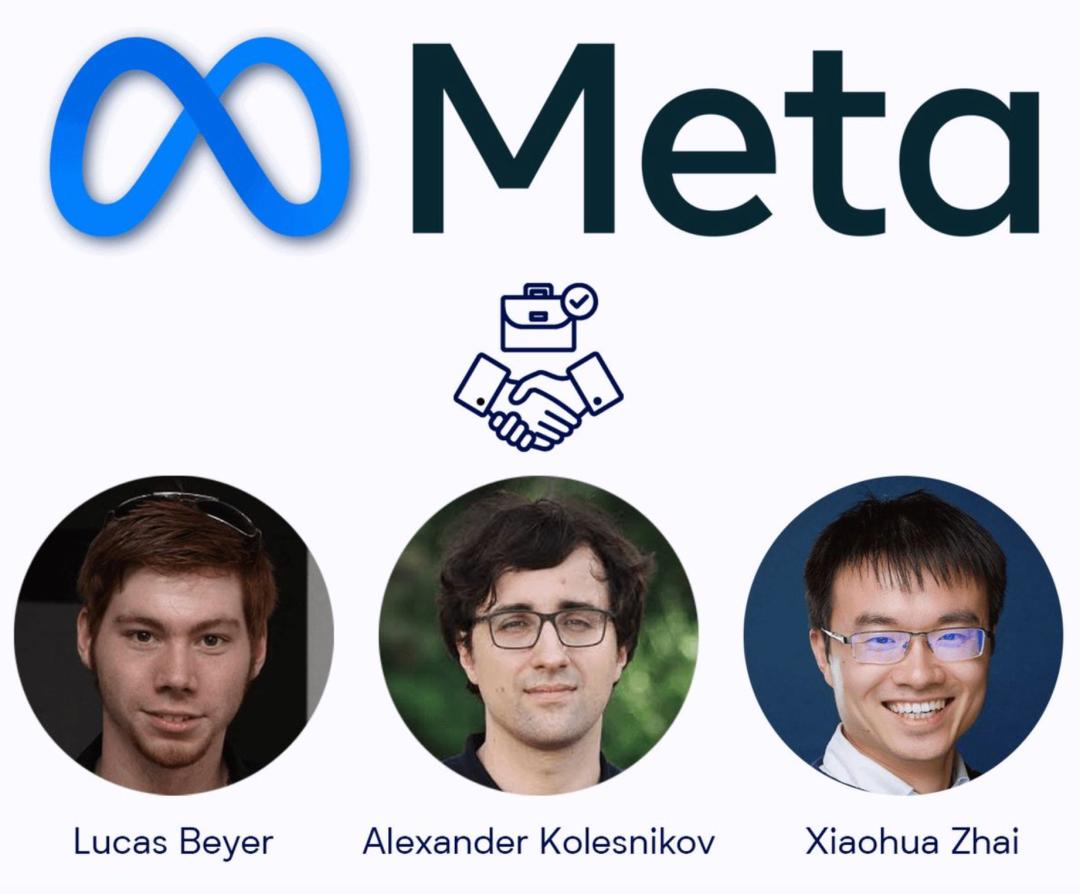
Lucas Beyer, Alexander Kolesnikov
This trio collectively joined Meta around June 2025.
Lucas Beyer confirmed the news on social media and said that he would continue to work in Zurich.
The Rise of "AI Scientists" and the Journey of Idealists
If the researchers who went to Meta are continuing to polish large models in another big company, then the departure of another group represents a more subversive divergence in technical beliefs.
The "empiricist school" led by Liam Fedus believes that large language models (LLMs) trained on Internet text have hit a "data wall," and the real next - generation AI must move out of the digital world and into physical laboratories.
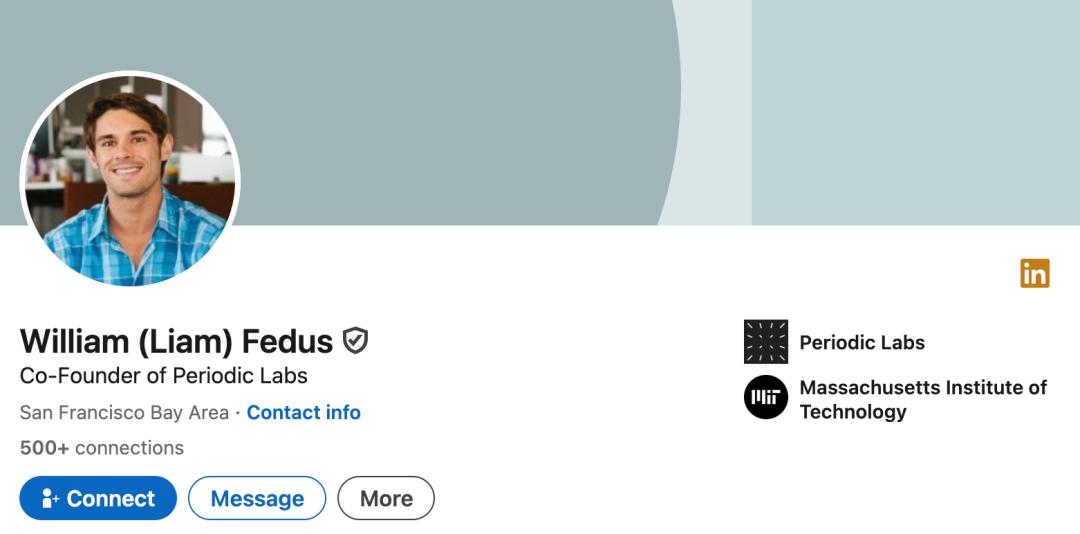
Liam Fedus
Liam Fedus was the former vice - president of research and the head of the post - training team at OpenAI.
His resume is extremely impressive: he is one of the core creators of ChatGPT, GPT - 4o