A key question that the national venture capital guidance fund needs to answer
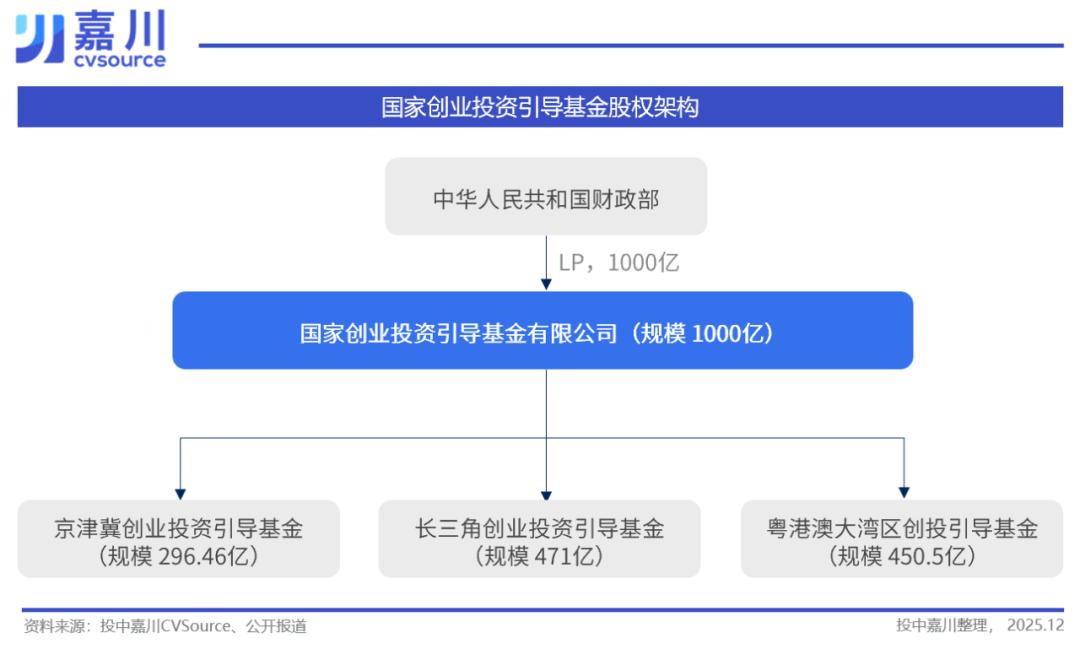
In March this year, the National Two Sessions announced the establishment of a "carrier - class" national venture capital guidance fund. Now, this fund and its three regional funds have officially set sail.
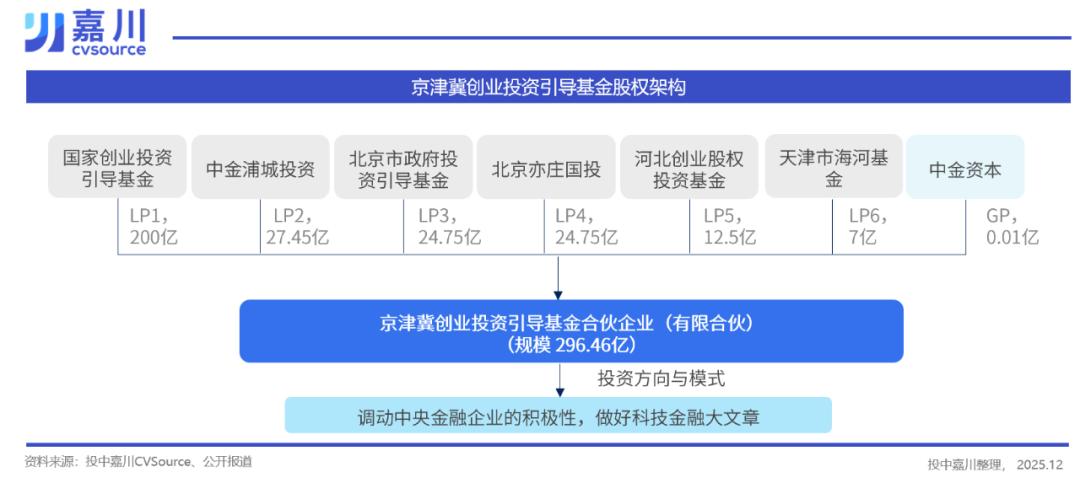
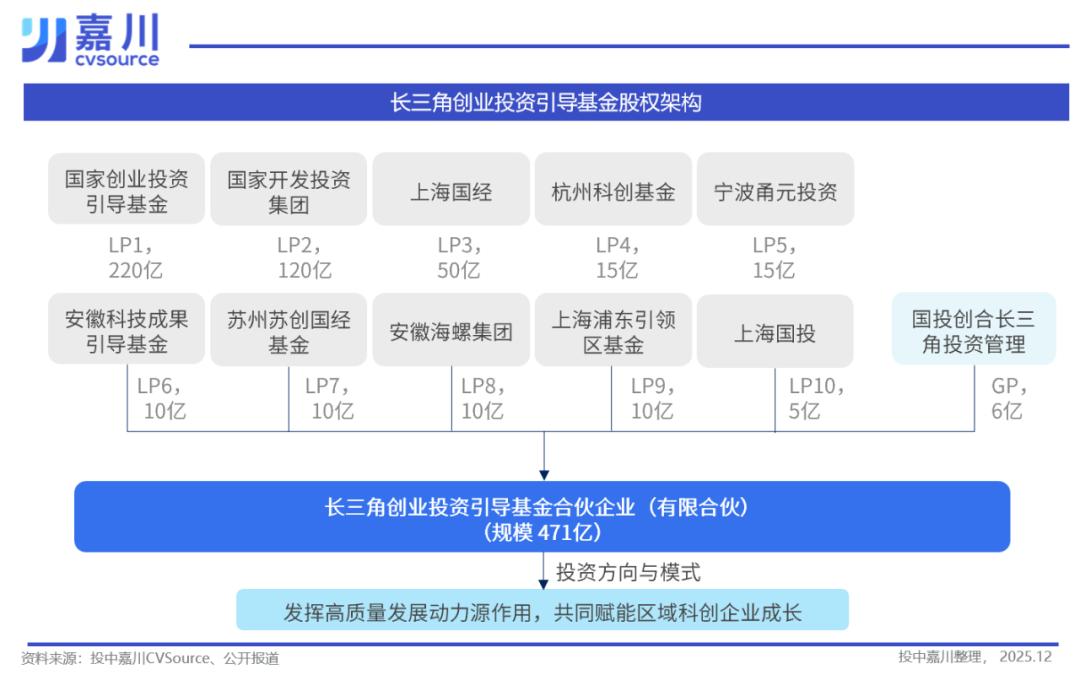
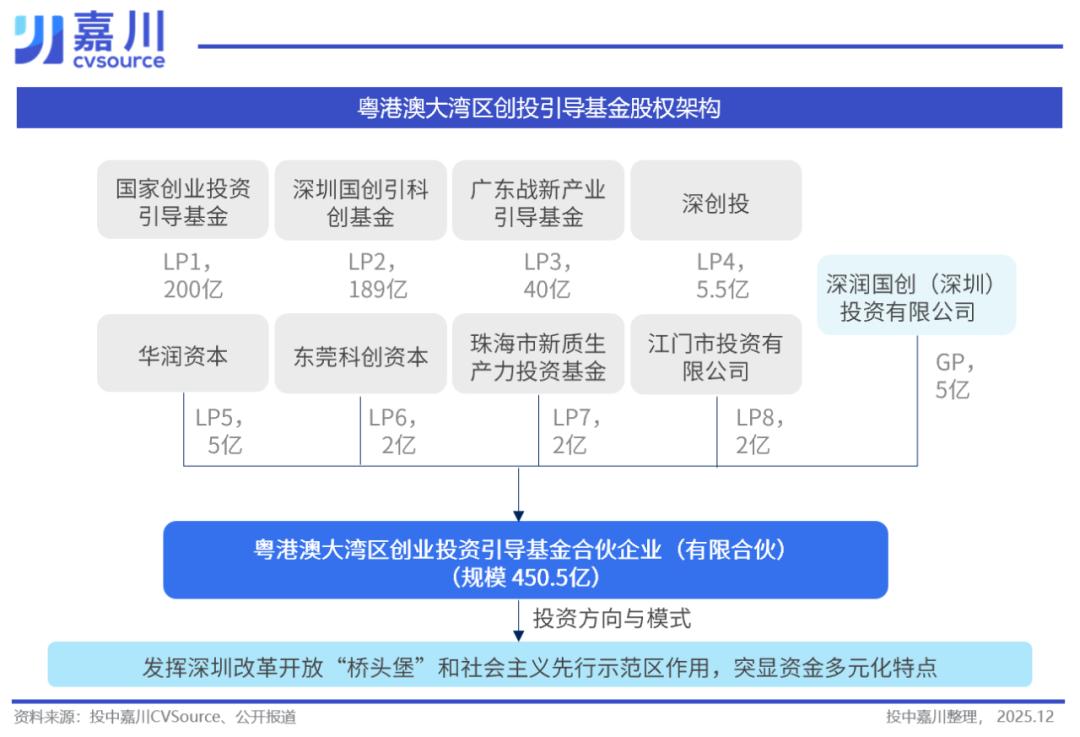
Among them, the registered scale of the Yangtze River Delta Venture Capital Guidance Fund reaches 47.1 billion yuan; the registered scale of the Guangdong - Hong Kong - Macao Greater Bay Area Venture Capital Guidance Fund is 45.05 billion yuan; and the registered scale of the Beijing - Tianjin - Hebei Venture Capital Guidance Fund is 29.646 billion yuan.
The total scale of the three funds exceeds 120 billion yuan, forming the "main fleet" of the first - batch implementation of the national venture capital guidance fund.
If we only understand this fund as an expansion of state - owned funds, it obviously underestimates its significance.
From the currently disclosed institutional design and operation details, we believe that what this fund really aims to answer is not just the question of "whether there is money" in the market, but a more crucial point: what kind of funds can be suitable for Chinese - style scientific and technological innovation.
Let's first look at a few key points.
First of all, the positioning of the national venture capital guidance fund is very clear.
The official has given four keywords, namely: early - stage funds, patient funds, market - oriented funds, and benchmark funds. These four positions correspond exactly to the current problems in the domestic primary market.
One is that the current venture capital industry has far from enough investment in early - stage and small - scale projects and lacks obvious motivation; the second is that the fund's duration does not match the growth cycle of early - stage enterprises; the third is that administrative requirements such as reinvestment and investment promotion interfere with market - oriented investment decisions; the fourth is that there is serious repeated investment in some tracks, but real long - term capital is still scarce.
Therefore, this time the "national team" enters the market with a clear goal, which is to solve the long - term problems in the venture capital industry.
Let's see how this carrier - class fund will invest.
The official press conference has elaborated on every aspect of "raising, investing, managing, and exiting" in detail. Moreover, it not only provides "qualitative" information but also gives "quantitative" data.
First, the duration is significantly extended. The guidance fund has a 20 - year duration, with a 10 - year investment period and a 10 - year exit period. For some industries with longer R & D cycles, such as innovative drugs, a longer - term cycle will be used for adaptation.
Second, it adheres to early - stage investment. For seed - stage and start - up enterprises, the investment scale will be no less than 70% of the total fund scale. The small enterprises to be invested are required to have a valuation of less than 500 million yuan, and the single - investment of the fund does not exceed 50 million yuan.
Third, the regional funds adopt the parallel model of "sub - funds + direct investment". For the first batch of three regional funds in Beijing - Tianjin - Hebei, the Yangtze River Delta, and the Guangdong - Hong Kong - Macao Greater Bay Area, in the future, investment will be carried out in the form of sub - funds plus direct investment. Among them, the investment in sub - funds is no less than 80%, and the direct - investment part emphasizes the synergy with the implementation of major national strategies by the guidance fund company.
Fourth, the regional funds do not act as the largest shareholder or the largest contributor in the sub - funds, reflecting the guiding nature of the policy. The sub - funds will operate in a market - oriented manner, and the investment in the seed - stage and start - up stage will be no less than 70% of the sub - fund scale. The average scale of sub - funds will not exceed 1 billion yuan.
Fifth, the assessment logic returns to the essence of venture capital. Especially in the management link, a assessment system in line with the laws of the venture capital market is established, focusing on the overall benefits and post - investment empowerment, rather than judging success or failure by a single project.
Sixth, in the exit link, a diversified exit system is established. In addition to IPOs, the guidance fund will strengthen communication and cooperation with private equity secondary market funds and regional equity markets, and strive to enrich and broaden exit channels to ensure the safety of funds.
From the above six points, it can be seen that after one - year preparation, the national venture capital fund has constructed a top - down and systematic investment and operation model. Because of this, it was able to quickly complete the signing with 49 sub - funds and 27 direct - investment projects. And according to the plan, the guidance fund will also promote the establishment of more than 600 sub - funds in the three regions in the future. Undoubtedly, this is the largest increment in the primary market so far.
Moreover, this increment is not only in terms of funds but also in terms of the system.
From the perspective of the innovation cycle, the 20 - year duration means that this fund no longer takes short - term returns as the primary goal, but matches the long business cycle required by scientific and technological innovation.
From the perspective of regional layout, the three regions of Beijing - Tianjin - Hebei, the Yangtze River Delta, and the Guangdong - Hong Kong - Macao Greater Bay Area almost cover China's most important scientific research resources, high - end manufacturing capabilities, and industrialization scenarios. By operating through regional sub - funds, on the one hand, it avoids the misallocation of resources under the "national overall plan", and on the other hand, it builds a clear cooperation framework between local governments, local state - owned assets, and national - level capital.
From the perspective of the investment model, the implementation of this fund means that "investing in early - stage, small - scale, and hard - technology projects" is moving from the past policy advocacy to the executable and sustainable capital level. It will not only directly affect the financing of early - stage projects but also reshape the risk preference and time dimension of the venture capital market through methods such as capital contribution, follow - on investment, and pricing anchor.
Therefore, the national venture capital guidance fund is not an expansion of the "mother fund" in the traditional sense, but a systematic institutional arrangement for national - level capital to participate in early - stage scientific and technological innovation in the long - term. In this sense, the implementation of the national venture capital guidance fund is not only the establishment of a group of carrier - class funds but also may become a milestone - like institutional innovation in the history of Chinese scientific and technological innovation and venture capital.
This article is from the WeChat official account "Beyond the J Curve", author: Yang Boyu. It is published by 36Kr with authorization.