What kind of future does the L3 road test launched by Hongmeng Smart Mobility lead to?
While the assisted driving circle is still debating whether L3 is a "compulsory" or "elective" course, the industry's first "admission ticket" has been issued.
Recently, the Ministry of Industry and Information Technology officially announced the first batch of access permits for L3-level conditionally autonomous vehicles. Meanwhile, Hongmeng Zhixing has also conducted road tests on the R & D of L3-level autonomous driving systems in places such as Chongqing and Hefei, and has applied it to the mass-produced models Zunjie S800 and Wenjie M9 under its brand for verification in real traffic environments on limited expressway sections.
From the leaked test videos, it can be seen that on eligible expressway sections, when the driver actively activates the L3 function, the system interface switches from "available" to the clearly marked "activated" and "navigating" states. When the system continuously performs dynamic driving tasks under limited conditions, the driver does not need to keep holding the steering wheel tightly, but must ensure timely takeover when necessary.
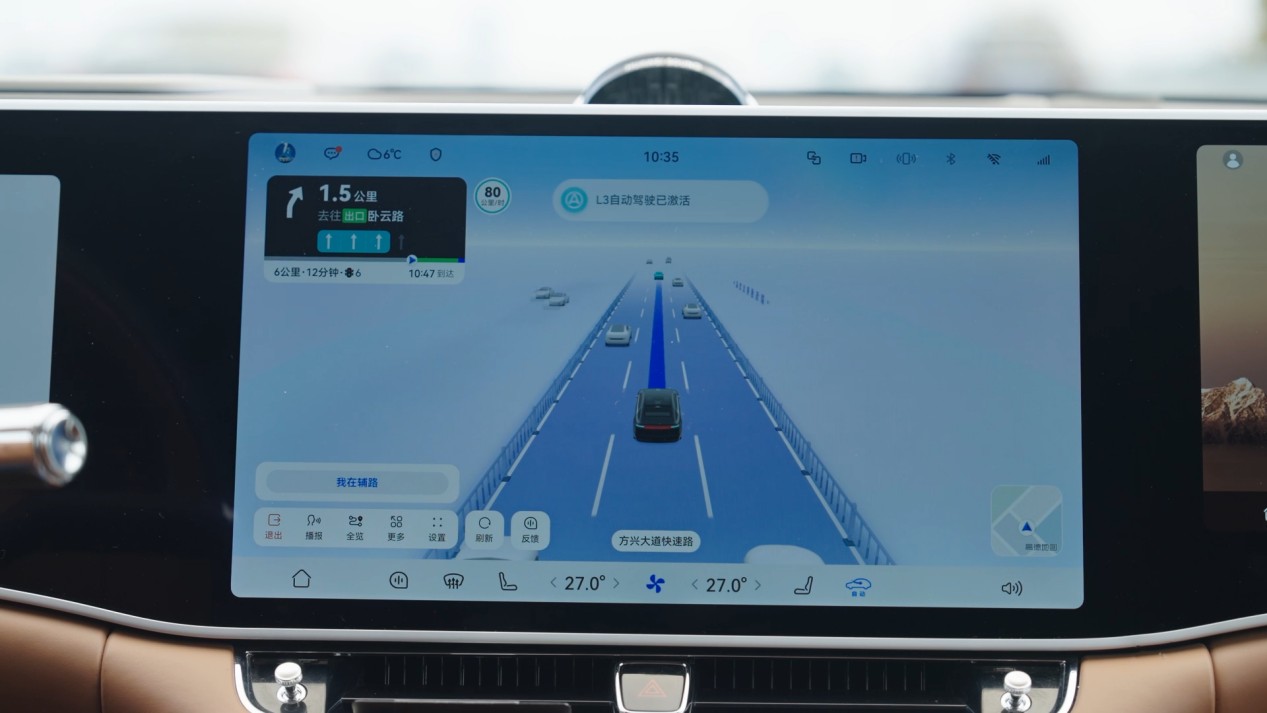
At a time when the policy window has just opened and the industry as a whole is still in a wait - and - see mode, why did Hongmeng Zhixing choose to be the first to introduce L3 into real - world road scenarios? More importantly, what exactly is it verifying, and what does it hope to leave for the industry?
In 2025, the difficulty of L3 is no longer about "being able to drive"
For a long time in the past, L3 has gone through a cycle of "technological enthusiasm". The industry's discussion once focused on computing power scale, sensor configuration, and an overly optimistic implementation schedule. However, the trend has now changed. From an industry perspective, increasing R & D investment in L3 is far more than just "being the first to launch" in terms of functions. It lies in the technological evolution route a company chooses.
Against the backdrop of increasing industry differentiation, a notable phenomenon is that many players have chosen to "slow down" or make strategic shifts. Some have even publicly stated that they will "skip" L3 and directly bet on the long - term L4 goal. However, this change does not mean that the technological value of L3 has declined. On the contrary, it exposes a more realistic problem: at the current stage, L3 can no longer be simply understood and developed as a "higher - level L2".
The difference between L2 and L3 essentially lies in the distinction between "assistance" and "replacement" in terms of rights and responsibilities. The core logic of L2 is "the human drives, and the system assists", and the responsibility always lies with the human.
On the other hand, L3 requires the system to be the main executor and primary responsible party for driving tasks under specific conditions. This forces companies to build a completely different full - stack safety engineering system centered on "system reliability", as well as redundant architectures and million - kilometer - level verification standards.
Under the current technological conditions, it is not difficult for a car to achieve a short - term "hands - off and eyes - off" demonstration on a closed section or in ideal weather. Many companies in the industry already have this ability. At the same time, the industry is also calling for the arrival of L3. According to official information from Hongmeng Zhixing, over 90% of its users use assisted driving every day. They are all looking forward to a more relaxed and intelligent driving experience and hope to turn their commuting time from being occupied to being disposable.
But the real tricky problems lie in engineering stability, system redundancy, and verifiability under long - term operating conditions. If these questions cannot be answered, no matter how smooth the driving performance is, it will be difficult for L3 to truly enter the "ordinary households".
Therefore, the key to promoting the development of L3 has shifted to another aspect: how to make L3 truly cross the gap from "function demonstration" to "users dare to use". To solve this problem, large - scale real - world road tests are the only way. In the "uncertainty" of the road, verify and refine the "certainty" of the system.
When the industry is generally hesitant, Hongmeng Zhixing's choice is not to debate, but to practice. It has put L3 on real roads to undergo high - intensity stress tests covering various weather conditions, lighting, and typical traffic scenarios, and directly face the challenges brought by innovation, including how to solve problems such as human - machine interaction, responsibility definition, and the long - tail effect.
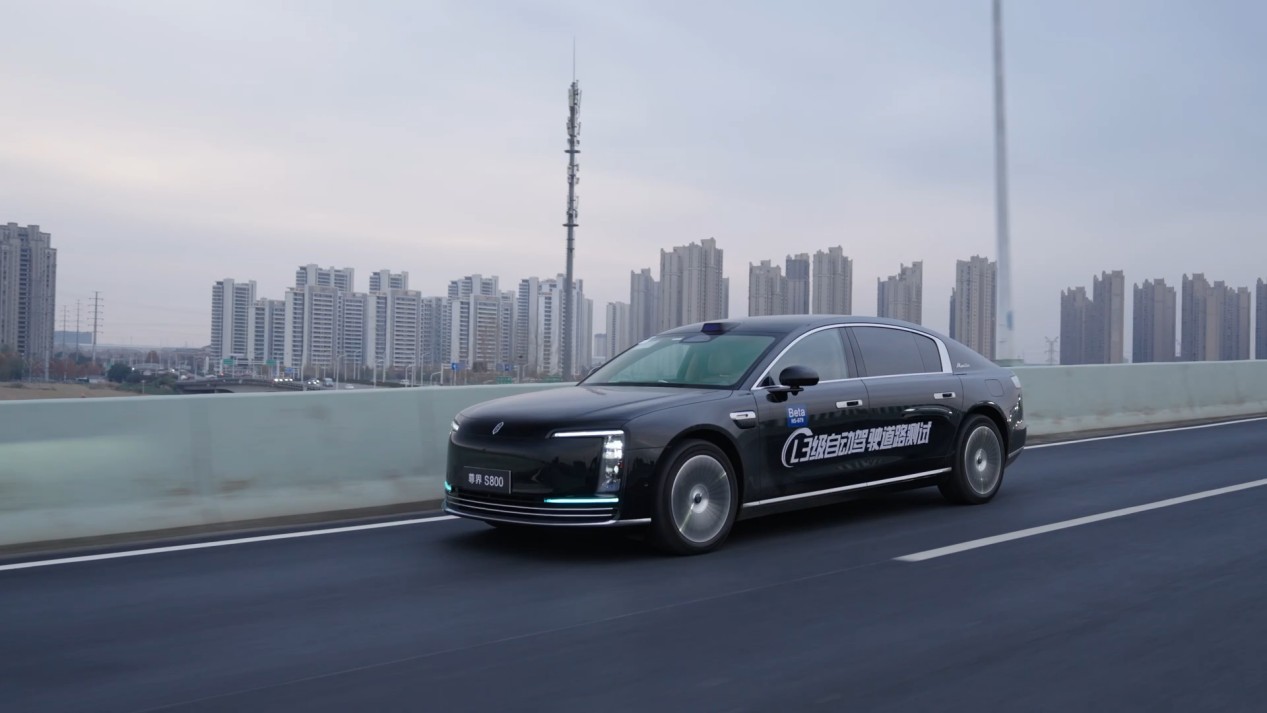
The company believes that the practical experience gained from real - world road tests will become an indispensable cornerstone for higher - level intelligent assisted driving. Therefore, this road test is not only about realizing current functions but also about building a continuous leading and smoothly evolving full - stack driving ability in the future.
Where is the upgrade of assisted driving heading?
The reason why the test videos of Hongmeng Zhixing's L3 have attracted industry attention is that they allow the outside world to directly see how the technical focus changes when the assisted driving system truly evolves towards "assuming the main driving tasks" under specific conditions.
In Hongmeng Zhixing's road test videos, after activating the L3 assisted driving, the vehicle can cruise autonomously in traffic, smoothly change lanes and overtake. When encountering a vehicle in front slowing down or cutting in, the assisted driving system can predict in advance and adjust the speed, showing a highly stable driving ability. At this time, the system continuously performs dynamic driving tasks under limited conditions, and the driver does not need to keep holding the steering wheel.
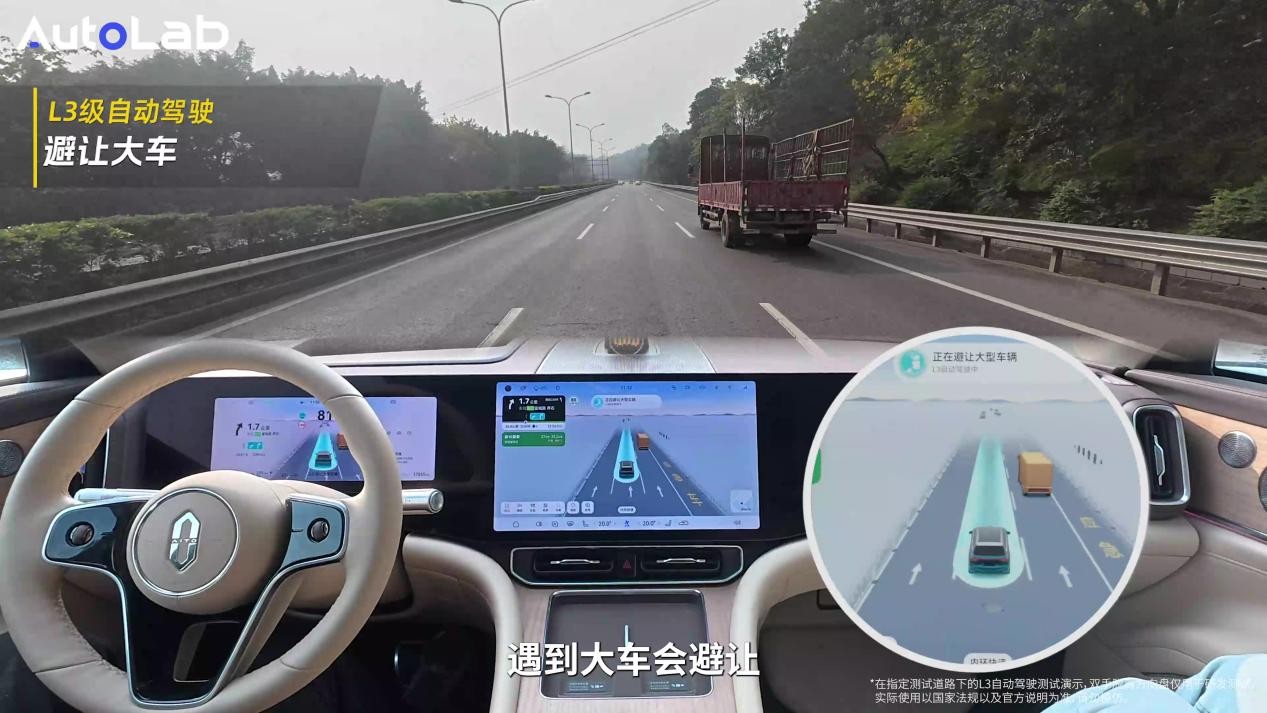
The reason why Hongmeng Zhixing dares to be a popularizer of L3 is closely related to the phased ability accumulation of its ADS 4. This assisted driving system has laid a "foundation" for L3, first achieving high enough stability in perception, decision - making, and execution, and then leaving room for the next - stage ability leap.
Hongmeng Zhixing's underlying advantage comes from its selected WEWA architecture. This architecture constructs a virtual "world model" through the collaborative work of the cloud - based world engine and the vehicle - end world behavior model. It is a deeply virtualized system that covers countless potential dynamics and complex environments.
Such a model can create more complex and changeable virtual driving scenarios than the real environment through efficient abstraction and training of real - world scenarios. This process allows the assisted driving system to gain experience in advance when facing extreme situations, rather than relying solely on real - time data and rule - based judgments.
For example, during driving, when facing complex and sudden traffic situations such as "sudden appearance of pedestrians" or "disappearance of the vehicle in front", the WEWA architecture enables the system to make judgments and take actions at a level closer to human "thinking" in an instant. Through repeated training and verification of these extreme situations, Hongmeng Zhixing's autonomous driving system can form continuously optimized decision - making ability to ensure its stable performance in complex scenarios.
In addition, real - world road tests provide the most direct data source for L3 technology verification. Every road test, especially the decision - making data of the system under complex boundary conditions, will be fed back to the WEWA architecture, further accelerating the iteration and optimization of the algorithm. Relying on this data - driven flywheel effect, Hongmeng Zhixing is building a moat that competitors can hardly cross in the short term.
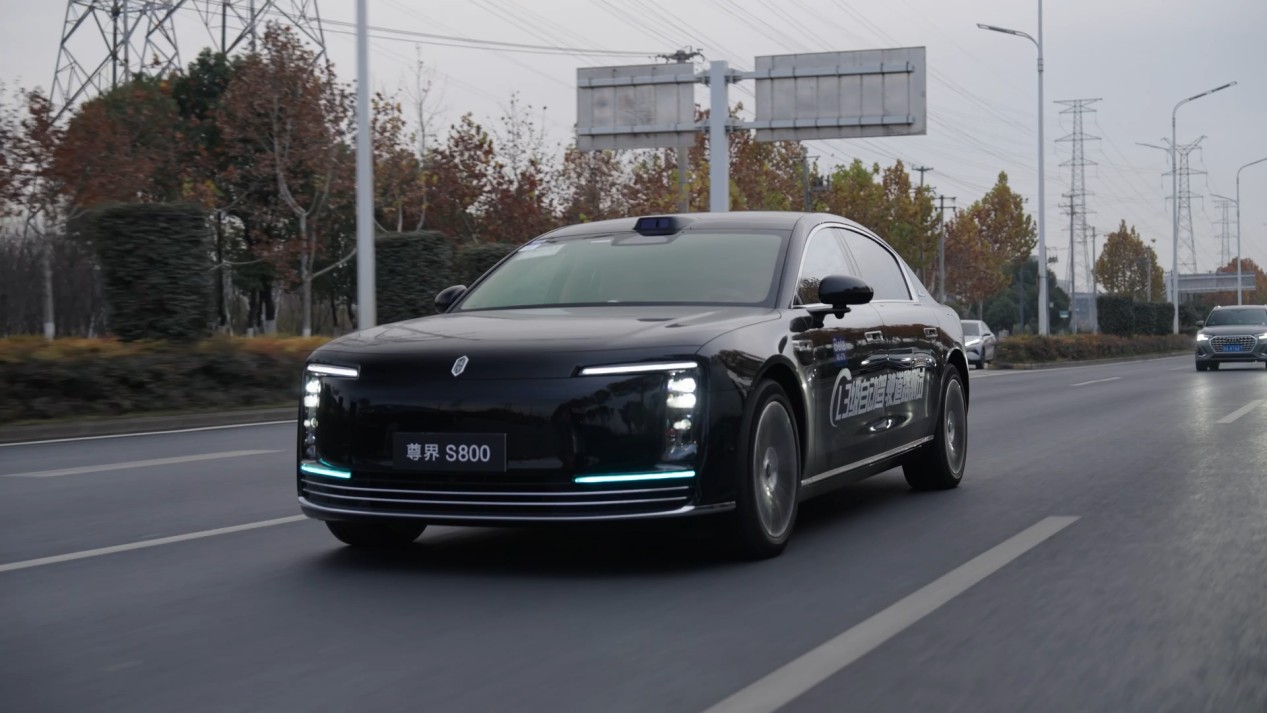
Among them, testing in the real environment of Chinese expressways is particularly important. Chinese expressways are one of the most challenging "test fields" for assisted driving systems in the world. In terms of climate, there are many heavy rains and dense fogs in spring and summer, and problems such as ice, snow, and slippery roads in winter. In terms of traffic ecology, a large number of long and irregular - shaped trucks, occasional scattered objects, and even sporadic wild animals crossing the road pose unique risks at high speeds, placing extremely high requirements on the vehicle's perception and decision - making at high speeds.
To this end, Hongmeng Zhixing has built a super - redundant perception array of multi - source heterogeneous sensors, including lidars that provide high - precision three - dimensional geometric perception and 4D distributed millimeter - wave radars that can enhance speed perception, penetration in bad weather, and static object recognition.
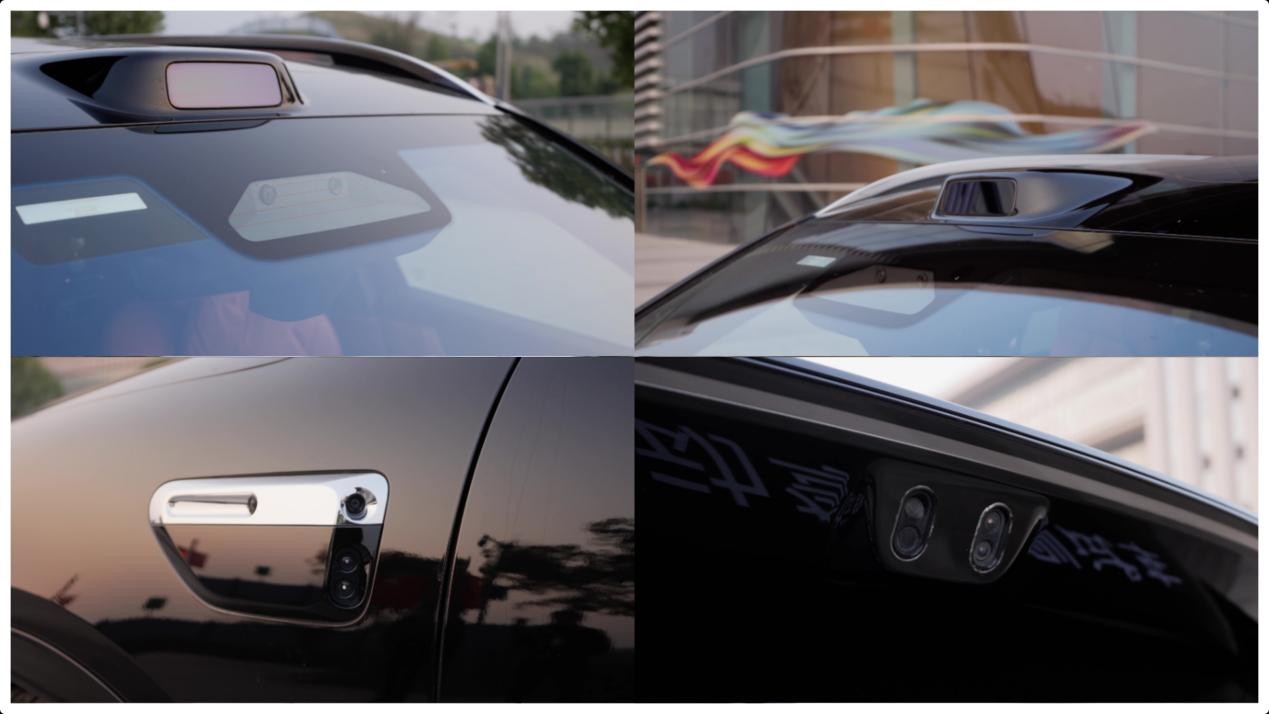
This system is deeply integrated with the full - dimensional anti - collision system CAS, aiming to achieve a complete "five - dimensional" safety ability: it not only provides full - speed protection covering forward (4 - 150 km/h), backward (1 - 60 km/h), lateral (30 - 130 km/h), and the active safety enhancement function eAES (50 - 135 km/h), but also realizes 360 - degree all - direction protection without blind spots.
At the same time, the system has the full - target perception ability to identify vehicles, pedestrians, two - wheeled vehicles, and various static obstacles, and can work stably around the clock under harsh conditions such as heavy rain, dense fog, and strong backlight, achieving full - scenario safety coverage from high - speed driving, urban roads to parking.
According to the latest ranking of lidar supplier installation volumes in the first eight months of 2025 released by Gasgoo, the Chinese lidar market has shown a significant concentration effect at the top. Among them, Huawei, which empowers Hongmeng Zhixing, ranked first with an installation volume of 643,800 units, and its market share climbed to 41.1%. The strong market share also fully shows that the technical system behind Hongmeng Zhixing has established a leading advantage in scale, ecology, and synergy that is difficult to replicate in the short term in the competition towards L3 - level assisted driving.
It is worth noting that some strategies formed during the R & D and testing of L3 can well empower the existing assisted driving system in reverse. For example, the driver disability assistance function derived from the minimum risk strategy of L3 has been pushed to mass - produced models through ADS4. When the driver falls asleep, faints, etc., the vehicle can actively take measures such as decelerating, changing lanes to the emergency lane, and turning on the warning lights, regardless of whether it is in the assisted driving or manual driving state.
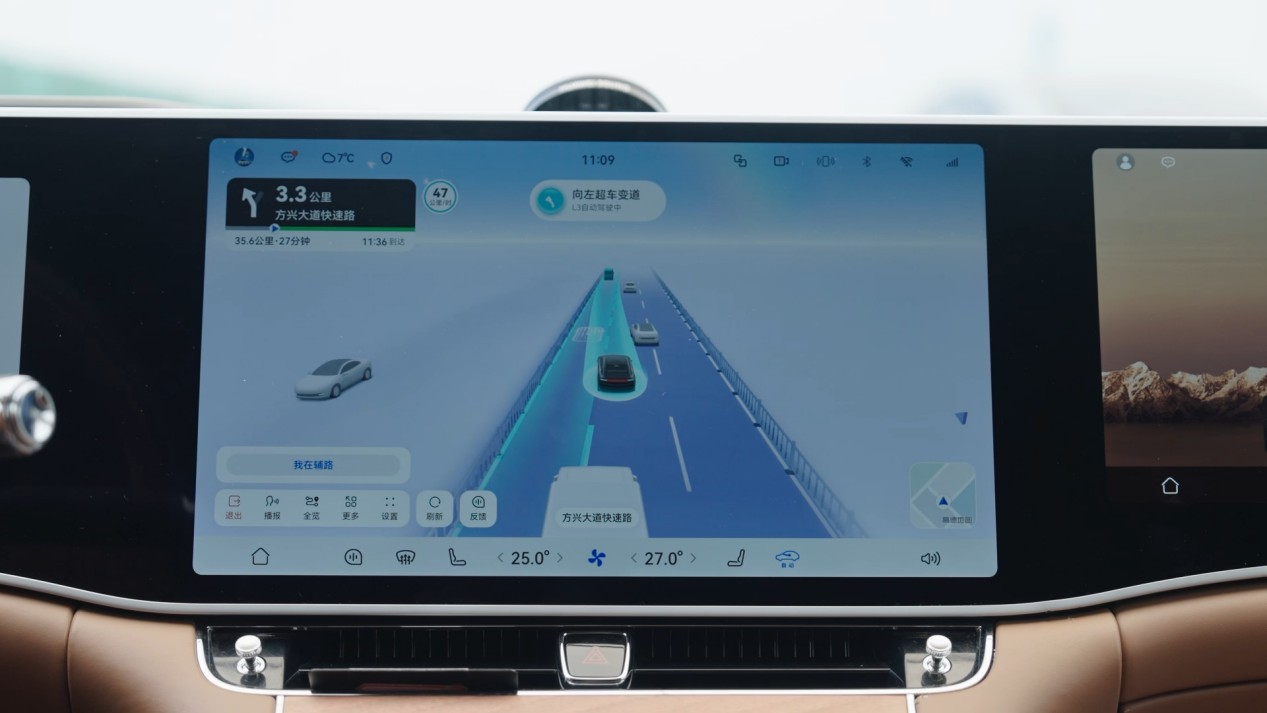
The technical thinking and safety redundancy design of L3 have begun to provide "bottom - line" protection for every trip of a wider range of users. It also shows from the side that Hongmeng Zhixing's promotion of L3 is using higher - standard engineering verification to reverse - lift the upper limit of the entire assisted driving system's ability.
Looking to the future, according to the data in the "Intelligent Connected Vehicle Technology Roadmap 2.0" of the Ministry of Industry and Information Technology and the industry white paper released by Deloitte Consulting, the market scale of Chinese L3 - level autonomous vehicles is expected to grow from 150 billion yuan in 2025 to 800 billion yuan in 2030, with a compound annual growth rate of 38.7% during this period.
Although we are still on the eve of the implementation of L3, looking to the future, a long - term, stable, and comfortable L3 experience will gradually build a deeper trust relationship between users and intelligent systems. Once this trust is established, it will form strong user stickiness and make users more willing to try and rely on other intelligent services provided by the vehicle.
Now, Hongmeng Zhixing is showing the industry and users how to solidly pave a reliable and popularizable assisted driving path.
In a marathon about "trust", Hongmeng Zhixing is leading the way
Looking back at the end of 2025, the competition in assisted driving has long since left the stage of competing for attention with parameters and concept videos. The access to L3 is more like a starting gun, marking that the competition has entered the "trust marathon" stage centered on system engineering capabilities, long - term data accumulation, and in - depth industrial chain collaboration.
Hongmeng Zhixing's early practice in the L3 track lies in answering a key industry proposition with solid engineering capabilities. When the technical ability of L2 assisted driving is approaching its upper limit and product homogenization competition is intensifying, how can the industry extend to the higher - level value area of "reliable travel".
According to the prediction of Southwest Securities, the policy closure will push the penetration rate of L3 from 30% in 2025 to 55% in 2028. The domestic market scale will exceed 1.2 trillion yuan in 2030, becoming another trillion - level track after new - energy batteries. Therefore, Hongmeng Zhixing's courage to be the first is not only to find a differentiated fulcrum for itself but also to explore a sustainable evolution route from technological breakthrough to scale verification for the industry in the role of a "chain leader".
As the industry enters the first year of L3 access, Hongmeng Zhixing is answering a more fundamental question - how "reliable" a car do we need to dare to let go of our hands on the expressway and entrust our safety with peace of mind? All the efforts are about enabling technology to liberate humanity while opening up a mobile future full of possibilities. And this test is making this foreseeable future clearer and clearer.