Minimalist innovation or a fatal hidden danger? Tesla's hidden doors face scrutiny.
The hidden door handle design, once a pride and iconic feature of Tesla, is now facing unprecedented doubts from regulatory authorities and the public. Is this avant - garde and cool minimalist design a necessary innovation or a deadly hazard?
Regulatory investigations are advancing steadily
On Monday this week, the National Highway Traffic Safety Administration (NHTSA) in the United States announced a defect investigation into the emergency door release mechanism of Tesla Model 3. This investigation involves approximately 180,000 2022 - model - year Model 3 cars.
It should be emphasized that according to the NHTSA's process, this investigation is currently in the stage of receiving complaints and conducting a defect investigation. In the next three to six months, NHTSA will conduct a technical assessment, collect and review data related to the problem, determine the frequency of the problem, evaluate the severity of the risk, and finally decide whether to launch a formal investigation.
Even more shockingly, Bloomberg has released a major investigation into Tesla's hidden door handles. The investigation found that in the past decade, at least 15 people died after car accidents because they were unable to open Tesla's doors, and more than half of these deaths occurred in the past year.
This innovation, once regarded as a revolution in automobile design, is now evolving into a crisis of trust. Whether the hidden door handles have a deadly hazard remains to be determined by regulatory authorities in the United States and around the world.
The latest investigation by NHTSA stems from a complaint by a Tesla owner, Kevin Clouse. In 2023, his Model 3 caught fire while driving. But he couldn't find the hidden mechanical emergency door handle and was forced to kick out the rear - seat window to escape.
Clouse, who survived the accident, filed a complaint with NHTSA. He wrote, "I didn't know the location of the hidden mechanical emergency door handle because it wasn't clearly marked, and there was no explanation when I took delivery of the car. I couldn't find it immediately in an emergency. I was forced to crawl to the back seat and kick out the rear - passenger window to escape when the car was on fire." As a result, he suffered serious leg injuries.

In fact, this is not the first time NHTSA has investigated Tesla's door handle problems, and it's not just the Model 3 that has issues. In September this year, the agency launched an investigation into the door handles of the Model Y after receiving 16 reports of external door handle malfunctions caused by low voltage in the 12 - volt battery.
Last month, NHTSA expanded the scope of the investigation and asked Tesla to provide detailed records of all systems related to door handles, door locks, 12 - volt batteries, software, etc., for Model 3 and Model Y vehicles between 2017 and 2022. If Tesla fails to respond in a timely, accurate, and complete manner, it may face a maximum fine of $27,000 per day, with a total maximum of up to $139 million.
As of 5 pm local time in the United States on December 25th, Tesla has not publicly responded to this matter, nor has it replied to media requests for comments. Tesla's stock fell 1% on Wednesday, with a market value of over $1.6 trillion.
Deadly cases are shocking
Bloomberg's in - depth investigation is even more shocking, revealing the severity of the door handle problem. These accidents involve almost all Tesla models because they are all equipped with hidden door handles.
The investigation team obtained data on all fatal electric - vehicle accidents involving fires between 2012 and 2023 provided by NHTSA, independently investigated cases in 2024 and 2025, and confirmed through cross - referencing local news reports, law - enforcement statements, court documents, accident photos, 911 recordings, and police body - camera videos that at least 15 deaths in 12 accidents were due to the inability to escape because the door handles malfunctioned.
In November 2024, in Verona, Wisconsin, a Tesla Model S crashed into a tree and caught fire. The driver, Barry Sievers, and four other passengers all died. A nearby resident called 911 after the accident and clearly stated in the call that she saw the car on fire and heard screams inside the car.
In a lawsuit filed by the victims' families, a report from the local sheriff's office shows that the remains in the front seats indicate that there may have been a struggle to escape. The lawsuit alleges that two of the victims survived the initial impact but were trapped inside the car because the door handles malfunctioned and eventually died in the rapidly spreading fire.
In the same month, in Piedmont, in the San Francisco Bay Area of California, a Tesla Cybertruck crashed into a tree and a wall and caught fire. Three college students in the car died, and one survived. This was the first fatal Cybertruck accident, and the direct cause was that the driver had consumed alcohol and drugs at a party, causing the vehicle to lose control.
But the three college students did not die directly from the impact of the accident. According to autopsy and fire - department reports obtained by The Washington Post, they died from the fire after the vehicle collision, including smoke inhalation and "thermal injury" (i.e., being burned to death). The surviving student was pulled out of the window after someone broke the window with a stick.
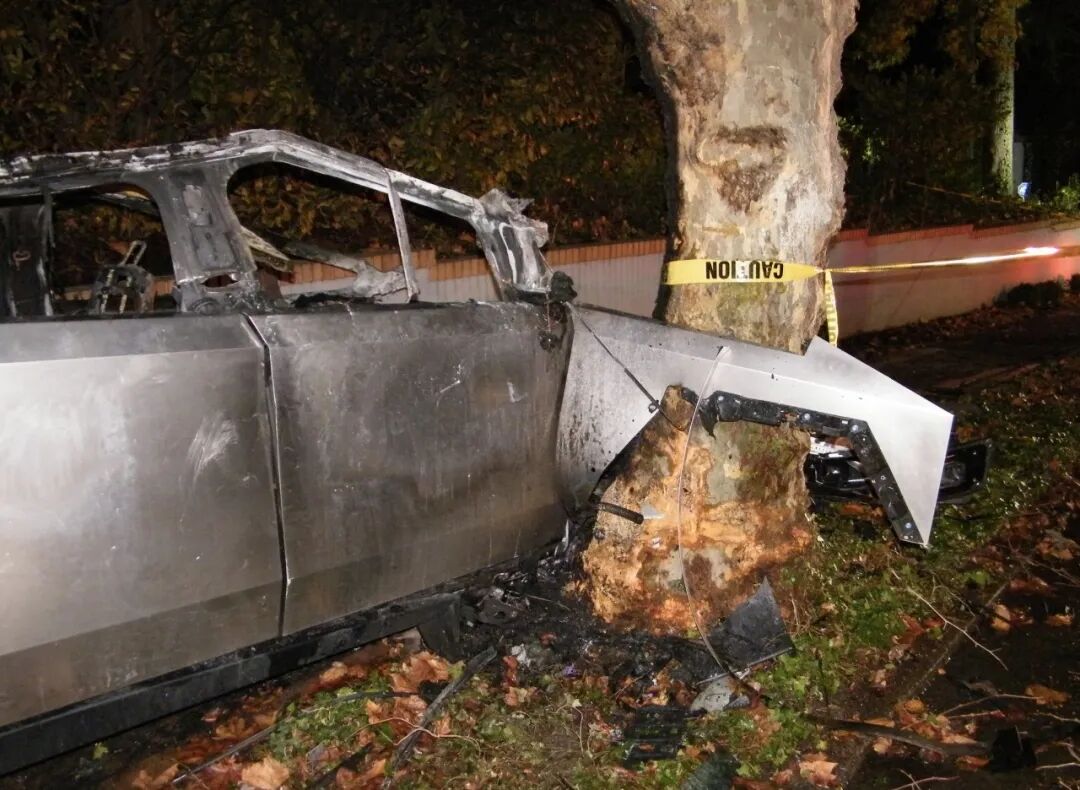
Photos of the accident scene also show that there are pry marks on the Cybertruck's doors because firefighters once tried to force - open the doors to enter the vehicle. The lawyer for the victims' families pointed out in the lawsuit that the victims did not die from the impact itself but suffocated because they were unable to escape from the burning vehicle after the impact, and the malfunctioning door handles were the key factor that trapped them inside the car.
In December 2023, in Leesburg, Virginia, a Model Y lost control in the rain and crashed into the roadside. The vehicle lost power, and all electronic door handles malfunctioned. The driver lost consciousness in the impact, and the passengers didn't know how to use the mechanical emergency release device and were trapped inside the car. Fortunately, this Model Y did not catch fire.
A passing couple immediately stepped forward to help, but they also couldn't open the doors. They and the arriving police even had to turn on their phones and search on YouTube for how to open Tesla's emergency release device. The police finally used a unlocking tool to pry open the rear - seat window, reached inside to access the driver's door release device, and opened the door to rescue the two people.
Musk advocates minimalist aesthetics
Why did Tesla choose the hidden door handle design? Bloomberg's investigation also reveals the story behind the decision.
In early 2016, Tesla's design and engineering teams were busy finalizing the final design of the Model 3. At that time, Model X owners had already complained about malfunctioning buttons and sensors. There was a fierce debate within the team about whether the Model 3 should use electronic door handles or mechanical door handles like other manufacturers.
According to multiple current and former Tesla employees interviewed by Bloomberg, Elon Musk is an admirer of Steve Jobs' design philosophy. He really appreciates Apple's iPhone and believes that its simple, software - driven touch - screen interface is far superior to the BlackBerry phone with numerous buttons. Musk wanted the Model 3 to have a similar futuristic design, and everything in the new car should be electronically controlled through buttons or touch screens, including the doors.
One person involved in the discussion revealed that the team had warned about the safety hazards of the door handles in emergency situations, but Musk insisted on his opinion and finally decided to use the hidden door handles.
He once explained his design philosophy in 2021, "I think in general, all inputs are mistakes. If you have to do something that the car could do automatically, it should be handled by the software."
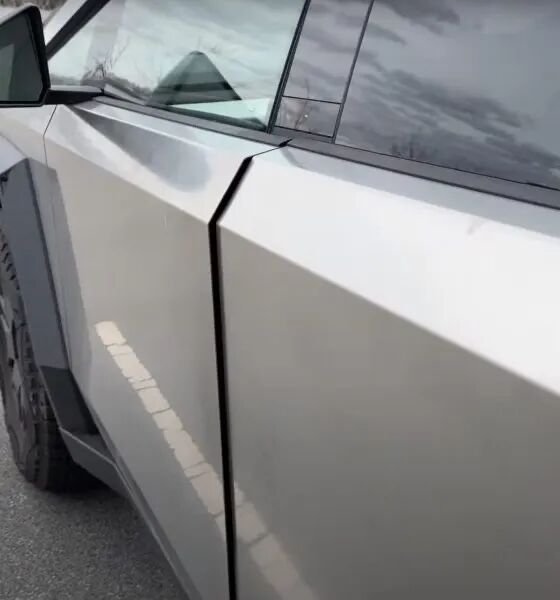
His philosophy is reflected in almost every Tesla model. The Model S pioneered the automatically retractable door handles: when the owner approaches, the door handles pop out of the door and retract automatically when the owner leaves. The Model X takes it a step further, with the front doors able to open automatically after sensing the key or mobile phone. The Cybertruck even completely eliminates the door handles and uses a button in the bottom corner of the window to open the door.
Tesla and its supporters once claimed that hidden door handles can improve aerodynamics, reduce wind resistance, and increase the driving range. This was regarded as an important technological advantage in the era of electric vehicles.
However, research by the automotive industry research institution SAE shows that the impact of hidden door handles on aerodynamics is minimal, only reducing the drag coefficient by 0.01, which is equivalent to saving about 0.6 kWh of electricity per 100 kilometers. At the same time, the additional weight of the motors, actuators, and related mechanical structures may offset the aerodynamic benefits.
Perhaps Tesla's insistence on using hidden door handles is just because of Musk's minimalist aesthetics, making Tesla look cooler. In his own words, he hopes users will feel "you're part of the future."
The industry follows the trend of door design
In 2012, with the Model S, Tesla first used hidden door handles. As a leader of the cool - style in the automotive industry, this design of Tesla quickly became an iconic feature of electric vehicles and luxury cars.
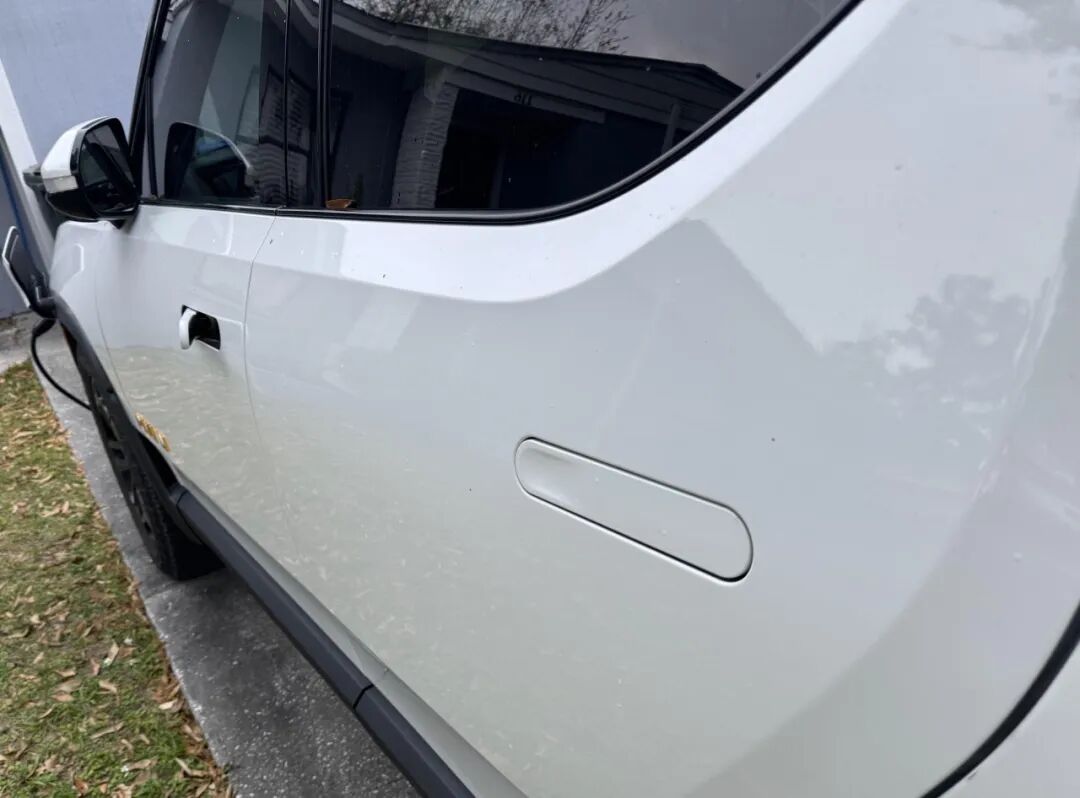
According to industry analysis, there are currently about 70 models in the US market that use electronic door handle technology, including Rivian's pickups, multiple Land Rover SUVs, Porsche 911 and Taycan, Audi, Fisker Ocean, Ford Mustang Mach - E, etc.
The same trend is also seen in Chinese new - force models. Data from early 2025 shows that nearly 60% of the top - selling 100 new - energy vehicles in the Chinese market use electronic door handles. For a while, it seems that electric vehicles without hidden door handles are the outliers and niche.
Why do so many car manufacturers follow Tesla's hidden door handle design? Perhaps there are several factors:
1. Luxury and differentiation. In the high - end car market, unique design is a key purchasing factor, and hidden door handles provide visual appeal that differentiates from traditional models.
2. Technological coolness display. Hidden door handles can be combined with advanced features such as keyless entry and automatic display systems, which fits the future image of smart cars.
3. Declining popularization costs. With the maturity of production technology and the realization of economies of scale, the cost of hidden door handles has dropped significantly and has expanded from being exclusive to luxury cars to mainstream models.
Safety experts don't agree
In fact, industry safety experts and engineers have long criticized hidden door handles, but their views didn't gain enough recognition until recently when many accidents attracted the attention of regulatory authorities.
Phil Koopman, a professor in the Department of Electrical and Computer Engineering at Carnegie Mellon University in the United States, is a well - known expert in the field of autonomous driving safety and a senior in ergonomics. He has publicly criticized Tesla's door handle design.
"As a computer expert who has spent a lot of time studying human - factors engineering, I can't imagine how anyone would create a consumer product that requires a manual to save lives. An ordinary person sitting in the back seat of a Tesla, trying to use those mysterious emergency escape systems, and some cars don't even have markings. You can't expect an ordinary person to get it right in that (emergency) situation."
Keith Barry, an automotive safety journalist from the US industry institution "Consumer Reporter", once published a detailed usage guide to teach car owners how to escape when the electronic door handles malfunction. But he also pointed out that these hidden door handles bring many difficulties to car owners in emergency situations.
He pointed out, "Unlike the simple and familiar mechanical latches, the external door handles of current cars are usually flush with the door and require a motor to open. Inside many new cars, the door handles have been replaced by buttons that require electricity and a motor to work. Even worse, if the car loses power or is in a collision, these electronic handles may not work. Although there are internal manual emergency release devices, they may be difficult to find or operate - especially when passengers are in a panic during an emergency."
Merick Lewin, a well - known lawyer in the field of automotive product liability in the United States, directly pointed at the Tesla Cybertruck in an interview. "When you market a car as being almost indestructible, and even claim at the product launch that it can't be broken by a hammer and can block bullets. But when you market it like this, you should obviously think about: in case of a collision, how can rescuers open the doors to save people?"
Tests by the China Automotive Insurance Safety Index (C - IASI) show that the success rate of door opening in side - impact collisions for vehicles equipped with electronic door handles is only 67%, far lower than the 98% of traditional mechanical door handles. The National Accident Investigation System (NAIS) reported that accidents caused by door handle malfunctions increased by 47% in 2024, and hidden door handles accounted for 82% of these accidents.
Tesla's attempt to remedy the situation
Facing increasing public criticism and regulatory pressure, Tesla has started to take some remedial measures, but many experts believe these measures are far from enough.
In September 2025, Tesla's design director, Franz von Holzhausen, revealed in an interview with Bloomberg that Tesla is redesigning the door handles and plans to integrate the electronic and mechanical door release mechanisms into one device. He admitted that this decision is aimed at making it easier for passengers to open the doors "in a panic situation."
Although Tesla has not directly admitted that its previous design had safety defects and that it needs to take responsibility, nor has it mentioned whether it will recall the vehicles, this statement undoubtedly indicates that they have realized that the hidden door handles are not conducive to passengers' escape in car - accident situations.
Moreover, Tesla just updated its safety page on the website last week. "When you're inside a Tesla and a severe collision is detected, your hazard lights will automatically turn on, your doors will automatically unlock, and in some regions, your vehicle will automatically call 911 and transmit information to the operator so that emergency services can arrive as soon as possible."
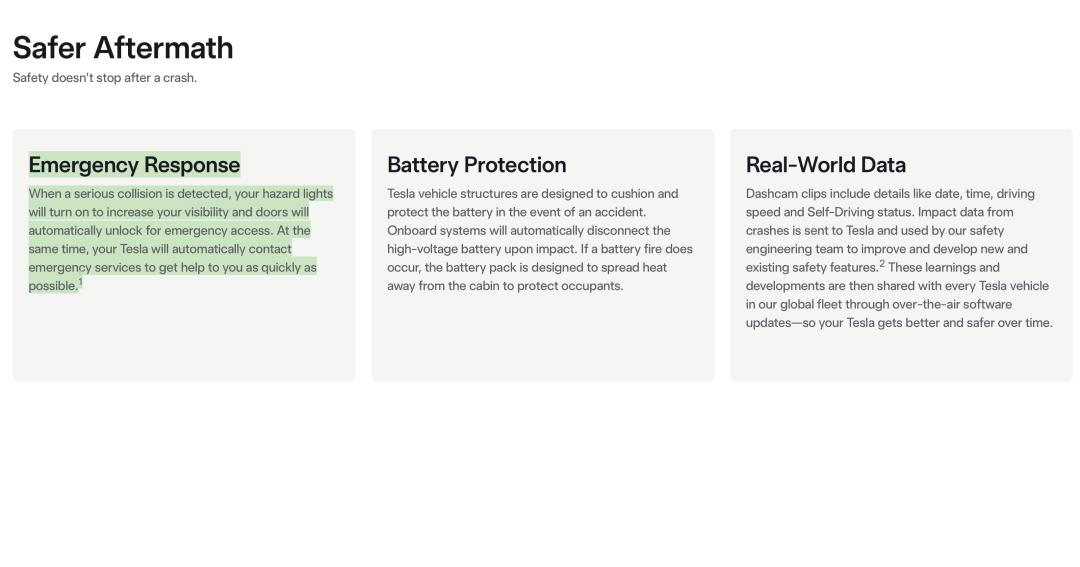
But this important safety update was not actively notified to car owners and was quietly placed on the website. Most car owners don't even know about this change. Moreover, Tesla has not disclosed whether all vehicles can automatically unlock. "The function may not be available in all regions or for all vehicles, or it may depend on the manufacturing date."
For different Tesla models, the locations of the mechanical release devices vary. For the front doors, they are usually near the electronic switch buttons, in front of the window switches. But the emergency release devices for the rear doors are usually hidden behind something (the part where the original text was