Understand in 5 charts: Why has the choice become more complicated after domestic products have become part of daily life? | 36Kr's Annual In - depth Review ⑦
The "Perspective" section specially planned the "36Kr Annual Perspective" series at the end of the year, using data to analyze the trends throughout 2025 and presenting the must - see highlights in this year's business world through pictures.
This is the 7th installment of our content.
Author | He Zhexin
As "Made in China" products have evolved from a sentiment into the backdrop of daily life, the Chinese consumer market is experiencing a quiet yet profound power shift.
According to Euromonitor data, from 2012 to 2024, in 27 fast - moving consumer goods categories including skincare and makeup, the market share of domestic brands has steadily risen from 66% to 76%. Especially in the apparel and footwear sector, 2025 will mark a historic turning point: domestic brands are expected to account for 50% of the market, officially sharing the market equally with foreign brands.
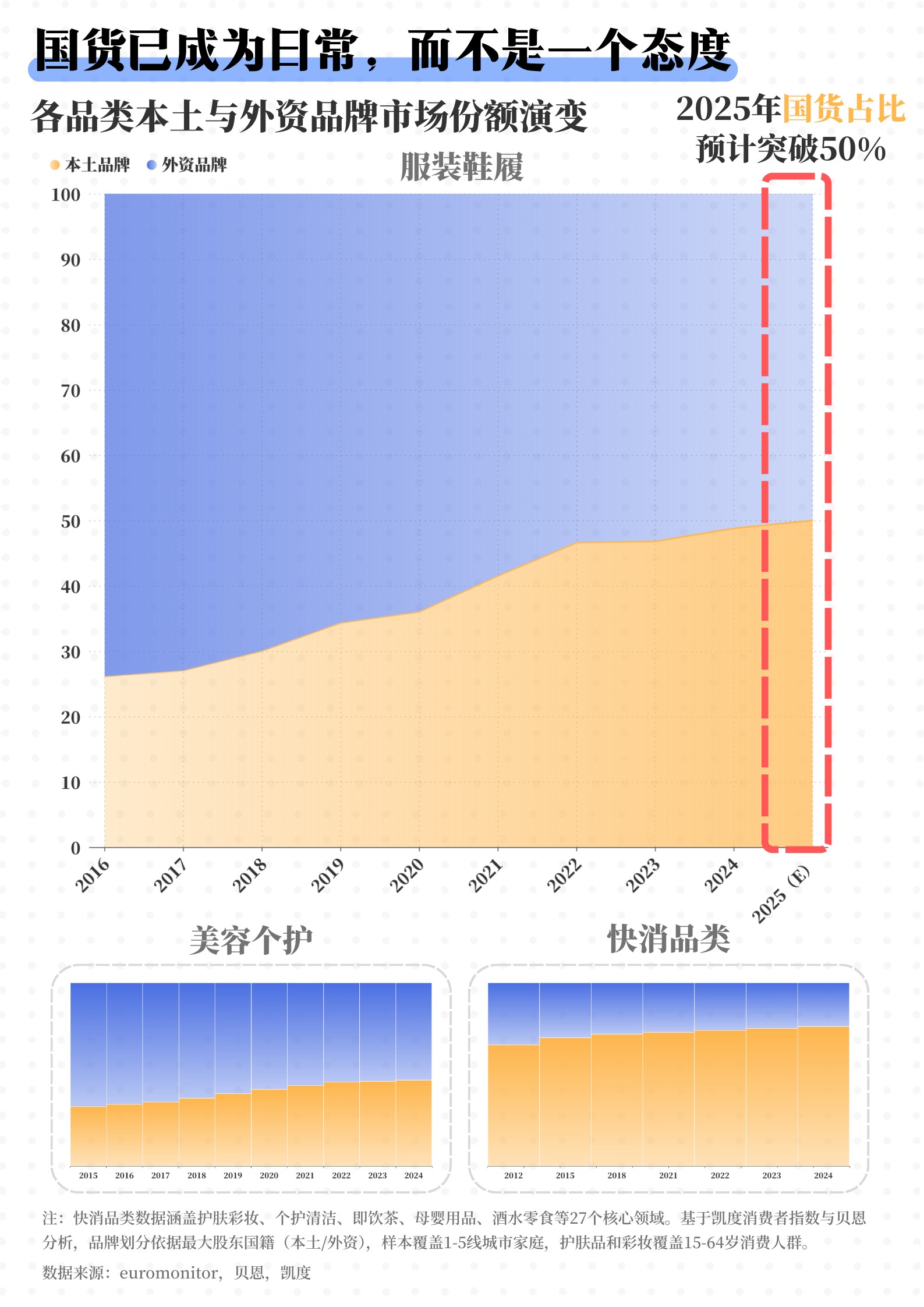
Chart by 36Kr
However, a wider market coverage does not necessarily mean real strength.
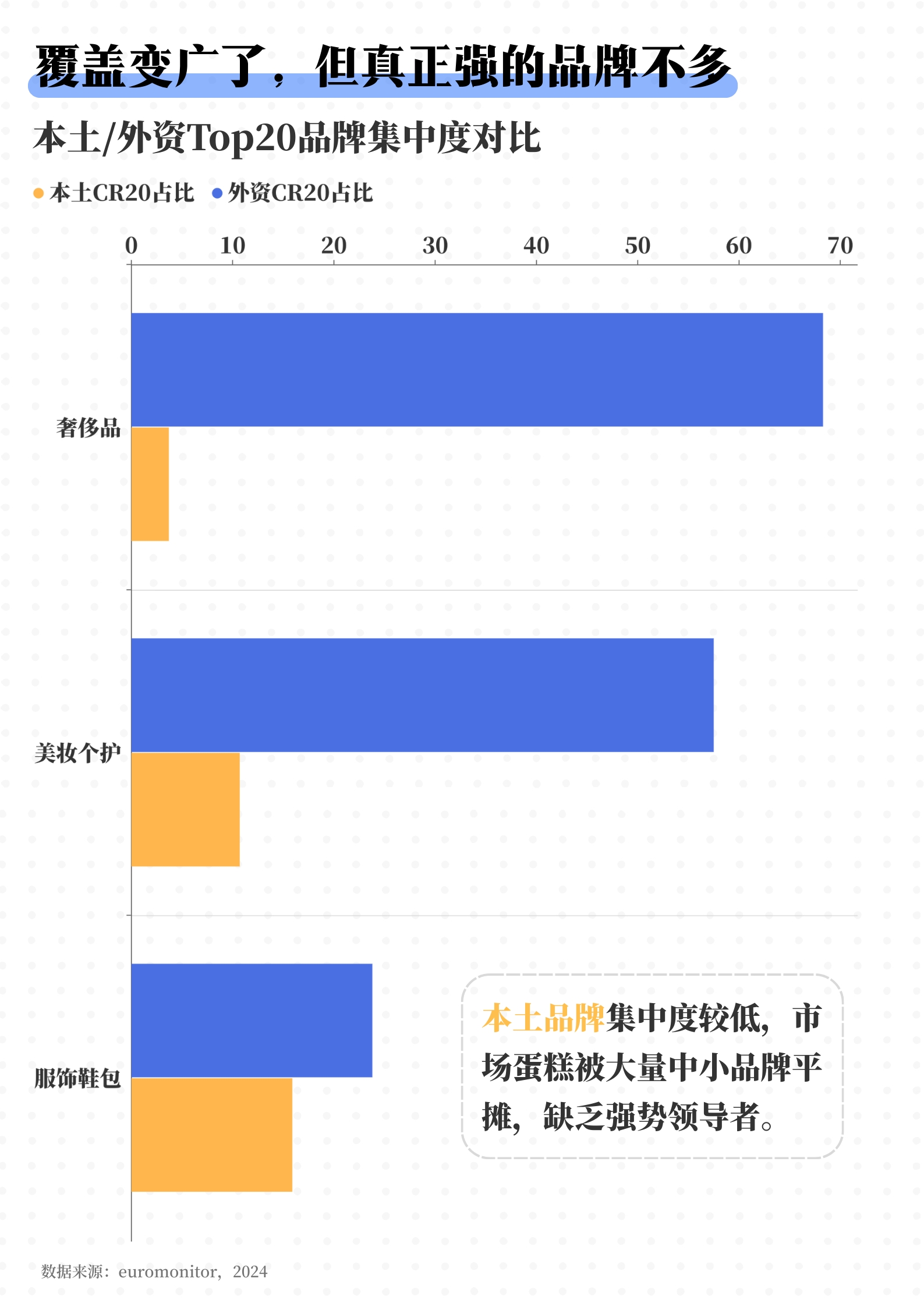
Chart by 36Kr
Through data analysis, we found that the "home - court era" of domestic brands still comes with obvious structural pains:
- Big but not strong: Compared with the extremely high brand influence of foreign giants, domestic apparel and footwear brands show an obvious "long - tail effect". The market share of the top 20 brands (CR20) is less than 16%. While a large number of small and medium - sized brands are diluting profits, the market also lacks an absolutely dominant leader.
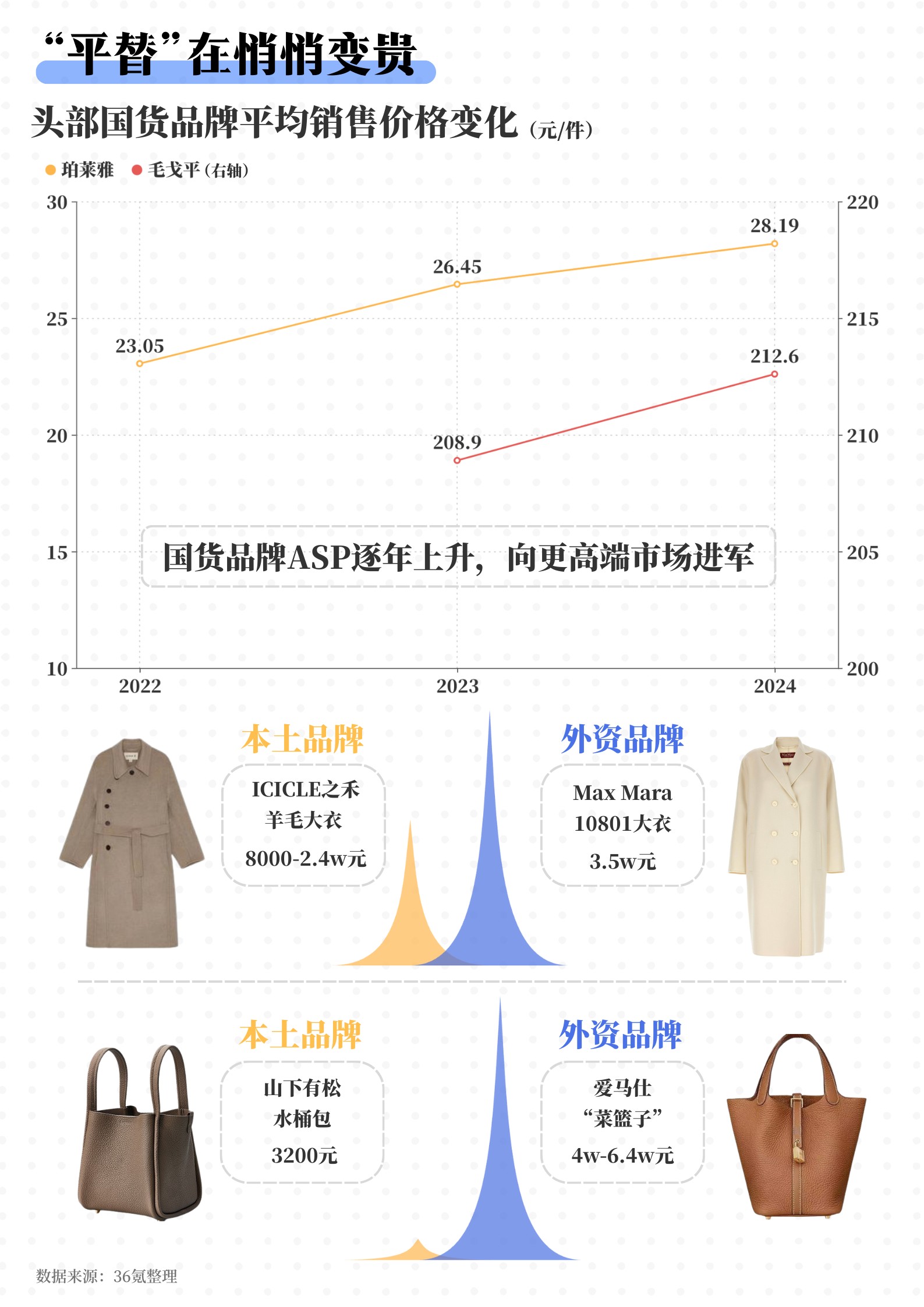
Chart by 36Kr
- Costly breakthrough: In the luxury goods market, which is a "tough nut to crack", the top 10 foreign brands account for as high as 60.90% and firmly hold 95% of the market share. Although leading domestic brands such as Maogeping, ICICLE, and Yamashita Yumematsu are trying to move upmarket by steadily increasing their ASP (average selling price), domestic brands are still at a disadvantage in the risky leap to change "brand perception".

Chart by 36Kr
Our future may be hidden in the mirror of our neighbors.
Referring to mature markets such as Japan and South Korea, domestic brands in these countries have an overwhelming advantage of 55% - 90% in most consumer goods categories. This indicates that in the next stage, domestic brands in China will bid farewell to the low - level growth of "all - round development" and enter a "hard - core critical period" where brand value and industrial structure are deepened simultaneously.
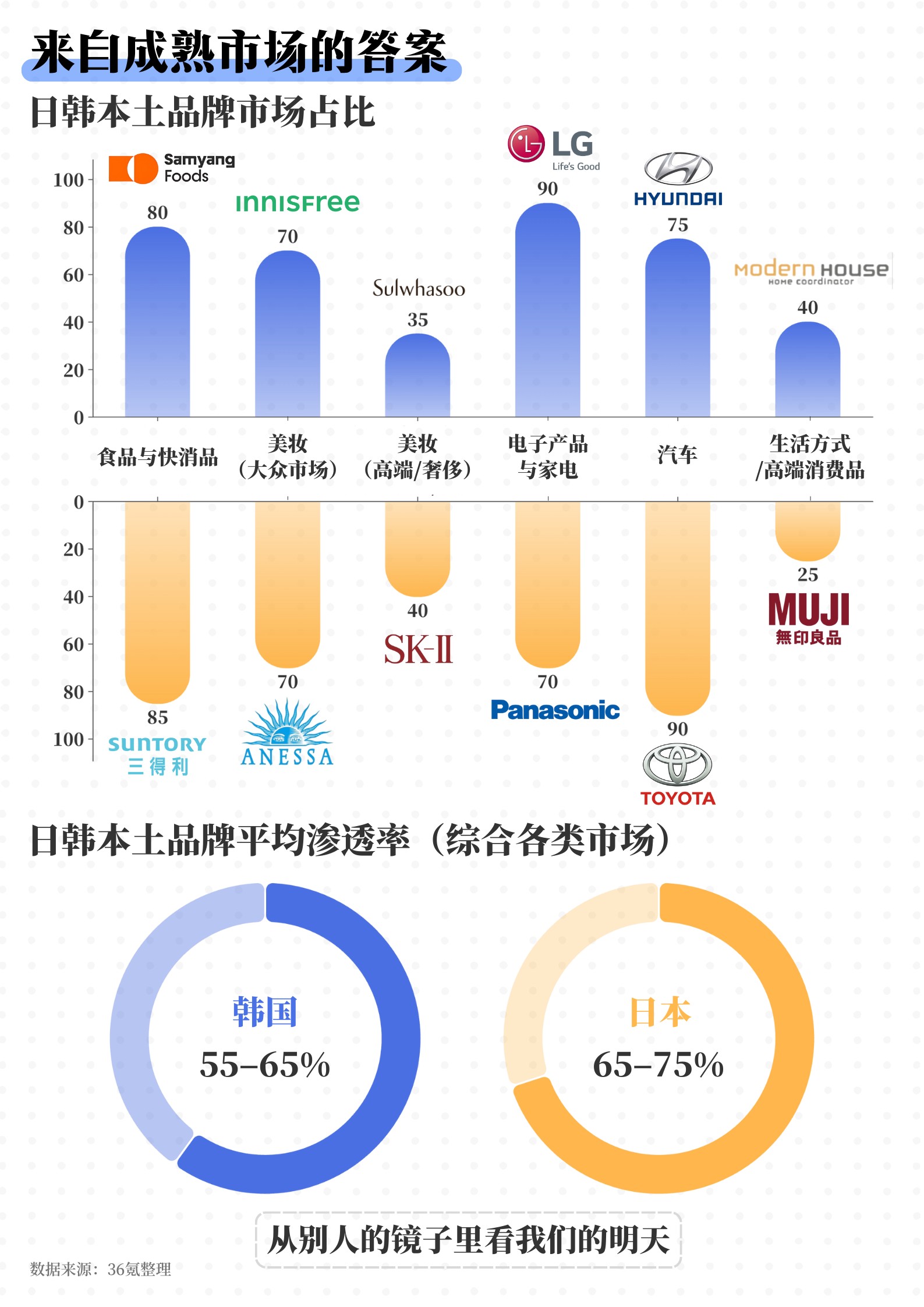
Chart by 36Kr
When choices become more complex, it means that consumer sovereignty is returning. Where exactly do domestic brands win, and where do they still fall short? Please see the in - depth analysis of this issue's infographic.