Zeekr's One-Day Trip in the US Stock Market: Li Shufu Single-Handedly Ended the Wild West Era of Car-Making Separation
On December 22, 2025, shortly after the Winter Solstice, the cold was intense.
On the New York Stock Exchange across the ocean, a quiet retreat was underway. Geely Automobile issued an announcement, officially completing the privatization and merger of Zeekr Intelligent Technology Holding Co., Ltd. Zeekr officially became a wholly - owned subsidiary of Geely Automobile and delisted from the NYSE.
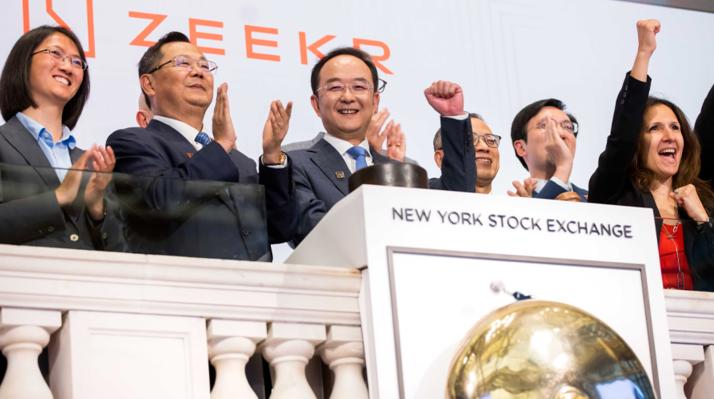
It had only been 19 months since Zeekr's glorious IPO in May 2024.
If you have a good memory, you should still remember the grand occasion back then. Zeekr went public just 37 months after its establishment, breaking the record for the fastest IPO among new - energy vehicle startups. Its market value once soared to nearly $7 billion and was hailed by the media as the strongest challenger to the "Chinese Tesla".
From the fastest listing to the fastest delisting, if this roller - coaster plot is simply regarded as a simple capital operation, it underestimates Li Shufu's ambition and downplays the profound changes taking place in the Chinese automotive industry.
This is not just a brand's return, but also the end of an era. With a multi - billion - dollar stop - loss move, Li Shufu personally closed the door on the wild era of Chinese automakers, an era characterized by "having more brands for better competition" and "splitting businesses to raise funds overseas".
1
The Shattered Dream of Getting Rich through Separation
Let's rewind the clock to 2021, a time when Chinese traditional automakers were at their most anxious and enthusiastic. The only business logic back then was to separate the new forces from the old ones.
In an era when Tesla was deified and NIO, XPeng, and Li Auto were booming, the fuel - vehicle businesses of traditional automakers were seen as negative assets dragging down valuations. Automobile industry tycoons not only wanted to build new cars but also establish new companies. GAC Aion became independent, Shenlan became independent, and so did Zeekr. Everyone had high hopes. They thought that by splitting off their new - energy businesses, giving them fancy names, setting up VIE structures, and going public on the NASDAQ, they could get rid of the low price - to - earnings ratios of traditional manufacturing and enjoy the high price - to - sales ratios of technology stocks.
Zeekr was the product of this logic. It was born in April 2021, with many advantages from the start, carrying all of Geely's hopes of breaking into the high - end new - energy market.
However, reality taught a lesson to those seeking shortcuts. During its one - and - a - half - year stint on the US stock market, Zeekr not only failed to enjoy the premium of technology stocks but also suffered a severe double - whammy on valuation. Even on the eve of delisting, in 2024, Zeekr's revenue reached as high as 75.9 billion yuan, with sales exceeding 220,000 vehicles, even surpassing NIO and XPeng in terms of delivery volume. But in the eyes of Wall Street, its market value was always stuck at around $5 billion.
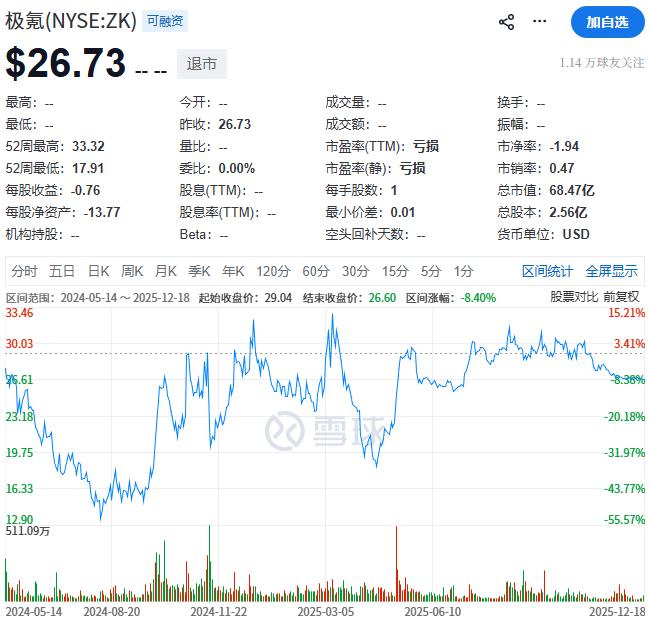
This figure is highly ironic. In the Series A financing in 2023, Zeekr's valuation was as high as $13 billion. That is to say, after going to the US stock market, instead of raising funds, its market value was halved and then discounted. Its price - to - sales ratio was even less than 1, which means that the capital market priced it lower than its annual car - selling revenue. In the eyes of investors, no matter what your name is, as long as you have the blood of a traditional automaker, you are just a car seller, not a technology seller.
The bubble of getting rich through separation has burst. Li Shufu knows better than anyone that letting Zeekr continue to struggle on the US stock market would not only fail to provide a boost to Geely but also become a huge strategic waste due to its undervaluation.
2
A $5 - billion - worth Internal Struggle
If the cold shoulder from the capital market is just an external wound, then the internal strife within Geely is an internal ailment that Li Shufu has to cure with radical measures.
In the past few years, Geely seemed to be suffering from brand schizophrenia. Under the multi - brand strategy, its sub - brands were competing fiercely for market share, and the situation was getting out of hand.
Take a look at Geely's product line in 2024, and you'll feel an overwhelming sense of congestion. The Zeekr 001 was priced at 250,000 yuan. Just as its sales were picking up, Lynk & Co. launched the Z10, also priced in the 200,000 - yuan range. Moreover, there was also Geely Galaxy, eyeing the mid - to high - end market. When the Zeekr 7X was launched, there was a ridiculous scene where the whole internet was discussing which one had better cost - performance, the Zeekr 001 or the Zeekr 7X, and even comparing them with Lynk & Co. models.
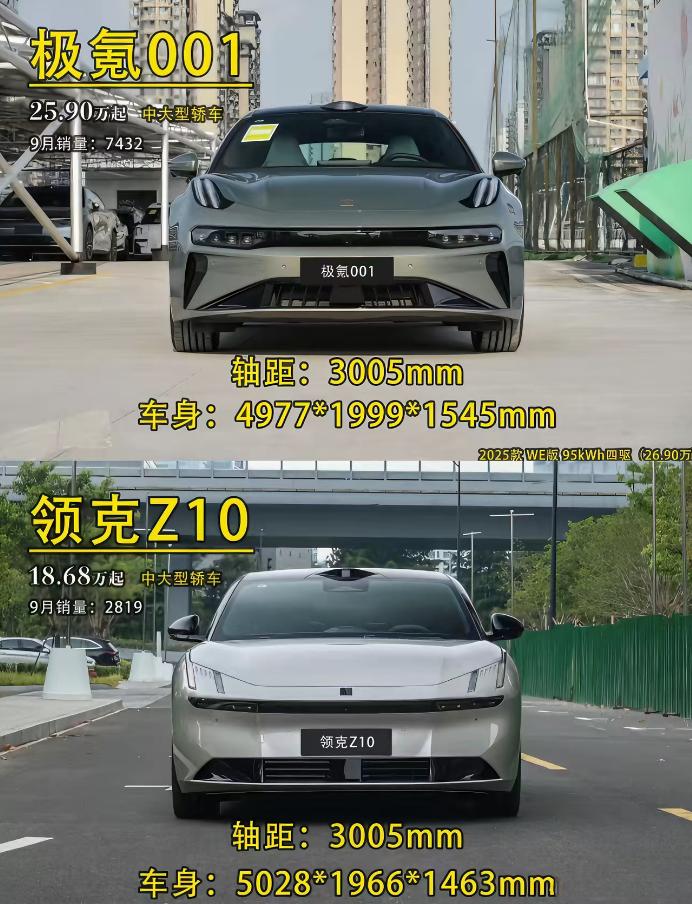
This is a classic case of "killing one thousand enemies while losing eight hundred of your own". According to industry data, in 2023 alone, the duplicate investment between Geely and Zeekr in areas such as electric powertrain systems and intelligent cockpits exceeded 5 billion yuan. This is not low - value investment but a real waste of R & D resources.
Each brand wanted its own R & D team, sales channels, app, and even its own unique identity. But in the eyes of consumers, this was not diversity but chaos. In the era of market expansion, having more brands was about seizing others' market share, known as the "horse - racing mechanism". But in today's cut - throat market with limited growth, having more brands means competing for your own share, which is resource internal consumption.
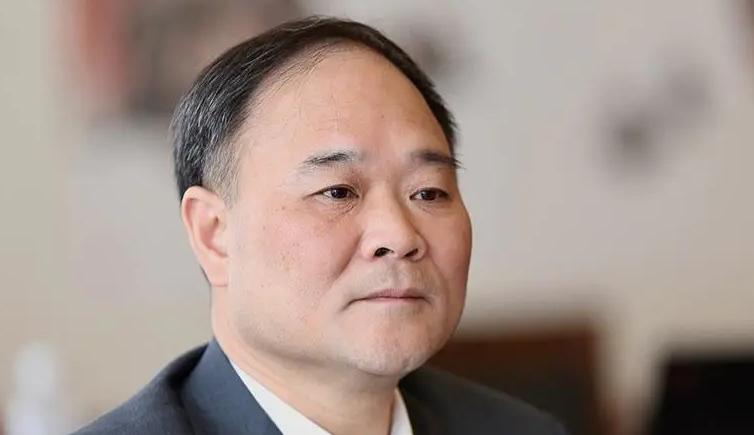
Li Shufu is a decisive man. In September 2024, he issued the "Taizhou Declaration" in Taizhou, with the core idea of centralizing power. Then we witnessed a series of dazzling but effective moves, from the integration of Geometry into Geely Galaxy, to the equity integration of Zeekr and Lynk & Co., then Zeekr taking control of Lynk & Co., the integration of Yizhen into Geely Galaxy, and finally Geely Automobile acquiring Zeekr to complete the privatization.
After this series of moves, the number of Geely's passenger - car brands was streamlined from the original chaotic six to a clear four. This is not just a simple financial merger. It is a surgical operation for the huge Geely Empire, aiming to remove the fat and build muscle. Through integration, R & D investment is expected to be reduced by 10% - 20%, and the BOM cost can also be significantly reduced. In this cold winter, Li Shufu wants this multi - billion - dollar giant to have only one steering wheel and one accelerator.
3
The Wall Street Eviction Notice and the Chill of Geopolitics
Zeekr's delisting, apart from its own strategic adjustment, also has an important macro - background. The US stock market is no longer a safe haven for Chinese manufacturing, but is becoming a high - risk area.
We have to admit a harsh reality. The era when you could raise funds on Wall Street just by having a concept is completely over. When Zeekr chose to go public in the US in the spring of 2024, it was a window period when the illusion of the recovery of Chinese concept stocks had not completely shattered. But in the following one and a half years, the cold wind of geopolitics has been blowing stronger. The US "Foreign Company Accountability Act" has been hanging over Chinese concept stocks like the Sword of Damocles. The requirements for audit working papers and information disclosure standards have made each review a painful process.
What's even more fatal is that Zeekr's proud combination of Chinese manufacturing, Chinese chips, and Chinese ecosystem is not an advantage but a trigger for scrutiny in the current US capital context. In the eyes of US stock investors, Chinese new - energy automakers are in an awkward cognitive mismatch. If you claim to be a technology company, they think you are just a manufacturer. If you mention the huge Chinese market, they worry about geopolitical risks. If you talk about your global ambitions, they see tariff barriers.
As a result, although Zeekr's performance was growing, its valuation logic was completely broken. It became an orphan, not understood by the US stock market, unavailable on the Hong Kong stock market, and out of reach of the A - share market. Since it is not welcome, why stay there and be looked down upon?
Delisting has become a strategic retreat with strong business rationality. Instead of being undervalued and scrutinized in a foreign market and constantly worrying about being restricted, it's better to come back and manage your own affairs. As industry commentators said, when the power of capital shifts and political variables override business logic, taking a step back is not necessarily a sign of defeat but may be a move to change the battlefield for the next attack.
3
The Wall Street Eviction Notice and the Chill of Geopolitics
Zeekr's delisting, apart from its own strategic adjustment, also has an important macro - background. The US stock market is no longer a safe haven for Chinese manufacturing, but is becoming a high - risk area.
We have to admit a harsh reality. The era when you could raise funds on Wall Street just by having a concept is completely over. When Zeekr chose to go public in the US in the spring of 2024, it was a window period when the illusion of the recovery of Chinese concept stocks had not completely shattered. But in the following one and a half years, the cold wind of geopolitics has been blowing stronger. The US "Foreign Company Accountability Act" has been hanging over Chinese concept stocks like the Sword of Damocles. The requirements for audit working papers and information disclosure standards have made each review a painful process.
What's even more fatal is that Zeekr's proud combination of Chinese manufacturing, Chinese chips, and Chinese ecosystem is not an advantage but a trigger for scrutiny in the current US capital context. In the eyes of US stock investors, Chinese new - energy automakers are in an awkward cognitive mismatch. If you claim to be a technology company, they think you are just a manufacturer. If you mention the huge Chinese market, they worry about geopolitical risks. If you talk about your global ambitions, they see tariff barriers.
As a result, although Zeekr's performance was growing, its valuation logic was completely broken. It became an orphan, not understood by the US stock market, unavailable on the Hong Kong stock market, and out of reach of the A - share market. Since it is not welcome, why stay there and be looked down upon?
Delisting has become a strategic retreat with strong business rationality. Instead of being undervalued and scrutinized in a foreign market and constantly worrying about being restricted, it's better to come back and manage your own affairs. As industry commentators said, when the power of capital shifts and political variables override business logic, taking a step back is not necessarily a sign of defeat but may be a move to change the battlefield for the next attack.
4
The Strategic Financial Merger
If you think Li Shufu delisted Zeekr just out of anger, you underestimate this automotive enthusiast's strategic thinking. This privatization is a very sophisticated strategic move at the financial level.
We need to look at a key figure. Zeekr is not a small player. It is a giant with an annual revenue of 75.9 billion yuan and annual sales of 220,000 vehicles. Before delisting, as an independent listed company, its huge revenue and the most promising growth data were not fully reflected in the financial statements of its parent company, Geely Automobile. For Hong Kong stock investors, although Geely Automobile was stable, its valuation could not go up due to the relatively low proportion of new - energy vehicles and the slow transformation speed.
Now, once Zeekr completes delisting and is merged, Geely Automobile will undergo a qualitative change.
First, the revenue will skyrocket. Zeekr's multi - billion - yuan revenue will be directly incorporated into the parent company, and Geely Automobile's financial statement scale will reach a new level.
Second, the company's nature will change. The pure - electric, intelligent, and high - growth labels brought by Zeekr will directly dilute Geely's traditional automaker image. Geely Automobile will transform into a real new - energy technology giant.
Finally, there will be a profit hedge. Although Zeekr is still in the red, the losses have been significantly reduced compared to previous years. Geely's traditional fuel - vehicle business is highly profitable and can easily cover Zeekr's losses. Using the profits from fuel - vehicle sales to support the valuation of new - energy vehicles is a worthwhile deal.
Through this merger, Geely Automobile will completely integrate its internal capital circulation. According to the announcement, after excluding one - time factors, Geely Automobile's core net profit attributable to shareholders in the first three quarters of 2025 reached 10.62 billion yuan, a year - on - year increase of 59%. This gives Geely enough confidence to bring Zeekr back.
5
Conclusion
Zeekr's delisting is by no means an isolated event. If you broaden your perspective, you'll find that in the Chinese automotive market in 2025, there is a collective retreat and contraction.
It's not just Geely. SAIC, Dongfeng, and GAC are all doing the same thing. GAC Aion has brought Hyper back under the same business unit, Geely has integrated Geometry into Galaxy, and Great Wall is also shrinking its front line. Because the elimination stage has arrived.
In the past few years, it was like the Spring and Autumn Period, when everyone was expanding their market share, competing to see who could spread their business wider and tell better stories. Now it's like the Warring States Period, or even the eve of the Qin Dynasty's unification of the six states. The competition is about who is more efficient, who has more staying power, and who