Do established automakers not approve of the highly touted large die-casting technology by new car-making forces?
Unexpectedly, there has been a heated debate in the automotive industry about whether to adopt integrated large-scale die-casting technology.
The cause was that Wei Jianjun, the chairman of Great Wall Motors, mentioned at the ORA 5 launch event that they didn't choose large-scale die-casting like Tesla. After research, they found that no matter how you calculate it, the cost of this technology is not low, and the repairability is extremely poor, resulting in excessively high insurance premiums.
In his view, this technology will increase consumers' vehicle usage costs, which is why established global automakers have not chosen the large-scale die-casting technology route.

As soon as Mr. Wei made these remarks, they immediately sparked controversy online.
After all, in everyone's impression, large-scale die-casting is a new technology brought by electric vehicles, and Elon Musk has often boasted about its advantages: it can greatly improve production efficiency and enhance vehicle safety.
Moreover, it's not just Tesla using this technology. Automakers like XPeng, Xiaomi, and Zeekr have all claimed that their large-scale die-casting technology is excellent. They even compete fiercely at product launch events by comparing the tonnage of their die-casting machines. One says 6,000 tons, another 8,000 tons; one goes to 9,000 tons, and another aims for 10,000 tons.
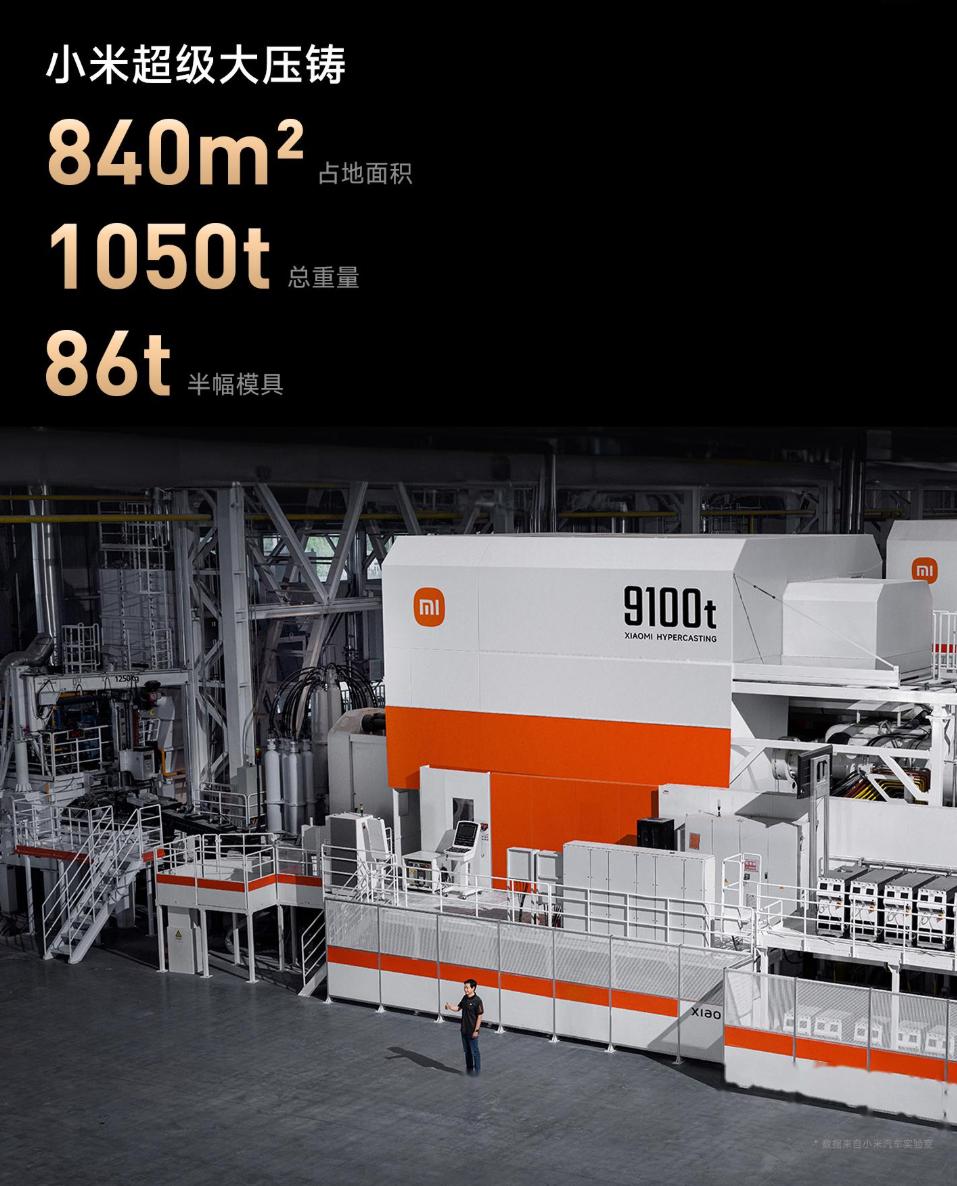
Now, suddenly, someone says this technology is actually not very useful. Naturally, the new car-making forces have something to say.
Recently, the head of material technology at Li Auto also shared some views on this issue.
He gave a rather long speech, and I've taken a full screenshot for everyone to see. The general idea is that while integrated die-casting is indeed less repairable than sheet metal parts, in most cases, the reason for not using integrated die-casting is cost, not repairability. Moreover, foreign automakers also use large-scale die-casting. For example, the Volvo EX90 has such parts.
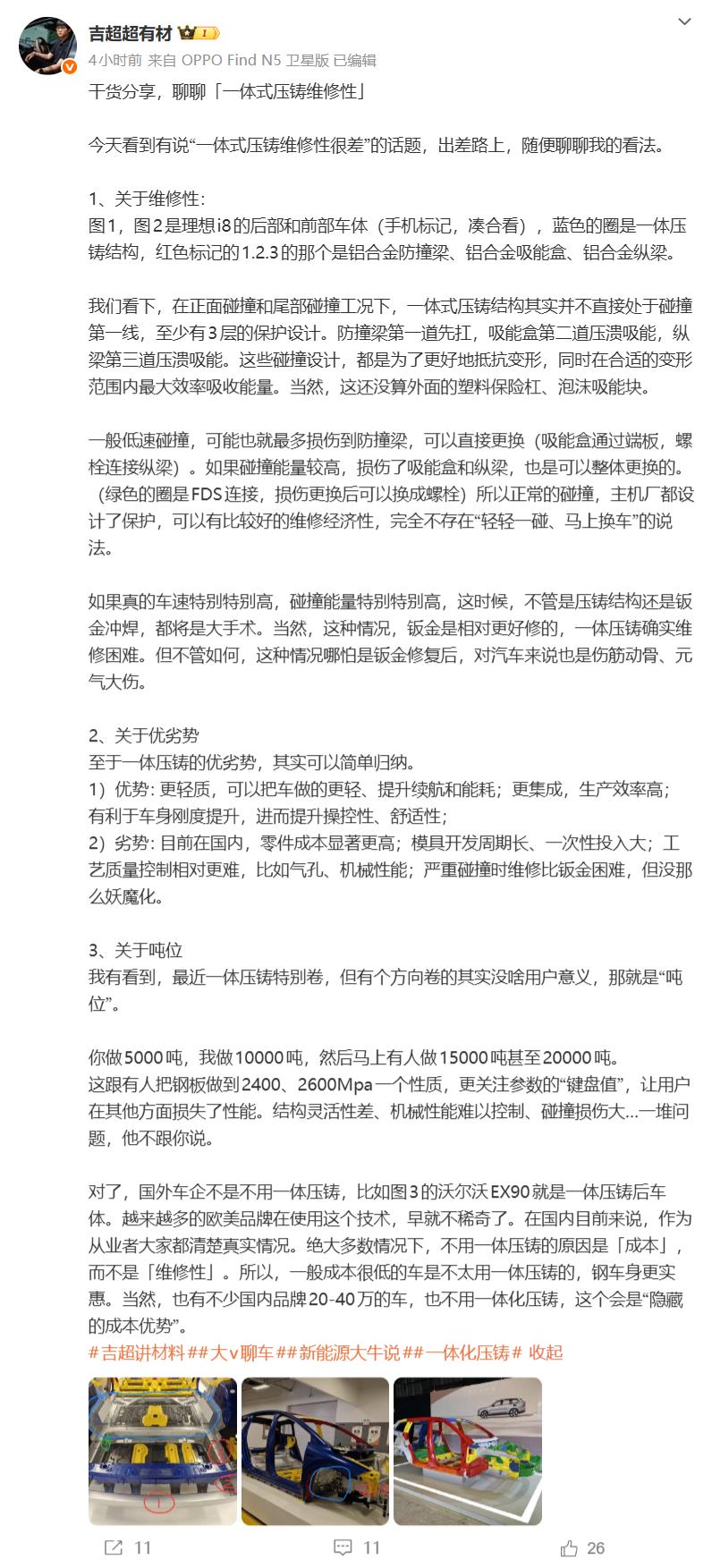
After listening to all this, I'm a bit confused. The statements of these two industry leaders seem to have similar viewpoints, but also seem like they're each talking about their own things...
Actually, since large-scale die-casting technology was introduced in the automotive industry, there have been continuous doubts about it. Last year, I also specifically talked about this issue. (Here's the link.)

The core of the debate is that while Elon Musk once focused on boasting about the advantages of large-scale die-casting, it actually has quite a few disadvantages. Is the benefit of using large-scale die-casting greater than the drawbacks, or vice versa? It's really hard to conclude for now.
Let's take a closer look.
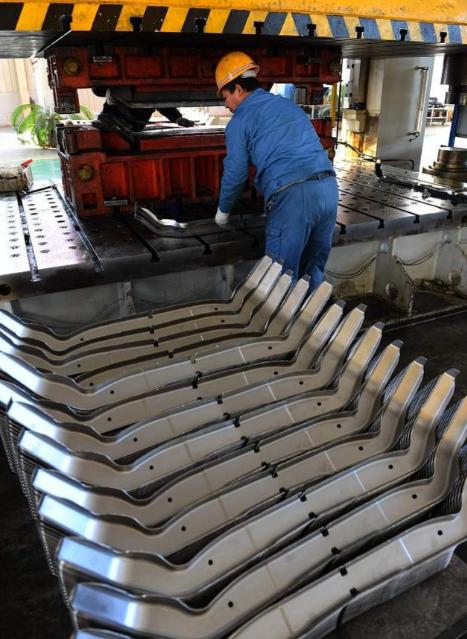
In automobile production, stamping and welding, and die-casting are two common manufacturing processes for metal parts. Stamping involves punching a steel plate into a specific shape, and then welding several punched parts together to form a larger part.
Die-casting, on the other hand, involves melting a metal material and pouring it directly into a mold to form the part. It's like making a casting.
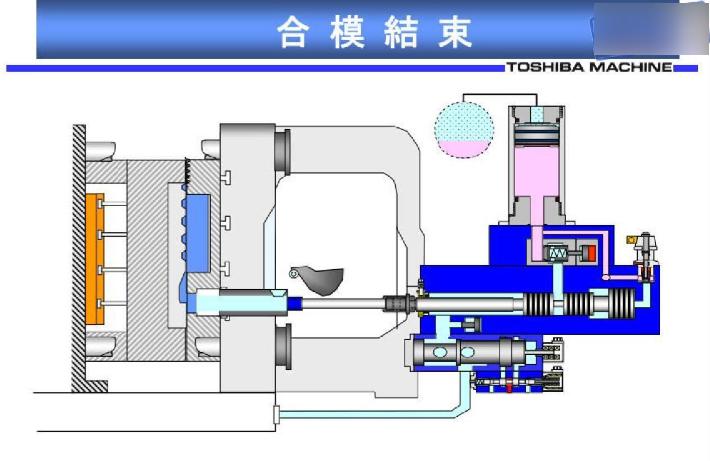
The so-called large-scale die-casting is literally "larger" die-casting. For traditional die-casting, a tonnage of 1,000 tons is already considered high, while large-scale die-casting can easily reach 6,000 tons or even 10,000 tons.
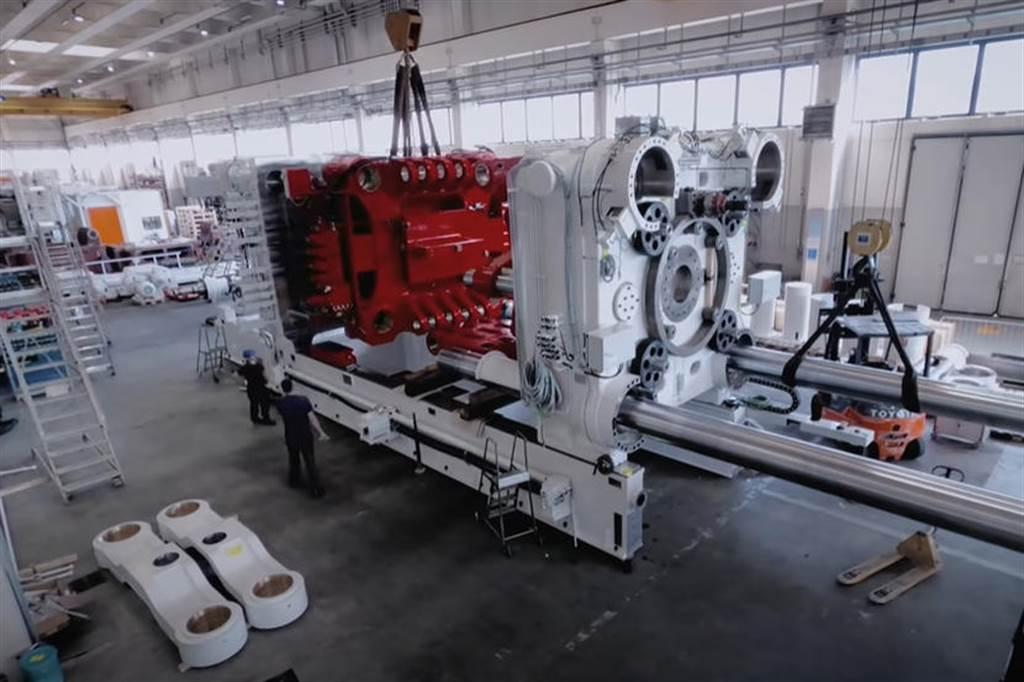
This can produce some extremely large parts, and one of the major benefits is high efficiency.
For example, for the entire rear floor of the Tesla Model Y, originally such a large part was welded together from more than 70 small parts, which took 1 - 2 hours to produce. Now, it can be die-cast in 3 - 5 minutes, reducing more than 700 welding points. The production efficiency has increased significantly.
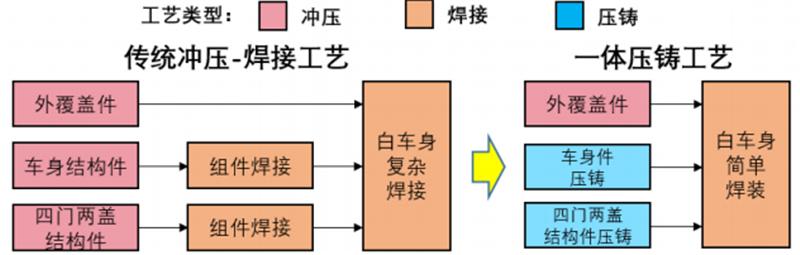
In addition to high efficiency, large-scale die-casting forms parts in one step, resulting in smaller cumulative errors. Also, there are fewer large-scale die-casting equipment, which requires less floor space. These are all the advantages brought by large-scale die-casting.
Logically, with such high production efficiency, the production cost of large-scale die-casting should be lower. However, this new technology may not help you save money.
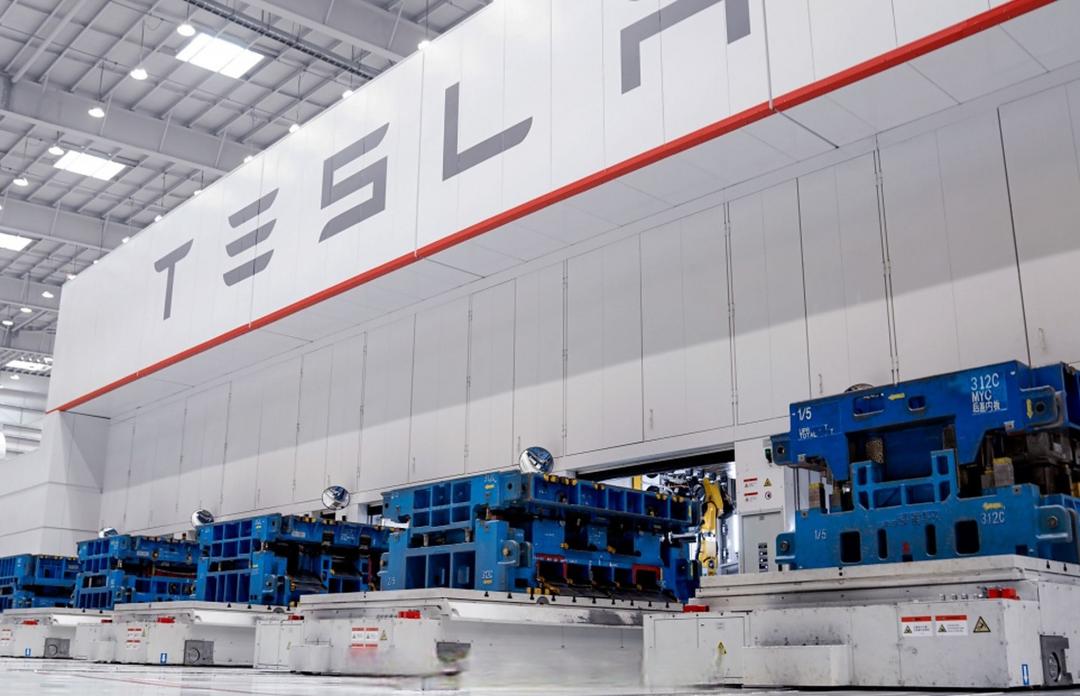
First, in terms of material cost, large-scale die-casting requires the use of aluminum, and the unit price of aluminum is two to three times that of steel.
Wencan Co., a supplier of die-cast parts, once estimated that the cost of manufacturing a body-in-white through welding is about 6,300 - 8,100 yuan per vehicle, while the cost through die-casting is about 7,000 - 8,750 yuan per vehicle, showing no significant reduction.
Second, the molds for large-scale die-casting are extremely large, and due to the many features of the parts, the manufacturing precision of the molds needs to be much higher than that of stamping molds.
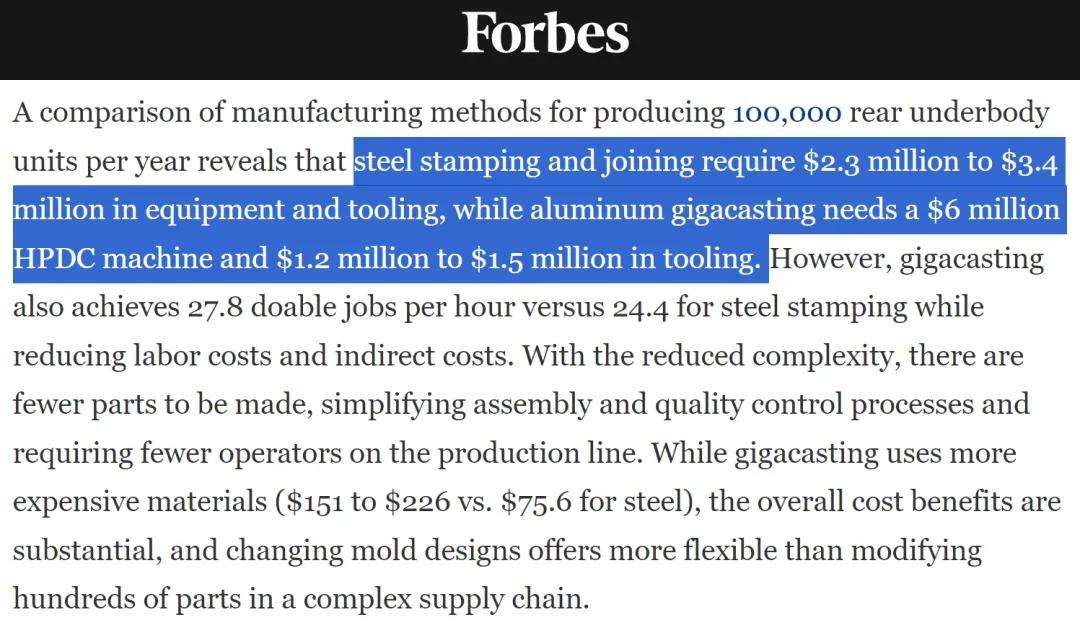
Forbes once conducted a survey and found that the investment in a large-scale die-casting production line is 2 - 3 times that of a traditional stamping production line. What's more difficult is that because die-casting metals require extremely high temperatures, a large amount of heat will affect the internal stress of the mold material, resulting in a short mold lifespan.
A stamping mold can produce 5 million parts without any problem, while a die-casting mold usually needs to be replaced after producing 100,000 - 150,000 parts.
In addition, the yield rate of die-casting cannot be compared with that of stamping. The yield rate of stamping parts is generally over 95%, while that of large-scale die-casting is only about 70% - 80%, which will further increase the cost.
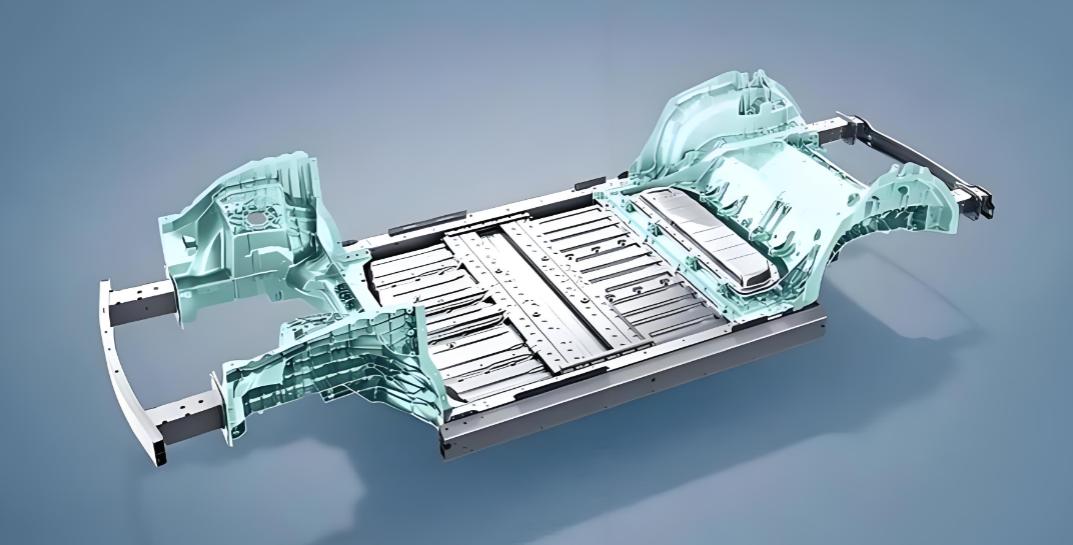
Of course, the most difficult issue, and the one that causes the most controversy among consumers, is the cost-effectiveness of repair.
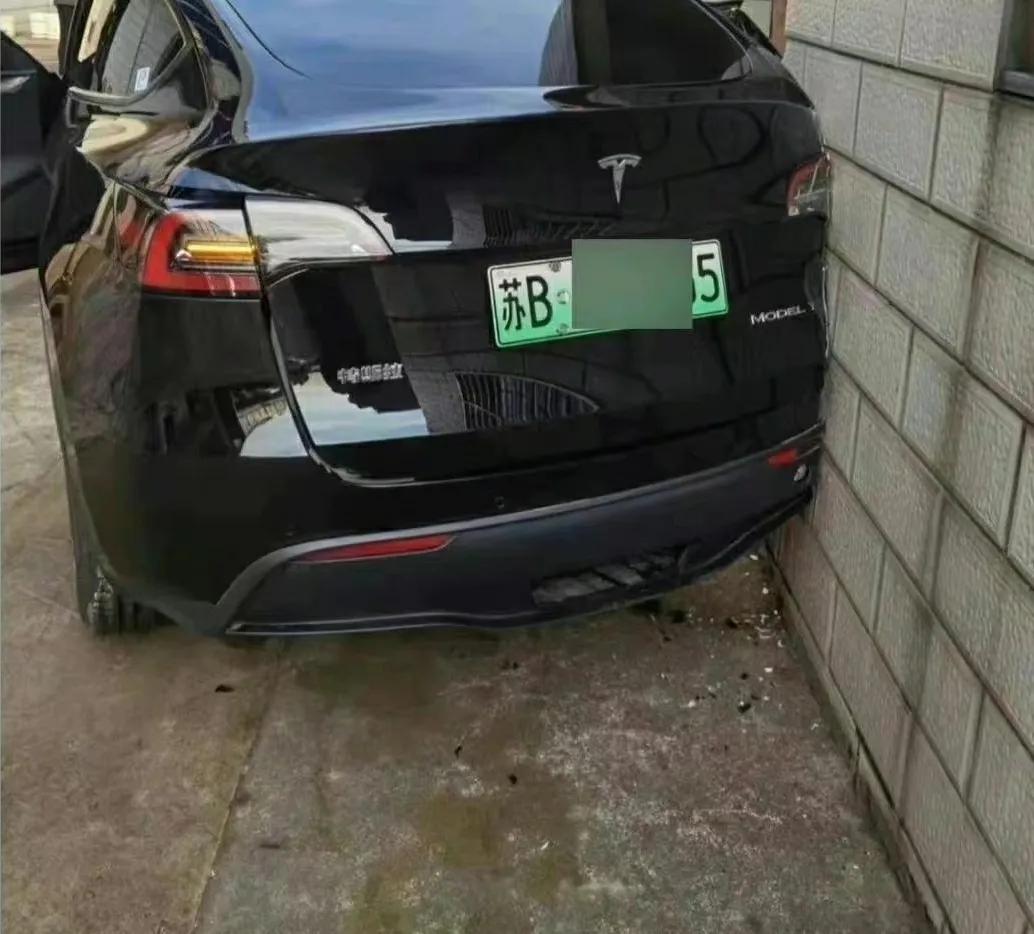
A few years ago, a Tesla Model Y owner in Wuxi hit a wall while reversing, damaging the rear shock tower. The car was purchased for 280,000 yuan, but the repair cost was as high as 200,000 yuan. The core reason was that the integrated die-cast part was damaged, and it couldn't be repaired through sheet metal processing; it had to be replaced entirely.
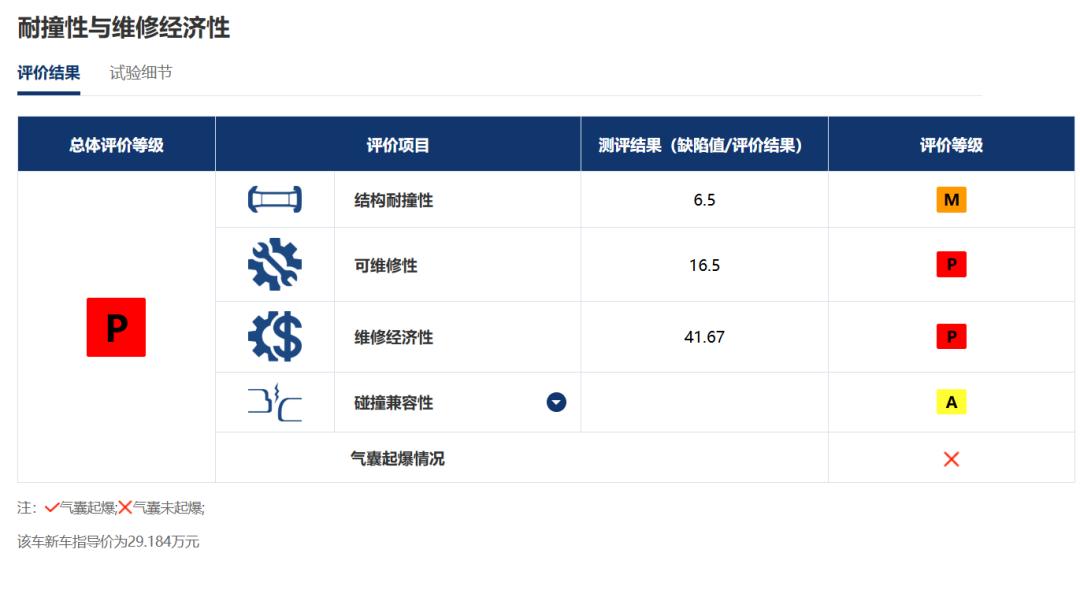
We can also see some clues from the data of the China Insurance Automotive Safety Index (C-IASI).
In the C-IASI collision test, the "Crashworthiness and Repair Cost-Effectiveness" of the Model Y received the lowest rating of "P (Poor)". Among the sub-items, both "Repairability" and "Repair Cost-Effectiveness" were rated as "P".
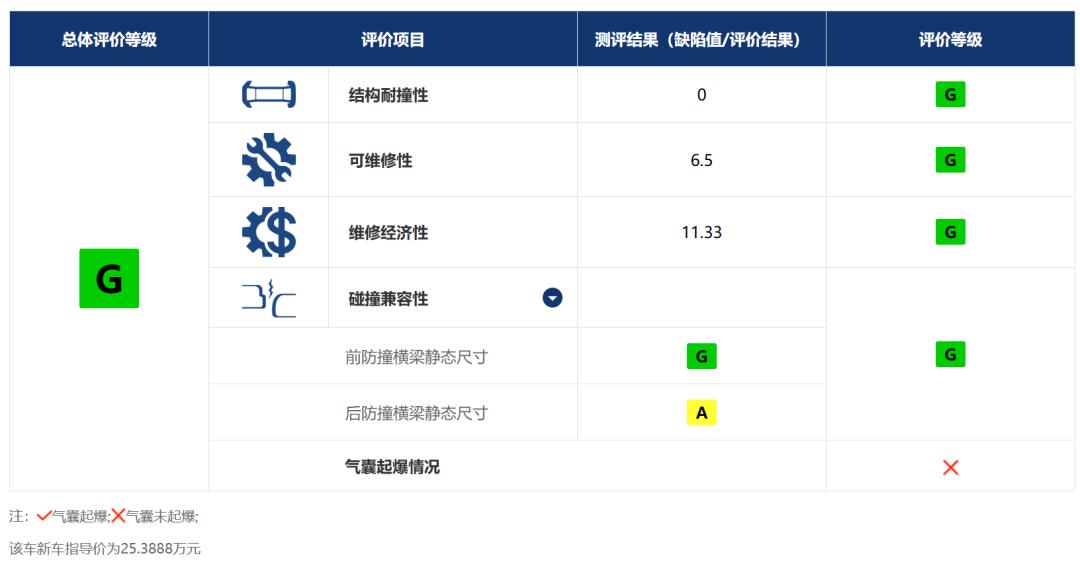
In contrast, the Model 3, which doesn't have large-scale die-cast parts, was tested twice in front and rear collisions by C-IASI, and both times it received a rating of "M (Marginal)", which is better than the Model Y.
The Volkswagen ID.4, which was tested around the same time as the Model Y and has a similar size and positioning, doesn't use large-scale die-casting, and it received an excellent rating of "G (Good)" in these aspects.
I also asked some industry insiders, and it's basically a consensus in the industry that large-scale die-cast parts are difficult to repair. So automakers usually place large-scale die-cast parts inside the vehicle body to avoid damage in collisions as much as possible.
For example, Xiaomi has specially designed a three-section anti-collision structure for the die-cast rear floor. The purpose is that in general low to medium-speed collisions, only the anti-collision beam and the crush zone need to be replaced, not the rear floor.
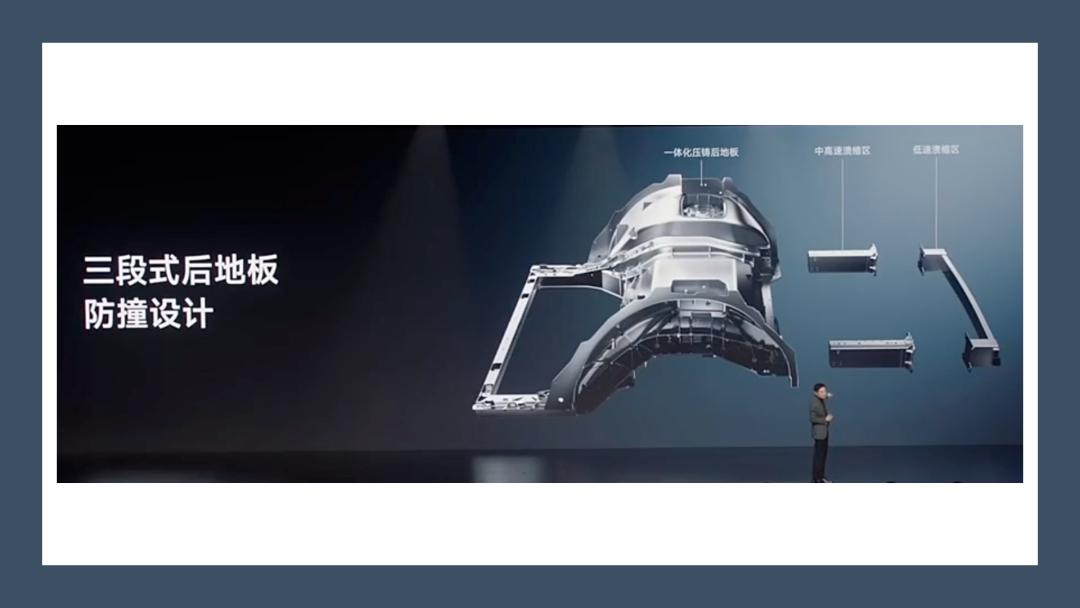
Obviously, automakers also know that these parts are really difficult to repair in the after-sales market, so they try to protect them as much as possible.
In conclusion, after large-scale die-casting technology has been used in the automotive industry for many years, both inside and outside the industry have a clearer understanding of it. People have found that this technology is not as miraculous as Elon Musk boasted.
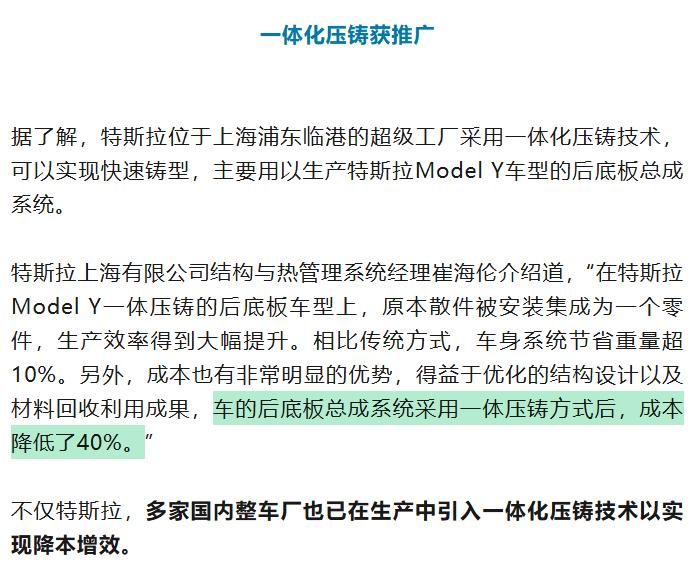
Tesla previously said that the cost of the rear floor of the vehicle has been reduced by 40%. However, it didn't clearly state how intangible costs such as repair and insurance premiums would change.
Essentially, the debate around large-scale die-casting is caused by the different market positioning of different automakers.
From the perspective of technological progress, large-scale die-casting represents a more advanced and efficient manufacturing process. It can also reduce weight by replacing steel with aluminum. As a new car-making force