The prospectuses of Zhipu and MiniMax reveal 10 truths about large model startups.
As members of the once highly - regarded "Six Promising Large - Model Startups", Zhipu and MiniMax may be the first to achieve success.
The competition to become the "First Large - Model IPO" has begun. This easily reminds people of the listing craze of the "Four AI Giants" in the past. Similarities include loss - making listings, intense capital attention, and the same "ambitious missions".
However, the difference lies in the new technology cycle: Zhipu and MiniMax, which have emerged from the fierce competition of the "Hundred - Model Battle", represent the survival paths of current large - model startups in China. They no longer divide their revenues simply by B - to - B or C - to - C businesses but rely on the final product form of the models.
There are also differences in commercialization paths. One type mainly relies on the MaaS model, making money through API calls and selling tokens. The other type consists of AI - native product companies that mainly charge for subscription services. According to the prospectuses of the two companies, Zhipu leans towards the former, while MiniMax leans towards the latter.
The difference in paths determines that the two large - model enterprises have completely different temperaments: Zhipu is more heavy - weighted as it expects to establish a revenue model centered on API consumption; MiniMax is more light - weighted as it aims to become the system center by using AI - native products as the entry point.
However, in contrast to their ambitions, the cost of large - model entrepreneurship is extremely high: continuous losses, infrastructure investment, and the demand for capital exit. IPO is not only a necessity for survival but also the start of a brutal competition.
The prospectuses of Zhipu and MiniMax are important references for us to understand large - model entrepreneurship in China. Undoubtedly, they are already excellent model enterprises, but here are ten harsh truths about them.
1. Different disclosure methods confirm the unshakable market positions of industry giants
Zhipu and MiniMax disclose their market shares differently. Zhipu focuses on the domestic market, while MiniMax benchmarks against the global market.
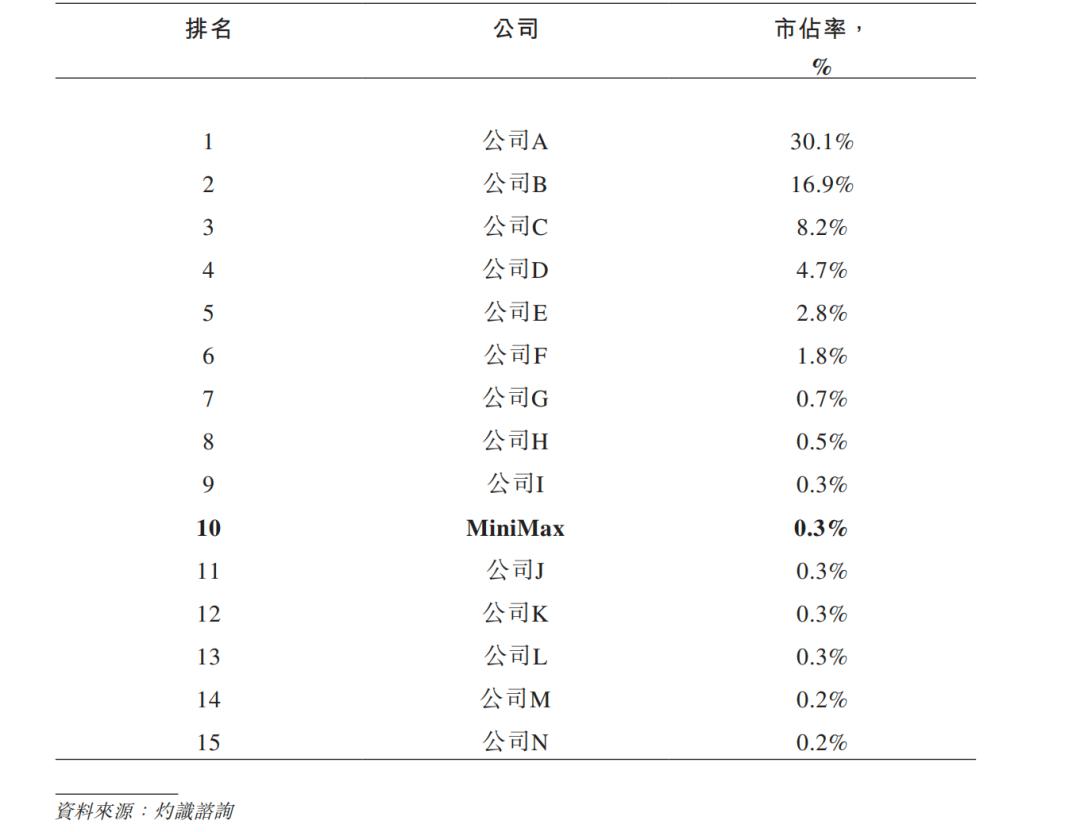
Zhipu stated in its prospectus that in terms of 2024 revenue, it ranks first among independent general large - model developers in China and second among all general large - model developers. MiniMax claims to be the tenth - largest model company globally.
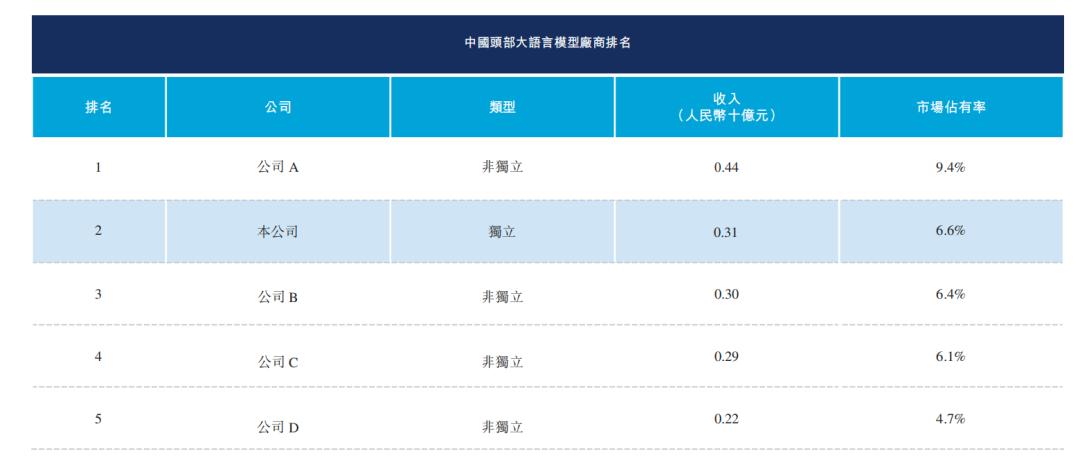
The two companies also have different classification methods: Zhipu divides large - model manufacturers into non - independent model providers and independent model providers; MiniMax divides large - model companies into large - model technology companies and large - model application companies, both emphasizing their strength to compete with big players.
However, different disclosure methods reflect their respective "hidden agendas" - Zhipu emphasizes its position among independent large - model manufacturers in China, which is in line with its B - and G - to - B business narrative; MiniMax regards itself more as a global model enterprise to emphasize its technological attributes.
However, their market shares are not high, and the "black - hole effect" of industry giants is emerging: Zhipu's market share among all general large - model developers in China is 6.6%, with a small gap from the third (6.4%) and fourth (6.1%) places. In the global model market, MiniMax's share is 0.3% in terms of basic model revenue. It claims to rank tenth but doesn't mention that it is tied for tenth place with four others.
2. Both have triple - digit revenue growth, but the growth logics have changed
Both Zhipu and MiniMax have shown a trend of triple - digit revenue growth. From 2022 to 2024, Zhipu's compound annual growth rate over three years was over 130%, and its revenue growth rate in the first half of 2025 reached 325.2%. MiniMax's growth rate is also astonishing, with a revenue growth rate of 782.2% in 2024 and 174.3% in the first three quarters of this year.
Although both have rapid triple - digit growth, the growth logics are different: From the perspective of revenue composition, Zhipu shows a trend of "decreasing local deployment and increasing cloud - based deployment share".
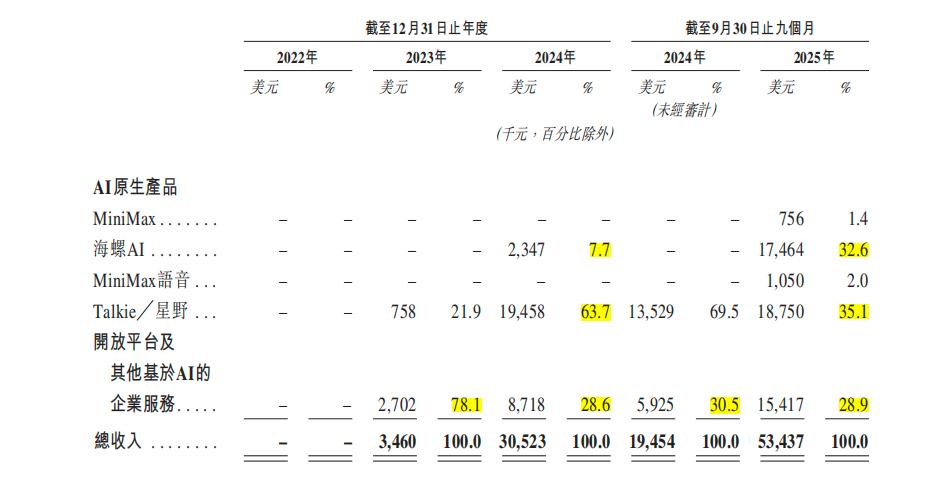
MiniMax's revenue growth mainly relies on AI - native products, and the importance of Conch AI is increasing - its revenue share has risen from 7% in 2024 to 32.6%, while the share of the well - known Talkie/Starry Field has dropped from 63.7% to 35.1%.
3. Both are "going public at a loss", but MiniMax has less short - term pressure
Large - model development is a money - burning race, and the "loss - making listings" of Zhipu and MiniMax confirm this. From 2022 to the first half of 2025, Zhipu accumulated losses of over 6.2 billion yuan in three and a half years. MiniMax accumulated losses of 1.32 billion US dollars (about 9.3 billion yuan) in the past three years and nine months.
Judging from the loss figures alone, the two companies are in a similar situation. However, looking at the cash - flow situation, MiniMax has less short - term pressure.
Zhipu had a net loss of over 2 billion yuan in the first half of 2025, and its average monthly cash consumption reached about 330 million yuan. According to the prospectus, as of the end of June this year, Zhipu's cash and cash equivalents were about 2.55 billion yuan. Based on this calculation, its cash flow can support operations for less than a year.
In the first three quarters of this year, MiniMax's monthly cash consumption was 2.11 million US dollars, and its cash balance on the books exceeded 1 billion US dollars. Based on this calculation, it can support operations for about four years.
4. Both emphasize diversified revenue structures, but there are no new stories in business models
Both companies also emphasize diversification, including diversified profit channels, revenue structures, supply chains, and customers. Essentially, they want the capital market to believe in their commercialization capabilities. Zhipu and MiniMax both mentioned "diversification" more than ten times in their prospectuses.
However, "diversification" is a very vague term. From the perspective of business models, they still haven't told many new stories.
Over 70% of MiniMax's revenue is driven by AI - native applications, of which 40% is subscription - service revenue and 20% is advertising revenue, which is no different from the revenue model of Internet products.
Although Zhipu's local and cloud - based deployment services are different from the past B - to - B heavy - customization model, the generalizability and versatility of the models provide a certain degree of standardized product capabilities in the form of selling tokens through APIs. However, these don't change the nature of customization - it's hard - earned money, with long payment cycles and heavy reliance on large customers. The prospectus also shows that as of the first half of this year, the revenue from Zhipu's top five customers still accounted for over 40%.
5. Zhipu emphasizes scientists, while MiniMax emphasizes youthfulness
Interestingly, the two companies also describe their talent profiles differently.
MiniMax uses a large amount of space to describe its talent advantages: The prospectus mentions its flat and flexible organizational structure seven times, stating that there are at most three levels below the CEO and that employees usually take on leadership positions before the age of 30.
MiniMax founder Yanjunjie once described his recruitment criteria: "Smart enough, with real passion and collaboration ability in the AI field."
Zhipu emphasizes scientists. It states in its prospectus: "Fundamentally, we are a company composed of data scientists and engineers." The word "scientist" is mentioned 18 times in the prospectus. Regarding the type of people Zhipu wants, Wu Weijie, Zhipu's senior vice - president, once described on social media as "smart + hard - working".
The proportion of R & D personnel in both companies exceeds 70%. However, startups emphasize more on human - efficiency ratios. We calculated the per - capita daily revenue - generating ability of the two companies: Zhipu's is about 1,189 yuan, while MiniMax's is 3,577 yuan. MiniMax's is three times that of Zhipu.
6. Costs are all flowing towards "computing power"
Where has the money raised by large - model startups gone? The prospectuses of the two companies clearly show that the money has gone towards computing power.
In the first half of 2025, Zhipu paid over 1.1 billion yuan in computing - service fees to cloud providers. MiniMax spent about 142 million US dollars (about 1 billion yuan) on computing - service expenses related to training in the first three quarters of this year.
The huge computing - power expenditure remains an invisible cost black hole.
7. Don't want to be OpenAI, but want to be "Anthropic + OpenAI"
Different from the past pursuit of OpenAI, neither MiniMax nor Zhipu wants to be OpenAI now. However, they both want to tell the story of "Anthropic + OpenAI" to gain a larger valuation space.
OpenAI is strong in creating unprecedented revenue - growth rates through ecological alliances and computing - power investment; Anthropic is more cautious, focusing on enterprise customers and optimizing gross - profit margins. Anthropic once predicted that it would achieve positive cash flow as early as 2027.
Both Zhipu and MiniMax are "smart": On one hand, they emphasize continuous expansion of revenue scale; on the other hand, they emphasize improving operational efficiency. In other words, they want to tell the market that they have high - growth potential but won't burn money as aggressively as OpenAI and will win by efficiency like Anthropic.
8. The overseas market is a growth point and also a high - risk area
The overseas market is a growth point for both Zhipu and MiniMax.
In the overseas market represented by Southeast Asia, Zhipu's local deployment contributed about 17.927 million yuan in revenue in the first half of this year. In addition to Southeast Asia, we also know that Zhipu is also vigorously expanding into the Middle - East market such as the UAE, joining the competition of large - model going - global.
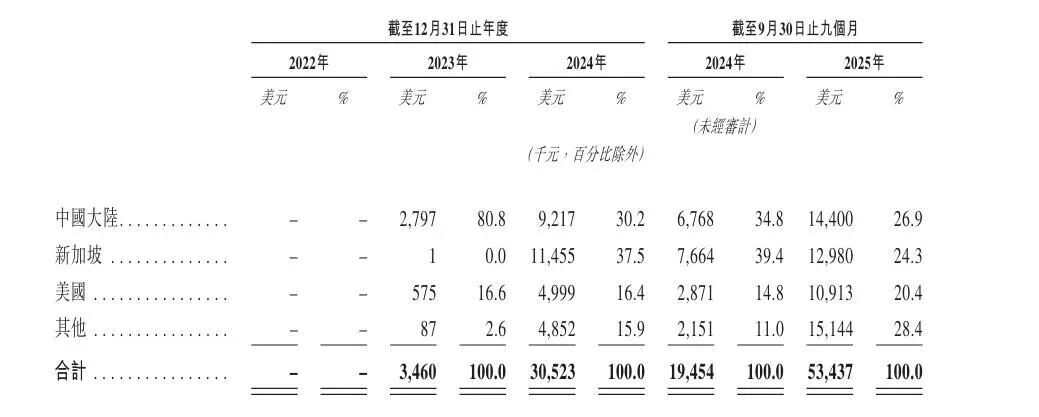
MiniMax, which established its overseas strategy earlier, had the overseas - market revenue contribution exceed 70% in the first three quarters of 2025.
The overseas market is a growth point, but it is also a high - risk area. In its prospectus, MiniMax reviewed the copyright - litigation disputes between Conch AI and several film and television companies, including Disney, in September this year. Although it emphasized that "it won't have a significant adverse impact on business, operating performance, or financial condition", the game between copyright holders and AI companies is still an uncertainty that MiniMax has to face.
9. Listing is just the start of brutal competition, and each has its own difficulties
Going public doesn't mean an expansion of competitive advantages. Zhipu and MiniMax still face many challenges.
Zhipu needs to answer whether, with the accelerating commoditization of models in the future, its MaaS business can truly achieve large - scale success in terms of effectiveness, price, and speed in the face of cloud providers.
If Zhipu wants to establish a revenue model based on API and token consumption like Anthropic, it must make its model capabilities have greater advantages in practical business scenarios that enterprises care about, such as programming, and seek survival opportunities in a larger ecosystem.
On the other hand, as of the end of September this year, MiniMax's C - to - C products had directly reached 212 million users globally. The signals that MiniMax sent out in its prospectus, such as a year - on - year decrease in sales and marketing expenses and the shift of products to natural growth, emphasize that it is not the past extensive - growth model.
These are good signals, but they are not long - term moats. Currently, MiniMax's C - to - C revenue still relies on a single product, namely Conch AI with a tool - based attribute and Talkie/Starry Field with an emotional - companionship attribute. Whether this "small - but - refined" product strategy can support a larger revenue scale remains a question.
In addition, MiniMax, which emphasizes the advantage of young talent, also faces the risk of talent loss.
10. "Rifles and millet" - style Chinese AI
Different from the "brute - force" approach of overseas model companies, Zhipu and MiniMax represent a "rifles and millet" - style survival path for Chinese AI: With extremely high R & D investment, they focus on commercialization while iterating quickly and organizing efficiently.
Regardless of which one goes public in the end, it will be a key node in large - model entrepreneurship in China: It's not only about the quantifiable growth in fundamentals but also the differentiation of competition among Chinese model enterprises - The capital market won't accommodate too many large - model enterprises, and a new reshuffle is about to happen.
This article is from the WeChat public account "Silicon - based Research Lab", author: kiki, published by 36Kr with authorization.