The list of ACM Distinguished Members for 2025 is out. Thirteen Chinese scholars, including ZOU Lei from Peking University and JIANG Yugang from Fudan University, have been selected.
The list of ACM Distinguished Members for 2025 is out!
In this cohort, 61 leading figures in the field of computer science have been newly selected as ACM Distinguished Members.

They come from multiple countries and regions around the world, including Australia, Belgium, Canada, Chile, China, the United States, etc., and are employed by top universities, enterprises, and research institutions.
This year's inductees stand out for their outstanding contributions in a wide range of computing research fields, covering many areas such as medical AI, computing education, data management, human - computer interaction, mobile computing, network systems, security, software, and sustainability.

Since its launch in 2006, the ACM Distinguished Members Program has been specifically designed to recognize ACM members who have demonstrated excellence in technical achievements and professional services.
It is only awarded to the top 10% of members globally. Inductees must have at least 15 years of professional experience and have had a significant impact on the computing field.
Notably, among this year's inductees, there are many Chinese scholars.
Yannis Ioannidis, the President of ACM, said, "We regard the announcement of the new Distinguished Members each year as one of the most important annual events and an excellent way to round off the year."
Taking this opportunity, we pay tribute to those innovators in the computing field. It is their efforts and creativity that have laid the technological foundation for shaping today's world.
Meanwhile, for the new Distinguished Members who have received this honor for their volunteer services, we would like to emphasize that the development of the industry cannot do without those colleagues who are willing to sacrifice their personal time to serve the public interest.
Whether they are conference organizers, editorial board members of ACM journals, or developers of computer science courses, it is these peers who support the community that benefits us all.
Chinese Scholars
Jianfei Cai
Institution: Monash University
Reason for selection: In recognition of his contributions to visual - language understanding and visual computing
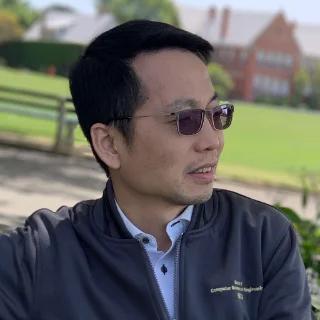
Jianfei Cai is currently a professor at the School of Information Technology, Monash University. He was the first head of the Department of Data Science and Artificial Intelligence at the university.
Previously, he worked as a full professor at Nanyang Technological University (NTU). He also served as the deputy director of the research cluster at the Data Science and Artificial Intelligence Research Center (DSAIR), the head of the Visual and Interactive Computing Division, and the head of the Computer Communication Division.
He obtained his degree in Electrical and Electronic Engineering from the University of Missouri in 2002.
His main research interests include computer vision, multimedia, and visual computing. He has published more than 300 academic papers in international conferences and journals.
Currently, he is an editorial board member of TPAMI and IJCV. He has also served as an associate editor of IEEE T - IP, T - MM, and T - CSVT. He has served as the area chair for many top - level conferences such as CVPR, ICCV, ECCV, ACM Multimedia, IJCAI, ICME, ICIP, and ISCAS.
He was the general chair of ACM Multimedia 2024 and is an IEEE Fellow.
Sheng Di
Institution: Argonne National Laboratory
Reason for selection: In recognition of his contributions to lossy compression, high - performance computing (HPC) resilience, and distributed computing
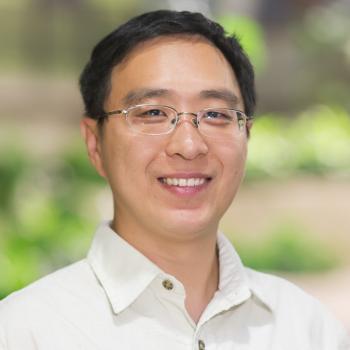
Sheng Di currently works as a computer scientist in the Mathematics and Computer Science (MCS) Division at Argonne National Laboratory in the United States.
He graduated from Huazhong University of Science and Technology with a bachelor's degree and obtained his doctorate from the University of Hong Kong in 2011.
Subsequently, he conducted post - doctoral research at the French National Institute for Research in Computer Science and Automation (INRIA), mainly focusing on workload and host load prediction for Google data centers and resource allocation optimization.
His research interests mainly include lossy compression of scientific data, high - performance computing, scalable computing, and fault - tolerant technologies.
He is a senior member of IEEE, a fellow of the NAISE Academy, and a Scientist at Large at the Consortium for Advanced Science and Engineering (CASE) at the University of Chicago.
He has won the U.S. Department of Energy (DOE) Early Career Research Program Award in 2021, the IEEE Chicago Section Distinguished Mentor Award in 2018, and the IEEE Chicago Section Distinguished Research and Development Award in 2019.
Daxin Jiang
Institution: StepFun
Reason for selection: In recognition of his contributions to context - aware search and language model expansion

Daxin Jiang is the founder of StepFun and an expert in the field of natural language processing. He obtained his doctorate in computer science from the University at Buffalo, the State University of New York.
In 2007, he joined Microsoft Research Asia as a principal researcher and was later promoted to the global vice - president of Microsoft, responsible for the research and development of natural language understanding technologies for products such as Bing, Cortana, and Azure Cloud.
In 2023, Daxin Jiang founded StepFun and launched the Step series of multimodal large - scale models, covering modalities such as text, voice, image, and video.
He has research experience in the fields of machine learning, data mining, and bioinformatics. He has published nearly 200 papers in international conferences and journals and has won the ACM SIGKDD Best Application Paper Award.
Daxin Jiang was elected as an IEEE Fellow in 2024 and was named the "AI Person of the Year" at the China AI Festival in 2025.
Yu - Gang Jiang
Institution: Fudan University
Reason for selection: In recognition of his contributions to large - scale video analysis
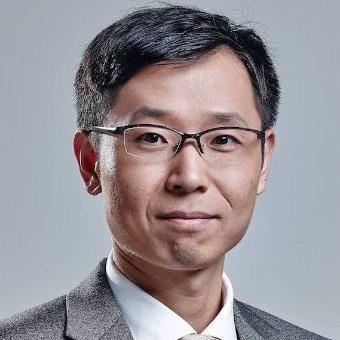
Yu - Gang Jiang is currently the vice - president of Fudan University, the dean of the School of Intelligent Robotics and Advanced Manufacturing Innovation, a professor at the Institute of Trustworthy Embodied Intelligence, and an IEEE/IAPR/CCF Fellow.
He is in charge of national key scientific and technological projects in the new - generation artificial intelligence and national major scientific research instrument development projects.
His research fields include multimedia information processing, computer vision, embodied intelligence, and trustworthy artificial intelligence. He has published more than 200 papers in internationally renowned journals and conferences, with a total of more than 35,000 citations on Google Scholar and an H - index of 93.
Weiyi Shang
Institution: University of Waterloo
Reason for selection: In recognition of his contributions to software performance and log engineering
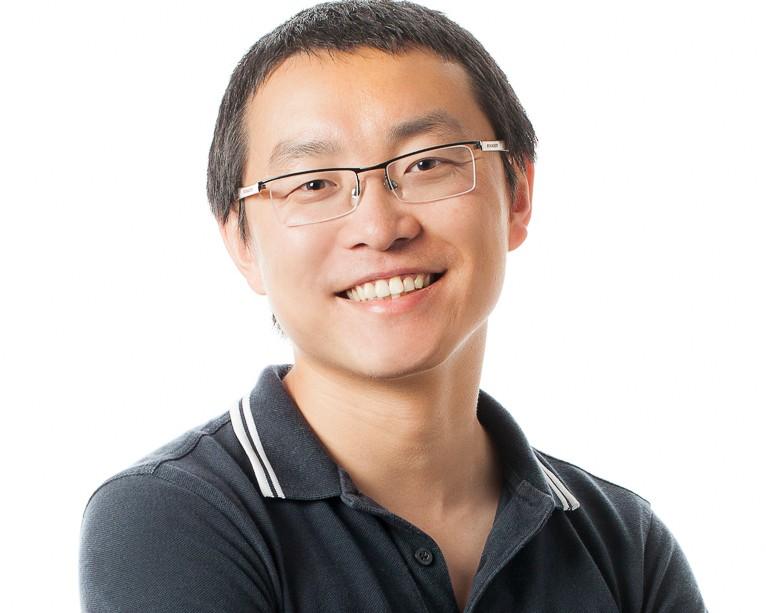
Weiyi (Ian) Shang is an associate professor in the Department of Electrical and Computer Engineering at the University of Waterloo in Canada.
He graduated from Harbin Institute of Technology with a bachelor's degree and obtained his master's and doctorate degrees from Queen's University in Kingston in 2010 and 2014 respectively.
He has won the CS - CAN/INFO - CAN Outstanding Young Computer Science Research Award in 2021 and the ACM SIGSOFT Distinguished Paper Award in 2020.
His research interests include ultra - large - scale systems, software log mining, empirical software engineering, software repository mining, and performance engineering.
Nan Tang
Institution: The Hong Kong University of Science and Technology (Guangzhou)
Reason for selection: In recognition of his contributions to AI - based data preparation in integration, cleaning, and transformation processes

Nan Tang is the deputy dean of the Information Hub and an associate professor in the Discipline of Data Science and Analytics at The Hong Kong University of Science and Technology (Guangzhou).
Previously, he has served as a senior scientist at the Qatar Computing Research Institute (QCRI), a visiting scientist at the Computer Science and Artificial Intelligence Laboratory (CSAIL) of the Massachusetts Institute of Technology (MIT), a researcher at the University of Edinburgh, a researcher at the Netherlands Institute for Mathematics and Computer Science (CWI), and a visiting scholar at the University of Waterloo.
He has published more than 150 papers in top - level conferences and journals in the fields of databases and data mining, with a total citation count of more than 10,000.
He has served as a reviewer, area chair, and conference chair for many international top - level conferences such as VLDB, ICDE, KDD, CIKM, and SIGMOD, and has won many important honors, including the SIGMOD 2024 Research Highlight Awards, multiple Best Paper Awards at SIGMOD/VLDB/ICDE, and the VLDB 2021 Distinguished Reviewer Award.
Huamin Wang
Institution: Style3D Research Institute
Reason for selection: In recognition of his contributions to physics - based modeling and simulation in the fields of computer graphics and computer vision

Huamin Wang is the chief scientist at Style3D and a senior member of IEEE.
Previously, he served as a tenured associate professor in the Department of Computer Science and Engineering (CSE) at The Ohio State University from 2011 to 2022.
He obtained his bachelor's degree from Zhejiang University, his master's degree in computer science from Stanford University, and his doctorate in computer science from the Georgia Institute of Technology.
Subsequently, he conducted post - doctoral research at the University of California, Berkeley from 2009 to 2011.
His research mainly focuses on high - performance and high - fidelity physics - based simulation technologies, which are GPU - driven and enhanced by generative AI, and are widely used in fields such as computer graphics, computer vision, and machine learning.
He served as the technical program chair for CASA 2017 and SCA 2023 and is currently the vice - chair of the technical paper program for SIGGRAPH Asia 2026.
Yubin Xia
Institution: Shanghai Jiao Tong University
Reason for selection: In recognition of his contributions to the co - design of hardware and software in the field of computer systems, taking into account both performance and isolation
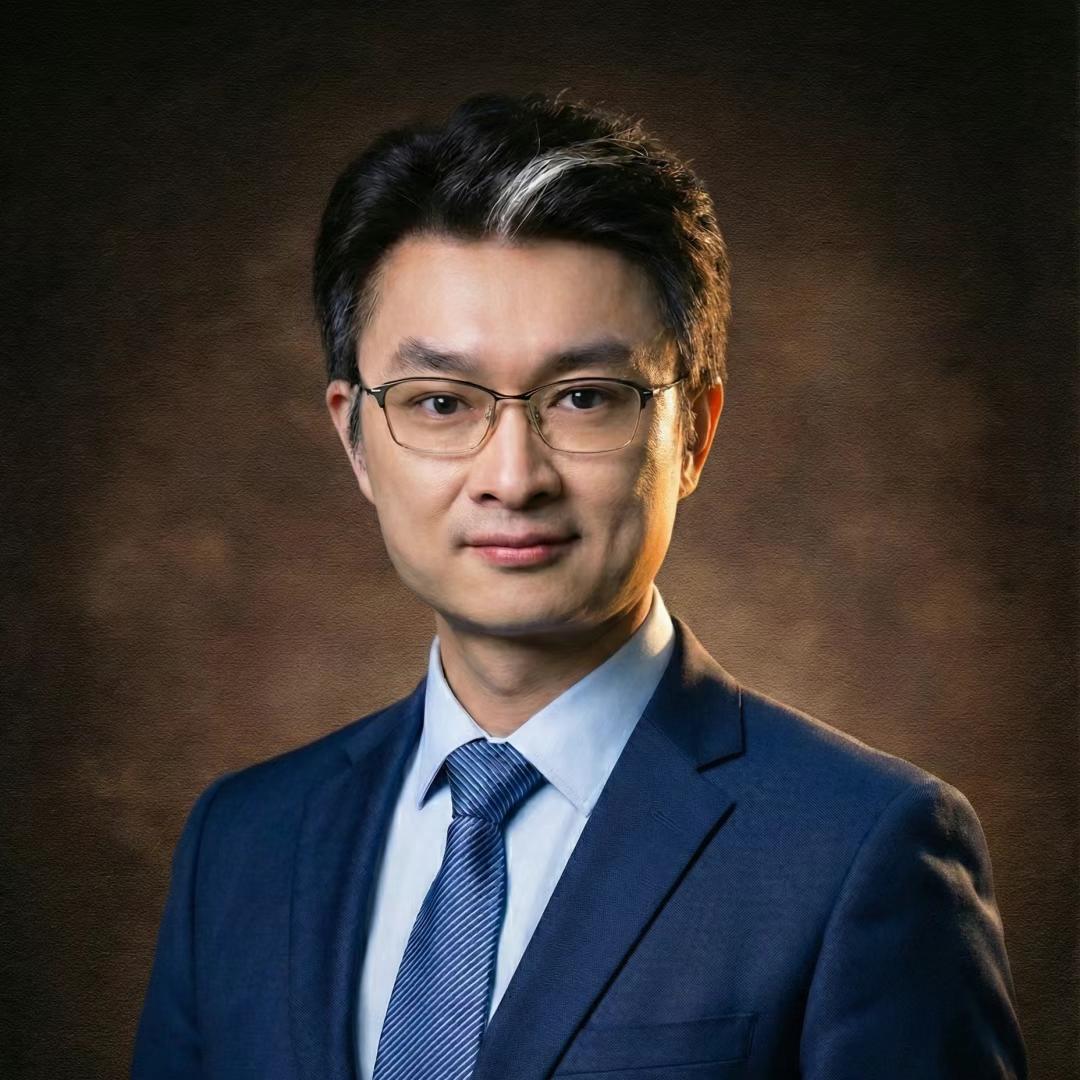
Yubin Xia is a professor and doctoral supervisor at Shanghai Jiao Tong University, an outstanding member of CCF, a recipient of the national young talent program, an outstanding academic leader in Shanghai, and an excellent advisor for the National Grand Prize of the "Challenge Cup".
His main research directions include operating systems, computer architecture, intelligent systems, etc. He has carried out continuous research with international influence in areas such as confidential computing, system isolation, trustworthy system architecture, and intelligent system optimization, and has formed systematic technological innovations from computer architecture to operating systems and then to intelligent application scenarios.
His representative honors include the SOSP Best Paper Award, the DSN Ten - Year Validation Award, the First Prize of the Ministry of Education's Technological Invention Award, the First Prize of the Shanghai Technological Invention Award, the CCF "NASAC Young Software Innovation Award", the Second Prize of the National Teaching Achievement Award, the Outstanding Teaching Award of Shanghai Jiao Tong University, and the "Jiahe" Outstanding Young Teacher Award of Shanghai Jiao Tong University.
In addition, he is also actively involved in serving the international academic community and the open - source ecosystem. He has long served as a program committee member for