The Low-Key Story of an Alternative Shenzhen Ebike Company: No Financing, No Cash Burning, with Annual Revenue Exceeding $100 Million | Insight Global
Editor's Note: As going global becomes an increasingly core strategy for Chinese companies, how to compete in the global market has become an extremely professional topic. In the evolution of globalization, many Chinese brands have stood at the forefront. In view of this, Yingke has launched the 'Insight Global' column to explore the cutting - edge directions and timely opportunities for Chinese brands to go global from the perspective of brand growth and change, providing thoughts and inspiration for global players and the industry.
This is the 56th issue of our column. In the wave of the explosive growth of the global electric bicycle (Ebike) market, a brand from Shenzhen - Heybike, has managed to break through in the highly competitive North American market in just four years. It has achieved annual sales of over 200,000 units and revenues of over $100 million, and has maintained continuous profitability.
Author | Ou Xue
Editor | Yuan Silai
The overseas Ebike market is shifting from a 'blue ocean' to a'red ocean'.
In the past few years, driven by environmental protection policies, consumption upgrading, and the influx of capital, this track was once extremely popular. However, as the track became crowded, the entire industry has experienced a fierce reshuffle.
Against this background, the Ebike company Heybike has continued to grow.
In the past few years, Heybike has accumulated over 170,000 users globally. At the same time, the company's annual sales have reached 200,000 units, corresponding to annual revenues of over $100 million.
Different from many competitors that rely on capital infusion, Heybike has been profitable since its first year of establishment and has never conducted external financing, nor does it have a financing plan for the time being. This ability to make money continuously and stably is not common in the industry.
The key to this stability lies in the fact that Heybike has always maintained its own pace and has not been led astray by external market changes.
'We hope to control the pace with our own funds and invest more resources in R & D and quality control,' said Fang Huimin.
Early on, it quickly entered the market with cost - effective and practical models, avoiding direct confrontation with traditional giants, and rapidly increased its volume through mainstream e - commerce platforms such as Amazon, completing the initial user accumulation.
However, during the period when capital was chasing and competitors were scrambling for financing and expansion, Heybike did not accept financing, did not pursue the advantage of the number of SKUs, and did not blindly expand into emerging markets.
In addition, after establishing a foothold in the North American market, Heybike did not rush to enter emerging markets such as Southeast Asia or Latin America. Instead, it spent two years intensively researching user needs and launched regional models accordingly.
This sense of rhythm of 'combining speed and slowness' has enabled it to stay sober during the industry's feverish cycle, providing a paradigm for global brands seeking long - term value that does not rely on capital infusion and is anchored by products and users.
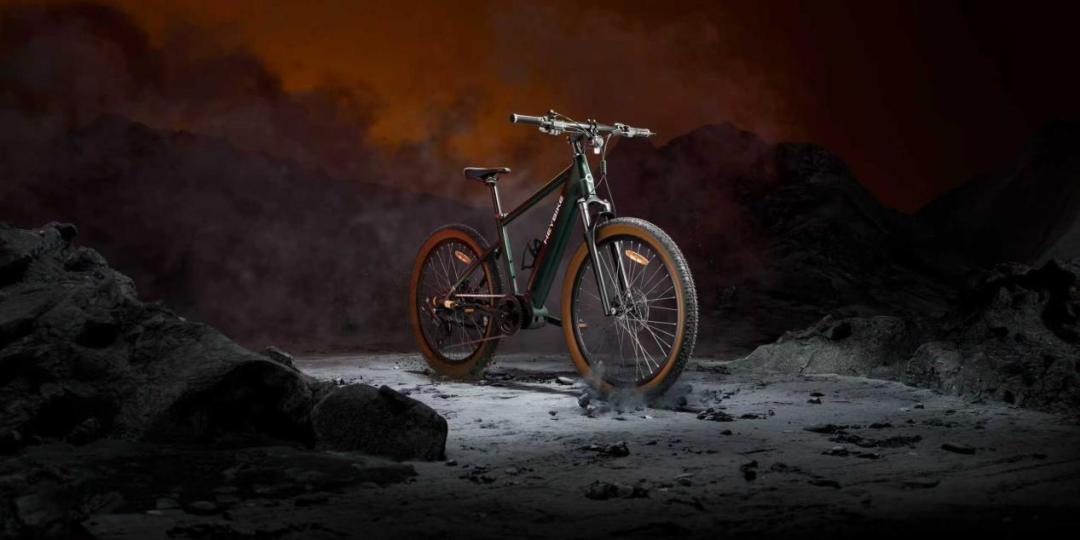
(Image source/Enterprise)

Don't be 'big and comprehensive', be'small and precise'
Heybike's two founders entered the short - distance travel field as early as 2014. One had focused on the domestic electric scooter market, and the other had years of experience in operating scooters overseas.
During an industry exchange, they realized that although the scooter market was becoming saturated, the North American Ebike market was still in the blue - ocean stage.
Based on their early accumulation in the electric travel field, in the early days, they built up their independent R & D, production, and supply - chain management capabilities by manufacturing scooters on an OEM basis for European and American brands - the company still retains some OEM business to this day.
However, the founders' ambitions were not limited to OEM. In 2021, when Heybike decided to create its own brand, it chose the Ebike track.
It was exactly the time when Ebike was at its hottest. In 2021, the investment boom in Ebike emerged. On one hand, emerging global brands in China such as Urtopia, Velotric, and Tenways received investment. On the other hand, Aventon and Rad Power Bikes in the United States, and VanMoof in Europe all received hundreds of millions of dollars in investment from institutions such as Sequoia and Hillhouse in that year.
However, although the market is large, the competitive landscape is highly fragmented. Traditional brands such as Giant and Merida, although occupying a certain share, mainly adopt the B2B distribution model, with slow market response and a long value chain. Emerging brands such as VanMoof and Rad Power, although rapidly rising with the DTC model, mostly focus on the 'big outdoor' or 'high - performance' fields, with generally high customer unit prices.
Fang Huimin, the founder and CEO of Heybike, told Yingke that there were two types of Ebike products on the Amazon platform at that time: one was the low - end models priced at only $600 - 700, and the other was the 'big wide - tire' off - road models priced at over $1,500 - 2,000. They judged that there was a neglected 'demand gap' in between.
Heybike targeted two niche scenarios: 'commuting' and'small outdoor', and launched two precisely positioned models - one for urban commuting and female users, and the other a folding fat - tire bike suitable for weekend outings, leisure cycling, and even rehabilitation training.
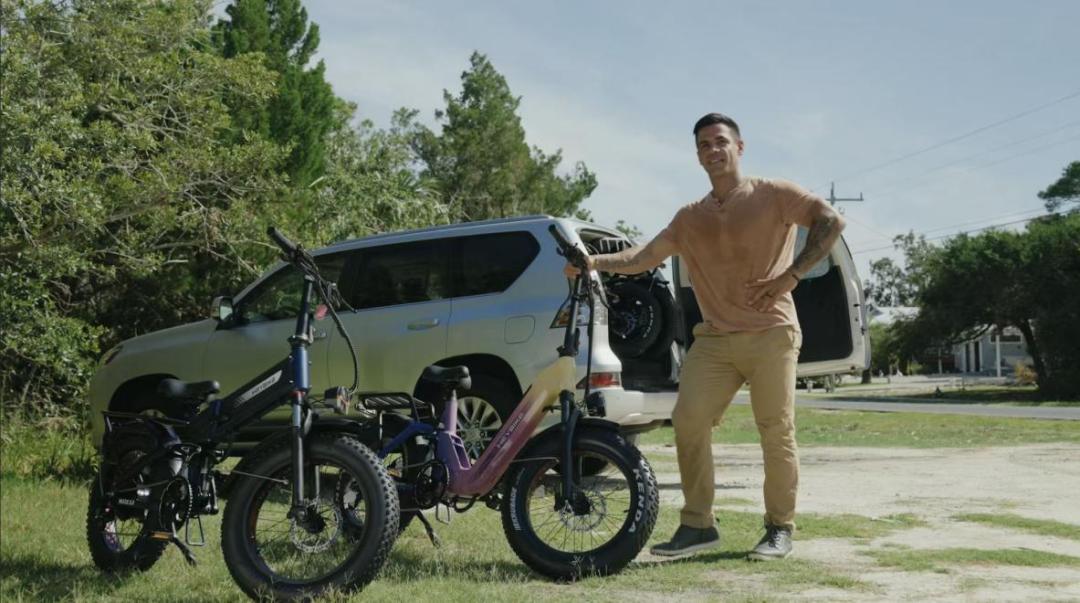
(Image source/Enterprise)
'American users have a very vague understanding of their first Ebike,' analyzed Li Yifan, the partner and COO of Heybike. 'They need a multi - functional bike that can be used for both daily commuting and weekend leisure.'
The two models were priced at around $1,000, avoiding the vicious competition in the low - price market and differentiating from high - end professional models.
After these two products were launched on Amazon and the independent website, they rushed into the top ten in the category sales in just 2 - 3 months and have remained in the top three since 'Black Friday' that year. The sales of a single model exceeded 10,000 units within half a year.
Compared with many brands targeting young people, Heybike's typical users are more likely to be women and middle - aged and elderly people over 50 years old who have outdoor leisure needs and consumption capabilities. These groups have high requirements for cycling comfort and safety and are willing to provide feedback.
In addition, Heybike chose to embrace the DTC model, leveraging both the independent website and Amazon, and gradually expanding to offline supermarkets such as Best Buy. Currently, it has become one of the first Chinese Ebike brands to enter Best Buy.
Currently, Heybike's sales markets are concentrated in North America, Europe, and Japan. North America contributes about 70% of the revenues, while Europe and Japan together account for about 30%. There are obvious differences in product strategies in different markets:
For example, in North America, outdoor models are the main focus, supporting the pure throttle mode with a speed of over 30 miles per hour; in Europe, commuter bikes are the main type, and the regulations require pedal - assist cycling; in Japan, the focus is on lightweight folding models to meet the local users' body types and storage needs.

Conduct R & D around 'real experience'
Perhaps due to years of experience in the industry, Heybike is used to being restrained.
In terms of the technical path, Heybike does not pursue the extreme stacking of parameters but conducts systematic R & D around'real experience'. According to Fang Huimin, the company invests tens of millions of yuan in R & D every year, with the focus on the three - electric system and IoT intelligence.
'We don't want technology to be a tool for self - indulgence but to truly serve users' daily lives,' emphasized Li Yifan.
In 2022, when many competitors were still struggling with hardware parameters, Heybike was the first to launch a smart Ebike with a built - in 4G module in the North American market. This was not just for technological iteration but to start solving vehicle - safety problems.
'We found that many users were worried about whether their expensive bikes would be stolen when parked outdoors. This is a real concern for them,' explained Li Yifan. Therefore, Heybike's IOT team focused its R & D on functions such as GPS anti - theft tracking, remote vehicle locking, and keyless unlocking through the APP.
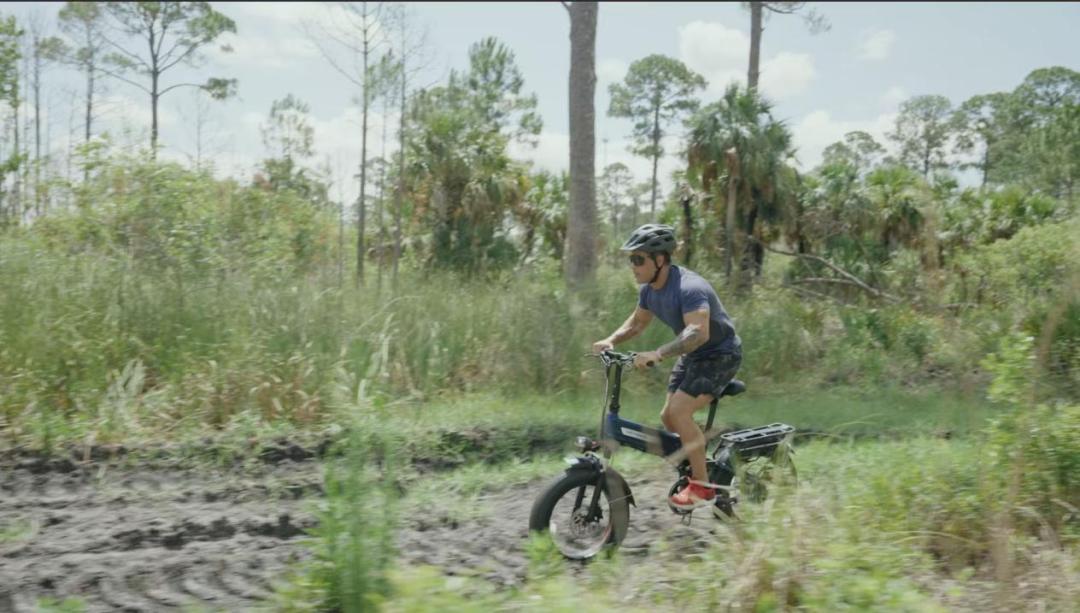
(Image source/Enterprise)
Since the main users of the products are women and the middle - aged and elderly, the Heybike team does not blindly pursue the maximization of peak power but pays more attention to the comprehensive performance of the motor in terms of smooth start, low - speed torque, and noise control - these are the most sensitive experience points for these users in real - life cycling scenarios.
Next, the Heybike team also plans to introduce AI algorithms into cycling data analysis to provide users with personalized cycling - mode recommendations, battery - health warnings, and even adaptive assist adjustment based on road conditions.
After capturing the niche groups, Heybike's next step is to expand to a more general market, which will be a significant change for them. In addition to deepening the professional niche market, they will also develop high - end models for 'extreme enthusiasts' and strengthen the stickiness of the community operation and the APP.
Fang Huimin revealed that the team is developing professional - grade models priced at $4,000 - 5,000, targeting professional groups and focusing on extreme sports and long - distance off - road scenarios. 'Just as the automobile market has differentiated into sports cars and SUVs, the user needs for Ebikes are becoming more diverse.'
This layout is based on their judgment of the market stage: the penetration rate of Ebikes in North America is only about 5%, far lower than 25% - 30% in Europe, but users' perception is evolving from 'the first commuting vehicle' to 'professional sports equipment'. Heybike plans to develop through a modular platform, maintaining the cost - effectiveness advantage of the main models while targeting the high - end market with high - performance configurations, and gradually building a full - scenario product matrix covering commuting, leisure, freight, and professional use.
It can be seen that the Ebike industry has now entered a stable period. Heybike also plans to increase its investment and become the Ebike brand with the largest market share in North America within 3 - 5 years, and continue to explore emerging markets such as South Korea and Singapore.
To achieve this goal, Fang Huimin revealed that Heybike will continue the idea of'regional customization'. For emerging markets such as South Korea and Singapore, the team will keep observing and plans to gradually penetrate through crowdfunding trials and cooperation with offline channels in a lightweight way.