With a daily salary of 300, I'm "manually crafting" humanoid robots in Houchangcun.
After "sneaking into" the assembly line of robotic robots, I finally understood why it's so difficult to mass - produce humanoid robots.
In an office building not far from the "Internet crossroads" in Beijing's Houchangcun, in a room the size of a classroom, dozens of workers are divided into two groups. One group is assembling bearing modules on the table with screwdrivers and wrenches, while the other group is in the adjacent testing area, using oscilloscopes and multimeters to test the assembled assemblies.
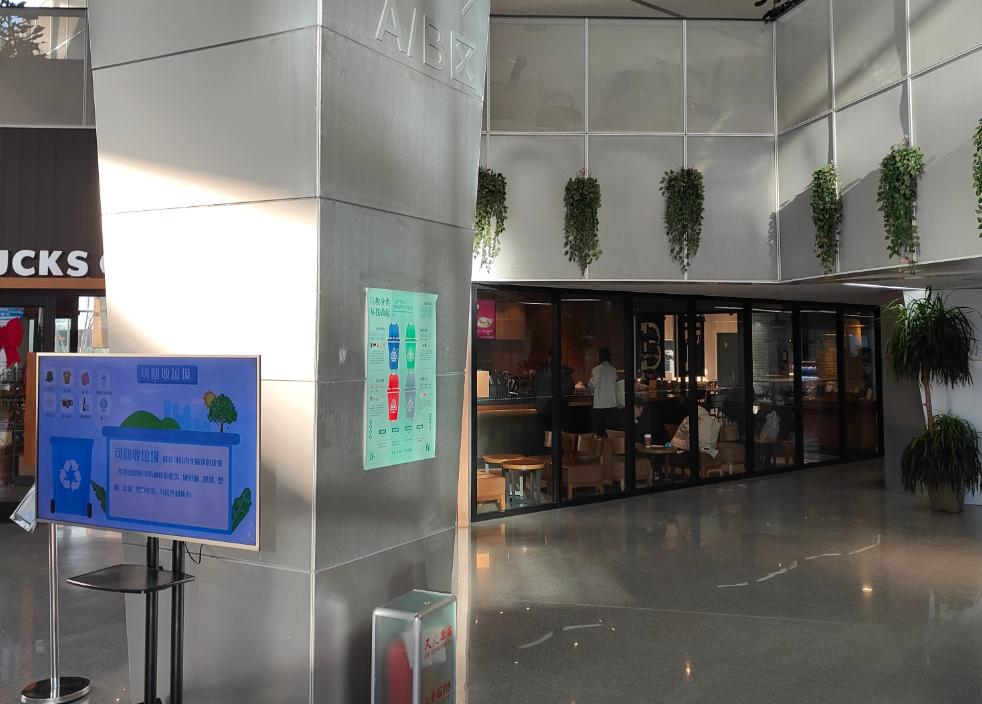
The lobby of the office building where the company is located
This is not a small workshop, but the production link of the humanoid robot industry, which is the technology startup trend in 2025.
I've visited countless smart factories in various industries, from coffee to automobiles. Usually, the higher the technological content of the product, the fewer the manual - operation links required, and the more standardized the assembly line. Workers and the assembly line are almost integrated. By analogy, the place where "embodied intelligence" is created should be full of various black technologies.
But the situation is not as I imagined. There is no assembly line here, and there are no large - scale equipment other than the metal workpiece freezer. The assembly specifications rely entirely on a well - worn A4 paper manual in each worker's hand...
It's more like a laboratory for the automation major in a university or a busy household appliance repair shop. In order to see the actual development level of the current robot industry, I signed up for an outsourcing part - time job at an embodied intelligence enterprise, originally intending to get a glimpse of this industry on the assembly line.
But the biggest feeling from the actual experience is that there is no assembly line. Compared with the iPhone era, the humanoid robot industry needs its own "Ford Model T moment" more.
Assembling robots by hand, earning 300 yuan a day
Since it was an outsourcing part - time job, I knew nothing about the company's scale, business, and strength before coming here. I was only quite puzzled about one thing: what kind of robot company would place its factory in Houchangcun, a place with high land prices and a dense cluster of Internet tech giants?
It wasn't until I sat down at the assembly station and looked around that I found out that this company is called "XX Intelligence". It's no unknown entity. It has the background of top - notch universities and tech giants and has completed multiple rounds of financing. Although it's not as well - known as Unitree and Zhipu, it's among the top in the industry. I followed their official account a year and a half ago and was even in the same industry group as one of the company's employees.
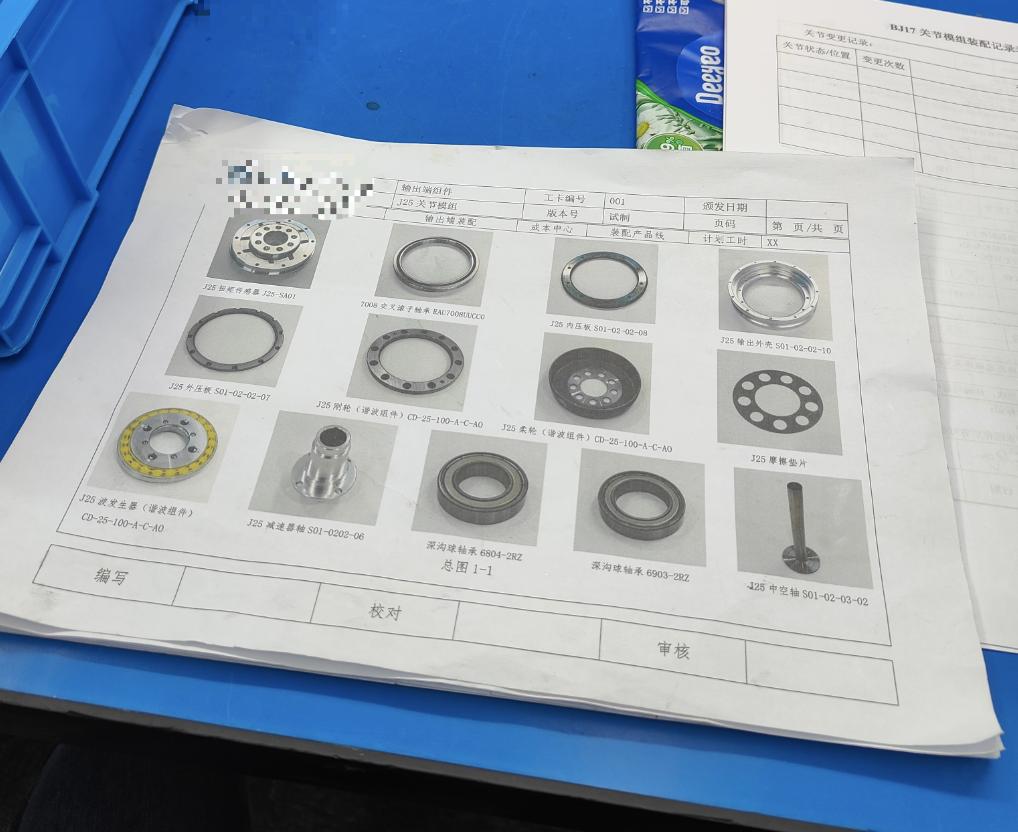
Assembly flow chart. Copyright belongs to the company
The position I applied for was assembly, which means putting the parts together according to the design drawings. The process manual details the precautions and the parts and tools to be used, such as what size of screws to use, how long to freeze the workpiece before installation (using the principle of thermal expansion and contraction to embed the workpiece), and how much torque to apply during installation, etc.
The color - printed process manual is a bit like a Lego assembly instruction. You can "assemble" it by following the specifications step by step. On the operating table, the storage boxes are filled with bolts and screws of various sizes, and tools such as hex wrenches and electric screwdrivers are neatly arranged on the table.
But for beginners without mechanical talent, it's really a bit of a mess at first. For example, they may not be able to tell the front and back of the workpiece, distinguish different workpieces in a joint module, or know where to insert the screws.
In some links, an electric soldering iron is also needed to connect the controller's circuit board and the connecting wire. However, for those with a little engineering foundation, they can quickly get the hang of it within two or three days after getting familiar with the process. The key is to have enough patience and a pair of dexterous hands.
During the simple "interview" process, in addition to the applicant's practical ability, the person in charge of the production department also cares a lot about whether the interviewee has worked in the bearing - related field.
This is because although the AI ability of the robot determines its intelligence level, in terms of manufacturing, it's more like building a car than a phone. Most of the assembly work revolves around individual joints, and joints are composed of more inconspicuous, basic, and even "plain" bearings.
Take the arm assembly necessary for humanoid robots as an example. Usually, there are a dozen or even dozens of joints. The bearings in the joints are directly or indirectly linked with various sensors, motors, reducers, etc. The quality of the robot is closely related to its mechanical quality and installation process. From this perspective, no matter how intelligent the humanoid robot is, it's actually a mechanical product similar to a car, rather than a digital product similar to a phone.
But different from the highly automated assembly lines of already - mature automobile factories, the assembly of humanoid robots, which have a higher technological content than cars, actually relies entirely on workers' "manual assembly": physically using simple tooling fixtures, electric wrenches, screwdrivers, and electric soldering irons for assembly and welding.
The pay for manual assembly is about 300 yuan a day. In this not - very - large robot assembly - testing workshop, both assembly and quality inspection are outsourced. The treatment is 30 yuan per hour. After a one - week trial period, an outsourcing contract can be signed, and the company will pay the five social insurances and one housing fund.
As for the working hours, it's "986" - starting work at 9 a.m., getting off work at 8 p.m., and there's a high probability of overtime on Saturdays to catch up with the progress.
Workshop - style production and the difficulty of mass production
Although they are engaged in production, the assembly workers work in the same office building with Starbucks and McDonald's as the white - collar workers in the tech company.
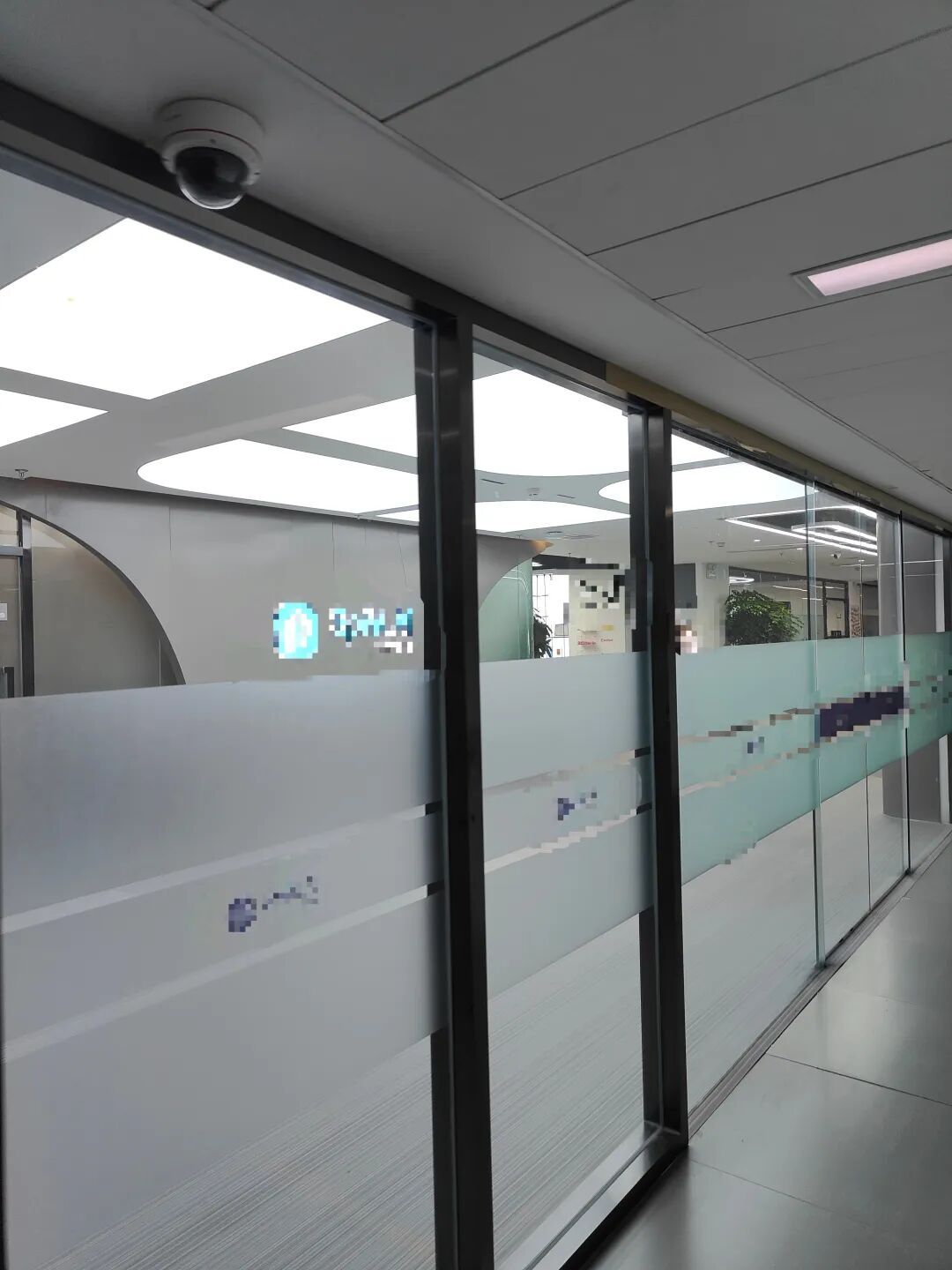
The company's front desk
This humanoid robot company occupies two floors of the office building. The office area is no different from that of Internet giants. Especially the layout of the company's front desk is a "standard" Internet company in Houchangcun;
In the R & D area, the floor is full of testing equipment connected to robots, as well as various semi - finished products and parts. There are frames hanging the upper bodies of robots everywhere, and engineers are shuttling among them in twos and threes;
There is also an area for image recognition training of AI. In front of several rows of computers, data annotators are optimizing the robot's visual model.
The pace of R & D and production seems to be very intense. On the big screen at the workshop entrance, there is a data dashboard showing the project progress of different project groups and the number of completed tasks today.
Although the weekly working hours are close to 70 hours, there is still a shortage of manpower here. In the assembly department where I work, new interviewees keep coming to apply for this outsourcing position.
It can be inferred that this humanoid robot company has a large number of orders and needs to work overtime to catch up with the delivery progress. But in Beijing, it's quite difficult to recruit skilled workers at this wage. The workers here need to complete multiple complex processes alone. In addition to a pair of dexterous hands, they also need a brain that can understand the drawings and even the design intention. Compared with ordinary assembly - line workers, assembling humanoid robots requires more comprehensive skills. Just simply increasing the number of workers cannot improve production efficiency. Only by finding enough, sufficiently skilled and dexterous workers can the production capacity be increased.
This is a typical "workshop - style production": When the assembly line and process flow fail, the craftsmanship and experience of craftsmen come in handy. In the embodied intelligence industry, the value of skilled workers is more irreplaceable than in other mature industrial productions.
During assembly, it often happens that some modules are installed according to the process but just won't move. At this time, a senior master will stand up from his workstation and use his ears to listen to whether a certain motor is installed correctly and how it's running. After his operation, there's a high probability that the module will run correctly. However, manual assembly means that many links cannot be standardized as strictly as stipulated in the process manual, resulting in a relatively high reject rate in front - line production.
In sharp contrast to the future of "embodied intelligence" - replacing manual jobs with AI and intelligent machines, the first sparks of humanoid robots are actually ignited by some human "skilled craftsmen".
At the same time, because they deeply understand the important value of workers, the working atmosphere here is much more relaxed and cheerful than that of express sorting, food delivery, etc. The production manager is quite patient with the workers and rarely shouts orders. Seeing that I was not very proficient, he even demonstrated the operation to me and didn't mind my rough soldering skills.
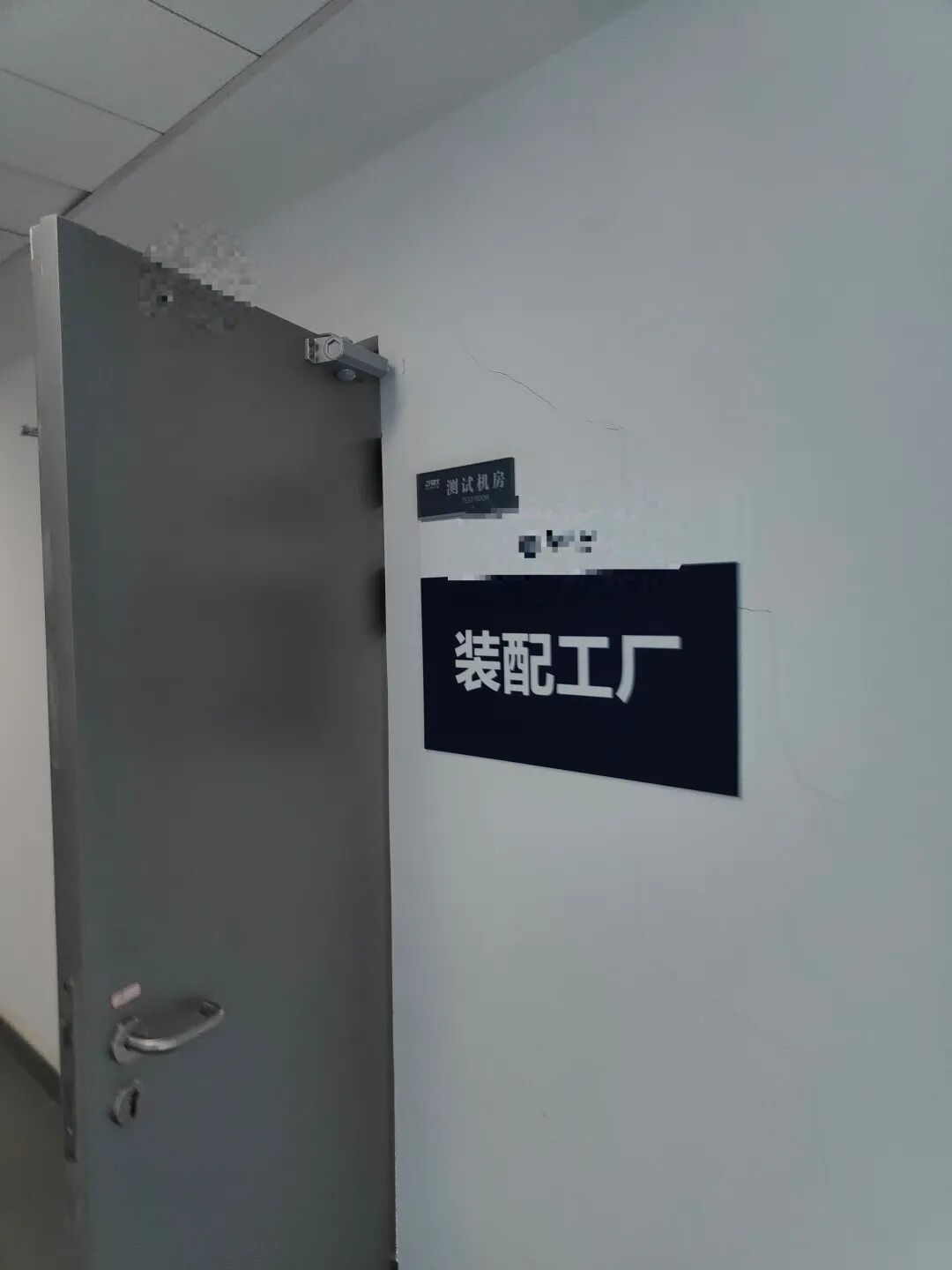
The entrance of the assembly workshop
This "craftsman spirit", if in the intangible cultural heritage handicraft industry, would be worthy of praise, but in manufacturing, it means inefficiency and difficulty in standardization. "Manual assembly" may seem simple, but it means the inability to mass - produce and high time and labor costs.
Recently, some industry insiders have defined 2026 as the "Year of Mass Production of Embodied Intelligence". But in the current workshop - style production, as long as humanoid robots are still assembled by workers' hands and there is no assembly line similar to that in the automobile industry, it can't be considered true mass production.

The street view near the company
As for why they set up a "robot workshop" in an office building in Houchangcun, a place with high - rent and a cluster of Internet companies, instead of placing the production link in Shunyi, Beijing or Lingang, Shanghai, where the land and labor are cheaper and the automobile and machinery - related manufacturing industries are more developed, the answer is obvious:
Firstly, it needs to be closer to R & D. The humanoid robot is still in the stage of rapid iteration in the laboratory. The R & D and production departments are on adjacent floors, which facilitates quick communication and improvement between R & D and production;
Secondly, the demand is not enough to support assembly - line production. The current orders are not large enough to require assembly - line production, and the process flow is still in the stage of frequent improvement. Workers' "manual assembly" is actually more flexible.
Some industry insiders hold similar views. For example, Wang Zhongyuan, the dean of the Beijing Academy of Artificial Intelligence, said, "The industry needs to distinguish whether the current mass production is driven by real business demand or a false demand only spawned by policy subsidies and investment enthusiasm." Only relying on demonstration projects such as robot performances and exhibitions can only bring small - scale and phased demand, which cannot support continuous mass production.
Therefore, for the humanoid robot industry to bid farewell to the workshop - style production, fundamentally, it needs to have stronger usability in production and living scenarios. Only then will there be enough demand. Just like the automobile industry 100 years ago, it was only after there was enough demand that Ford's Model T assembly line emerged.
The "Robot Grandma" who can only twirl a handkerchief doesn't need to be produced in large quantities.
Epilogue
Another thing that shocked me greatly was that I originally thought robots were all precision products, but it turned out not to be the case.
Actually, in the robot production process, if you assemble something wrong and want to start over, many parts can be knocked off with a hammer.
Once, when the production manager saw that I had two workpieces with small tolerances stuck at an angle and couldn't move them forward or backward, he directly found an ordinary hammer from another workstation and knocked them apart with a bang and then continued the assembly.
After that, I completely "disenchanted" humanoid robots. No matter how intelligent the embodied product is, most of it is actually just a lump of iron.
Reference materials
1. "The Embarrassing Business of Humanoid Robots: Orders Exceed 3.5 Billion, but Deliveries Are Less Than a Thousand Units" - Tech Planet
2. "The Year 2025 of Humanoid Robots: Half in the Misty Forest, Half in the Starry Sea" - Titanium Media
3. "On - the - Spot Investigation at the Exhibition: Where Is the Bottleneck in Mass - Producing Humanoid Robots?" - Shanghai Securities News
4. "The Year 2026 of Mass Production: Where Are the Opportunities for Humanoid Robots?" - Gelonghui
This article is from the WeChat official account "Hedgehog Commune" (ID: ciweigongshe), author: Garden Director, editor: Chen Meixi, published by 36Kr with permission.