Founder who bets on "childhood trauma": This early-stage London fund has achieved a 10-fold return.
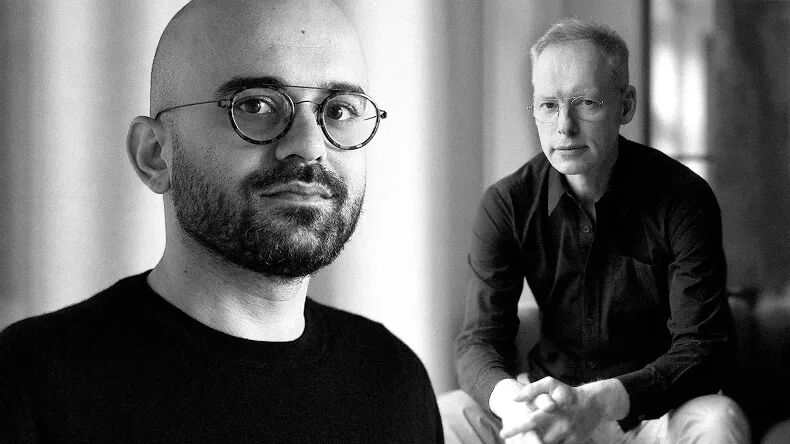
Image source: Hummingbird Ventures
Hummingbird is a low - key venture capital fund in London. Its partners, Barend Van den Brande and Firat Ileri, were both included in the Forbes Midas List Europe for their unique strategy of breaking the conventions of the venture capital industry and focusing on supporting "outsider" founders.
In 2018, Oguzhan Atay was preparing for the Series A financing of his San Francisco - based medical diagnosis startup, BillionToOne, when a message from Hummingbird Ventures suddenly appeared in his inbox.
The London - based fund said it wanted to hear his project pitch. After a phone call, Hummingbird's two partners, Van den Brande and Ileri, flew to California to meet Atay and his team. At that time, the team was working on developing genetic testing technologies for common fetal diseases such as sickle - cell anemia and cystic fibrosis. On the day of the meeting, Hummingbird presented Atay with a term sheet and led BillionToOne's $15 million Series A financing in March 2019. Atay said, "In just one week, they understood our business better than those investors who had spent six months to a year studying us."
In November this year, BillionToOne went public on the NASDAQ, and its market value soared to $4.4 billion at one point. At that time, Hummingbird held a 16% stake in the company, which is now worth $745 million based on the current market value.
01
This deal helped Ileri make it onto the European Midas List for the first time, while his partner, Hummingbird founder Van den Brande, was included for his investment in the cryptocurrency wallet company Kraken, which is currently valued at $20 billion.
In addition, the two have also successfully bet on a series of high - quality projects: the Swedish artificial intelligence "ambient programming" company Lovable, valued at $6.6 billion; several Turkish mobile game developers such as Peak Games; and the chip manufacturer Etched in the US Bay Area.
The biotech, cryptocurrency, artificial intelligence, and gaming industries may not seem closely related, but in the eyes of Hummingbird's two partners, the founders in these fields share similar traits. This trait has nothing to do with educational background or technical expertise, but rather "traumatic experiences."
Ileri and Van den Brande said that they are looking for "outsiders" - those who have experienced difficulties but developed a strong desire to win.
"The world's best founders don't come with 'perfect resumes,'" Van den Brande said. "Their alternative traits often scare off most venture capitalists, who think 'it's too risky, a minefield.' But we didn't back down. That's what makes us different."
On the surface, Hummingbird's investment logic doesn't seem special. Doug Leone of Sequoia Capital often mentions that his experience of being bullied at school after immigrating to the US from Italy gave him unique investment insights and made him pay special attention to "edgy" founders. Other funds also often list "grit" as an important consideration. But Hummingbird takes this logic to a deeper level. "Many funds say they value this trait, but in the end, they still invest in people with work experience at Palantir or McKinsey," said an angel investor who co - invested with Hummingbird (the investor requested anonymity to speak freely). "But Hummingbird is really looking for founders with childhood trauma."
02
When asked about his personal experience, Atay didn't respond directly but mentioned that he grew up in a middle - class family in a small town on the Black Sea coast of Turkey. He faced fierce competition during his studies and finally won the top place in the national university entrance exam. "I didn't think my family was poor at that time, even though we couldn't afford many of the books I wanted to read," Atay said in an interview with Forbes.
Less than a year later, the pandemic hit, and Atay's grit was proven.
At that time, BillionToOne's doctor clients were extremely busy, and the company's regular business channels came to a standstill. Different from the traditional image of founders with a scientific research background, Atay was flexible and highly proactive: he started meeting clients in parking lots and donated N95 masks to get time to communicate with busy doctors and clinics. "Many people think Oguzhan is a mild - mannered doctor, but they haven't seen his determination," Ileri said, adding that he was sure Atay had the ability to overcome any difficulties and make the plan work.
Van den Brande, who was born in Belgium, developed his current strategy after repeatedly hitting a wall following traditional investment logic. After graduating from university, he first worked in the banking industry in the US. In 2001, he returned to Belgium and founded the small venture capital fund Big Bang Ventures. He followed the classic US venture capital model at that time, focusing on investing in SaaS (Software as a Service) founders and university - derived projects in the Netherlands and Belgium, but the results were mediocre, far from the "spectacular" expectations. "For a while, even my limited partners (LPs) wanted to replace me," Van den Brande said. He comes from a well - known political family in the Flemish region of Belgium and currently lives in Bruges and London.
It was already a struggle for Van den Brande to raise this $10 million fund at the beginning, and now he had to face embarrassing questions from the investors, most of whom were industrialists from the Low Countries. In communicating with these investors, he increasingly asked them to share their experiences of overcoming challenges and discussed the psychological traits of self - made entrepreneurs with them. In 2010, he restarted the fund business, founded Hummingbird, and raised $25 million in new funds to specifically invest in "outsider" entrepreneurs.
Later, Pamir Gelenbe, who was then a venture partner at Hummingbird responsible for finding projects, suggested to Van den Brande that they pay attention to the emerging Turkish startup ecosystem. In November 2010, Van den Brande led a $500,000 seed - round investment in the Istanbul - based game company Peak Games, one of his first moves in the Turkish market. This investment eventually brought substantial returns: in 2020, the casual game giant Zynga acquired Peak Games for $1.8 billion. Gelenbe now runs his own cryptocurrency fund and also recommended the US - based cryptocurrency exchange Kraken in California to Van den Brande. In March 2014, Hummingbird led Kraken's $5 million Series A financing. In November 2024, Kraken raised $800 million for global expansion, and the company was valued at $20 billion at that time.
Ileri joined Hummingbird in 2012. Before that, he was based in London and worked on the emerging - market bond team at JPMorgan Chase. He grew up in North Cyprus, a divided Mediterranean island. As an autonomous region, North Cyprus is currently only recognized by Turkey internationally. At the age of 16, Ileri left his hometown to study at the Massachusetts Institute of Technology (MIT). At that time, there was a startup boom on campus, and his classmates later founded well - known companies such as Dropbox (a cloud - storage company), Twitch (a game - streaming platform), and Cruise (an autonomous - driving company).
Initially, Ileri tried to enter the US venture capital industry but didn't succeed. Later, he saw a job posting by Van den Brande on a niche Turkish startup blog. In 2017, Ileri was included in the Forbes 30 Under 30 Europe list. The following year, one of the first investment projects he led at Hummingbird, the Istanbul - based game developer Gram Games, was acquired by Zynga for more than $250 million. In 2021, Ileri was promoted to managing partner at Hummingbird.
03
Now, Hummingbird manages over $1 billion in funds. Headquartered in London, its 14 - member team searches globally for founders who meet the criteria. The junior investors on the team are not restricted by industry or region. They spend a lot of time filtering valuable signals and can meet with up to 50 companies per week.
"There is a great deal of freedom to work there. If I think there are opportunities in Latin America, I can just go there to explore," said Lola Wajskop, who started her investment career at Hummingbird and is now a partner at the New York - based fund Asylum. "But the key is not the quantity, but the ability to stick to the standards and never compromise."
Hummingbird has abandoned many traditional venture - capital models. For institutional investors who are used to classifying funds as "region - specific" or "industry - specific," Hummingbird's strategy is hard to define. "Our most successful investments have always been in those who break the rules," Ileri said. The two also don't value the principle of "diversified investment": Hummingbird usually makes only a few investments each year. In 2015, they even invested 40% of a fund's capital in the same startup, the UK food - delivery platform Deliveroo, which went public in 2021 with a market value of $2.4 billion.

Van den Brande and Ileri also don't quite agree with the view that "venture capitalists should guide founders on product or strategy." "We believe that the greatest value of venture capitalists lies in having honest conversations with founders, not causing trouble - but 95% of venture capitalists in the market do the latter," Ileri said. However, Hummingbird has also made a rare adjustment close to the traditional venture - capital model: it recently established a talent team to help founders recruit core management talents.
Another difference between Hummingbird and most venture capital firms is: it never shies away from talking about the fund's performance. Its second fund, raised in 2012, is currently performing the best, with a distributed - to - paid - in (DPI) ratio of 10 times and a net internal rate of return (IRR) of 46%. The third fund, raised in 2016, currently has a DPI of 0.7 times (although the unrealized return is 5.3 times) and a net IRR of 33%.
This means that among the venture - capital funds focused on the US market that started investing in 2012, Hummingbird's early - stage funds rank in the top 10%. According to Pitchbook data, the average IRR of funds established in 2012 was 18.7%, and the average DPI was 2.3 times; for funds established in 2016, the average IRR was 15.7%, and the average DPI was 0.8 times. "Although Hummingbird is not as well - known as Sequoia, judging from the historical performance of its early - stage funds, it has undoubtedly performed very well compared to the overall market," said Beezer Clarkson, the head of fund - investment business at Sapphire Ventures. "In my experience, it is extremely rare for an early - stage fund to achieve a DPI of over 10 times in multiple fund cycles, no matter in which region."
Hummingbird's obsession with finding founders with "exceptional adaptability" and pursuing "cognitive arbitrage" is quite similar to that of another Midas List honoree, Peter Thiel, and his anti - consensus - style Founder Fund. However, compared with this Bay - Area - based competitor, Hummingbird has a more aggressive investment style and gets involved in projects at an earlier stage. The two partners have also launched a small project similar to the "Thiel Fellowship" called the "Magnificent Grants," which provides a minimum of $12,000 in funding to young people under 25 who are ambitious to launch grand projects.
Perhaps the most "traditional" thing about Hummingbird is its office. Its London headquarters is near Golden Square, an area where many well - known European venture - capital firms are located, such as Index Ventures, Highland Capital, and the European division of the fund - management company Horsley Bridge. Currently, the two also manage a $300 million fund dedicated to investing in other non - traditional investment institutions. It's becoming increasingly difficult to find corners or niche industries that competitors haven't noticed in the global market, but their core investment logic remains unchanged. "Our goal is clear: to find those outstanding and different founders before others do," Ileri said.
This article is translated from: https://www.forbes.com/sites/iainmartin/2025/12/11/these-vcs-winning-investment-strategy-finding-founders-with-childhood-trauma/
Original title: "These VCs' Winning Investment Strategy: Finding Founders with Childhood Trauma"
This article is from the WeChat official account "Forbes" (ID: forbes_china), author: Iain Martin; translated by Lemin, published by 36Kr with authorization.