How can data transform from "cost" to "asset" and then to "capital"? This official and authoritative guide (Version 8.0) explains it thoroughly.
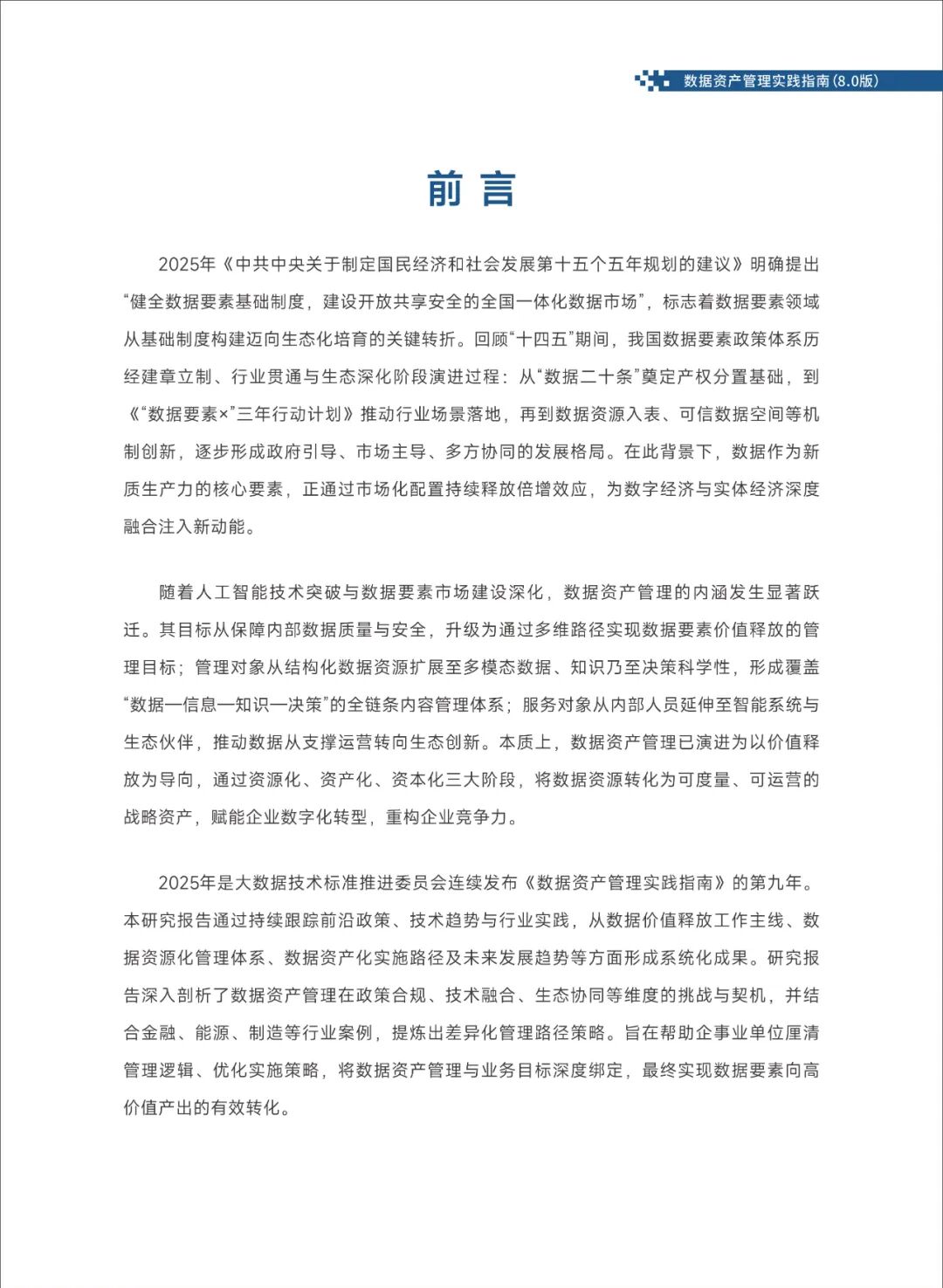
In 2025, the market - oriented reform of data elements has entered the "deep - water zone". With continuous policy support and rapid technological iteration, how can enterprises seize the strategic dividends brought by data elements and truly transform massive data into core assets driving growth? The “Practical Guide for Data Asset Management (Version 8.0)”, jointly compiled by the Big Data Technology Standard Promotion Committee (CCSA TC601) with the participation of hundreds of leading enterprises and authoritative experts, is officially released! As the industry's "weather vane" that has been iterated for nine consecutive years, this year's Version 8.0 systematically depicts for the first time the complete value leapfrog path from "data resourceization" to "data assetization" and then to "data capitalization". It is an essential reference book for managers in all industries and data practitioners to grasp the future direction.
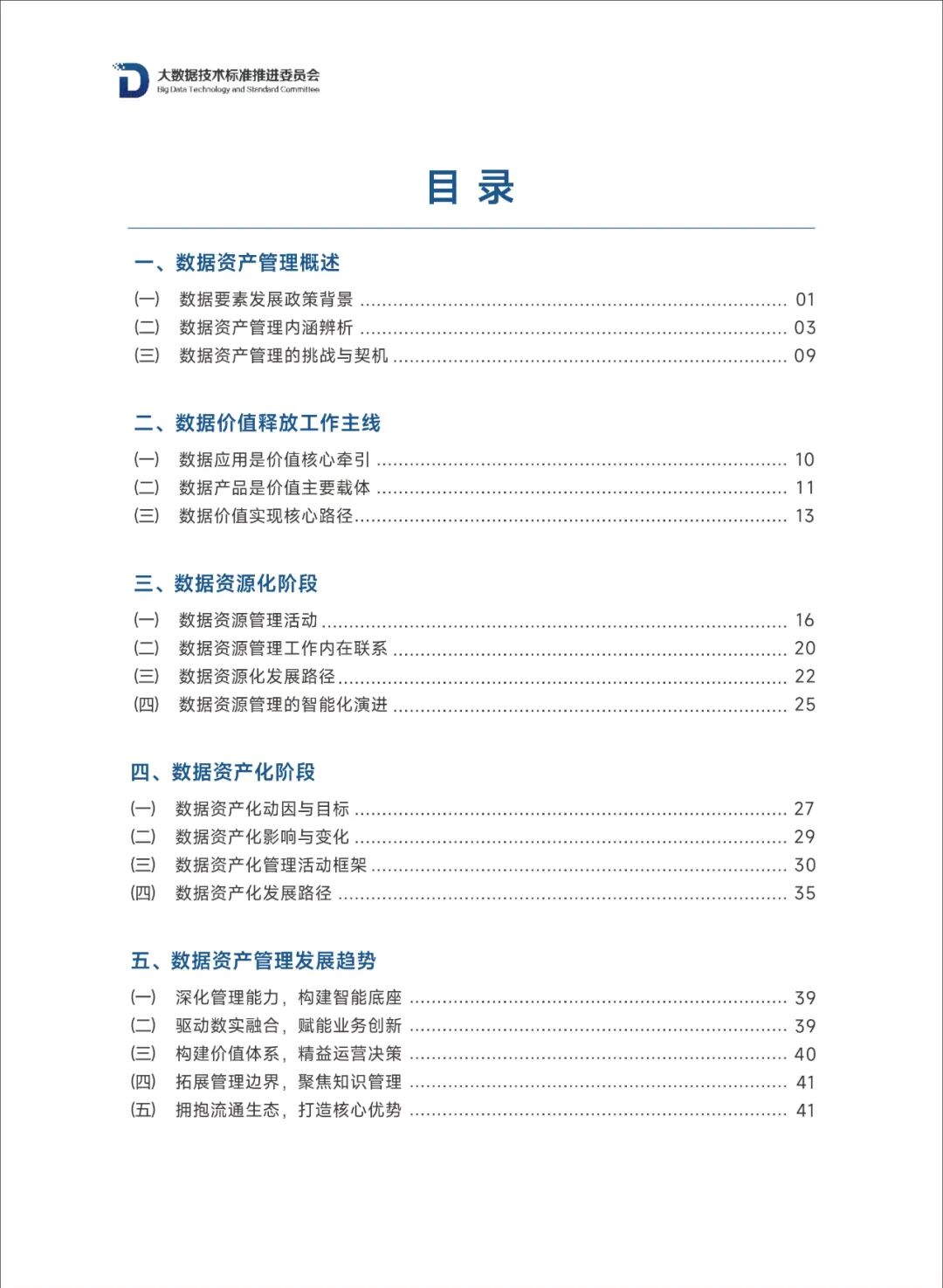
I. Core Upgrade: Clearly Outline the "Three - Step Jump" of Data Valuation for the First Time
In the past, when we talked about data governance, we mostly focused on quality, security, and internal applications. The 8.0 version of the guide clearly points out that a paradigm shift has occurred in data asset management:
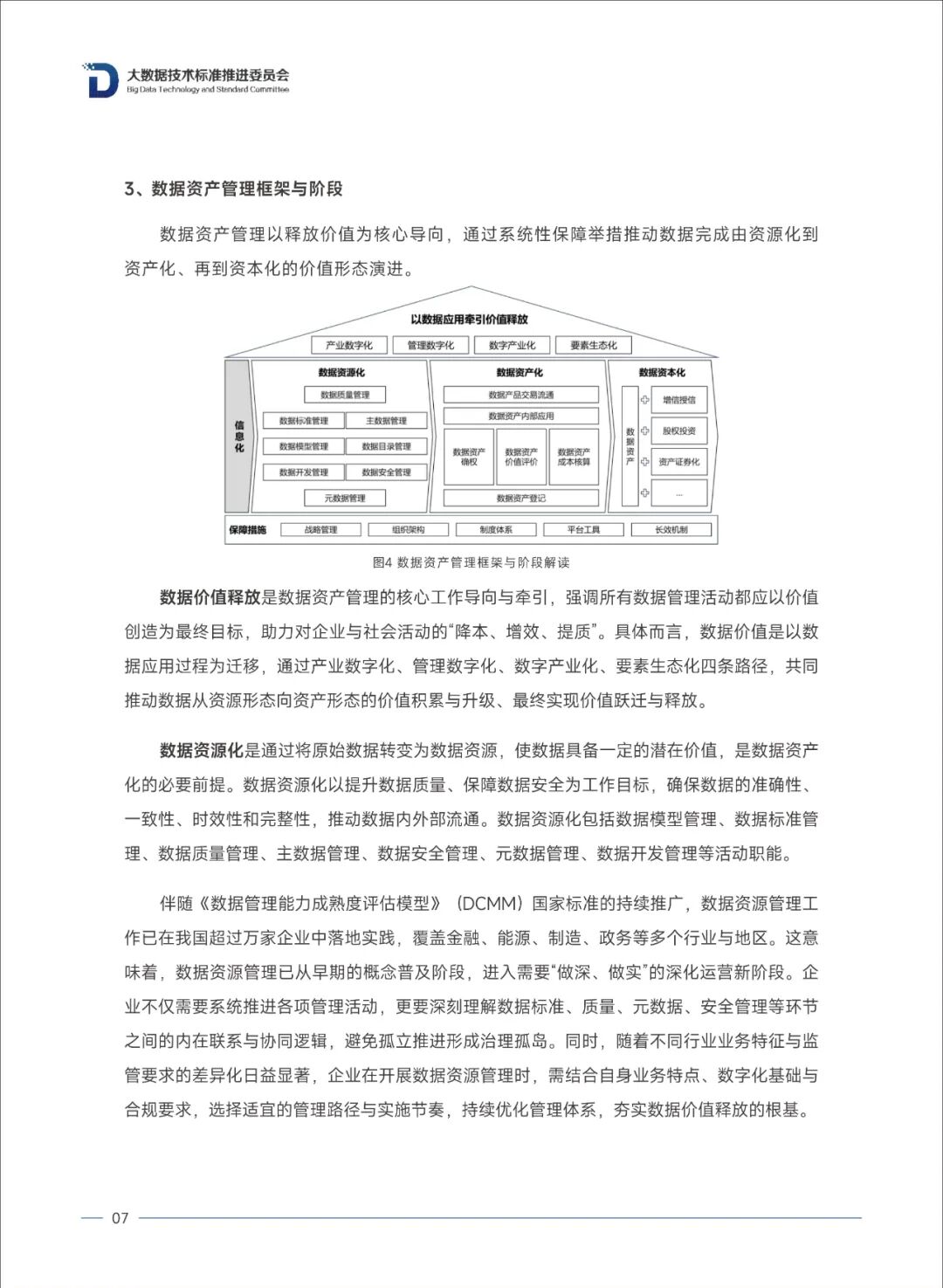
Resourceization (Laying the Foundation): Solving the problems of "whether the data exists, whether it is good, and whether it is safe" is the prerequisite for value release. The guide details the internal relationships and intelligent evolution of eight management functions (such as models, standards, quality, and security).
Assetization (Realizing Value): The core is to make the value of data "visible, tangible, and measurable". The guide systematically explains six core management activities including data asset registration, rights confirmation, valuation, cost accounting, inclusion in the balance sheet, and internal and external circulation, directly addressing practical problems that enterprises are most concerned about, such as "how to include data in the balance sheet", "how to price data", and "how to conduct data transactions".
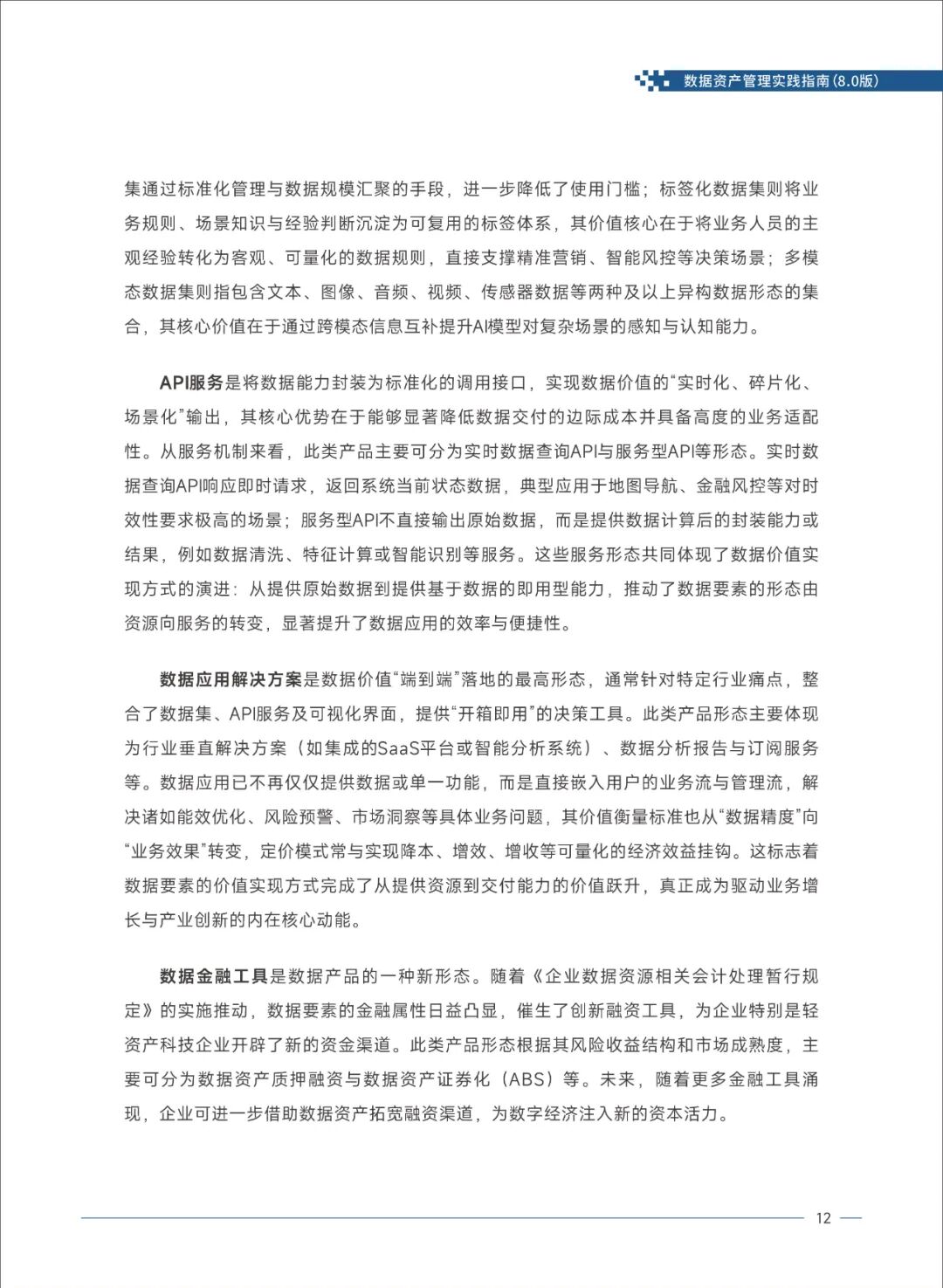
Capitalization (Amplifying Value): When data becomes a stable asset, it can be combined with financial instruments. Innovative models such as pledge financing, securitization (ABS), and capital contribution in the form of data assets upgrade data from a "production factor" to "strategic capital", opening up new financing and development channels for enterprises.
This guide is like a clear "navigation chart", helping enterprises identify their stage in data valuation and where to go next.
II. Four Selling Points: Why is this the most worthwhile report to read this year?
1. Closely Follow the Latest Policies and Market Trends
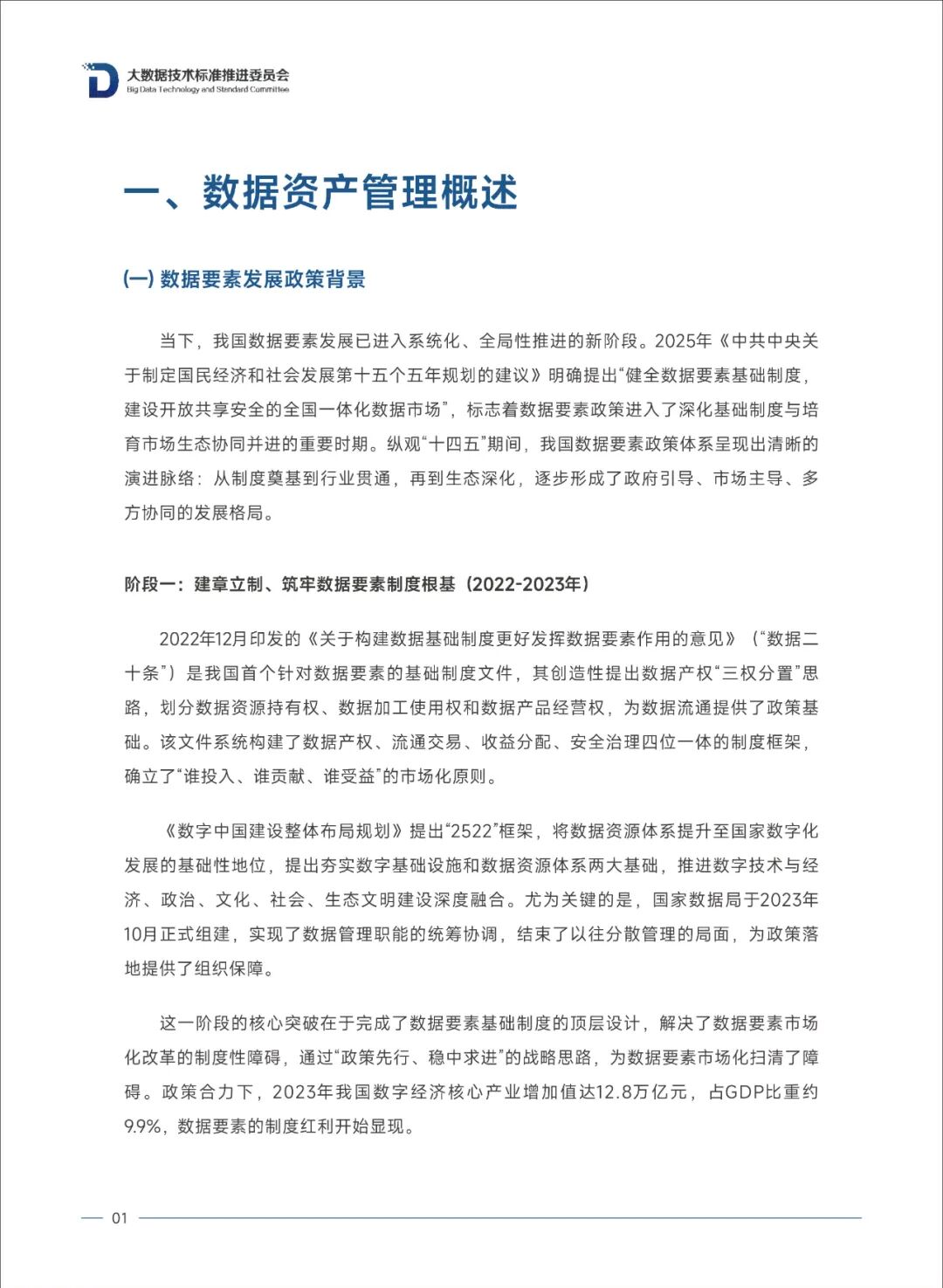
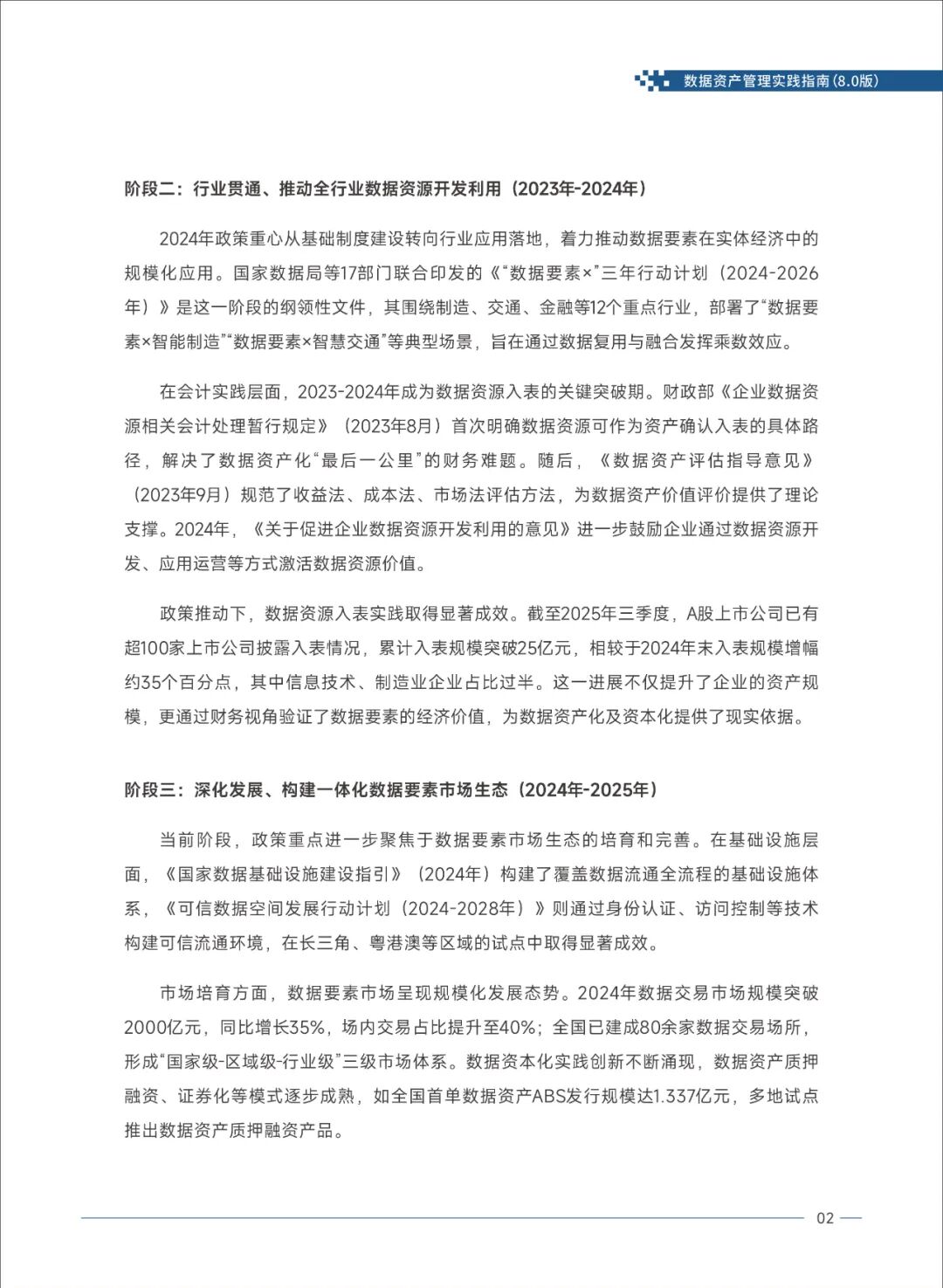
The report deeply interprets the latest policies such as the 14th Five - Year Plan, the new regulations on including data resources in the balance sheet, and the "Data Elements ×" Action Plan. It also quotes the latest market data as of 2025 (for example, more than 100 A - share companies have included data in their balance sheets, and the scale of the data trading market has exceeded 200 billion yuan), ensuring that all analyses and suggestions are in line with the current development.
2. Extract Four Implementable Value Realization Paths
Enterprises don't need to be confused. The guide summarizes four core paths for data value release:
Industrial digitalization: Optimize the main business with data to reduce costs and increase efficiency. (Cases: Sany Heavy Industry, Changzhou Economic Development Zone)
Management digitalization: Reconstruct management with data for intelligent decision - making. (Cases: China Unicom's Digital Government, Ordos Urban Construction Investment)
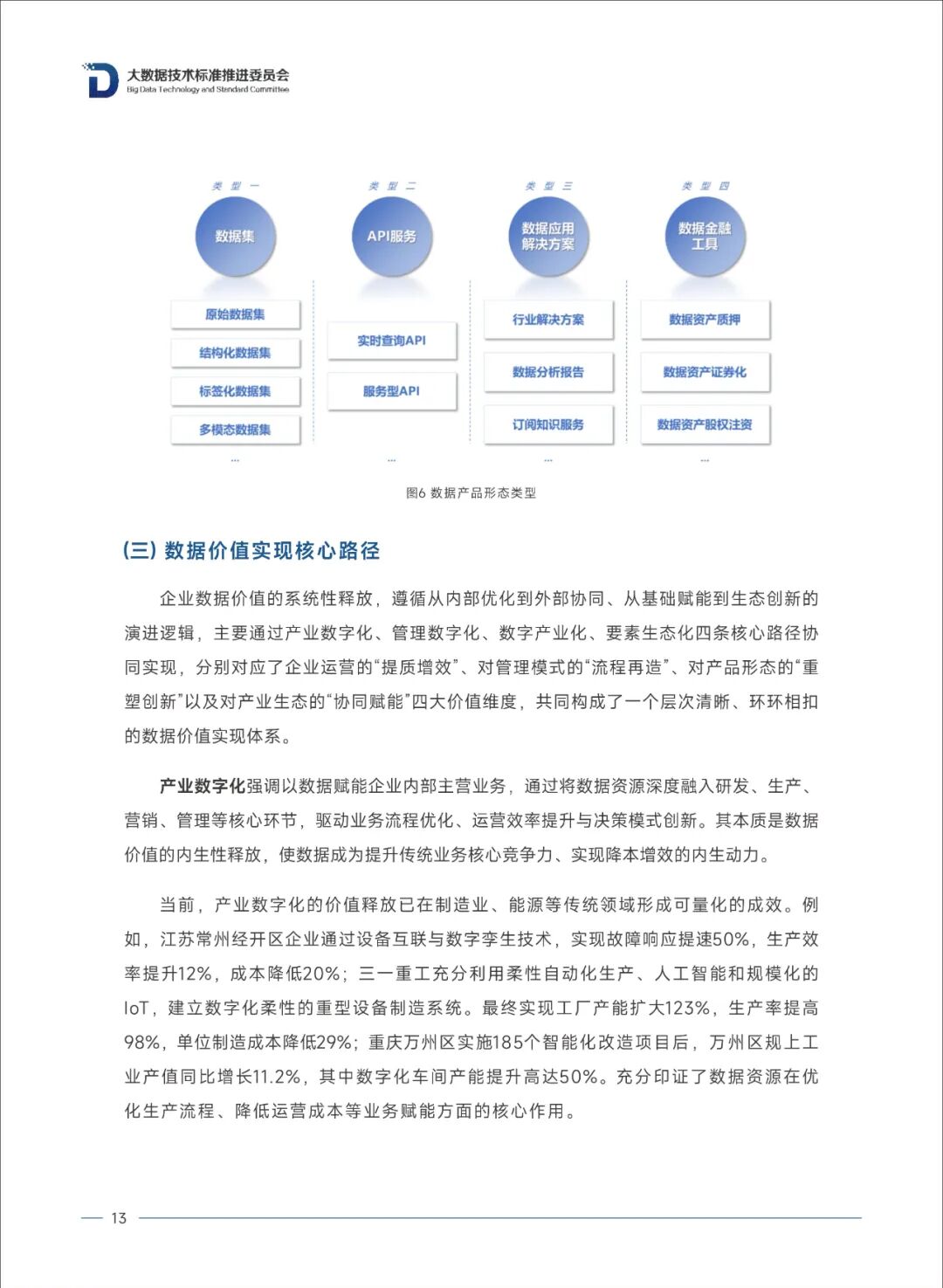
Digital industrialization: Package data into products for external trading and revenue generation. (Cases: China Mobile's Wutong Big Data, Northern Trading Center)
Element ecologicalization: Empower the industrial chain with data to build a collaborative ecosystem. (Cases: Weichai Power, "All - Sports Guangzhou")
3. Provide "Transformation Strategies" for Four Types of Enterprises in Assetization
For enterprises with different foundations and goals, the guide extracts four implementable paths that can be matched:
Value - oriented operation (leading enterprises in finance, communication, etc.): With a mature system, focus on lean value operation.
Transaction - innovation - oriented (leading enterprises in manufacturing, retail, etc.): With unique data, focus on creating tradable data products.
Balance - sheet - inclusion - driven (large groups or enterprises under strong supervision): With the direct goal of compliant inclusion in the balance sheet, conduct cautious pilot projects.
Management - foundation - building (enterprises in the early stage of transformation): Strengthen the foundation of data management to pave the way for future assetization.
4. Forecast Five Future Development Trends
The report not only focuses on the present but also foresees the future:
Intelligent foundation: AI will be deeply integrated into all aspects of data management to achieve automation and intelligence.
Integration of digital and real: Digital twins and simulation deduction will make data the core of real - time business decision - making.
Value system: Establish a precise value measurement framework covering costs and revenues, and data investment will change from "cost" to "investment".
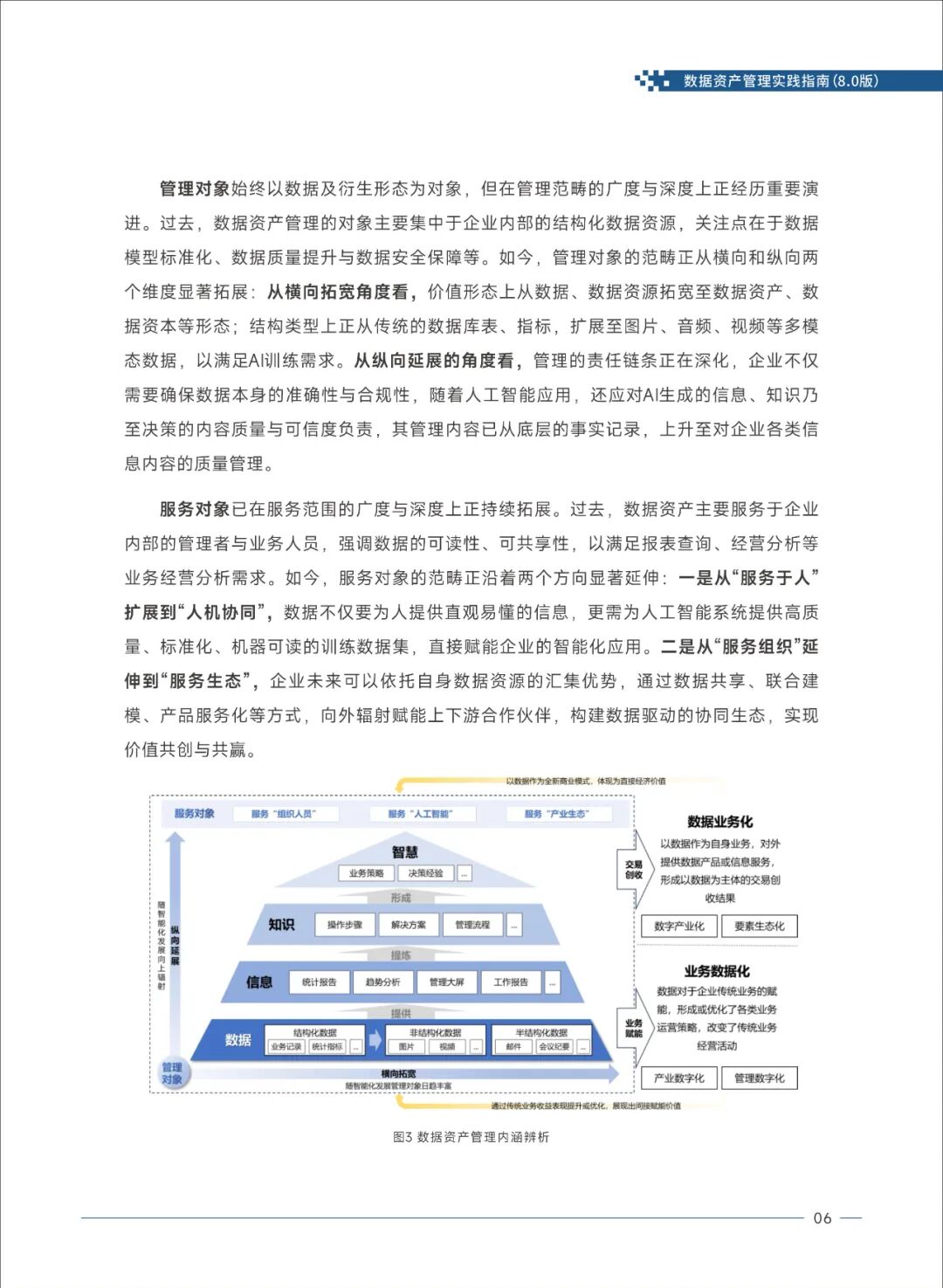
Knowledge management: The management boundary will expand from data to information and knowledge, empowering AI applications such as RAG.
Circulation ecosystem: Actively participate in the data element market ecosystem and transform from resource holders to value operators.
III. Who needs this guide?
Enterprise decision - makers (CEO/CDO): Formulate data strategies, clarify investment directions, and seize opportunities in the data element market.
Data department heads: Build and optimize the data asset management system to promote the realization of data value.
Business department managers: Understand how data empowers business innovation and put forward effective data requirements.
Finance, legal, and risk - control personnel: Address professional challenges in data inclusion in the balance sheet, compliance rights confirmation, and data trading and circulation.
All data practitioners and researchers: Obtain the latest industry insights, methodologies, and rich practical cases.
Data asset management is no longer just a technical issue but a core strategy determining an enterprise's future competitiveness. The "Practical Guide for Data Asset Management (Version 8.0)" provides us with theoretical weapons and practical maps to navigate the data element era with its systematicness, forward - looking nature, and strong practicality.
Source of this report: Big Data Technology Standard Promotion Committee (CCSA TC601)







This article is from the