The first session of the "IPO Acceleration Camp" was held in Shanghai, comprehensively dissecting the "deep waters" of overseas listings for enterprises.
In 2025, there seems to be a subtle shift in the global capital market. When the Hong Kong stock market announced the "return of the bull market" with a year-on-year surge of 700% in fundraising, and when the approval process for Chinese concept stocks in the US stock market returned to normal, the path for Chinese enterprises to list overseas seems to have broadened again. However, on the other side of the coin, as the A-share IPO continues to tighten, thousands of enterprises that are in the process of preparing for listing are flocking to the overseas listing track. There are still many hidden dangers behind the opportunities: from the in-depth supervision of the red-chip structure to the compliance red line for data going overseas, from the financial audit of the new Web3 track to the valuation management after SPAC listing, any cognitive deviation in each link may become the "Achilles' heel" for enterprises on their overseas listing journey.
Against this background, the "IPO Acceleration Camp" jointly initiated by five major institutions, namely Zhonglun Law Firm, 36Kr, RET Ruiyide, Krypton Ruifengyuan, and Rongcheng Certified Public Accountants, officially opened on December 17th in Lujiazui, Shanghai, and held the first special salon on Hong Kong and US stock IPOs with a gathering of industry experts.
This was not only a closed-door training session that brought together nearly a hundred enterprise founders, CFOs, and well-known investment institutions, but also a in-depth review and strategic reconstruction of the methodology for Chinese enterprises to build capital market platforms overseas. During the five-hour intense exchange of ideas, nearly twenty heavyweight guests from the fields of law, audit, finance and taxation, investment, SPAC issuance, and policy analysis dissected multiple real - world cases on - site and jointly drew up a valuable "practical guide" for enterprises planning to list in 2026.

Photo of the event site
At the beginning of the event, Li Hairong, a senior partner of Zhonglun Law Firm and the representative of the initiators, delivered a welcome speech. Over his 23 - year legal practice, Lawyer Li has taken a global perspective and dedicated himself to the fields of domestic and overseas capital markets, IPO and SPAC listings, overseas investment and the Belt and Road Initiative, mergers and acquisitions, debt restructuring and bankruptcy reorganization, and dispute resolution. He provides comprehensive professional legal services to clients at different stages of development and has hosted dozens of domestic and overseas listing and M&A projects of listed companies.

Li Hairong, Senior Partner of Zhonglun Law Firm
In his opening speech, Lawyer Li Hairong explained the driving force and goals behind the birth of the "IPO Acceleration Camp": in the increasingly complex global regulatory environment, by breaking down the barriers between law, media, finance and taxation, space, and capital, a closed - loop of "one - stop full - process IPO services" is created to address the misunderstandings and trial - and - error costs for listed companies when choosing service providers. By leveraging the power of resource aggregation and the professional expertise honed over years of experience, it helps Chinese enterprises run faster, more steadily, and more professionally on the crowded listing track.
Zhang Zhenghao (Eric Zhang), the founder and CEO of Zhiyi Capital, set the macro - tone for the event with his speech titled "New Opportunities in the Global Capital Market under Changing Circumstances - The Road to Overseas IPOs for Chinese Enterprises". As a former executive director of Futu, he pointed out sharply that currently, enterprises' pursuit of overseas listing mainly stems from three major pain points: the urgent pressure to terminate the gambling agreements, the need to seek financing leverage for counter - cyclical growth, and the in - depth demand for enterprise internationalization.
He compared the differences among the three major markets with detailed data: the A - share market has high standards and is relatively difficult to enter; although the Hong Kong stock market is recovering, its liquidity is highly concentrated in the top 100 enterprises; while the US stock market has 90% institutional investors, with the strongest liquidity and extremely high fixed - investment returns. He suggested that "small and beautiful" enterprises with a market value between $200 million and $1 billion should not focus solely on a single market but should firmly look overseas and use global capital to achieve development leaps.
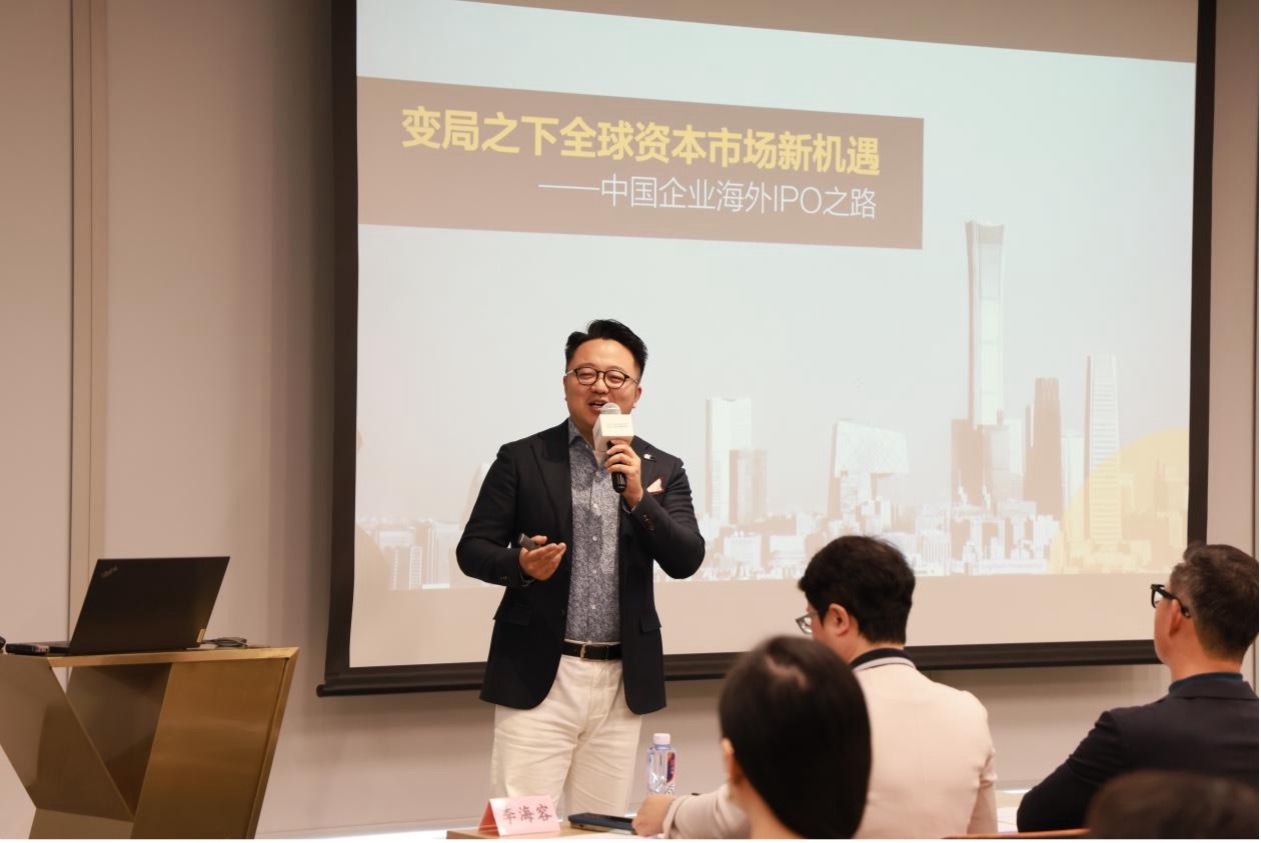
Zhang Zhenghao, Founder and CEO of Zhiyi Capital
This "IPO Acceleration Camp" not only focused on the traditional IPO path but also presented demonstration options for innovative overseas listing paths for listed companies.
Wang Zhuo (Alvin Wang), the managing director of Fupeng International, shared the latest practical observations on SPAC (Special Purpose Acquisition Company). He pointed out that after the frenzy in 2021 and the subsequent market clearing, the SPAC market in 2025 is returning to rationality, and there are more large - scale (US$100 million - US$300 million) institutional SPACs.
Compared with the IPO roadshow pricing, which is affected by market sentiment fluctuations, the core advantage of SPAC lies in its certainty. First, issue a SPAC to raise funds and list, and then look for suitable target assets to acquire, enabling the asset - side company to list. That is, the valuation and pricing in the acquisition process are determined through one - on - one negotiations, with high pricing controllability, and the entire process can be completed within 3 - 4 months. In the second half of 2025, Nasdaq raised the issuance and fundraising threshold for IPO enterprises (the minimum issuance amount was raised to US$25 million), making it difficult for many small - and medium - cap listed companies to issue shares and preventing them from going public. SPAC undoubtedly provides a highly certain backup path for enterprises to list.

Wang Zhuo, Managing Director of Fupeng International
As the hottest topic in overseas listing currently, Ma Dong (Veney Ma), a partner of Hong Kong Daheng Consulting, as an expert at the forefront of the market, gave an excellent interpretation of the listing path in the cutting - edge Web3 field. Taking the listing of HashKey in Hong Kong as an example, she pointed out that the cryptocurrency assets are moving from the gray area to the sunlight. In response to the industry pain points, she analyzed in detail the structural differences between the "US model" and the "non - US model" for cryptocurrency asset listing and particularly emphasized the two major challenges of financial distortion and compliance isolation.
Ma Dong said that licensed and unlicensed businesses must be physically separated; in the audit process, auditors may even need to sit in front of the screen and watch the enterprise transfer funds between wallets or exchange accounts to verify the real control of on - chain assets, which are compliance details unimaginable in traditional industries.

Ma Dong, Partner of Hong Kong Daheng Consulting
The red - chip structure for overseas listing is the cornerstone of listing. Calamus Huang, a partner of Appleby, an offshore law firm, conducted an in - depth analysis of the universality of the red - chip structure in overseas listing. She pointed out that as an overseas issuer recognized by the Hong Kong Stock Exchange and a "Foreign Private Issuer" (FPI) in the US stock market, a Cayman company has extremely high flexibility. It can enjoy various exemptions from the stock exchange and is also convenient for dual listing (such as Beike's dual listing in the US and Hong Kong stock markets) or spin - off listing (such as Geely's spin - off of Zeekr).
In addition, a Cayman company can adopt a mature equity structure with different voting rights for the same shares. Its equity incentive mechanism has a flexible and diverse toolbox, and it can also conduct financing and other transactions conveniently after listing (such as Baidu issuing convertible bonds to exchange for Ctrip shares). While ensuring the control of the enterprise founder, it facilitates the promotion of complex capital market transactions and effective market value management.
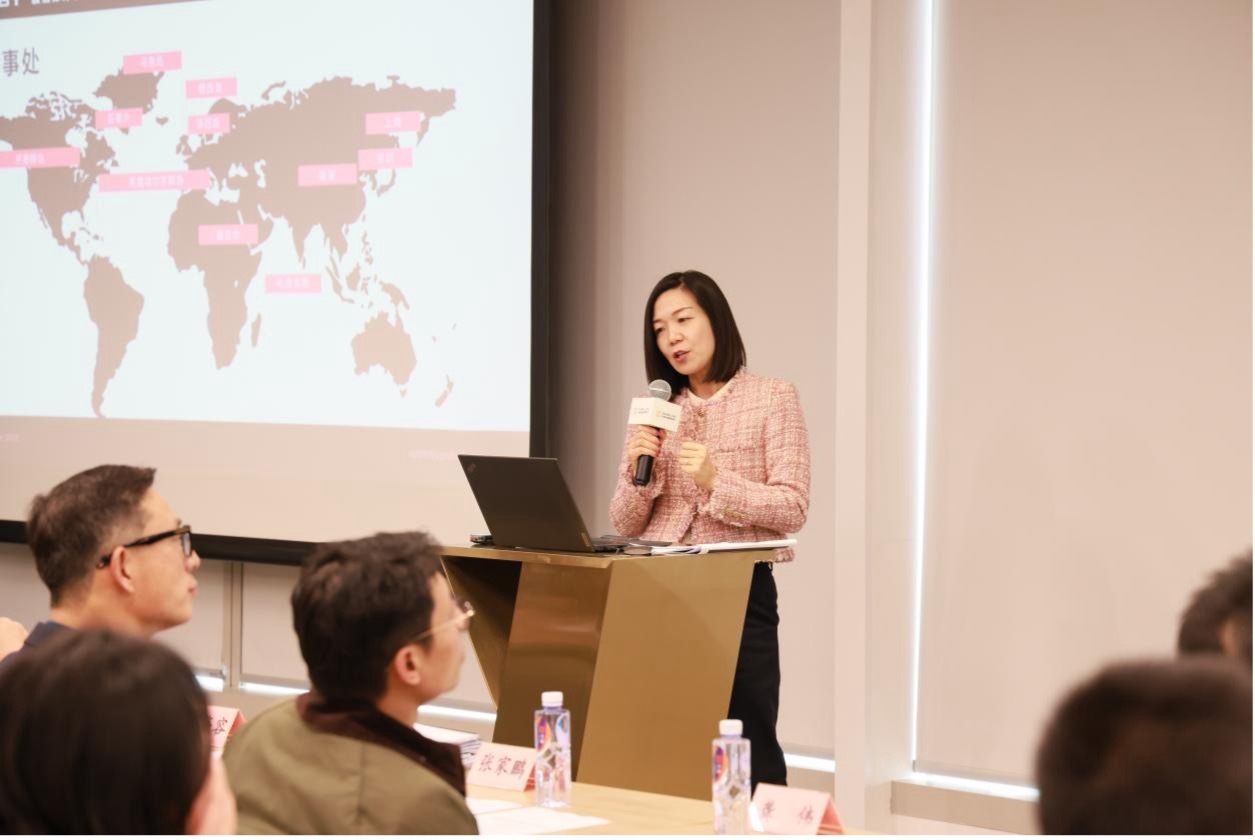
Calamus Huang, Partner of Appleby
Regarding the Hong Kong stock market, which performed outstandingly in the capital market in 2025, Wu Hao, a partner of Zhonglun, and Lawyer Wang Yu jointly presented the "pass - through secrets" for Hong Kong stock review from the perspectives of the latest developments in the Hong Kong Stock Exchange's review and the China Securities Regulatory Commission's filing in 2025. Hong Kong Lawyer Wu Hao focused on interpreting the listing thresholds for the main board, the 18C (Specialized Technology) and 18A (Biotech) sectors of the Hong Kong stock market, especially the strict requirement of the 18C sector for the endorsement of "leading senior investors" and the hard indicator that the core products of biopharmaceutical enterprises must pass the second - phase clinical trials.
Mainland Lawyer Wang Yu, from the perspective of the on - shore filing (New Regulation 331) in the process of Hong Kong stock listing, detailed the ranking and data of the issues that on - shore filing focuses on from high to low. She mainly analyzed the on - shore regulatory authorities' focus on issues such as foreign investment access in the issuer's business operations, compliance of shareholder and share changes, and the establishment of overseas structures and on - shore operating entities, and provided practical suggestions for issuers. She analyzed cases of issuers with foreign - restricted businesses going overseas for listing through methods such as contractual structures, spinning off subsidiaries in sensitive industries, and applying the "safe - harbor" clause, and shared the latest breakthrough market practices in the establishment of the red - chip structure. Lawyer Wang Yu also reminded that for enterprises involved in prohibited foreign - investment businesses, if they adopt the VIE structure, the filing period may be longer than that of the H - share structure and the general red - chip structure, and they need to seek the opinions of industry regulatory authorities. There are still no "green - light cases" in some prohibited industries. It is recommended that enterprises customize appropriate restructuring plans before listing to reduce the filing difficulty in advance.

Wu Hao, Partner of Zhonglun Law Firm

Wang Yu, Lawyer of Zhonglun Law Firm
From the perspective of US stock listing experts, Du Yilong, a senior consultant of Zhonglun, and Qiu Pengchao, a consultant of Zhonglun, compared the two processes of US stock IPO and SPAC listing. They pointed out that although geopolitical issues still exist, the US stock market still has a high degree of acceptance of "small and beautiful" Chinese concept stocks. The relatively mature SPAC listing path in the US stock market provides enterprises with higher valuation and issuance certainty compared with IPO, offering an alternative feasible capitalization path for enterprises other than the Hong Kong and A - share markets.

Du Yilong, Senior Consultant of Zhonglun Law Firm

Qiu Pengchao, Consultant of Zhonglun Law Firm
Listing is not only an art of compliance but also a game of capital.
Xu Zhenliang (Alfred Xu), a partner of Zhonglun, analyzed the "clause traps" in private equity financing from the perspective of US - dollar funds. He vividly used the example of "buying and selling apples" to illustrate the importance of "representations and warranties". Whether the subject matter is a "red apple" or a "green apple" requires negotiations and risk - taking games around the "representations and warranties" clause and the "disclosure letter". The devil is often in the details.
He also shared the key points to note when mature enterprises go overseas or split and finance their international business lines. In such transactions, enterprises need to focus on arranging the separation of domestic and overseas businesses, especially IP licensing and personnel separation, as well as potential ongoing related - party transactions in the future, so as to lay a solid foundation for the new company's future independent financing and operational capabilities.
Finally, from the perspective of a transaction lawyer, Lawyer Xu shared his observations and experiences in participating in the investment of Sino - US technology and AI companies in the past two years. In the investment cycle of the AI narrative, the explosion of enterprise valuations has arrived as expected. However, both investors and founders need to always adhere to the legal and compliance bottom - line to move forward smoothly on the road to achieving great goals.
