In 2025, humanoid robots will first compete for "positioning".
In 2025, the humanoid robot industry entered the deep - water zone of development amidst controversy.
On one hand, there were the amazing performances of 16 Unitree H1 humanoid robots dancing Yangko and twirling handkerchiefs at the 2025 CCTV Spring Festival Gala, and the Zhongqing T800 kicking over its company's CEO. On the other hand, there were sharp doubts from well - known investors, such as "All they can do is somersaults. Where is the commercialization?"
Is the humanoid robot in 2025 just a bubble carnival or is it ready for real - world applications?

Solving the Puzzle: Analyzing the Core Contradictions of Two Opposing Views
Doubters: It's All a Bubble
The doubts of the opponents focus on two main dimensions. First, there are safety risks caused by immature technology. Hardware failures and algorithm loopholes may lead to robot malfunctions, causing personal injuries in industrial or household scenarios. Second, there are hidden risks of bubbles created by the influx of capital. By the end of 2025, there were over 3,000 domestic humanoid robot - related enterprises, but the estimated annual shipments in 2025 were only 20,000 units. Most enterprises rely on financing to survive and lack sustainable business models.
Recently, the comment of a well - known investor, "All they can do is somersaults. Where is the commercialization?" sparked a heated discussion. Looking back at some robot companies on Douyin that are keen on showing high - difficulty moves like backflips and Thomas spins without clarifying application scenarios has further intensified the controversy of "showing off technology rather than practical use".
Supporters: Morphological Adaptability Facilitates Real - World Applications
Supporters believe that humanoid robots are the key to real - world applications. Their core advantage lies in the fact that humanoid robots are more morphologically adaptable to human work scenarios. The living and working scenarios in human society, from household furniture to factory assembly lines, are all based on the human body shape. Traditional robots are difficult to penetrate deeply due to "morphological incompatibility". Humanoid robots can seamlessly integrate into these existing scenarios and start working without reconstructing the environment. For example, in the industrial field, their anthropomorphic limbs can replace humans in precision assembly; in the elderly - care scenario, they can naturally assist the elderly in getting up, walking, and fetching objects; at the consumer end, they are expected to become robot butlers to provide comprehensive housekeeping services.
Positioning Theory: Bursting the Bubble and Enabling Real - World Applications
Actually, the key to evaluating whether the robot industry is a bubble is whether it can meet the requirement of "being useful".
As long as we understand the "Positioning Theory", we will know whether humanoid robots are really useful.
In 1972, the famous American marketing strategists Ries and Trout proposed an interesting theory. They put forward the view that the core of whether a product is useful is to occupy a unique and valuable position in the consumer's mind.

To see how important differentiated positioning is in the robot field, we can look at the cases around us.
Currently, there are four highly popular robots in China, all of which are "internet celebrities". They have obvious differentiated positioning.
1. Zhongqing Heavy - Duty T800: The "CEO - Kicking" Hard - Core Positioning
The differentiated positioning of the Zhongqing T800 is to define its core advantage through a hot - search - level demonstration. With the popular video of "kicking over its own CEO", it transformed hard - core parameters such as a peak torque of 450N·m and an instantaneous joint power of 14,000W into a visual impact that the whole network could understand.
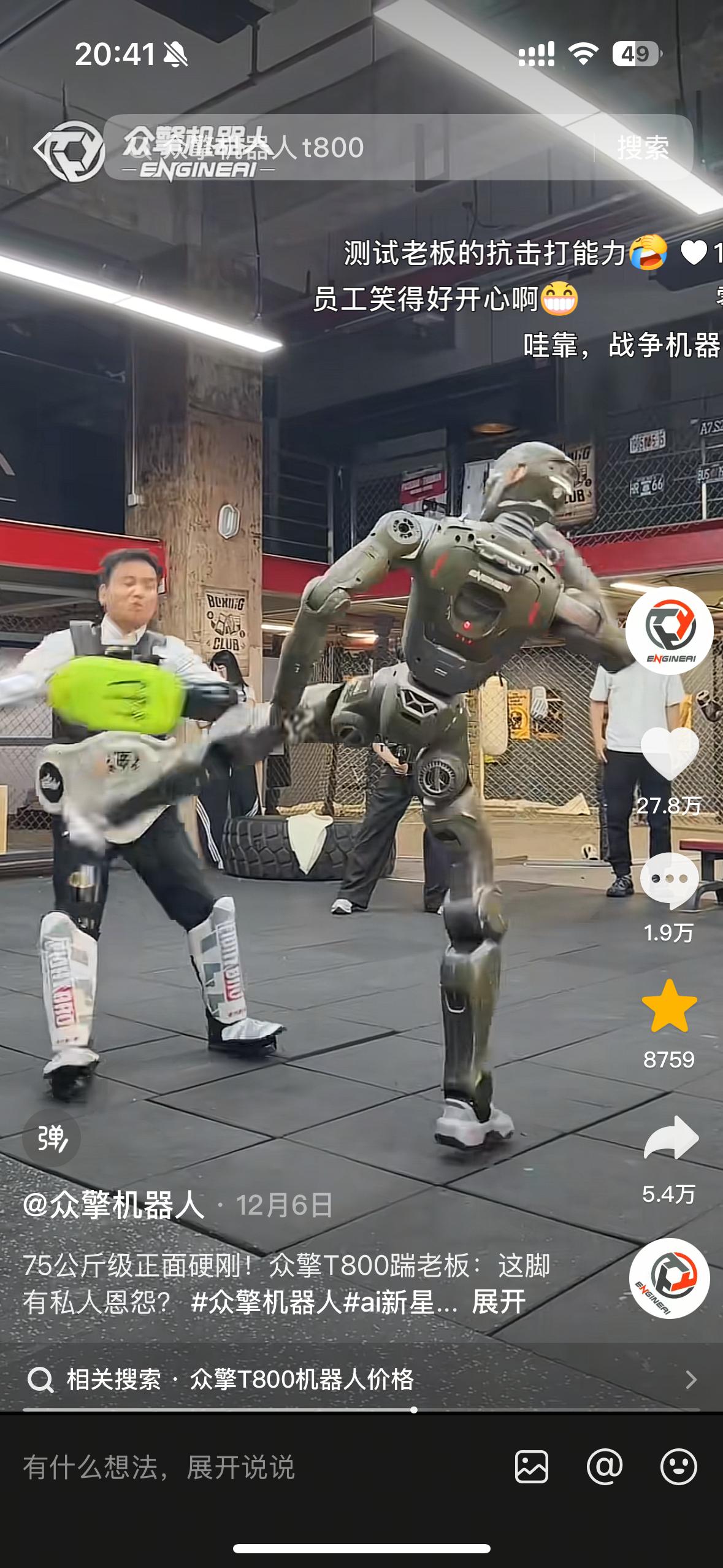
At the beginning of December, the video released by Shenzhen Zhongqing triggered cross - platform discussions. The topic's reading volume exceeded 120 million in 24 hours. In the video, the 1.73 - meter - tall and 75 - kilogram T800 accurately kicked the abdomen of CEO Zhao Tongyang, who was wearing protective gear, with a high - leg kick. The company's boss was immediately sent flying and fell to the ground. He got up and exclaimed, "It's so brutal. Without protective gear, I would definitely break a bone." More interestingly, this kick only used 15% of its power, which directly dispelled the doubts of overseas netizens that "the video was a CGI special effect". After the doubt was dispelled, all that was left for foreigners was shock.
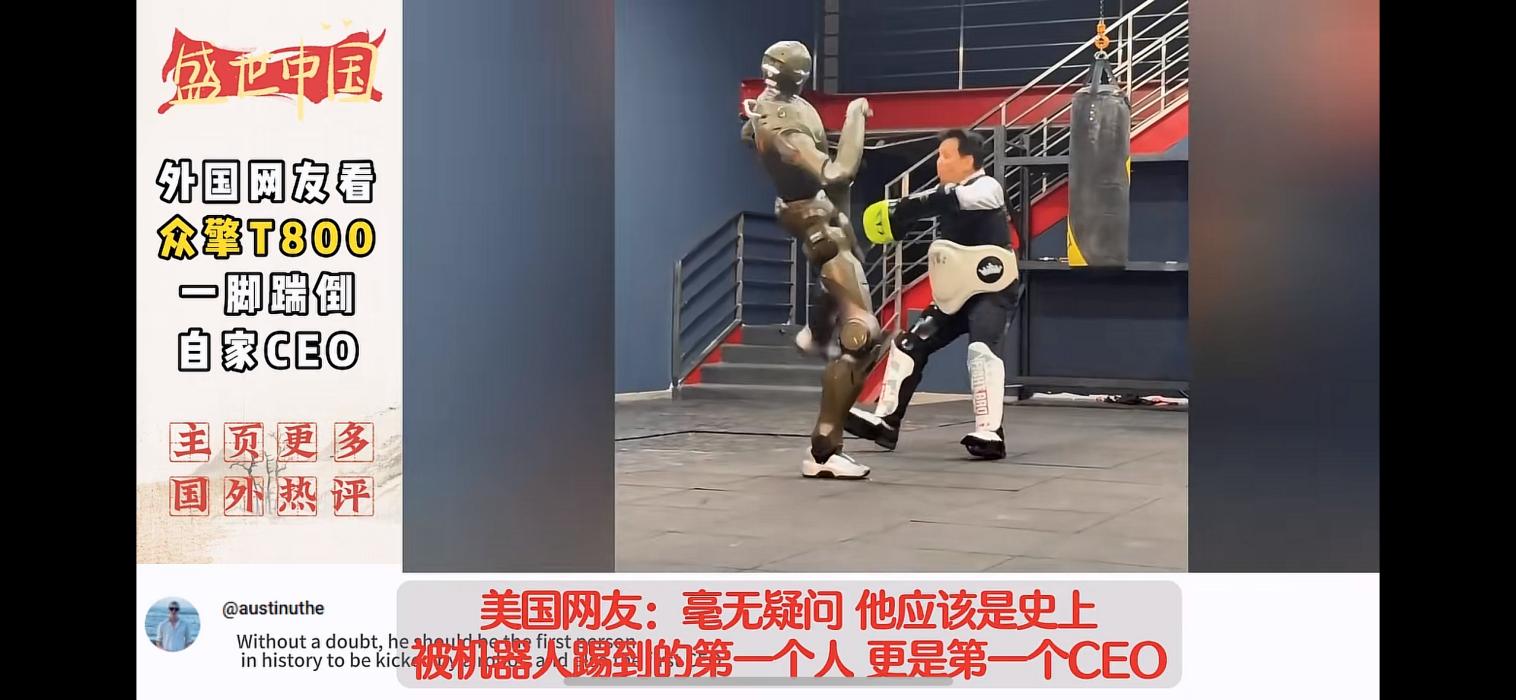
Behind this "violent marketing" is the clear positioning of the T800 as a "mass - produced industrial - grade humanoid robot". It didn't take the simple technical demonstration route but proved its practical value in the most intuitive way: it can kick through a swinging door, perform a rising - dragon - punch - style jump, and its 41 high - degree - of - freedom joints allow a motion accuracy of 0.1°. These performances are not for show but to adapt to real scenarios such as patrol, logistics, and factory cooperation. More importantly, with a starting price of 180,000 yuan, which is only one - fifth of the Tesla robot, and the boost of the hot search "secured 1 billion in financing after kicking over the CEO", it stands out from many humanoid robots. It not only proves the technical feasibility but also conveys the signal of "large - scale implementation", becoming a differentiated benchmark that "ordinary people can understand and enterprises dare to purchase".
2. XPeng Robot: The "Most Human - Like" Positioning
The differentiated positioning of the XPeng robot is to engrave the "ultra - realistic human gait" in the user's mind through a widely discussed "self - proof battle". It was suspected of "hiding a human inside" because it walked too much like a real person. Then, it became well - known through a hard - core clarification of "removing the clothes and cutting the skin", and was recognized as the "ceiling of anthropomorphic realism in humanoid robots". At the XPeng Technology Day in November 2025, this 178 - centimeter - tall and 70 - kilogram robot walked onto the stage with a smooth catwalk. Its hip - twisting, arm - swinging, and tiptoe - balancing postures were comparable to those of professional models. The relevant video immediately went viral on the whole network but also instantly fell into the controversy of "100% a real person in a shell".
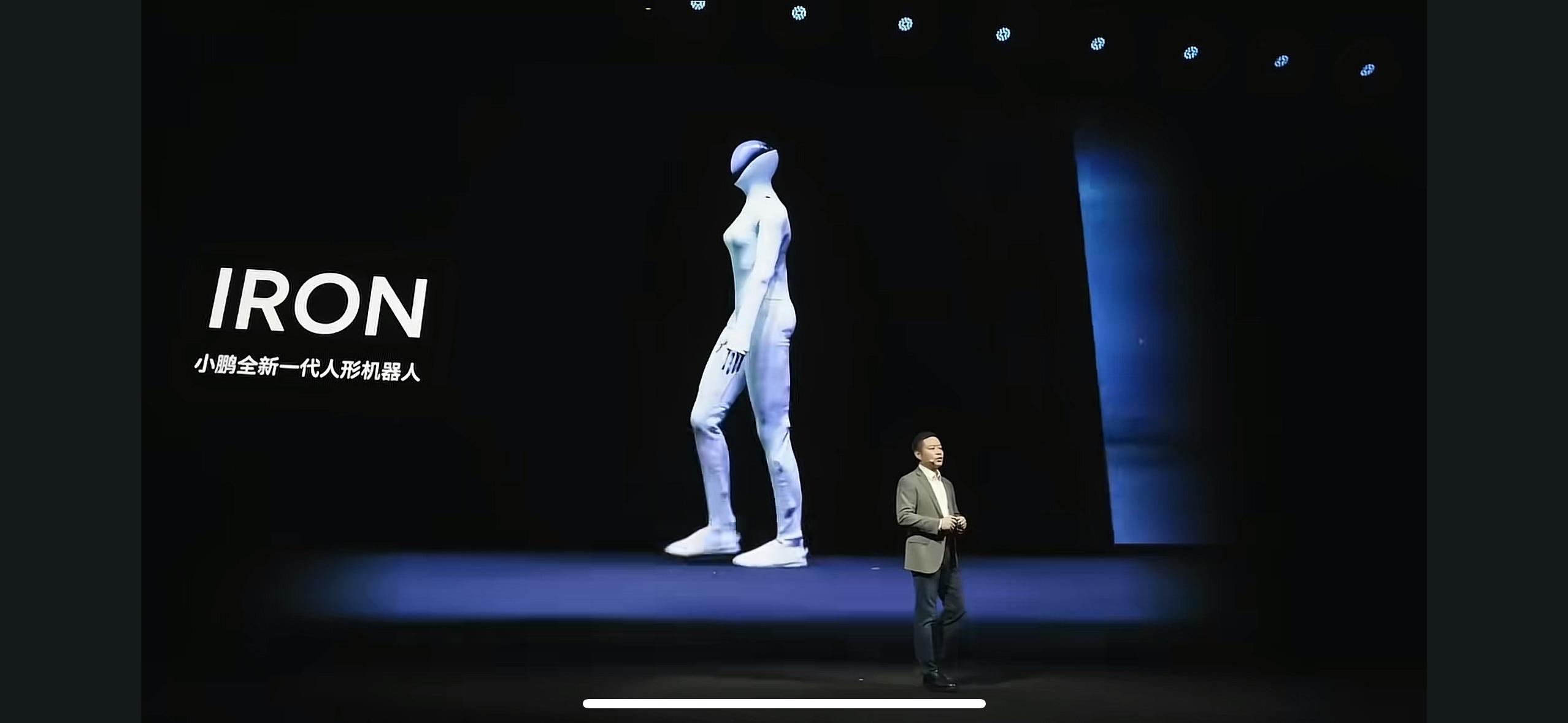
Netizens' doubts were wild. Some magnified the video details and claimed that the reflection at the joints was like human skin rather than metal; some imagined the plot of "a stuntman curled up inside the shell performing"; even an anonymous informant claimed that "the actions were controlled behind the scenes". The reading volume of the relevant topic exceeded 200 million within half a day. The core of this controversy precisely proves the success of its positioning. When the anthropomorphism of the robot exceeds the public's cognitive boundary, "being human - like" itself becomes the most distinctive differentiated label. The doubts didn't subside. XPeng simply released a "final move" at the evening press conference: the staff directly cut open the flexible "skin" and "muscle" layers of its left calf while the robot was powered on. The metal mechanical skeleton was exposed. Amazingly, even in the "semi - dissected" state, the IRON still smoothly completed the catwalk. The scene of its flexible joint movement was joked by netizens as "walking more steadily than me". He Xiaopeng choked with sobs and said, "This is the last time to prove. It's like having to prove that you didn't cheat when eating a bowl of noodles by cutting open your stomach." The single - video playback volume exceeded 10 million, completely reversing the public opinion.
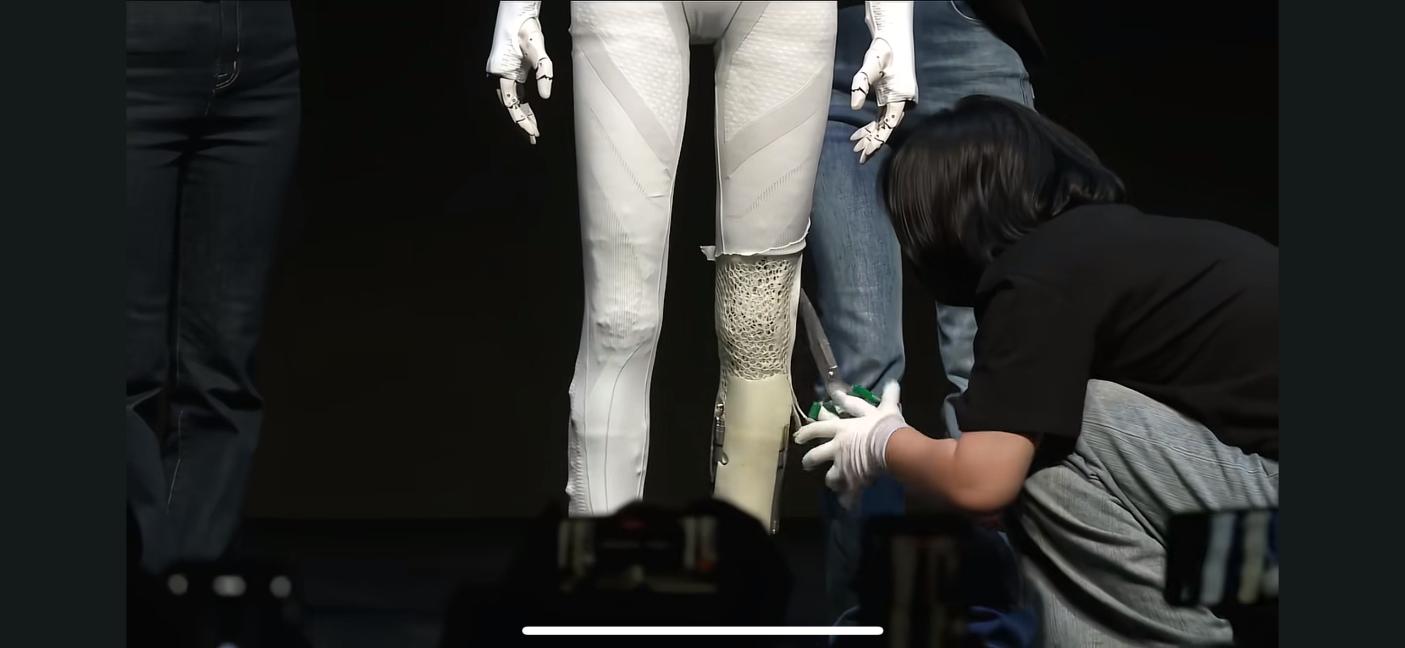
Although there are also doubts on the Internet that this self - proof was probably self - directed by XPeng, regardless of the truth, behind this self - proof, XPeng's precise positioning of "being the most human - like" has deeply taken root in people's hearts. To replicate the human gait, the team specially designed an anthropomorphic spine and waist muscle group, abandoned the traditional direct - drive motor scheme, moved heavy components closer to the torso to reduce foot inertia, and combined with 3D - printed elastic lattice "muscles" and a passive - degree - of - freedom design for the toes, making the walking both smooth and cushioned. The AI chip, combined with the end - to - end control of the physical - world large model, makes movements such as hip - twisting and arm - swinging coordinated and natural.
3. Unitree Robot: The Household Practical Positioning
The core of Unitree Robot's differentiation is to "break through the circle barriers through magical interactions". At the consumer end, represented by the Go2 robotic dog, it is equipped with a self - developed 4D lidar, can chase and pick up balls, guard the house, and can also achieve emotional interactions through the GPT model, becoming a synonym for "tech trendy toys". At the industrial end, the B2 quadruped robot has a peak torque of 360N·m and a speed of 6m/s. It can climb 40 - centimeter steps and work for more than 5 hours in an IP67 - grade harsh environment. It is an "all - around warrior" for power inspection and fire rescue.
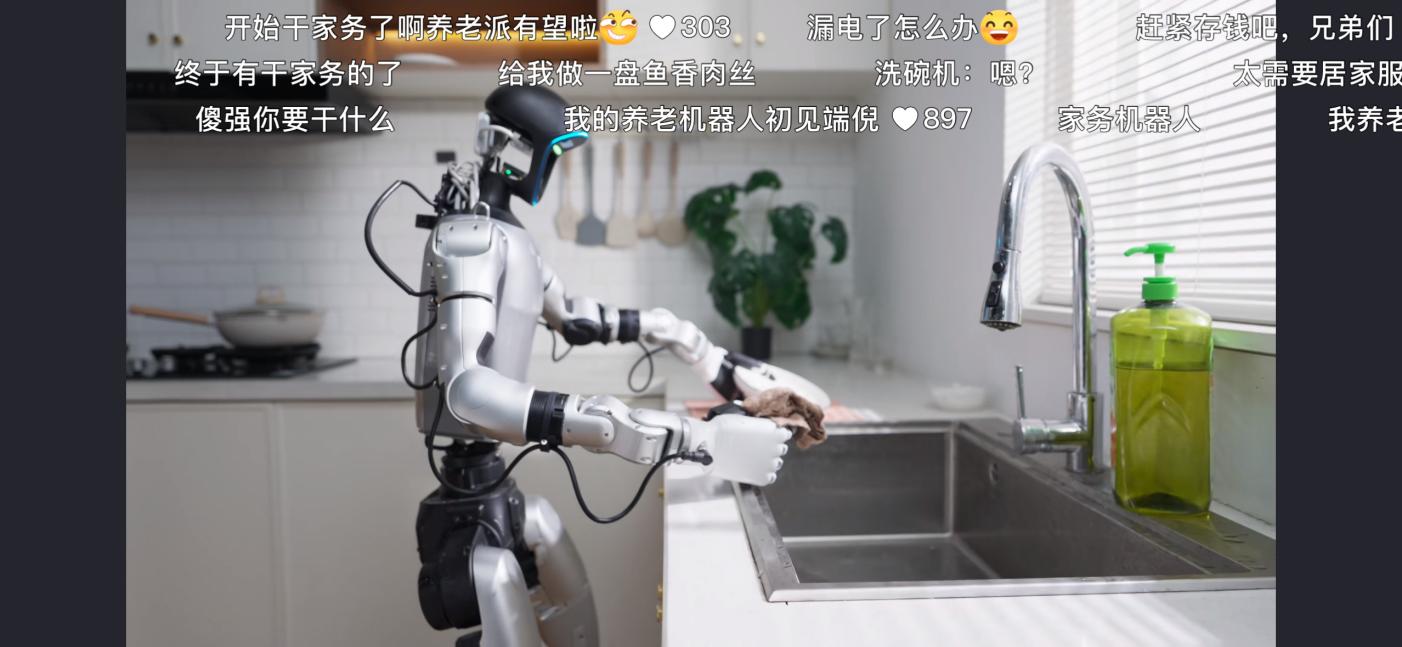
Recently, Unitree's official account released a new video showing Unitree's humanoid robot performing various household chores with ease. Netizens sent in barrages one after another: "My elderly - care robot is taking shape."
This kind of differentiation of "being able to dance to become popular and also perform hard - core tasks" allows Unitree to lower the public's cognitive threshold through interesting content and become a unique existence that combines both traffic and strength with its self - built technical barriers.
4. Non - Programming Spray Gun Robot: The Ultra - Simple Operation Positioning
The differentiated positioning of this spray gun robot perfectly hits the traffic code of "entertaining domestic audiences and attracting foreign buyers". It became popular with a magical video of "the boss demonstrating in a 'cannon - firing' posture" but became a hit in the overseas market due to its core advantages of "non - programming, easy operation, and multi - scenario adaptation". In mid - December, a video of a factory boss demonstrating to foreign customers went viral on Douyin. In the video, the boss "recorded a script" with gestures, and the robot immediately accurately completed point - shooting and continuous - spraying actions. The foreigners beside were full of shock. Netizens in the comment section created a meme: "It should be equipped with an AK47."
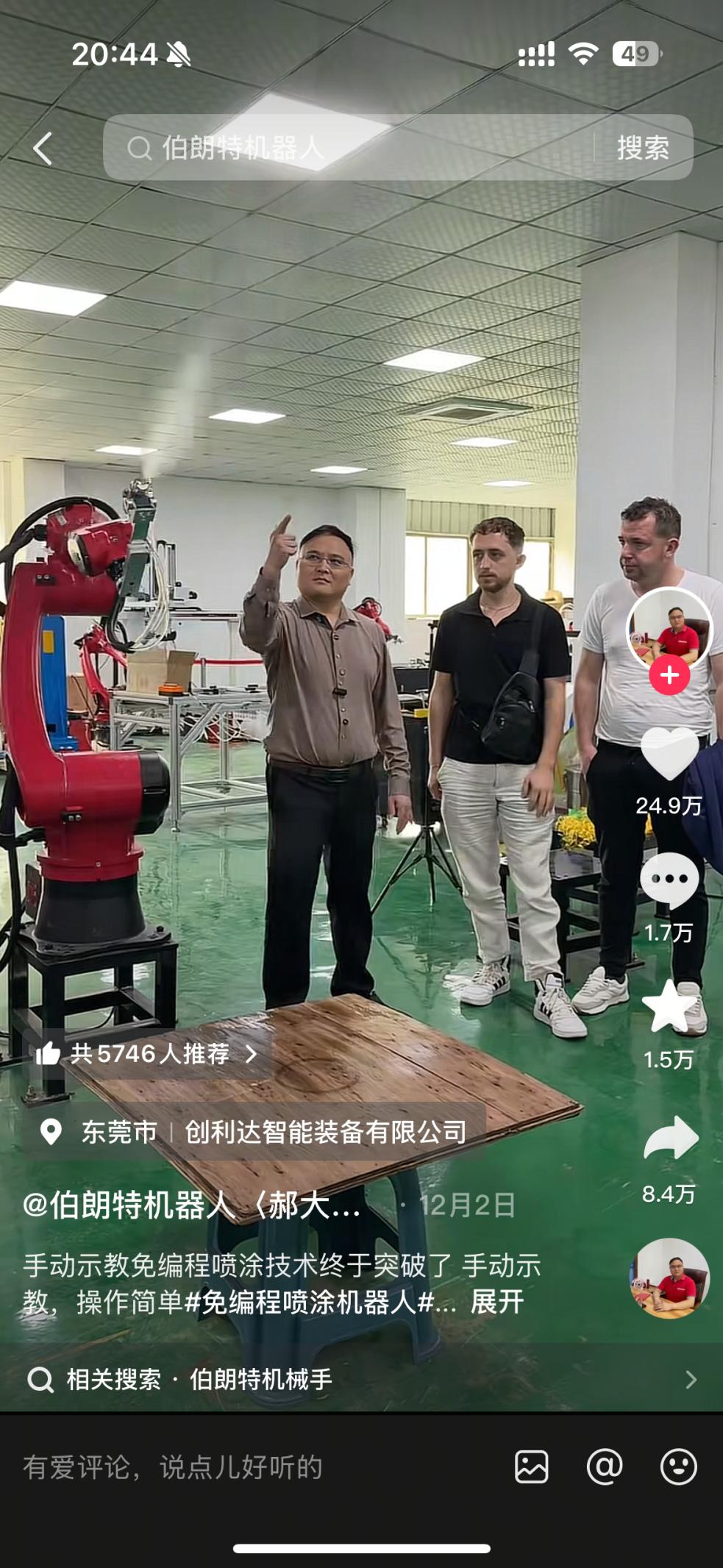
Behind the funny meme is its clear positioning of "enabling non - professionals to operate easily". It breaks the stereotype of industrial robots being "complex to program and high - threshold". It supports remote control and quick path saving, with low latency and sensitive triggering. It can not only meet basic needs such as painting but also protect workers in high - risk scenarios such as steel mills and power plants, achieving "one machine for multiple uses". The real differentiated highlight lies in the "cross - scenario imagination space". The wild "modification conjectures" of netizens have become free publicity, allowing this robot to receive a large number of orders overseas.
Conclusion:
The Future of Humanoid Robots - Saying Goodbye to the Bubble through Differentiation and Realizing Value in Real - World Applications
On November 27, at the press conference of the National Development and Reform Commission, when the relevant department head calmly said, "We will focus on preventing the 'crowded' launch of highly repetitive products", the boiling capital enthusiasm in the humanoid robot industry seemed to be doused with a bucket of cold water.
As of December 2025, there were already more than 150 domestic humanoid robot body enterprises, but only a very small number have really attracted attention on the Internet.
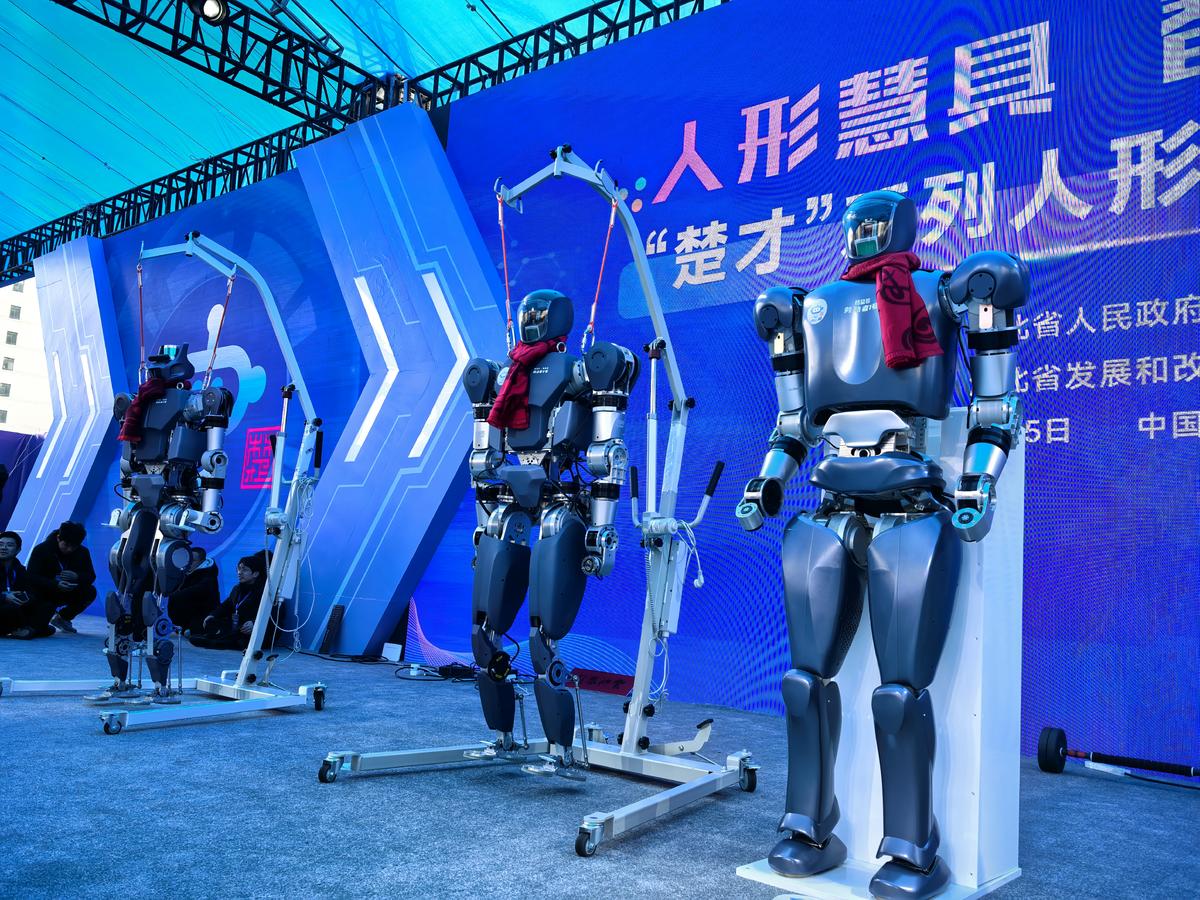
The industrial controversy in 2025 precisely proves that the humanoid robot has passed the "concept hype" stage and entered the critical period of "simultaneous bubble extrusion and value realization".
The core of whether it is a bubble or not does not lie in "being humanoid" but in "having differentiated positioning". Humanoid robots without positioning are just carriers of capital speculation and will eventually be eliminated by the market. Products with precise positioning are achieving continuous implementation in industrial, commercial, and special fields through technological, scenario - based, and value - based differentiation.
In a word, the future of humanoid robots does not lie in somersaults or beautiful PPTs but in factory assembly lines, hospital corridors, and nursing home rooms. They will realize their real industrial value through differentiated real - world applications.
This article is from