Porsche CEO Reflects on Defeat, Considers Localizing EV Production in China
"From today's perspective, our product portfolio setup a few years ago was not flexible enough."
"We made a misjudgment on the Macan model."
"For Porsche, it's not cost - effective to produce in the United States because the sales of individual model series are too low."
Recently, Oliver Blume, the CEO of Volkswagen Group, rarely conducted a profound reflection on Porsche's market performance and strategic layout in recent years during a media interview. He pointed the main cause of the current dilemma to Porsche's long - standing model of production in Germany and global export.
"Porsche has a clear commitment to its German homeland, but this is precisely the key to the current situation. We still export 100% of our products from Europe. Now, the luxury car market in China has shrunk by more than 80% in a short period, and the United States faces high tariff barriers. These two largest single markets contribute more than half of Porsche's global sales. Such a double blow has brought us huge financial pressure."
Perhaps the way out lies in the East.
Facing the challenges, Oliver Blume clearly stated that Porsche will not withdraw from the Chinese market. Moreover, it is considering creating exclusive electric models tailored for Chinese consumers. His statement that "Volkswagen Group can provide local production for this" is interpreted by the outside world as a clear signal that the process of Porsche's domestic electric vehicle production is about to speed up.
Over the past years, rumors about Porsche's production in China have emerged and faded repeatedly. But this time, with the CEO himself sending out the signal, the context is completely different - perhaps it's no longer that the Chinese market needs Porsche, but that Porsche needs China more than ever.
01
Failure in electrification transformation
Although Oliver Blume said in the interview that "Porsche's electric mobility is successful", objective market data and financial performance have mercilessly revealed the difficult reality of Porsche's electrification transformation.
As early as November 2023, Porsche put forward the goal of "more than half of new cars being electric by 2025 and more than 80% being pure - electric by 2030". However, in 2024, the proportion of new energy vehicle deliveries of Porsche was only 27%.
This figure not only reflects consumers' limited acceptance of Porsche's electric products but also exposes the significant lag in its transformation rhythm.
Looking at the timeline, Porsche's response to electrification was not late. In 2019, the release of the pure - electric Taycan was regarded as a landmark event in the electrification transformation of traditional luxury brands. At that time, Porsche seemed to be ahead of its traditional competitors. However, its real large - scale delivery was significantly delayed.
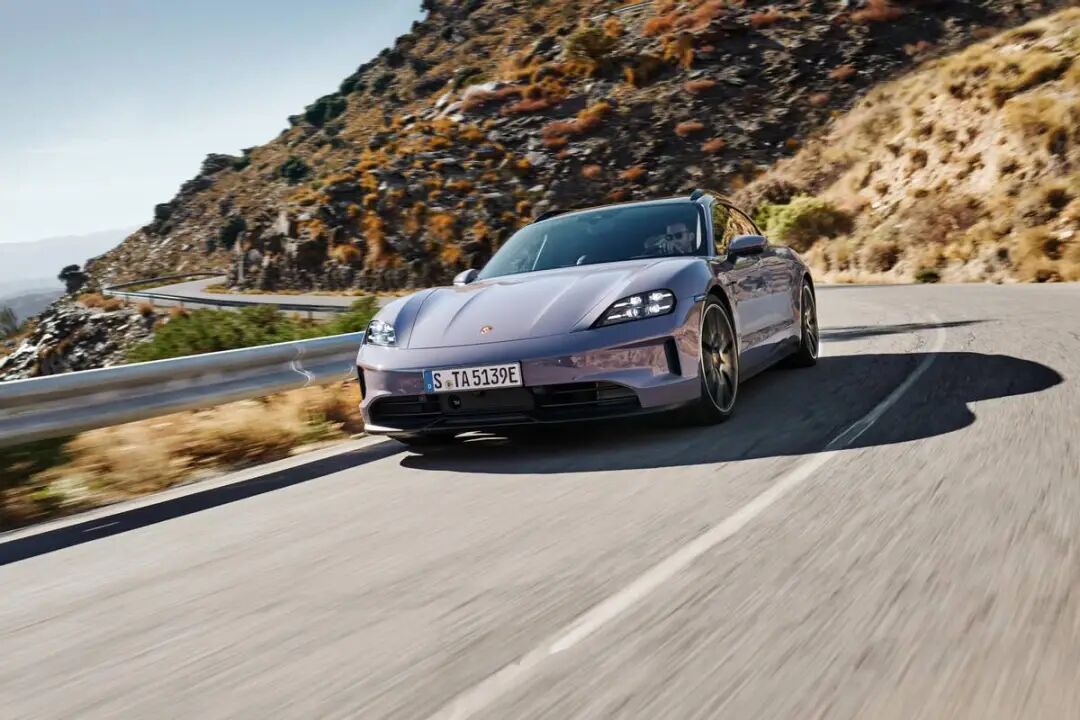
What's more worrying is the imbalance between input and output. After investing huge R & D and production costs to promote the electrification transformation, Porsche's pure - electric models have not brought the expected returns. Not only has the sales volume declined, but the profit margin is also lower than that of fuel - powered models.
In August this year, Porsche announced the reorganization of its high - performance battery subsidiary Cellforce and abandoned the plan to produce self - developed batteries. In September, it officially announced that it would slow down the electrification process and launch more fuel - powered and plug - in hybrid models in the future. This series of strategic contractions is tantamount to admitting the stall of the electrification route.
The stall has directly dragged down Porsche's financial performance. In the first three quarters of 2024 alone, Porsche's special expenses due to reorganization reached as high as 2.7 billion euros. The single - quarter loss in the third quarter was 966 million euros, directly resulting in the sales profit in the first three quarters being only 40 million euros, a plunge of 99% compared with 4.035 billion euros in the same period last year. This "cliff - like" decline has forced Porsche to re - examine the rhythm and path of its electrification strategy.

Beyond subjective factors, Porsche's electrification transformation also faces more fundamental structural challenges: the ultra - luxury pure - electric vehicle market itself has not really taken shape.
Looking globally, Porsche's dilemma is not an isolated case. Recently, Maserati has significantly reduced prices for promotion in China. The starting price of some models has dropped to the range of more than 300,000 yuan, trying to maintain its presence by sacrificing price for volume. In sharp contrast, the Chinese emerging luxury electric vehicle brand Zunjie achieved the milestone of producing 10,000 units of its first - model in just over 200 days, demonstrating a completely different product rhythm and market response speed in the new energy era.
In the wave of electrification, the brand premium, performance halo, and craftsmanship narrative that traditional luxury brands rely on for survival are being deconstructed by the new technological architecture, intelligent experience, and ecological value of electric vehicles. Consumers' cognitive standards for electric luxury are being reshaped, and traditional luxury brands like Porsche seem to be struggling in this reshaping process.
Porsche's electrification dilemma stems from both its own strategic and execution deviations and is also a microcosm of the collective anxiety of the traditional luxury automobile industry at the crossroads of a new era. The glory of the internal combustion engine era is gradually fading, and the path ahead for electrification is still shrouded in fog. This sports car manufacturer proud of its racing genes is facing the most complex strategic choice in its history - and the key to breaking the deadlock may not be in Germany but in the East.
02
The Chinese market becomes the key
"The innovation speed and product diversity in China are amazing, and the competition strategies are also evolving at an accelerating pace. We must admit that many local products are very suitable for the needs of Chinese customers." The statement of Detlev von Platen, the CEO of Porsche China, is not only an objective description of the Chinese automobile market but also seems to be a clear awareness of Porsche's own situation.
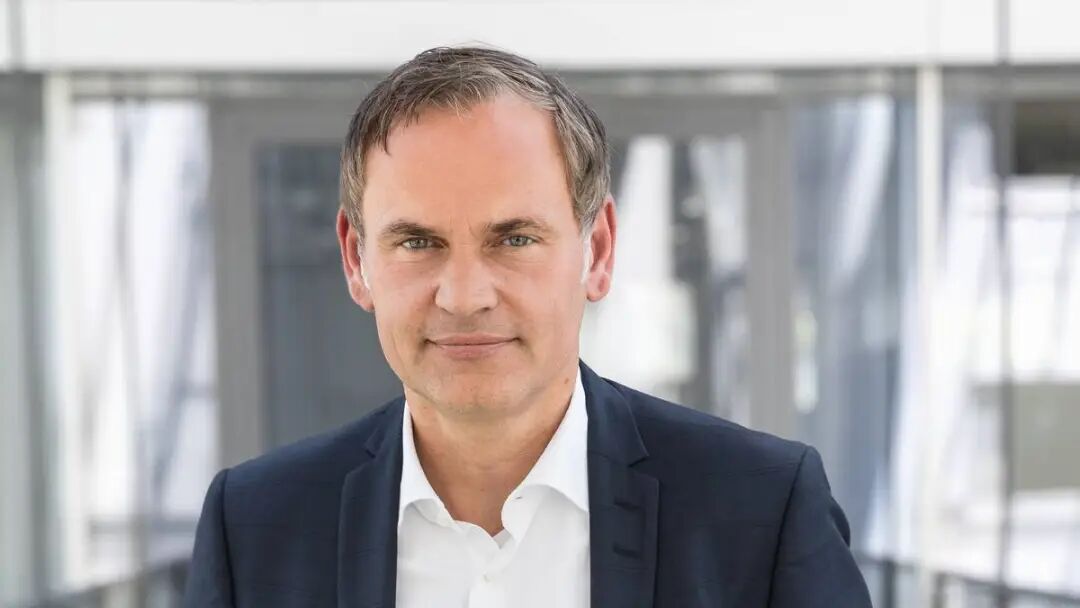
More notably, Oliver Blume, the CEO of Volkswagen Group, clearly stated in a recent interview: "There is no question of Porsche withdrawing from the Chinese market. Porsche will not only not withdraw from the world's largest automobile market but will also consider launching an exclusive model, an electric sports car, for Chinese buyers in the future." He especially added: "Theoretically, Volkswagen Group can provide local production for this." This statement is generally interpreted by the industry as an important signal that Porsche may produce electric models in China for the first time.
Oliver Blume and his team are no strangers to the option of "producing in China". Porsche's parent company, Volkswagen Group, has been deeply involved in China for decades and has a mature production system and supply chain network. In recent years, Volkswagen has accelerated the layout of local intelligent electric technologies by taking a stake in XPeng and cooperating with Horizon. All these provide a solid foundation for Porsche's possible localization production.
Previously, rumors about Porsche's production in China have circulated for many years but have always remained at the rumor stage. However, the situation is different now. Once it was China that needed Porsche to fill the gap in the luxury car market, but now it is Porsche that needs China to rescue its stalled electrification transformation.
Behind this change is the harsh reality of Porsche in its two core markets. In the first three quarters of 2025, although the North American market became Porsche's largest global market with a delivery volume of 64,446 vehicles, due to all models being produced in Germany, high tariffs have seriously eroded its profit margin. In China, once its largest single market, the situation is even more worrying: the new - car delivery volume in the first three quarters was only 32,000 vehicles, a sharp year - on - year decline of 26%.
Although Porsche has taken measures such as increasing the supply of fuel - powered and hybrid vehicles, looking forward to 2026, the brand has no plan for a strong new internal combustion engine model. This means that if Porsche fails to make substantial breakthroughs in the field of electrification, it will face continuous market pressure.
This pressure not only comes from the limitation of the product line but also from the real constraints of the global production layout.
Porsche is extremely cautious about local production in the United States. Oliver Blume said bluntly: "For Porsche, it's not cost - effective to produce in the United States because the sales of individual model series are too low." Although Audi has a foundation for production in the United States, "the key to making an economically viable decision lies in obtaining strong financial support from the US government. So far, such support has not been in place."
More hopes are placed on China. In addition to Oliver Blume's statement, Porsche has launched the "Win Back China" strategy. Not long ago, it opened its first comprehensive R & D center outside Germany in Shanghai, focusing on developing exclusive solutions for the Chinese market. Next year, the pure - electric Cayenne equipped with a new solution for intelligent navigation and information entertainment systems will debut as a major product for the brand to target the Chinese market.
Porsche is not the only ultra - luxury brand changing its strategy. Lexus, which had long adhered to the principle of "never producing locally in China", finally announced in 2024 that it would establish a production line in China.
From "China needs Porsche" to "Porsche needs China". This is not only a response to market pressure but also a strategic choice to integrate into the world's most active electric vehicle ecosystem.
The localization production of brands like Lexus has verified this trend. For Porsche, the performance in the Chinese market will greatly affect whether it can continue its legend in the new era. The East may not be a savior, but it is undoubtedly a compulsory course for luxury brands' transformation.
This article is from the WeChat official account "Automobile Commune" (ID: iAUTO2010), by Sai Jiatong, edited by He Zengrong, and is published by 36Kr with authorization.