The "crazy batteries" make a comeback at the end of the year: The prices of raw materials have doubled, and bosses of new energy vehicle companies are "blocking the doors" to grab orders.
“The claim that car manufacturers are 'rushing' for orders from power battery manufacturers is not an exaggeration at all.” In mid - December, an insider from a leading domestic power battery manufacturer told a reporter from Time Weekly.
△Photo source: Taken by a reporter from Time Weekly
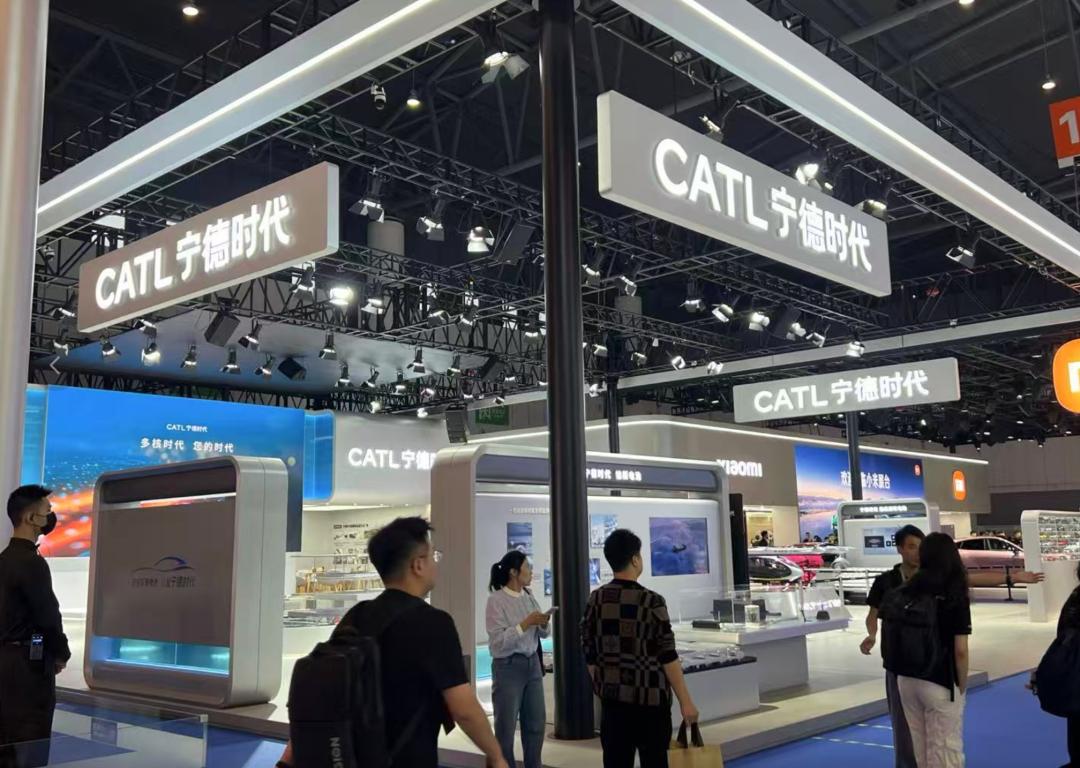
As the end of the year approaches, news about the tight production capacity of power battery manufacturers has spread rapidly. It is reported that some popular new energy vehicles have to extend their delivery cycles due to insufficient battery supply, and car manufacturers have to urge power battery manufacturers for orders. Among them, many senior executives or procurement personnel from car manufacturers have personally gone to the headquarters of CATL to 'rush' for orders.
The reporter learned from Dongfeng Motor that recently, a group of senior executives including the general manager of Dongfeng Motor and the chairman of Voyah Automobile went to Ningde City, Fujian Province to discuss battery supply matters, and successfully signed a ten - year in - depth cooperation agreement with CATL (300730.SZ, 03075.HK). Voyah Automobile will have priority access to CATL's battery technology and products.
Several power battery manufacturers such as CATL did not comment on the above statement. However, an industry insider told the reporter that the fourth quarter is not only the traditional peak season for the auto market but also for the power battery industry. On the one hand, the high automobile sales volume in the fourth quarter leads to an increase in battery demand. On the other hand, car manufacturers need to stock up in advance before the Spring Festival.
There is also a new change this year, that is, the explosion of the energy storage industry. According to data from the Zhongguancun Energy Storage Industry Technology Alliance, in the first half of 2025, the newly installed capacity of new energy storage in China reached 42.6GWh, a year - on - year increase of 27.5%. The proportion of energy storage business in the business of power battery manufacturers continues to increase, squeezing the battery quotas of many manufacturers to a certain extent.
While the production capacity of downstream power batteries is tight, a wave of price hikes is brewing in the upstream of the industrial chain. For example, the price of battery - grade lithium carbonate, one of the core raw materials, has rapidly risen from about 60,000 yuan per ton in the third quarter to nearly 100,000 yuan per ton currently, and many raw material manufacturers have also successively issued price increase notices.
01
Car Manufacturers Compete for Batteries
“I've had drinks with all the bosses of our battery manufacturers in the past one or two weeks!” On the evening of November 6th, when talking about how to ensure battery supply, He Xiaopeng, the chairman and CEO of XPeng Motors (09868.HK, XPEV.US), euphemistically stated his coping method.
Dongfeng Motor and Voyah Automobile took more direct actions: On December 17th, Feng Changjun, the general manager and deputy secretary of the Party Committee of Dongfeng Motor, and Lu Fang, the chairman and secretary of the Party Committee of Voyah Automobile, signed an agreement with Zeng Yuqun, the chairman and CEO of CATL, in Ningde City, and successfully obtained priority supply of the latter's battery technology and products.
“Voyah Automobile and CATL will carry out long - term cooperation in the future to reduce risks such as supply chain tension and delivery delays caused by industry fluctuations, ensure stable and reliable battery supply for Voyah in the face of market fluctuations, enable Voyah to plan product launches and production schedules more calmly and flexibly, and efficiently respond to changes in market demand.” Voyah said.
In addition to car manufacturers' bosses taking direct action, procurement personnel from car manufacturers are also closely monitoring the production lines of power battery manufacturers. According to a report from National Business Daily, it is reported that recently, procurement personnel from many domestic car manufacturers have gathered at the sales office of CATL's headquarters to 'block the door' in order to lock in battery production capacity. The reporter from Time Weekly verified this with CATL, but the other party did not comment.
An insider from a power battery manufacturer told the reporter that the claim of 'blocking the door' is not an exaggeration. Especially since CATL is the leading domestic power battery enterprise, car manufacturers do have more demand for it.
△Photo source: Tuchong
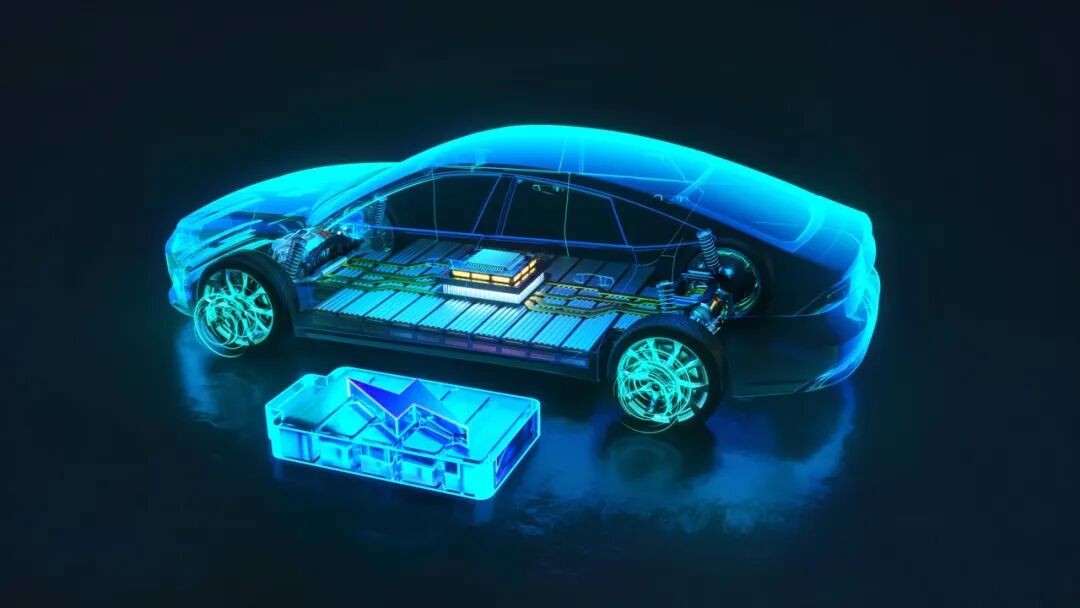
The reporter from Time Weekly learned that the long delivery cycles of many popular new energy vehicle models are partly due to insufficient battery supply. For example, the current delivery cycle of the pure - electric model Li i6 of Li Auto (02015.HK, LI.US) is 19 - 22 weeks. A relevant person in charge of Li Auto told the reporter that this is related to battery supply to a certain extent.
A similar situation has also occurred in models such as Wenjie M7 and XPeng X9. Most of these models use products from popular power battery manufacturers, such as CATL, CALB (03931.HK), and Honeycomb Energy. These power battery manufacturers have many customers, which means that the earlier a car manufacturer gets their battery supply, the more opportunities it has to sell more cars.
Conversely, if the battery supply is insufficient or untimely, the production capacity of new energy vehicles of car manufacturers will be adversely affected, which will in turn affect the production and sales volume of their products. Simply put, getting sufficient battery supply earlier for car manufacturers also means taking the lead in the competition.
The reporter from Time Weekly inquired about the year - end battery supply situation from the above - mentioned manufacturers. CATL and CALB did not reply. A relevant person in charge of Honeycomb Energy told the reporter that affected by the Spring Festival holiday factor and the increase in power battery specifications and demand, car manufacturers' demand for the production capacity of power battery manufacturers is indeed increasing.
02
New Variables Appear
Generally, car manufacturers have two direct reasons for competing for battery orders: one is to ensure the production and sales volume of their hot - selling models at the end of the year; the other is to make reserves around the Spring Festival holiday to quickly improve the production and sales capacity of cars after the festival.
The end of the year is one of the traditional peak seasons for the auto market. Many car manufacturers and dealers are striving for sales in November and December, which puts forward requirements for the production capacity of car manufacturers. With the retail penetration rate of new energy vehicles in China exceeding 50%, this in turn puts forward requirements for the battery supply of power battery manufacturers.
The reporter learned from the China Automotive Power Battery Industry Innovation Alliance that from January to November this year, the cumulative installed capacity of domestic power batteries was 671.5GWh, a year - on - year increase of 42.0%. Among them, the installed capacity of ternary batteries was 125.9GWh, accounting for 18.8%, with a year - on - year increase of 1.0%; the installed capacity of lithium iron phosphate batteries was 545.5GWh, accounting for 81.2%, with a year - on - year increase of 56.7%.
However, this is still difficult to cope with the short - term increase in demand.
In addition, the Spring Festival holiday this year lasts for 9 days, which will affect the battery production of power battery manufacturers to a certain extent. In this situation, car manufacturers need to get battery orders in advance and even have the privilege of priority production scheduling to ensure a rapid increase in car production and sales after the festival.
In fact, in order to cope with the rapid growth of the new energy vehicle market, most domestic power battery manufacturers have been expanding their production capacity in recent years. But why do they still face the phenomenon of tight battery production capacity? This is related to a variable in the energy market this year - energy storage.
△Photo source: Tuchong
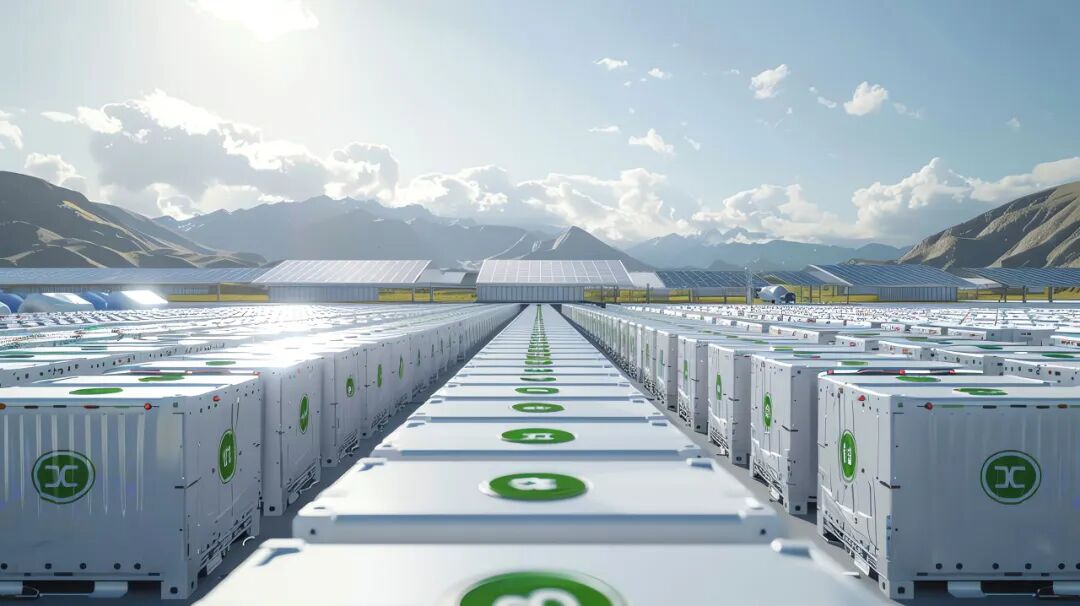
Energy storage business is one of the main businesses of most energy - related enterprises. For example, in the first half of the year, CATL's energy storage business revenue reached as high as 2.84 billion yuan, second only to the scale of its power battery business. Electrochemical energy storage is one of the fastest - growing energy storage routes in recent years, and the most widely used one is lithium - ion batteries, which are also the main type of current power batteries.
While manufacturers are expanding their production capacity, the energy storage industry is also developing at a high speed. In the first half of 2025, the newly installed capacity of new energy storage in China reached 42.6GWh, a year - on - year increase of 27.5%. It is worth mentioning that global leading car manufacturers such as Tesla and BYD are also vigorously developing energy storage business.
From the perspective of car manufacturers, the energy storage business has 'consumed' a lot of the production capacity quotas of power batteries, so it has become more urgent to seize the remaining battery production capacity. For power battery manufacturers, even battery giants such as CATL and BYD need to consider the production quota issue between power batteries and energy storage products.
03
Is the Industrial Chain Heating Up Again?
The strong terminal demand has spread to the upper end of the industrial chain, and the prices of upstream raw materials for power batteries have begun to soar.
Take lithium carbonate, which accounts for more than 40% of the cost of lithium iron phosphate batteries, as an example: Since October, the price of battery - grade lithium carbonate has been rising all the way, from about 60,000 yuan per ton to nearly 100,000 yuan per ton currently, with a short - term increase of 50%. The prices of core raw materials for power batteries such as lithium hexafluorophosphate and lithium cobalt oxide have also doubled in the short term.
Against the background of the price increase of upstream raw materials, upstream lithium mining concept stocks have also become very popular. As of December 19th, the cumulative increase of the lithium mining concept index this year was nearly 60%. Among them, the stock prices of companies such as Dazhong Mining (001203.SZ), Zangge Mining (000408.SZ), Shengxin Lithium Energy (002240.SZ), and Zijin Mining (601899.SH) have all doubled.
While the prices of raw materials are rising, some enterprises revealed that some raw material manufacturers have also increased processing fees recently. For example, the processing fee for lithium iron phosphate cathode materials will be increased by 3,000 yuan per ton from next year, which further increases the upstream cost.
Affected by the above - mentioned multiple factors, many battery manufacturers said they will raise the prices of battery products.
For example, Suzhou Dejia Energy announced that it will raise the prices of battery products by 15% from December 16th; Funeng Technology (688567.SH) said on the investor platform that combined with the rising raw material prices and increasing market demand, the price increase of lithium batteries is an industry trend. The company is communicating with customers about the price increase, and some products have already increased in price.
△Photo source: Tuchong
The relevant person from Honeycomb Energy also told the reporter that power battery manufacturers will communicate with upstream raw material manufacturers and car manufacturers to balance prices. Specifically, in the current market environment, the increase in battery raw material costs will drive up the product selling prices.
Zhou Bo, the secretary - general of the Lithium Iron Phosphate Materials Branch of the China Chemical and Physical Power Supply Industry Association, said that the supply - demand situation in the lithium iron phosphate market has reversed. It is estimated that the top 20 enterprises in terms of capacity utilization rate are basically operating at full capacity, and many of the industry's previously idle production capacities have also started contract manufacturing. In this situation, most enterprises in the industrial chain have started to raise prices.
At this point, while car manufacturers are competing for battery production capacity, the prices in the power battery industrial chain have started to heat up across the board.
The price increase of upstream raw materials also has positive significance for the power battery industry. On November 28th, the Ministry of Industry and Information Technology organized a symposium for manufacturing enterprises in the power and energy storage battery industries, calling for the healthy development of the industry and avoiding 'involution - style competition'. The background is that many enterprises in the power battery industry are still in a state of low - price competition or loss.
According to industry estimates, if the processing fee is increased by 3,000 yuan per ton in 2026, the gross profit margin of lithium iron phosphate can rise to 7.5%, an increase of more than 7 percentage points compared with the current level, which will effectively improve the profitability of some enterprises.
Currently, according to industry insiders' analysis, this wave of power battery boom will last until next year. With the resumption of work and expansion of production after the festival and the optimization of enterprise production capacity quotas, the shortage of power battery supply is expected to be alleviated.
Many downstream power battery manufacturers are also trying to actively reduce the impact of raw material cost fluctuations. For example, CATL invested 2.6 billion yuan this year to take a stake in Tianhua New Energy (300390.SZ), a lithium - battery material manufacturer, and CALB took a stake in Shengxin Lithium Energy, a lithium mining company. One of the main goals of such business cooperation is to obtain stable and controllable lithium - battery materials.
New energy car manufacturers also don't want to sit idle. In addition to communicating with battery manufacturers in advance for stable supply, many car manufacturers have entered the power battery industry, such as taking stakes in power battery enterprises or establishing joint - venture factories with them. The latest example is Li Auto. After investing 400 million yuan in Sunwoda in 2022, it established a joint - venture battery factory with Sunwoda this year in order to reduce the risks of industrial chain fluctuations.
In the view of many industry insiders, this wave of popularity in the power battery industry is expected to last until after the festival. With the new policies in the auto market next year and the adjustment and release of industrial production capacity, the trend of the power battery industry may change.
This article is from the WeChat official account “Time Weekly” (ID: timeweekly), author: Wu Kai, editor: Liu Xue. Republished by 36Kr with permission.