AI glasses: Are we ready to let AI "see" the world?
In 2025, AI glasses became a "hot topic" in the tech circle.
In February 2025, Meta's Ray-Ban smart glasses sold over 2 million pairs, and the annual shipment is expected to reach 4 - 5 million pairs. Overseas giants Google and Samsung restarted their AI glasses projects, and Apple finalized the release schedule for its AI glasses.
Domestic companies also took action. Tech giants in China such as Huawei, Xiaomi, Alibaba, and ByteDance have publicly announced their relevant layouts. Among them, the pre - sale period of Alibaba's Quark AI glasses S1 on Tmall reached 45 days, and they were in short supply. Domestic AR unicorn companies like Rokid and Thunderbird Innovation, as well as other professional players, are also continuously iterating their new AI glasses products.
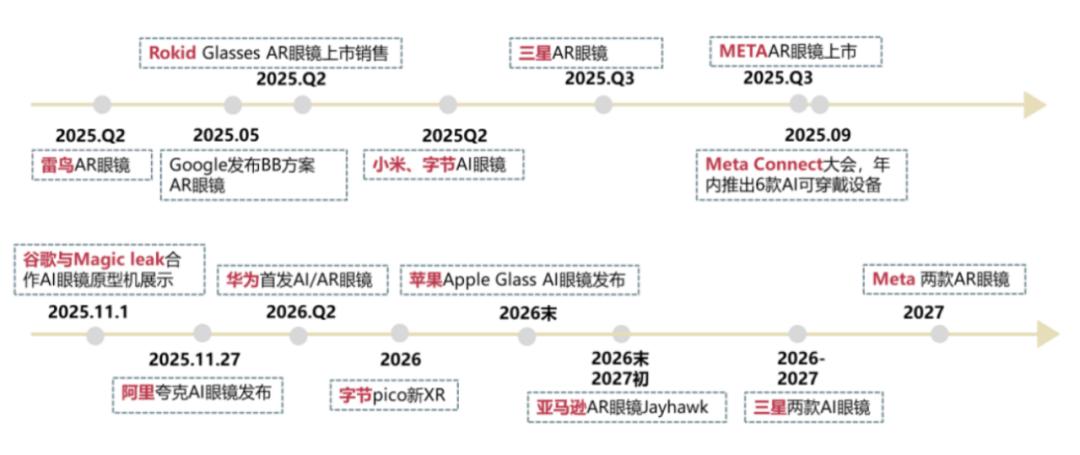
Timeline of AI glasses' development, Image source: Soochow Securities
On the surface, this is a new wave of hardware driven by large - model technology. However, all the big tech companies have bet on AI glasses, each with its own motives.
In the artificial intelligence competition, if you don't advance, you'll fall behind. Previously, during the window period when the big tech companies hadn't made large AI models their strategic focus, some startups broke through first. For example, Kimi launched by Dark Side of the Moon quickly captured a large number of users with its differentiated advantages such as long - text processing.
Even a tech giant like Tencent made a strategic misjudgment at the beginning of the race. It was relatively conservative in its layout of consumer - facing large models, and its product Yuanbao was launched later than its peers.
Companies that "suffered losses" in the large - model competition are definitely not willing to fall behind again in the next - generation terminal entrance. Hardware has become a new line of defense for competing for users' attention and achieving a data closed - loop.
Currently, AI glasses are highly anticipated, mainly because Meta's Ray - Ban smart glasses have provided a rare successful example. The Ray - Ban glasses, with a starting price of about $300, have sold over a million pairs, which is sufficient to verify the feasibility of "implementing AI capabilities through glasses."
Not making AI glasses means giving up the future entrance for human - machine interaction. In this regard, the big tech companies "have to" make AI glasses. However, problems arise:
As service providers, do the big tech companies have sufficient technological maturity and product responsibility to enable AI to truly "understand what it sees" rather than just "record what it sees"?
As service recipients, are we ready to define the boundaries of the right to "see and be seen"?
01
Who has the chance to stand out?
In the industry report of Frost & Sullivan, AI smart glasses are classified into three categories according to their different functional characteristics: AI audio glasses, AI shooting glasses, and AI + AR glasses.
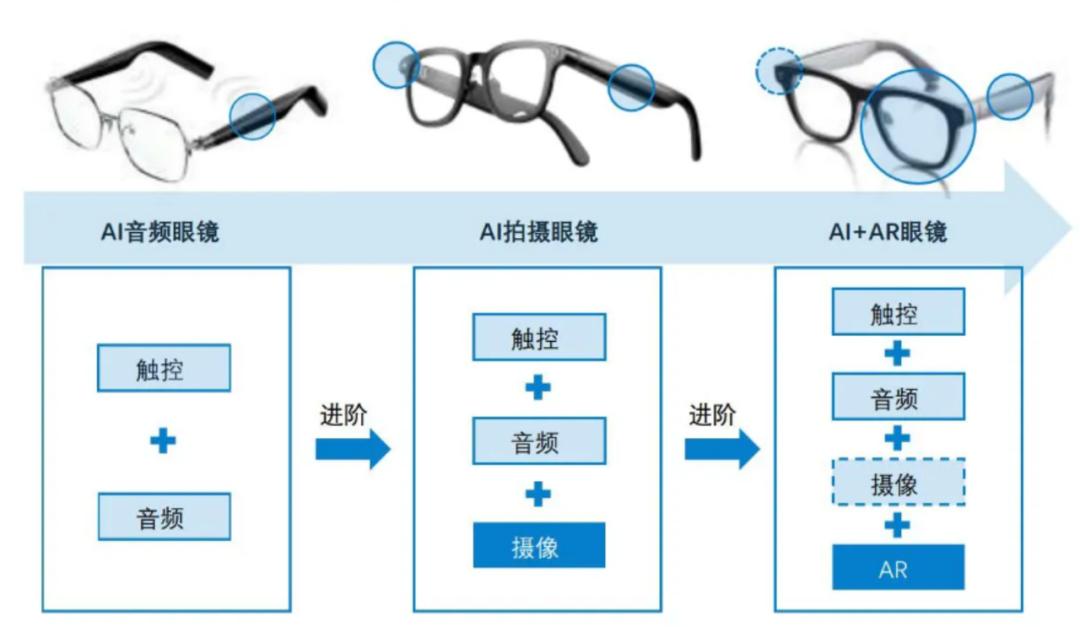
Image source: Frost & Sullivan
AI + AR glasses are regarded as an advanced form of the first two types. On the basis of voice interaction and image - capturing capabilities, they further integrate AR optical display technology, thus achieving a deep integration of multimodal interaction methods such as voice, touch control, visual recognition, and spatial overlay information.
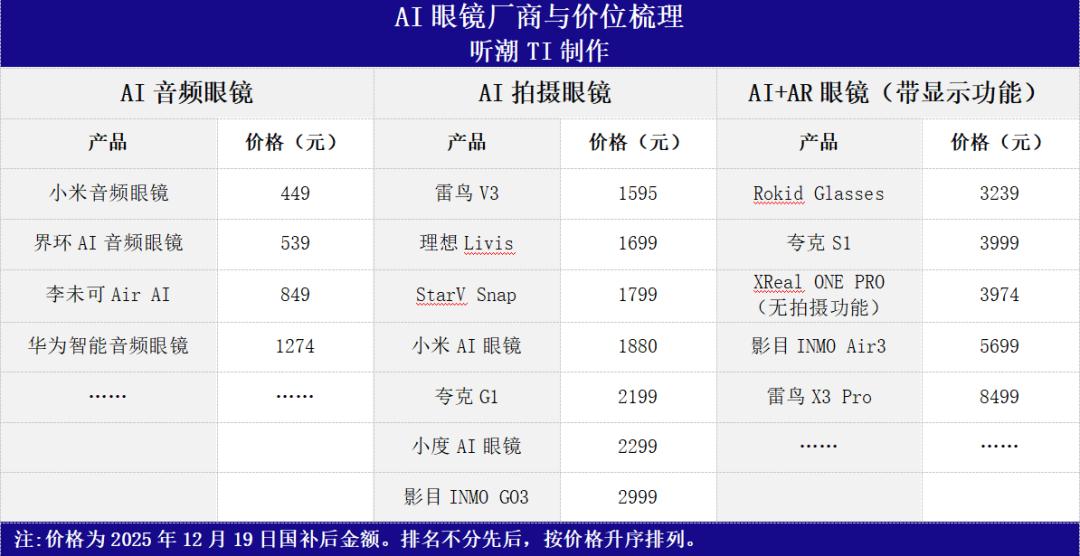
Currently, there are a wide variety of AI glasses on the market with a large price range from a few hundred yuan to several thousand yuan. The main reason is the different positioning of product forms. In this chaotic competition, not all players are on an equal footing. Currently, there are five main types of domestic competitors:
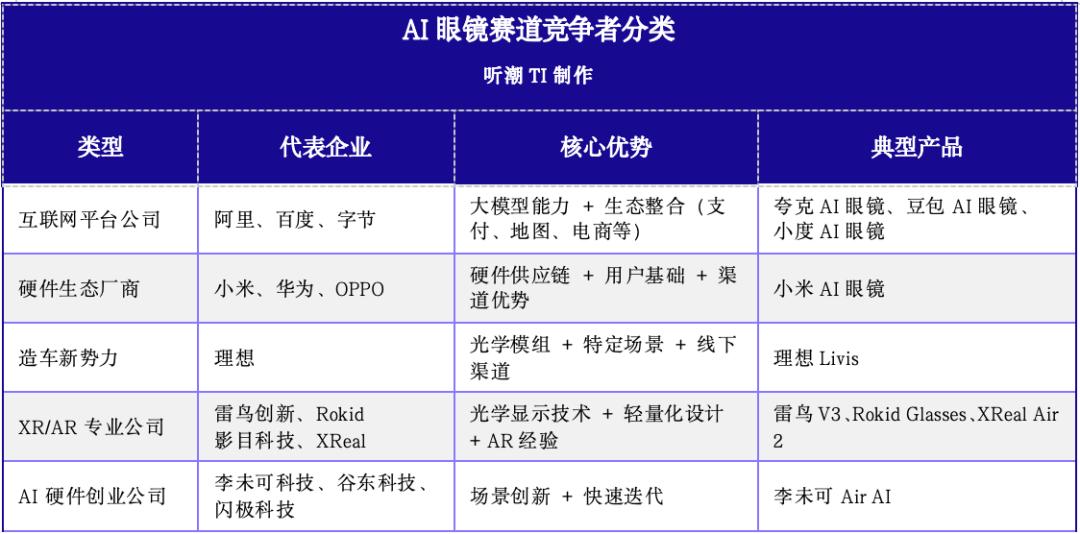
Note: XR (Extended Reality) = VR (Virtual Reality) + AR (Augmented Reality) + MR (Mixed Reality)
First are several well - known domestic Internet and technology giants, such as Alibaba, Baidu, and ByteDance. They generally rank among the top three to five in the domestic large - model field, and each has its own ecological moat. Alibaba has e - commerce and payment platforms, Baidu has mapping services, and ByteDance has a huge content ecosystem. They can upgrade the device from a tool to a lifestyle service entrance through ecological collaboration.
Hardware ecosystem manufacturers represented by Xiaomi are quickly seizing the market with their supply - chain and channel advantages. After discounts, Xiaomi's AI glasses were once priced as low as 1,630 yuan, supported by its mature supply - chain management capabilities. With its large number of offline stores and a large user base of mobile phones, its products can quickly reach the general public.
More importantly, the cross - device collaboration between AI glasses, mobile phones, and smartwatches forms a unique ecological barrier. According to Wellsenn XR data, the sales volume of AI smart glasses is expected to reach 7 million pairs, with Meta accounting for 5 million pairs. Xiaomi's AI glasses, which were launched at the end of June this year, are expected to account for 200,000 pairs.
The entry of new car - making forces has opened up a differentiated track. On December 3rd, Li Auto's AI glasses, Livis, were officially launched, with a starting price of 1,999 yuan and 1,699 yuan after national subsidies. Li Auto deeply integrates its AI glasses with the in - vehicle system to meet the driving - related needs of car owners. This "scenario - specific" strategy allows it to avoid the fierce competition in the consumer market but also limits its audience.
The "Four Little Dragons of AI Glasses" are representatives of the technology - driven group. Players such as Thunderbird Innovation, Rokid, XReal, and Yingmu Technology have been deeply involved in optical display technology for many years. The high - brightness screen of Thunderbird V3 and the lightweight design of XReal have reached the top level in the industry. More importantly, they have experience in implementing their products in professional scenarios such as industrial inspections and cultural tourism guidance.
However, the weak ecological construction is their biggest constraint. How to penetrate from the B - to - B professional market to the C - to - C consumer market is an issue they must address. Rokid has chosen a differentiated path, focusing more on high - value vertical scenarios.
In international conferences, Rokid glasses can translate conversations in real - time and project subtitles. In factory inspections, workers can retrieve device parameters by voice, take photos, and upload fault information. In speech scenarios, the prompt content can be directly displayed on the lenses, invisible to others. In these scenarios, AI glasses solve real pain points by freeing hands, improving efficiency, and ensuring safety.
AI hardware startups are looking for opportunities through flexible innovation. They avoid the ecological barriers of big tech companies and focus on niche scenarios. For example, Li Weike Technology was the first to launch the "AI digital human" personal assistant function. It sold over 100,000 units last year and became a dark horse in the consumer market.
So, who is leading the race at present?
According to CINNO Research data, from July to September 2025, in the Chinese consumer - grade AR market, Thunderbird maintained its leading position with the stable sales of its Air series and the continuous innovation of the X3 Pro in the high - end market.
The market situation is constantly changing, and big tech companies are closely following with their ecological advantages. During this year's "Double 11" period, the top three best - selling smart glasses on Taobao were Alibaba's Quark S1, Rokid Glasses, and Xiaomi's AI glasses.
02
A "must - do" for big tech companies, an "optional" for users
Amid the hype, a question has been intentionally or unintentionally overlooked: Do ordinary users really need a pair of AI glasses to "see" the world for them?
In the past decade, countless smart hardware products have failed due to "false demands." Smart bracelets once claimed to replace mobile phones but ended up as pedometers. Smartwatches have powerful functions, but most people just use them as watch decorations. AR glasses have been promising to "change the world" for years but are still confined to vertical industries such as manufacturing. If AI glasses can't answer the question of "what makes them better than mobile phones," they are likely to meet the same fate.
Currently, the core functions of AI glasses on the market generally include voice assistants, real - time translation, photo recognition, navigation prompts, and meeting recording. At first glance, these functions seem rich, but in fact, most of them have already been implemented on mobile phones.
More importantly, these functions often require an internet connection and rely on cloud - based large models. Once the signal is weak, the device becomes useless. Another drawback of the user experience is the unnatural interaction. Ideally, AI glasses should "seamlessly integrate into daily life," but in reality, users still need to frequently say "Hey, AI," manually click on the touch bar, or set up through the mobile app.
Moreover, privacy issues are always a concern. A pair of glasses that can record audio and video at any time means that the user can be both a user and a potential invader of others' privacy.
As early as a decade ago, Google Glass had to withdraw from the market due to the issue of secretly filming. Meta's solution is to embed an LED indicator on the glasses to remind people around that "you are being filmed." However, this measure seems insufficient. Soon, private engineers began to "teach" on the Internet how to modify the glasses to block the indicator, and some even offered modification services.
Although Meta has responded that such behavior violates the user agreement, and in the new batch of products, it has upgraded the LED from 1mm to 2mm, changed the blinking mode to a constant - on mode, and even added hardware - level tamper detection, it still can't prevent the old - model glasses already on the market from being modified.
In October 2024, Harvard students AnhPhu Nguyen and Caine Ardayfio uploaded a video titled "Are we ready for a world where personal information is transparent?"
They connected a face - recognition and data - aggregation system to the Meta Ray - Ban glasses. The function they achieved was that just by making eye contact with a stranger on the street, the person's name, age, phone number, address, and even information about their family would appear on the phone screen in real - time.
For users themselves, AI glasses are always in an "online perception" state. Private scenes at home, private conversations with family members, and financial information on the phone screen may all be unconsciously captured by the device and synchronized to the cloud.
This data is not only the "raw material" for training AI algorithms but also may become the target of theft due to account leakage or system vulnerabilities, leaving personal privacy exposed under the guise of "convenience."
Therefore, currently, AI glasses are more of a novelty for tech enthusiasts and are still far from being a "must - have" for the general public.
To transform from a "novelty" to a "must - have," it is necessary to find and focus on real rigid - demand scenarios, that is, in a certain situation, if the user doesn't have this device, they will obviously feel a decline in efficiency, an increase in safety risks, or a deterioration in experience.
At present, AI glasses are approaching this state in some B - to - B operations, such as operation inspections, spot checks, maintenance in the power industry; remote acceptance and equipment inspections in the oil and gas industry; pre - hospital emergency treatment and remote consultations in the medical industry. In these scenarios, AI glasses solve not just "convenience" problems but core pain points related to safety, accuracy, and efficiency, and thus have a natural rigid - demand attribute.
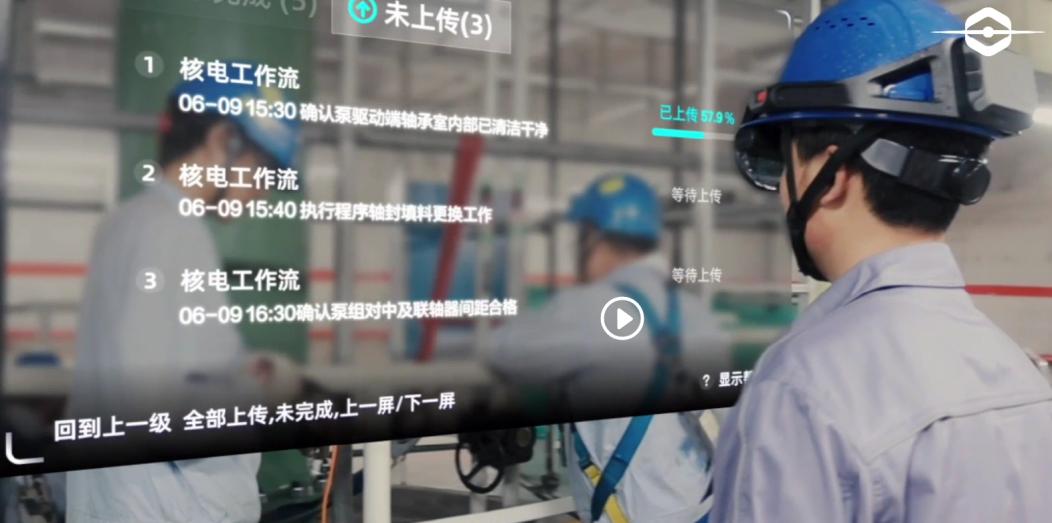
Image source: Rokid official website
In the consumer market, most of the functions currently offered by AI glasses have mature alternatives, such as mobile phones, earphones, and smartwatches. Therefore, the exploration of rigid - demand scenarios in the consumer market must target those scenarios where mobile phones and other devices can't free hands or provide first - person perspective overlay, such as cycling navigation, cooking in the kitchen, and assistance for the disabled.
Secondly, the experience should be "seamlessly integrated" to build user dependence in daily use. Users have limited patience for wearable devices. If the glasses are uncomfortable to wear, difficult to operate, or have short battery life, users are likely to sell them on Xianyu.
Thirdly, integrating into a broader "ecological collaboration network" is the key to amplifying the value of AI glasses. Users will be buying not just a pair of glasses but a complete, cross - scenario smart - life solution.
Of course, the ultimate goal is to provide highly "personalized" proactive services. The highest level of rigid - demand is that before the user even speaks, the device already "understands what you want and provides what you need." This depends on data - driven personalization and proactive intelligence. A basic AI glasses requires you to give commands, while a mature one should be able to predict your needs through eye - movement tracking, behavior patterns, and environmental perception.
The device will no longer be a cold tool but a perceptive and predictive "personal assistant." This path is destined to be long and full of trial - and - error, but once the rigid - demand in a niche area is firmly grasped, it may, like smartphones back then, evolve from a niche trendy product to a must - have for everyone.
For manufacturers, the most practical strategy at present may be to verify the value and polish the experience in the B - to - B market, while cultivating seed users and scenarios in the C - to - C market. Wait for the inflection point of technology and cost to turn "potential rigid - demand" into "real rigid - demand."
03
Beyond glasses, big tech companies are vying for all possible AI entrances
So, going back to the original question: Are we really ready to "let AI see the world"?
The answer may be no - at least not yet. However, the ambitions of big tech companies go far beyond AI glasses.
From smart cars to smart homes, from wearable devices to embedded terminals, in essence, all are competing for the right to speak at the entrance of the AI era. Whoever becomes the most trusted "digital partner" of users will control the core traffic of data and services. This is the fundamental reason why Internet platforms, hardware manufacturers, and professional players are all entering the market.
Looking back at history, every prediction of the "next - generation terminal" has been accompanied by fanaticism and disillusionment. Tablets were supposed to replace laptops, smartwatches were supposed to replace mobile phones, and the metaverse was supposed to reshape the Internet - most of these predictions have ended