Countdown to the "exit" of fully concealed door handles. The new national standard will be implemented in 2027. Automotive industry insiders: The cost of vehicle modification is quite high.
“Last winter, after a snowfall, I didn't drive my car for a few days. When I went to drive it again, I found that the hidden door handle of the vehicle was frozen. Fortunately, I haven't encountered a similar situation this year.” Recently, an owner of a Tesla Model 3 told a reporter from National Business Daily about his embarrassing experience.
What's more dangerous than a frozen door is the high risk associated with hidden door handles in extreme situations. For example, at the end of October this year, a fatal traffic accident lawsuit against Tesla cars that occurred in November last year was officially filed in a local court in Wisconsin, USA. In the accident, the doors of a Model S couldn't be opened after a collision, and all five passengers in the car were trapped in the rapidly spreading fire and unfortunately died. Due to the potential safety hazards of hidden door handles, Tesla is facing lawsuits and investigations by relevant agencies in the United States.
Against this background, consumers' concerns about hidden door handles are also increasing. Based on this, regulatory authorities have started to take action, and there has been new progress in the mandatory national standards for car door handles.
According to a notice on the official website of the Ministry of Industry and Information Technology on December 16, the ministry has organized and completed the compilation of seven mandatory national standards (draft for approval), including the Safety Technical Requirements for Automobile Door Handles (hereinafter referred to as the Requirements), and the foreign - language version (draft for approval) of the mandatory national standard Safety Requirements for Electric Vehicles.

Image source: Ministry of Industry and Information Technology website
The Requirements have new regulations on the mechanical release function, position and visibility, strength requirements, and test verification of door handles. For example, the Requirements state that “each door (excluding the tailgate) should be equipped with an exterior door handle that can be mechanically released. Even if the vehicle is equipped with an electronically controlled / automatically activated locking device, it should still be mechanically openable after an accident when in the locked state.”
“This should clearly prohibit fully hidden door handles,” Cui Dongshu, the secretary - general of the Passenger Car Association, analyzed to the reporter.
Mandatory Installation of Mechanical Exterior Door Handles
Currently, many new energy vehicles are equipped with hidden door handles. “In terms of advantages, hidden door handles have a sense of technology and aesthetics and can automatically pop out and retract through induction devices. Hidden door handles have become an identity symbol for new energy vehicles. They can make the vehicle's appearance more concise, which conforms to the aesthetic trend of future technology,” said Zhang Hong, a member of the Expert Committee of the China Automobile Dealers Association.
Although hidden door handles have a simple appearance and a high - tech feel, they have exposed many potential hazards in actual use, such as low structural strength, security vulnerabilities in control programs, difficulties in identification and operation (without obvious markings), failure when the power is cut off, and a high risk of pinching. In the event of a collision or fire, after the vehicle loses power, both the electric exterior and interior door handles may malfunction, seriously hindering passengers' self - rescue and external rescue.
Wei Jianjun, the chairman of Great Wall Motors, recently stated bluntly: “Hidden door handles may prevent the doors from opening in the event of a vehicle collision, causing serious accidents. In addition, although hidden door handles are considered to reduce wind resistance and energy consumption, Great Wall Motors has found through experiments that the effect of reducing wind resistance is minimal, while the weight of the handle has increased by 8 kilograms, and it is not easy to seal.”
The China Insurance Automotive Safety Index (C-IASI) has revealed the drawbacks of hidden door handles in scenarios such as collisions through actual test data. The collision test data it released shows that the probability of the doors of models equipped with electronic door handles popping out successfully after a side collision is only 67%, while this figure for traditional mechanical door handles is as high as 98%.
Based on this, the Requirements clearly state that “each door (excluding the back door) should be equipped with an exterior door handle that can be mechanically released. The vehicle's safety design should ensure that after events such as the deployment of irreversible restraint devices or thermal diffusion of the power battery occur, the doors can be opened by mechanically releasing the exterior door handle without the use of tools. For vehicles equipped with electronically controlled door locking devices or automatically activated door locking devices, when the locking device is in the locked state, after events such as the deployment of irreversible restraint devices or thermal diffusion of the power battery occur, the doors can be opened by mechanically releasing the exterior door handle without the use of tools.”
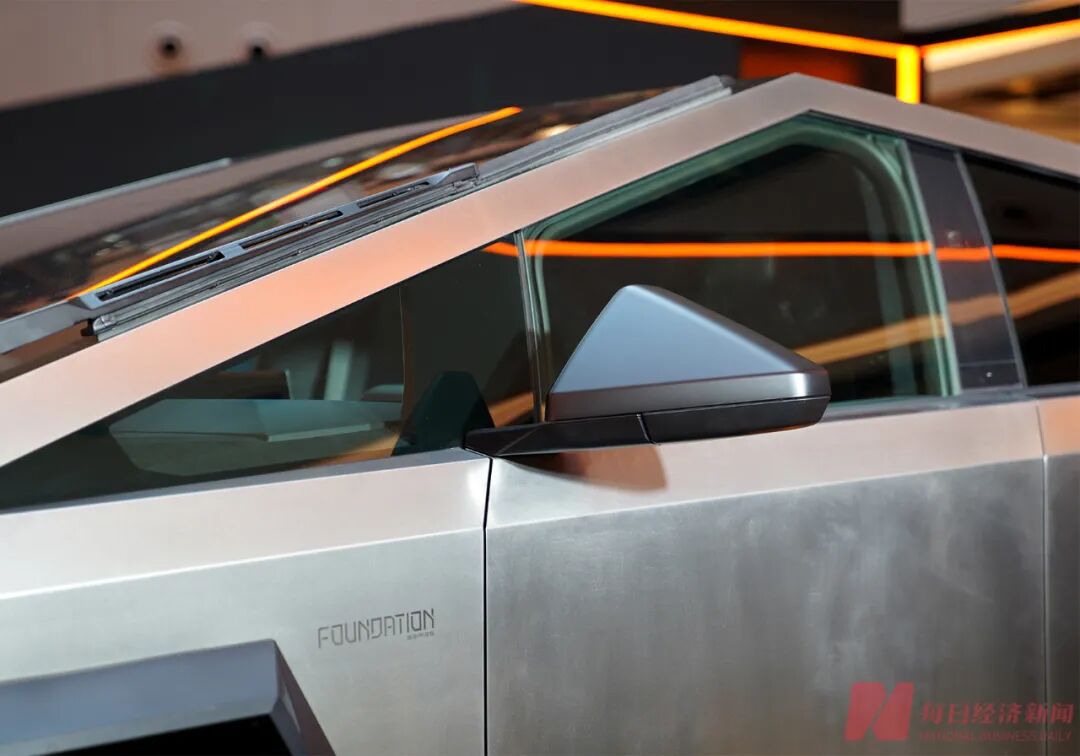
Image source: Photo by Cong Sen, reporter from National Business Daily (file photo)
In addition, the Requirements also clearly stipulate the hand - operating space for exterior door handles. The exterior door handle of each door should have a hand - operating space relative to the vehicle body surface in any state, and this operating space should be no less than 60mm × 20mm × 25mm. Such a space is large enough for an adult to insert four fingers and have enough leverage to open the door.
In addition to exterior door handles, the Requirements also stipulate that each door (excluding the back door) should be equipped with at least one interior door handle that can be mechanically released. When a single door is equipped with multiple mechanically released interior door handles, operating any one of the interior door handles independently should be able to open the door. At the same time, the interior door handles are also required to be easily recognizable by vehicle occupants and should be equipped with permanent markings that meet the requirements.
Enterprises Still Have Time to Adjust Door Handles According to New Regulations
A relevant person in charge of the Science and Technology Department of the Ministry of Industry and Information Technology said that the standards for automobile door handles are not only technical and design issues but also safety issues. Regulating hidden door handles is to prevent safety issues from remaining “invisible.”
In Zhang Hong's view, the extensive solicitation of opinions on the safety technical requirements for automobile door handles by the state is unprecedented and an important step in filling a gap. It marks that China's automobile industry is about to take an important step in door handle safety. The new regulations also put forward new requirements for the supply chain and technological innovation, which will trigger a profound reshuffle of the automobile industry chain and eliminate models with pseudo - technology.
From the market perspective, the new AITO M7, Geely's 9X and 8X have already switched to semi - hidden door handles. However, according to publicly available statistical data, among the top 100 best - selling new energy vehicle models in the Chinese automobile market in April this year, the installation rate of hidden door handles was about 60%. This means that the door handles of these models may need to be adjusted.
In response, a body designer from Toyota said: “We will install a mechanical door handle inside the hidden door handle. In the event of a vehicle collision, people inside the car can open the door through the mechanical door handle, and people outside the car can also open the door through the automatically popping - out door handle.”
Leapmotor said that almost every new energy vehicle enterprise has models with hidden door handles, and Leapmotor will strictly follow the regulations of relevant departments to adapt the door handle configuration. Changan Automobile said that it participated in the formulation process of relevant regulations, will continue to follow up on developments, and will make preparations for implementation in accordance with the regulations in the future.

Image source: Leapmotor's official WeChat account
It is worth noting that under the new regulations, some models may need to be redesigned. The reporter learned that once the shape and installation position of the door handles are redesigned, the die - casting molds for the doors and the injection molds for the interior must be adjusted synchronously. Along with this comes a change in the door's structural strength, and the vehicle may have to undergo safety tests such as side - impact tests again.
“Changing from hidden door handles to traditional mechanical door handles requires redesigning the electrical circuits and making new molds. Especially now, the design of new energy vehicles emphasizes integration. Although it seems that only the door handle has been changed, many system designs need to be changed in a coordinated manner, and the cost of the change is not small,” a relevant person from GAC revealed.
It is understood that the four doors of a vehicle correspond to four different die - casting molds, and manufacturing molds requires not only material costs but also development fees, mold - testing fees, and a series of other expenses. Depending on the weight and material, the cost of the four door molds ranges from about 4 million to 6 million yuan. In addition, time pressure is also one of the factors that automobile manufacturers evaluate most carefully when making adjustments.
The drafting group of the standard recommends that the implementation date of the new regulations be January 1, 2027, and a transition period has been set: New models applying for type approval need to meet all the requirements starting from July 1, 2027, and models that have already obtained type approval need to complete rectification by July 1, 2028. The industry believes that this arrangement takes into account both the urgency of safety requirements and gives enterprises enough time to make adjustments.
This article is from the WeChat public account “NBD Auto”, author: Sun Lei. Republished by 36Kr with permission.