The acquired American brand is back to life after expanding its stores to 170 in two years.
Interview | Yang Xuan, Li Xiaoxia
Author | Li Xiaoxia
Editor | Qiao Qian
Recently, foreign - owned brands selling their Chinese businesses have been quite a hot topic. First, Starbucks China was sold to Boyu Capital, and then Burger King China was acquired by CPE Yuanfeng.
This is not just a short - lived business wave, nor is it just a phenomenon in the food and beverage industry.
In the fashion field, Anta is an experienced acquirer. At the beginning of 2023, Baozun completed the acquisition of GAP's Chinese business and officially joined the ranks of local forces reshaping foreign - owned brands.
Behind all these transactions lies the same logic: Only the most in - depth localization can reactivate the growth potential of a brand in the Chinese market.
For a large multinational business group, it's difficult to avoid redundant and lengthy decision - making processes in cross - border operations.
Huang Yiming (Ken), the CEO of GAP China, told 36Kr that when Baozun first took over, GAP China had more than forty complex and independent operating systems that were not interconnected. It often took multiple rounds of cross - border reviews for a product to be approved for launch from the development stage. By the time the decision was made, market opportunities might have already slipped away.
Streamlining was the top priority after the acquisition. Baozun spent ten months completing the localization upgrade of all GAP China's systems.
In addition, GAP China also systematically sorted out its brand strategy: while clarifying the brand positioning, it reduced its reliance on discount promotions, promoted the localization of about 70% of the supply chain, and further accelerated the expansion of sales channels.
Two years have passed, and there are some positive signs of the "transformation". The number of stores has increased from more than 120 at the time of acquisition to 170. According to Baozun's recently released Q3 financial report, GAP's same - store sales also achieved a 7% year - on - year increase.
"What's the most difficult? Everything." Huang Yiming (Ken) admitted frankly.
The recovery has just begun, but the story is far from over. How to create GAP China into a "Yuanyang" (a popular Hong Kong - style drink made of coffee and tea) as envisioned by Qiu Wenbin, the chairman of Baozun - GAP globally represents Western - culture coffee, and Baozun China represents Chinese tea. Combining them creates a "Yuanyang".
Blending this "Yuanyang" to the most appropriate taste, retaining the global perspective of an international brand while integrating Chinese local culture and context, is the core issue that Huang Yiming (Ken) needs to address.
Huang Yiming (Ken) took over as the CEO of GAP China in July 2024. He is also the CFO of Baozun Brand Management (BBM). Before joining Baozun, he worked at Inditex China, the parent company of ZARA, for ten years. Recently, we had a chat with him about GAP China's development strategy.
The following is an edited conversation between 36Kr and Huang Yiming (Ken), the CEO of GAP China:
From discount - driven sales to emotional connection with users
36Kr: Before the acquisition, there were many reports about GAP closing stores. After Baozun took over, it's obvious that the store - opening speed has accelerated significantly.
Ken: When we took over, GAP China had more than 120 stores, and now there are 170.
As a mass - market brand, actively opening new stores is an important way to maintain the brand's scale and market presence, and it can also prevent channel shrinkage due to expired store leases.
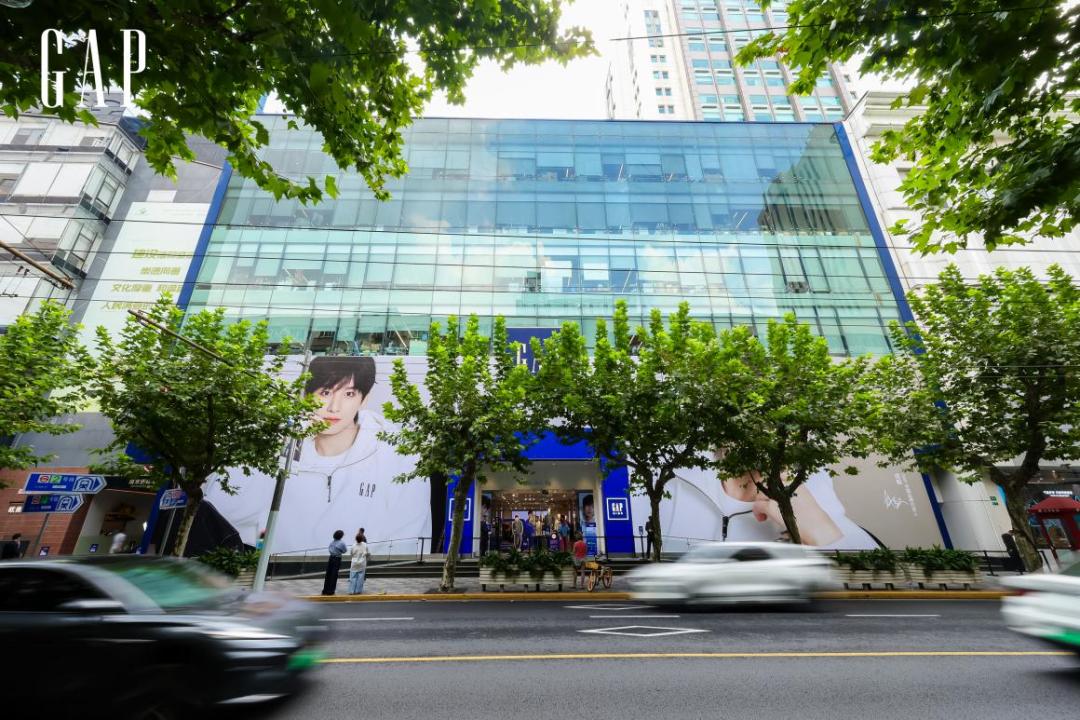
GAP's flagship store at 863 Nanjing West Road
36Kr: As the person in charge of the business, what do you think is the key to turning around GAP China?
Ken: Our core strategy is "Local for Local, China for China". We adopt a localized business strategy, including a Chinese team, a local supply chain, and product development from the perspective of local consumers. We combine the brand's DNA with the emotional needs of Chinese consumers for brand positioning.
36Kr: In the past, GAP impressed me as an American casual basic - style brand with a bit of design, not too expensive, positioned between Uniqlo (pure basic styles) and ZARA, UR (more fashion - forward). Has the overall positioning changed or shifted?
Ken: Yes, there has been a change. In 2024, we adjusted the brand positioning, which echoes the global brand positioning change of GAP. (GAP globally changed its CEO and core management team in 2023 and has been continuously deepening its brand positioning.)
In terms of product features, UR and ZARA's designs are more trendy and can quickly respond to fashion changes, while Uniqlo focuses more on the functionality of fabrics. In contrast, GAP's product design is more classic, emphasizing resonance with consumers and popular culture, allowing consumers to express their individuality through GAP's clothing. Therefore, GAP's products focus more on emotional connection rather than functionality.
36Kr: How can consumers feel the emotional connection?
Ken: This is quite a challenging task. Consumers need an all - round perception of emotional connection, whether it's through in - store experiences or social media channels.
This year, we proposed a clear strategy: creating brand narratives around music and dance scenes to establish an emotional connection with consumers. This direction is also related to the brand's history and DNA - since its inception, GAP stores have sold both jeans and vinyl records. In the 1990s, many of its music - and - dance - themed advertisements were very popular and became the shared memories of a generation.
In the offline space, this emotional connection is also extended to product presentation and experience. Different from the traditional shelf - display store model, GAP stores create an interactive space model centered around product styles. At the same time, the store image is also constantly being upgraded. The new 2.5 - version store image will be officially launched this year, aiming to provide consumers with a more comfortable, warm, and experiential offline space.
36Kr: Uniqlo has many impressive hit products and collaborations, but it seems that GAP doesn't have as strong a brand presence in consumers' minds?
Ken: This is also related to the channel coverage. Uniqlo has more than 900 stores in China, while GAP currently has only 170 stores in China.
Moreover, GAP's brand presence is not concentrated on a single product but on the product line. For example, from our sales data and membership system, it can be seen that consumers have a strong preference for our children's clothing and sweatshirts. In GAP stores, regardless of size, there are usually independent areas for children's clothing and sweatshirts, which may be different from most clothing brands.
In addition, we have also been actively engaged in brand marketing. We've seen some results from these efforts. For example, after we announced Cheng Yi as the brand ambassador for GAP China, the UGC content on social media increased significantly, and consumers started sharing the star - endorsed outfits. From the e - commerce data, the active search rate for brand keywords and the proportion of new customers have both increased significantly, which shows that our strategy is working.
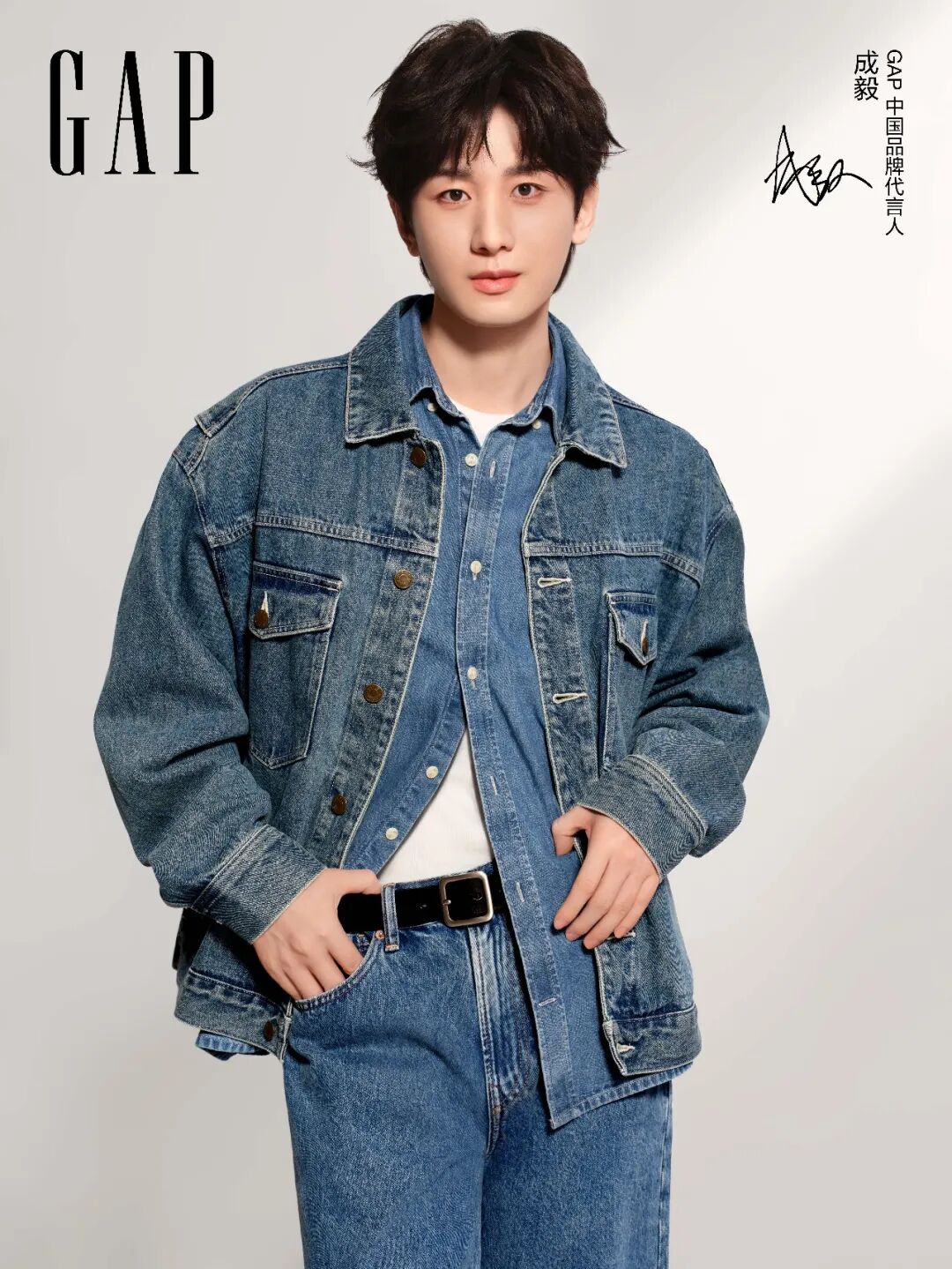
Cheng Yi, the brand ambassador for GAP China
36Kr: Why didn't GAP develop smoothly in the past?
Ken: I once read an interview with GAP's global CEO. He also mentioned that for a long time in the past, GAP drove product sales through discounts. They are now adjusting their strategy and aiming to return to a brand communication method driven by cultural resonance and emotional connection.
36Kr: You've also been doing the same after taking over.
Ken: Because this is what we think too. It's a choice based on our own analysis and judgment of the market. Coincidentally, it aligns with their thinking.
36Kr: Everyone has noticed the problems, but GAP Global failed to solve them in the past. Why are you confident?
Ken: Many problems are caused by the objective limitations in cross - border operations.
As a local enterprise, Baozun understands the Chinese market and consumers well. The management team and mechanisms we've established can make quick adjustments and changes.
36Kr: Can you give an example, like how things were when the headquarters was directly in charge and how they are now?
Ken: Take the system transformation as an example. When Baozun took over GAP China, there were more than forty independent systems in operation, with unconnected data and processes. A business often had to be repeated in multiple systems and go through complex cross - system approvals. After Baozun took over, leveraging its advantages in e - commerce and IT, it completed the localization upgrade of all systems in just ten months.
In terms of decision - making, now if the local team finds a product with market potential during product development, they can quickly make decisions on ordering and re - ordering, with a very short decision - making process. In the past, after the Chinese market put forward a demand, it had to go through internal and cross - border approvals. By the time the overseas supply chain responded, the market opportunity might have been missed.
Taking over a foreign brand, the hardest part is everything
36Kr: It's almost been three years since Baozun completed the acquisition of GAP's Chinese business. Are there any interesting things to share?
Ken: After taking over such a large international brand, we made systematic and all - round adjustments from personnel, products, and sales channels to organizational management.
Recently, when chatting with some other brands, they asked me what the most difficult part of this project was for Baozun. I said everything.
In addition, our strategic focus has also changed at different stages of development. In the initial stage, we mainly focused on building the underlying architecture such as organization and systems and formulating the overall strategy; last year, the key was to integrate the brand positioning and product system; this year, we've been continuously focusing on expanding and deepening sales channels.
36Kr: Foreign - owned brands have been producing in China for many years, and the experience and processes are quite mature. I wonder if there is much room for improvement in the supply chain?
Ken: There is still a lot of room for improvement.
After we took over, although it was difficult to expand offline channels in the first two years, our e - commerce business has been growing steadily. For example, by setting up a matrix of Douyin accounts, we were able to accurately reach our target consumers. The characteristic of the e - commerce ecosystem is that once a product becomes a hit, the local supply chain needs to be able to respond quickly.
From product development and design to supply chain implementation, it's a complete and closely - linked process. We can make the supply chain quickly match the front - end product requirements and market rhythm, and the resulting production efficiency and market effectiveness will definitely be higher than the brand's original model.
36Kr: Nowadays, consumers don't lack clothes. They are looking for lifestyle concepts, fashion collaborations, and other gimmicks and selling points. Will basic - style products face difficulties in sales or price setting?
Ken: The rapid changes in the Chinese market are essentially due to the shift in consumer motivation. In the past, clothing consumption was mainly to meet the needs from basic functions to social identity recognition. For the new generation growing up in a materially saturated environment, their needs have shifted from "owning products" to "expressing themselves". The emotional value and symbolic meaning of clothing are surpassing the pure commodity attributes.
In terms of industry competition, a single technology or fabric can hardly form a long - term barrier. There are often products with similar functions but more competitive prices in the market. Therefore, in such an environment, the brand's own value and consumers' brand recognition become even more precious, which can highlight the brand's advantages, enhance product pricing power, and attractiveness in the fierce competition.
36Kr: GAP used to offer many discounts. After Baozun took over, it was mentioned that the discount intensity would be reduced. Now that the public is pursuing low prices, will it affect your pricing strategy?
Ken: Before Baozun acquired GAP, there were indeed some deep - discount clearance sales, but now it has returned to a normal level.
GAP has always been positioned in the mass - consumer market. We hope to bring greater cost advantages to the supply chain through scale, and then provide consumers with high - quality products at a reasonable price.
36Kr: Has the proportion of the local supply chain reached 70%?
Ken: Currently, this seems to be a relatively reasonable proportion. We will continuously optimize the configuration by combining the product portfolio developed for the international market each season with the locally developed product lines, and the proportion will fluctuate within about 10%.
We don't blindly pursue a high localization rate. This is also related to the brand positioning. We hope to provide consumers not only with many local products but also some global products.
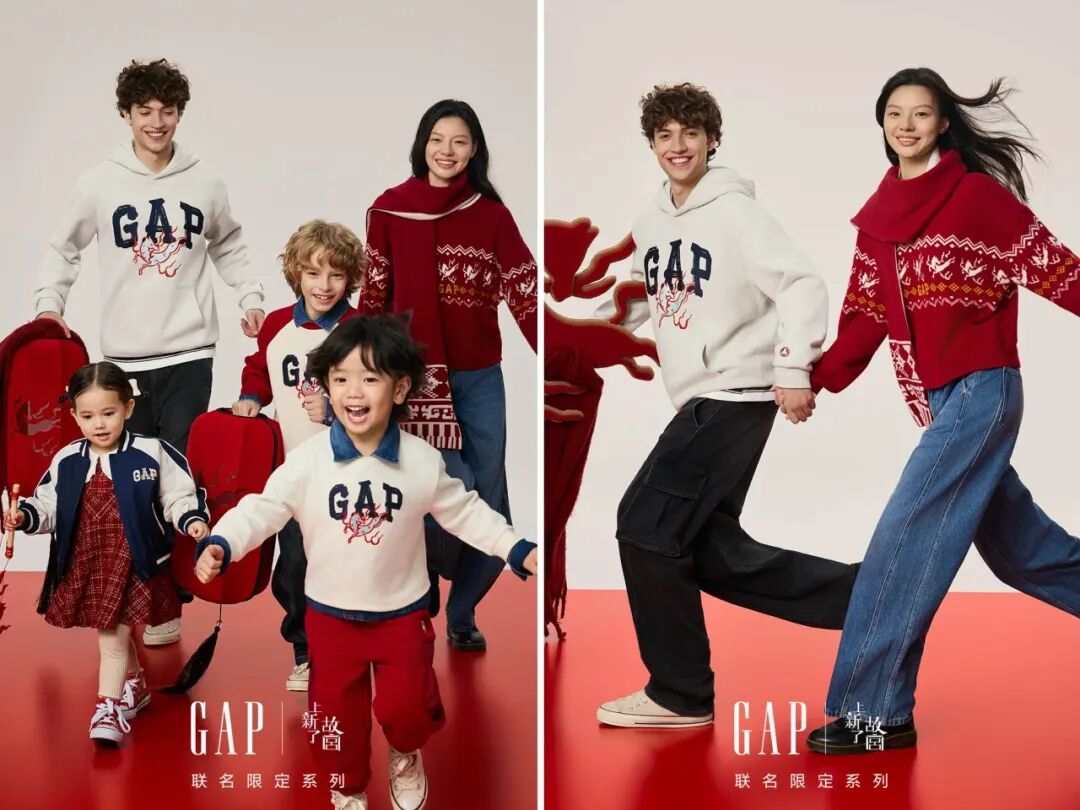
GAP's collaboration series
GAP China is like a Yuanyang
36Kr: GAP China has been promoting localization for more than two years and achieved certain results. What obstacles does it still face in achieving greater growth potential?
Ken: It's not really an obstacle. Our goals are clear. All the breakthroughs and efforts we're making need time to be verified, and consumers also need time to perceive the brand's changes.
36Kr: Has your experience provided any inspiration for GAP Global?
Ken: The local marketing campaign we launched in the Chinese market in the autumn of 2025 received a good response, giving confidence to the global team. Especially in the e - commerce field, the live - streaming promotion models on platforms like Douyin have also provided a reference for the global team in developing e - commerce business. Therefore, they often come to China to investigate the market operation situation.
On the other hand, according to the feedback from partners in other Asian regions, the products we developed based on local consumer insights often better fit the body shapes and aesthetic preferences of Asians. They have actively proposed to purchase products independently developed in China in the future, which means that GAP China's localized designs have broader market opportunities.
36Kr: What are the non - financial expectations of Baozun's senior management for GAP?
Ken: For example, the capacity building of the team, the ability in the entire product chain from development to the supply chain, and the brand's market presence.
36Kr: Apart from rational business discussions, has the chairman ever made any emotional expressions?
Ken: I remember he compared GAP China to a Yuanyang. GAP globally represents Western - culture coffee, and Baozun China represents Chinese tea. Combining them creates a Yuanyang.
How to blend this Yuanyang to the most appropriate taste, doing well in our part while integrating with global elements