The first batch of car stores opened in shopping malls can no longer hold on and are about to close.
“What freebies come with buying this car now?” A middle-aged man in business casuals asked the salesperson beside him while feeling the Li Auto i6. His wife was holding a child's hand and waiting for him not far away.
After introducing the latest car purchase strategy to the man, the salesperson couldn't help joking, “Brother, why do you come here every day?”
Another salesperson told Zhiwei that this middle-aged man often dines at the Shanghai Longemont City Life Center (hereinafter referred to as “Longemont Mall”). After meals, he would go downstairs to check out the new Li Auto i6. “There are quite a few such consumers who have already been interested in this car online. They come to the mall to shop and dine, and by the way, they take a look at the cars. If it suits them, they'll place an order.”
However, this seemingly wonderful model is no longer stable now. Many brands have chosen to withdraw.
The Rise of the Direct - Sales Model Brings the Prevalence of the Mall Model
In the past few years, new car - making forces represented by “NIO, XPeng, and Li Auto” have rapidly emerged. These enterprises with Internet thinking began to follow Tesla's example and introduced the direct - sales model into the automotive field, competing with the traditional dealer model.
In the past, if consumers wanted to buy a car, they often had to go to a relatively remote suburban area or an auto city for an on - site experience. Now, just by taking a stroll to a large shopping mall near home, they can see stores of well - known brands.
As early as 2023, over 5,000 new energy vehicle stores in shopping malls had opened across the country, located in more than 2,200 shopping centers in 247 cities. Among them, 300 shopping centers had five or more new energy vehicle stores in malls, creating an agglomeration effect.
The car stores in malls located in the “prime C position” on the first floor of the mall have replaced the former beauty and skincare stores, becoming a pastime for people to casually glance at during their leisure walks.
The reasons are quite simple.
On the one hand, the stores are directly located in the high - traffic areas of the mall, attracting the attention of a large number of passers - by and increasing brand exposure. At the same time, an attractive store design can also turn passers - by into impromptu customers who “just take a look around.”
A Volkswagen salesperson at a Shanghai mall told Zhiwei that a Volkswagen ID.6 convertible was deliberately placed at the store entrance, with a highly technological car wrap on it. “Nearly 80% of the customers who enter the store come in because of the convertible at the entrance and the in - store decoration. Only 20% of the customers who enter the store have already learned about the car online and come specifically to have a look offline.”
On the other hand, compared with traditional auto cities located in the suburbs, car stores in shopping malls can provide potential consumers with a more convenient way to learn about cars. As mentioned before, consumers may just be having a meal in the mall and then go downstairs to learn about their desired models on the spot.
Moreover, large shopping malls often introduce multiple car brand stores, which can form a brand clustering effect. Consumers can compare multiple brands in one place, saving time and effort. For car brands, they can share each other's traffic, and the advertising cost is relatively shared.
According to the statistics of the China Automobile Dealers Association, by the end of 2024, the scale of the automobile 4S network reached 32,000. Among them, about 60% of the 4S stores chose to enter the auto business district. This also proves indirectly that most car stores will choose to be in car brand gathering areas to exert their brand clustering effect.
However, car stores in shopping malls, which have many advantages such as brand promotion and efficient customer acquisition, have gradually come to a halt in the past two years.
Behind the Disappearing Mall Stores Are Frustrated Dealers
Let's go back to 2022, taking the Shanghai Longemont Mall as an example.
At that time, car stores in shopping malls were rising rapidly. The Longemont Mall created the first new energy vehicle block in Changning District, located on the B2 floor of the mall. This location is right next to the subway station exit, and there is a food market with more than 20 restaurants beside it. Even on ordinary weekdays, it is bustling with people. The car brands in the block include traditional car - making brands such as BYD and Great Wall Motors, as well as new car - making stars like Tesla and XPeng Motors. For a while, it was extremely popular. According to Shangguan News, in the first year of opening, the sales volume of the Longemont new energy vehicle block was close to 3 billion yuan.
However, from the recent visit of the Zhiwei editorial department, the former new energy vehicle block has become a bit desolate.
Not to mention the HiPhi and Jiyue cars that have already withdrawn from the stage, and their storefronts have been renovated. Even the stores of brands like Great Wall, which still rank high in the Chinese automobile sales list, have been replaced by the outdoor sports brand Camel.
There is also a small path beside the main road of the new energy vehicle block, where many luxury - gene brands such as Audi, smart, and Denza were once located. Now, they are in the stage of closing for renovation. Although it still bears the name of “new energy vehicle block,” the number of car stores inside is less than that of other types of shops.
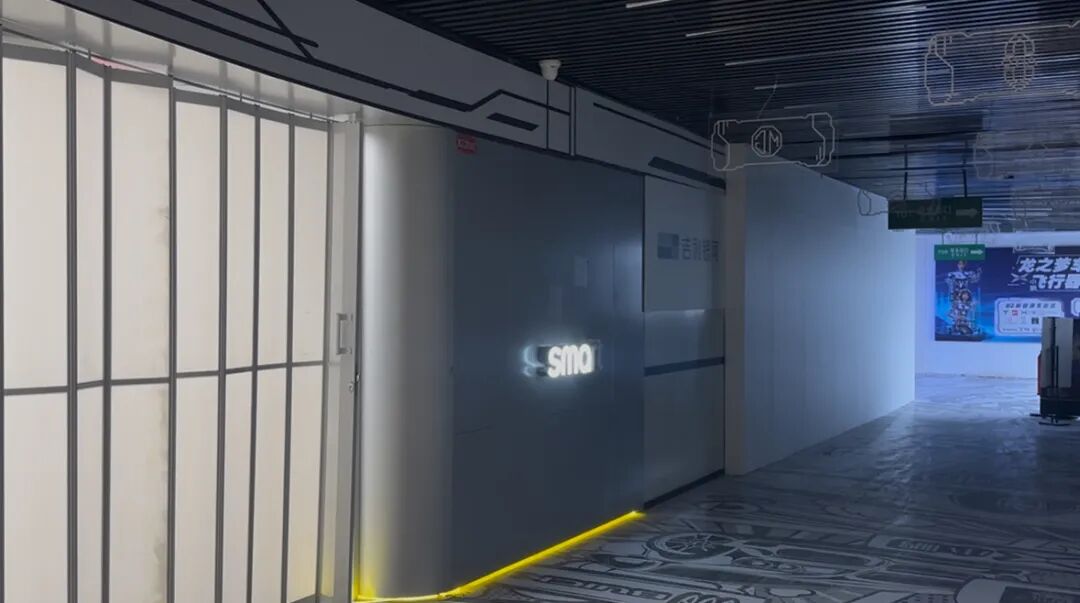
(In the new energy vehicle block of the Shanghai Longemont Mall, the former smart and Geely Galaxy stores have closed.)
“The costs outweigh the revenues.” Mr. Zhong revealed the mystery to Zhiwei in one sentence.
Mr. Zhong works in a car store in the new energy vehicle block, located at the end of the block. It is far from the high - traffic area, but the monthly rent is as high as 360,000 yuan.
How remote is Mr. Zhong's store with a monthly rent of 360,000 yuan? Well, according to Shangguan News, in the first quarter of this year, the daily average passenger flow of the Shanghai Longemont Mall exceeded 200,000, ranking among the top in the city.
Even in this mall with a daily average passenger flow of over 200,000, Mr. Zhong's store has about 10 - 15 groups of customers entering the store on weekdays and about 30 groups on weekends. Assuming each group has 3 people, the daily average passenger flow of the store is about 30 - 90 people. That is to say, in the best - case scenario, only 1 out of every 2,000 people entering the mall will enter Mr. Zhong's car store.
Looking at the monthly overall sales conversion rate. Mr. Zhong told the Zhiwei editorial department that the monthly passenger flow of the store where he works is about 440 - 540 groups, and about 20 electric cars are sold every month. The monthly overall sales conversion rate is about between 3.7% and 4.5%. As a comparison, the sales conversion rate of traditional automobile 4S stores is about 20% or more.
“Judging from these data, I estimate that they are losing money.” Wang Xiaoning, who has many years of experience as an automobile dealer, told Zhiwei, “For cars with an average price of 150,000 yuan, selling 20 units a month with a single - car gross profit margin of 7 - 8%. Without price cuts, the monthly income is about 200,000 yuan. And just the monthly rent is 360,000 yuan, not to mention the expenses for finance, insurance, etc.”
The situation of the Shanghai Longemont new energy vehicle block is not an exception. Liao Qi (a pseudonym), a recruitment staff member of a community mall in Beijing's Fengtai District, told Zhiwei that since this year, several car brands have successively left their mall. In order to retain the car brands, the mall even offered them a 50% discount on the rent.
It should be noted that whether it is the Longemont Mall in Shanghai or the community mall in Beijing, most of the car stores that choose to leave are opened by dealers.
“Dealers are private bosses who are responsible for their own profits and losses. Naturally, they will leave when they see they are losing money. Most of the stores still open in the mall now are direct - sales stores funded by the automakers. They have money.” Mr. Zhong pointed to the automatic coffee machine in the store and said, “See that coffee machine? It costs 140,000 yuan.”
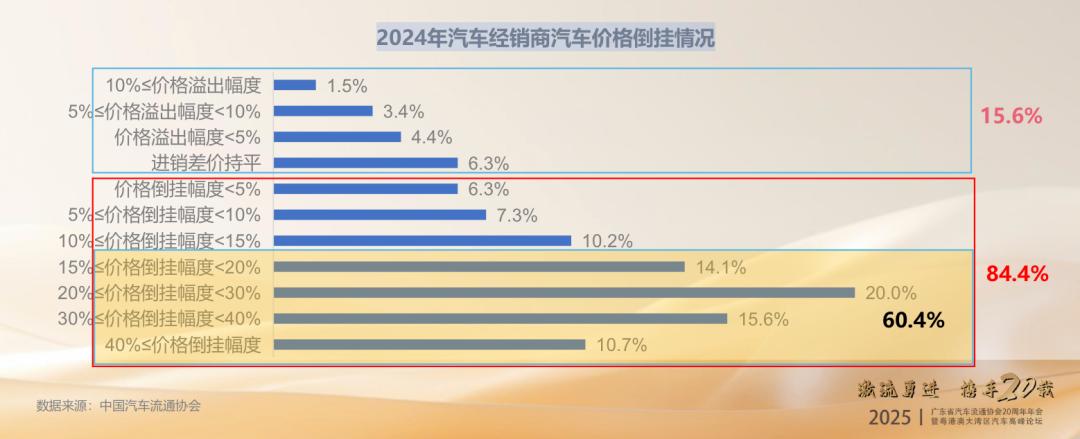
The past two years have indeed been tough for automobile dealers. Previously, Lang Xuehong, the deputy secretary - general of the China Automobile Dealers Association, mentioned that in 2024, 84.4% of automobile dealers had price inversions to varying degrees, and 60.4% of automobile dealers had a price inversion amplitude of more than 15%. Although the loss rate of automobile dealers narrowed compared with 2023, only 39.3% of the dealers made a profit. The proportion of loss - making dealers was 41.7%, and the proportion of those with a break - even situation was 19.0%.
Liao Qi also mentioned that in the past, car companies vigorously promoted their brands to enter the mall in order to expand their brand influence. One of the means was to provide financial subsidies to dealers to help them open stores in the mall. ‘But since this year, the subsidies have been reduced or stopped.’
A senior BMW staff member told Zhiwei that around 2023, BMW established the “BMW iSpace” city showroom project to promote its pure - electric i - series models. In order to encourage dealers to actively apply for operation, it provided certain subsidies. “But after two years of operation, we found that this project was not very successful. We have gradually stopped this project, and currently, most of the BMW iSpace stores have been closed.”
The BMW employee added that if a car store in a mall wants to play the role of brand exposure and customer acquisition, after staying in a mall for a certain period of time, most of the customers in this area are already familiar with the brand, and there is not much increase in the number of customers; if it wants to make a profit from the car store in a mall, it is even more impossible because the rent cost of the mall store is too high.
Even for BMW, which has a relatively high single - car profit in the industry, a single car store in a mall cannot bring enough income to make a living, not to mention some domestic new energy vehicles with extremely low prices.
Outdoor Exhibitions - A Boon for New Forces, a Bane for Traditional Brands
In addition to fixed stores in shopping malls, various car brands, including BMW, also liked to set up outdoor exhibition stands (hereinafter referred to as “outdoor exhibitions”) in the atrium of shopping malls or other high - traffic areas in the past few years.
However, BMW has held fewer outdoor exhibitions this year.
The BMW employee told Zhiwei that neither the headquarters, agents, nor dealers have much money. Due to the brand image of BMW, they usually choose to set up outdoor exhibitions near relatively high - end business districts, and the rent is relatively high. In Shanghai, even if it is not the core display position in the business district, the daily rent is at least 50,000 yuan. The area is very small, and only about 2 cars can be placed.
“Now, maybe several dealers will join hands to set up an outdoor exhibition in a mall for 2 days for a small - scale promotion, and they may get dozens of sales leads.” The BMW employee said, “This is not a very cost - effective business.”
However, new car - making forces, especially factory - owned direct - sales stores, have different views on outdoor exhibitions. A senior NIO salesperson said, “Compared with stores, outdoor exhibitions are very cost - effective. Employees can be transferred from nearby stores, and the setup of outdoor exhibitions is relatively simple. The cost is basically only the rent.”
The brand heritage and popularity of new car - making forces such as NIO are not as good as those of traditional high - end car brands like BMW. For the latter, since the general public is already very familiar with them, the effect of expanding brand popularity through outdoor exhibitions is limited. New car - making forces have been established for a relatively short time, and their popularity needs to be improved. So they can contact more consumers through outdoor exhibitions and increase brand awareness.
“The trial - and - error cost of outdoor exhibitions is very low. We hold outdoor exhibitions for a few days, and after attracting a group of consumers, we'll withdraw.” The NIO salesperson said, “In addition to increasing brand awareness, on the one hand, we can guide potential customers from remote areas to nearby fixed stores; on the other hand, through the effect of outdoor exhibitions, we can also test whether the customer group in this business district is in line with our brand's target audience, and it may develop into a fixed store in the future.”
In the first few years when shopping malls became popular, car brands either followed the trend or truly saw the value of shopping malls and actively promoted the layout of stores in malls, bringing about the grand occasion of “car showrooms becoming a new pastime for people's shopping.”
However, now the trend has reversed. The promotional significance of shopping mall stores is greater than their sales significance. How to balance brand profitability and brand promotion depends on the wisdom of the decision - makers.
This article is from the WeChat public account “Zhiwei”. Author: Jinli, Editor: Dabing. Republished by 36Kr with permission.