The drama of "second entrepreneurship" unfolds.
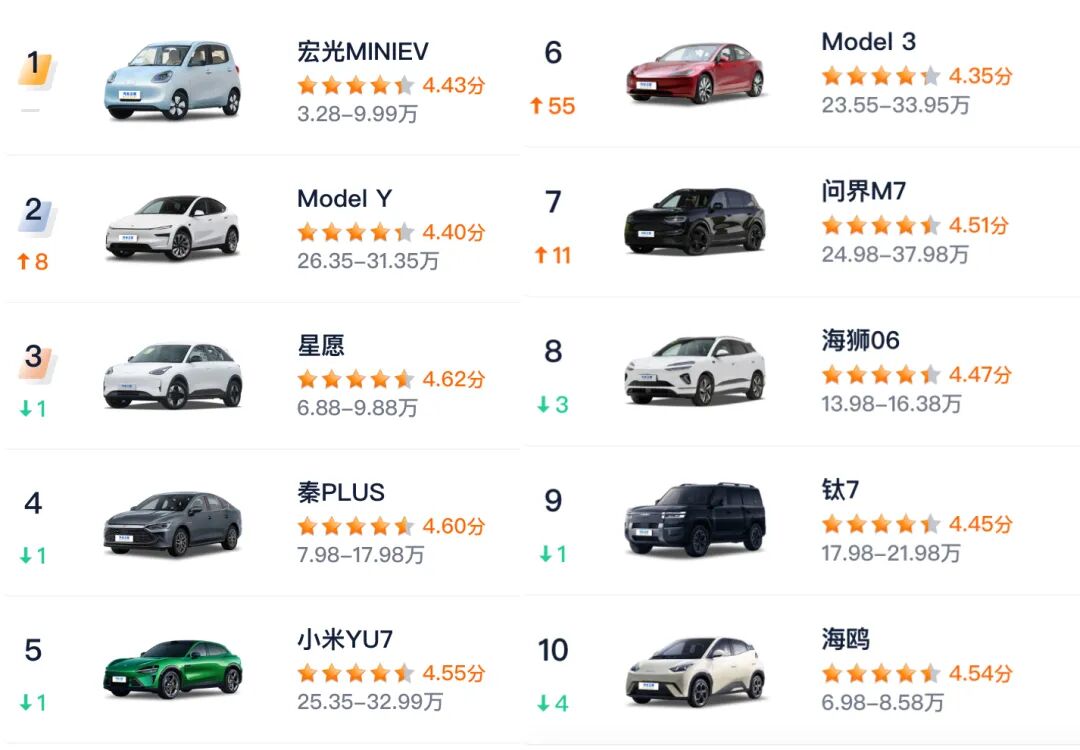
Since the new energy transformation in the domestic market exploded, the rapid growth of the market for vehicles priced over 200,000 yuan has become an obvious trend. A closer look at the recent sales rankings reveals another notable phenomenon in the new energy market that is also intensifying. Take the sales volume in November as an example to see the evolution of today's new energy market and even the overall domestic market -
Screenshot from "Autohome"
In this ranking list, products priced over 200,000 yuan occupy 4 spots. The Model Y, ranked 2nd, sold over 47,000 units, and the AITO M7, ranked 7th, sold over 25,000 units.
On the other hand, products priced under 100,000 yuan also occupy 4 spots. The Hongguang MINIEV, ranked 1st, sold over 56,000 units, and the BYD Seagull, ranked 10th, sold over 21,000 units. (The dealer - quoted price of the Qin PLUS on Autohome ranges from 69,800 to 119,800 yuan, and the transaction prices of most of its main - selling models are under 100,000 yuan, so it is also classified into the under - 100,000 - yuan market.)
The entire market is like the Red Sea being parted by Moses, with the main market segments divided into the under - 100,000 - yuan market and the over - 200,000 - yuan market, creating a desolate zone in the 100,000 - 200,000 - yuan market.
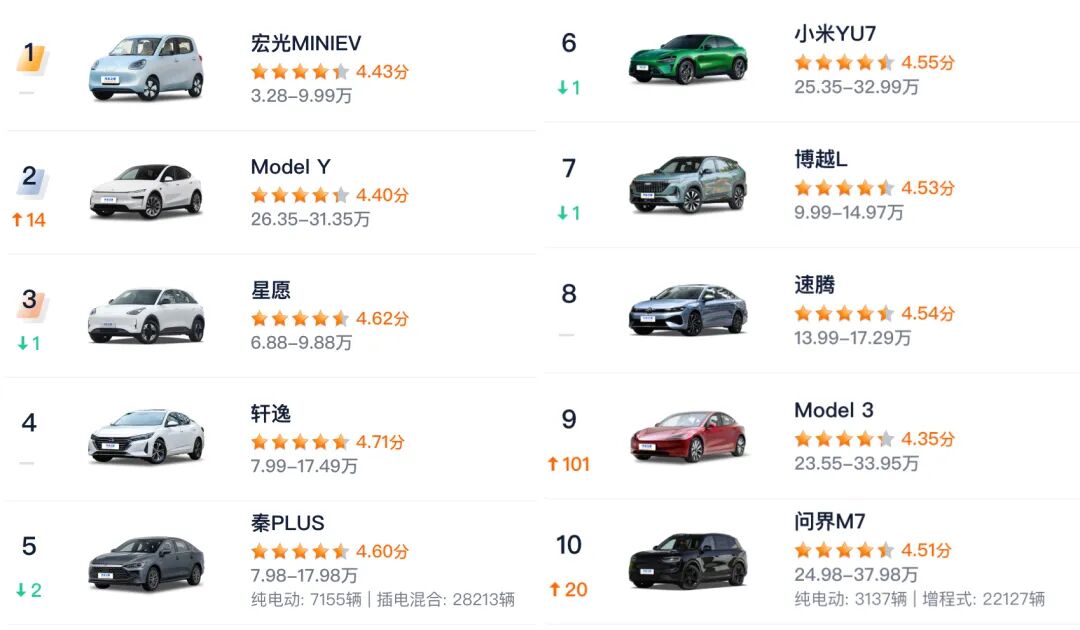
Expanding the perspective from the new energy market to the overall automotive market, the top 10 best - selling models in November are as follows:
Screenshot from "Autohome"
Three familiar names have made it into the top 10 list. The Sylphy, with sales of over 38,000 units; the Boyue L, with sales of over 31,000 units; and the Sagitar, with sales of over 28,000 units. The dealer - quoted prices of these three models on Autohome are 59,800 - 141,900 yuan, 92,900 - 129,700 yuan, and 95,900 - 128,900 yuan respectively. Their main - selling models are priced under 100,000 yuan, around 100,000 yuan, and slightly over 100,000 yuan respectively. The lower the price of the main - selling model, the higher the sales volume.
This also confirms the increasingly sluggish situation of the 100,000 - 200,000 - yuan market.
The segmentation of the automotive market is, on the one hand, a reflection of the current consumption trend. Take the Labubu of Pop Mart, the most talked - about mass - market product this year, as an example. As a doll, ornament, or aromatherapy, its practical value can even be ignored, while the emotional value provided by blind boxes, scarcity, etc., is extremely high.
The characteristics of the over - 200,000 - yuan automotive consumption market are similar. Of course, the practical value of a car definitely accounts for the highest proportion in the consumption decision - making process. However, the rapid explosion of the over - 200,000 - yuan market in just a few years cannot be ignored in terms of the proportion of emotional value factors.
This market was initially developed by Tesla and three domestic companies: XPeng, Li Auto, and NIO. The three domestic companies each targeted the over - 200,000 - yuan, over - 300,000 - yuan, and over - 400,000 - yuan market segments respectively. Now, the main players in this market have changed to Tesla, Xiaomi, and Hongmeng Zhixing, all of which are new - force manufacturers.
These manufacturers come from the technology and Internet industries. Their teams, brands, products, and marketing all have the bloodline of technology and Internet companies. They know better how to stimulate the excitement points of the consumer market. This is also reflected in their high exposure on social media and the fan - club - like debates among their respective supporters.
In the past era of joint - venture cars, the main market was the 100,000 - 200,000 - yuan market. Most users bought cars when it was time to do so, such as for commuting to work or for family use after getting married. It can be said that they "bought a car just to buy a car." At that time, the media environment was dominated by comprehensive information - based institutional media like Autohome, and the media services such as car selection, comparison, and price consultation provided were mostly of a rigid - demand nature.
In the current new energy market, the over - 200,000 - yuan market is rising against the overall consumption environment, obviously with a higher proportion of impulse factors. The market is gradually shifting from "buying a car just to buy a car" to "buying a car because of being attracted."
Comparing it with the view of marriage, the automotive market in the past joint - venture era, with the 100,000 - 200,000 - yuan segment as the main market, was more like a blind date. Since it was "time to get married," people were trying to make it work and examining each other's work, education, family background, and other hard - core conditions. In the current new energy era, the over - 200,000 - yuan segment as the main market has a stronger sense of love at first sight.
The under - 100,000 - yuan market corresponds to the explosion of Pinduoduo and Mixue Bingcheng. On the one hand, it can be said that this is a consumption downgrade, as many white - collar workers in big cities are also flocking to these cost - effective platforms or brands. On the other hand, it is also a manifestation of the consumption upgrade in third - and fourth - tier cities and below. The demand for a better quality of life from consumers with lower incomes has finally begun to be released after long - term suppression.
It is also worth noting that the dominant players in the under - 100,000 - yuan market are no longer new - force manufacturers - even the phenomenal Leapmotor doesn't have a single model in the top 10. Instead, they are traditional domestic automakers like Geely and BYD.
Compared with new - force manufacturers, these domestic giants have advantages in brand reputation and system scale, but their disadvantage lies in the ability to explore, create, and provide emotional value. These differences have laid the foundation for their explosive power in the under - 100,000 - yuan market and have also allowed them to find a foothold for their second - round entrepreneurship in the era of intelligent new energy.
Following this line of thought, we can see that XPeng, Li Auto, and NIO, the pioneers who opened up the over - 200,000 - yuan and even the domestic intelligent new - energy market, are currently in a very competitive time window.
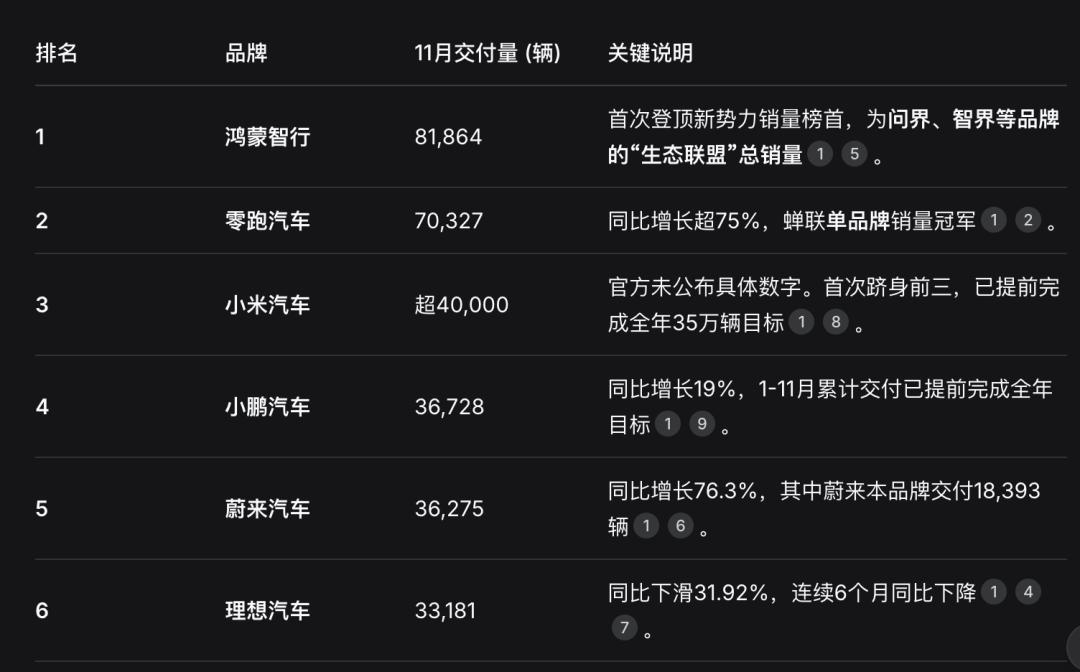
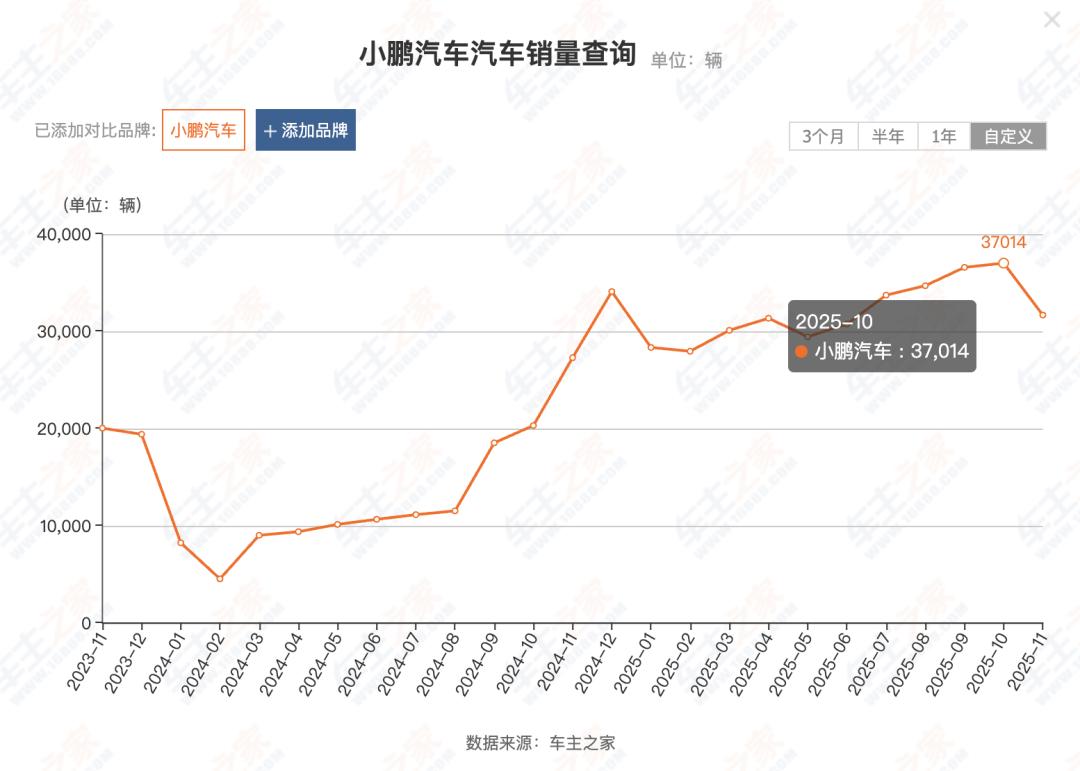
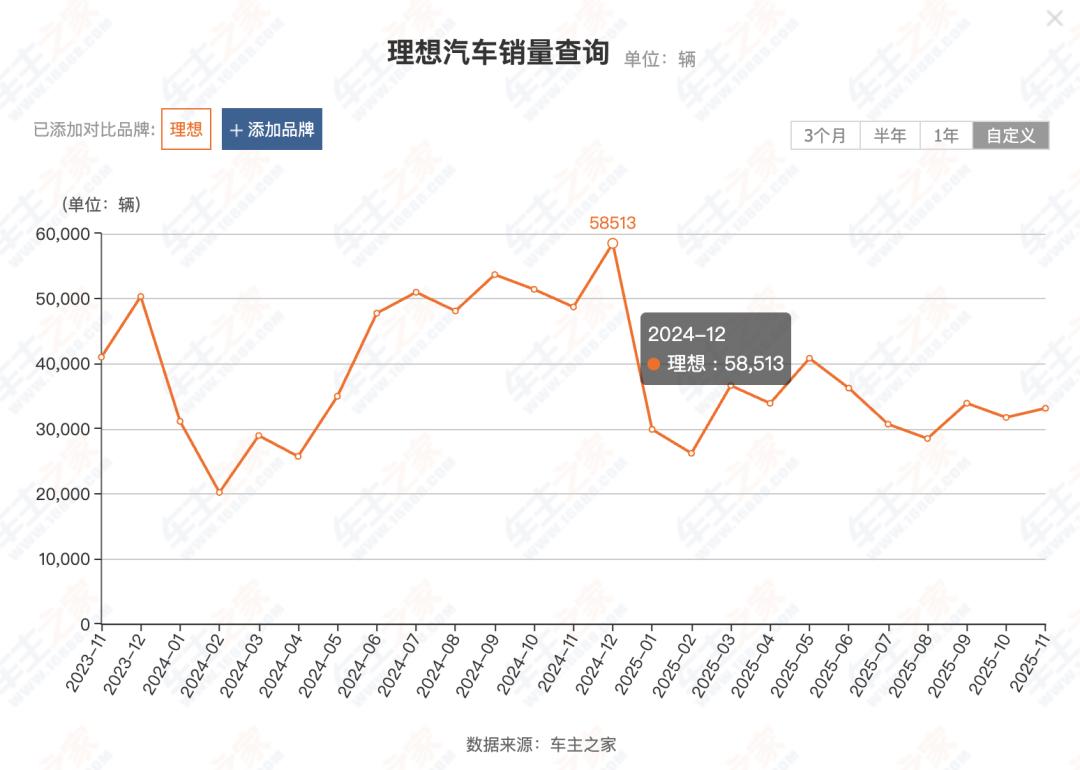
None of their models have made it into the top 10. The most promising model for them currently, the Li i6, depends on the efficiency of production - capacity improvement. At the same time, they also rank lower than Xiaomi and Hongmeng Zhixing in the manufacturer rankings.
In the market, Xiaomi and Hongmeng Zhixing have a brand effect similar to that of XPeng, Li Auto, and NIO, all based on the genes of technology and Internet companies. On the basis of similar brand effects, the appeal of Xiaomi and Hongmeng, as top - tier domestic brands, is obviously higher than that of XPeng, Li Auto, and NIO. Even the system scale they have quickly established has surpassed that of XPeng, Li Auto, and NIO.
Taking the November sales volume as an example again, Xiaomi Auto sold over 40,000 units, and this is the third consecutive month that their sales have exceeded 40,000 units. Among XPeng, Li Auto, and NIO, only Li Auto has reached such a production - capacity level (with consecutive monthly sales exceeding 40,000 units, reaching nearly 60,000 units at the peak). NIO only achieved monthly sales of over 40,000 units once in October, and XPeng has never achieved it.
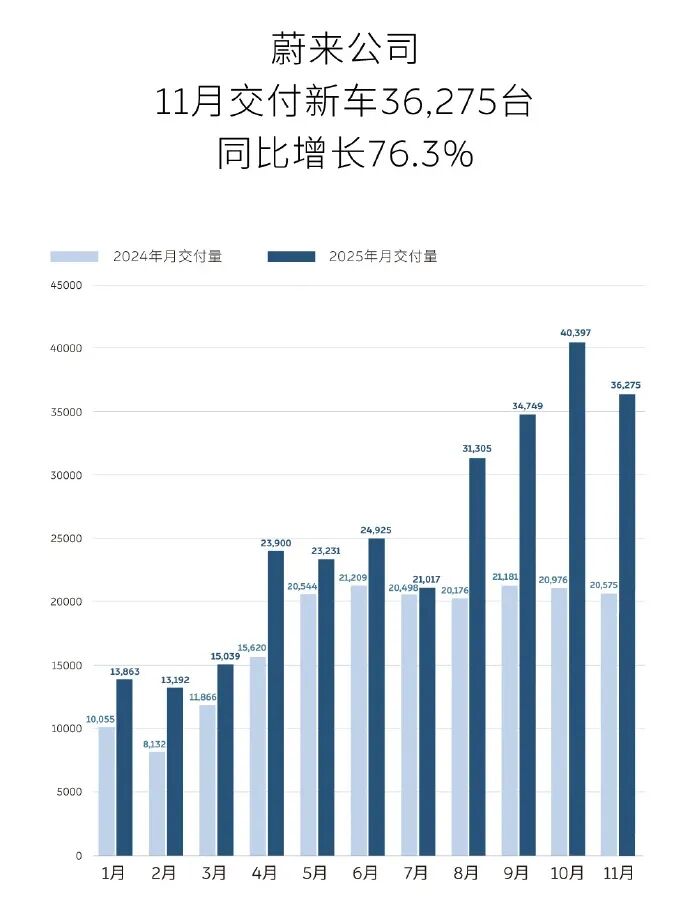
Screenshot from "Chezhu Home"
Screenshot from "Chezhu Home"
Here, it is necessary to give a shout - out to Leapmotor's achievements. This new - force manufacturer, which started at the same time as XPeng, Li Auto, and NIO, has gradually entered the top tier through its firm "good but inexpensive" strategy. It has also quietly built a production - capacity foundation capable of supporting monthly sales of 60,000 or even 70,000 units with high efficiency. At least this year, they are the most exciting new - force manufacturer with the most anticipated future prospects.
In other words, the current competitive situation for XPeng, Li Auto, and NIO is that their appeal in the over - 200,000 - yuan market is stronger than that of domestic giants but weaker than that of Tesla, Xiaomi, and Hongmeng Zhixing. In the overall intelligent new - energy market, their system scale is lower than that of all their competitors, including domestic giants, Tesla, Leapmotor, Xiaomi, and Hongmeng Zhixing.
In the brand competition and system - scale competition in the over - 200,000 - yuan main battlefield, they currently have no advantages. To regain the dominance, they need to achieve a comprehensive and all - round upgrade.
There is a keyword implied in the sales rankings, which is "second - round entrepreneurship."
Domestic giants are undertaking a second - round entrepreneurship in the field of intelligent new energy after the era of fuel - powered vehicles; Xiaomi and Hongmeng Zhixing are undertaking a second - round entrepreneurship in the automotive field after the development of intelligent software and hardware; for XPeng, Li Auto, and NIO, they are undertaking a second - round entrepreneurship after leading the market transformation and entering a new competitive landscape.
And Leapmotor is experiencing a second - round entrepreneurship after entering the ranks of top - tier automakers.
This article is from the WeChat official account "Cheyun" (ID: cheyunwang), author: LX, editor: Cong. Republished by 36Kr with permission.