The Horizon ecosystem alliance expands to withstand the fierce attack from Momenta.
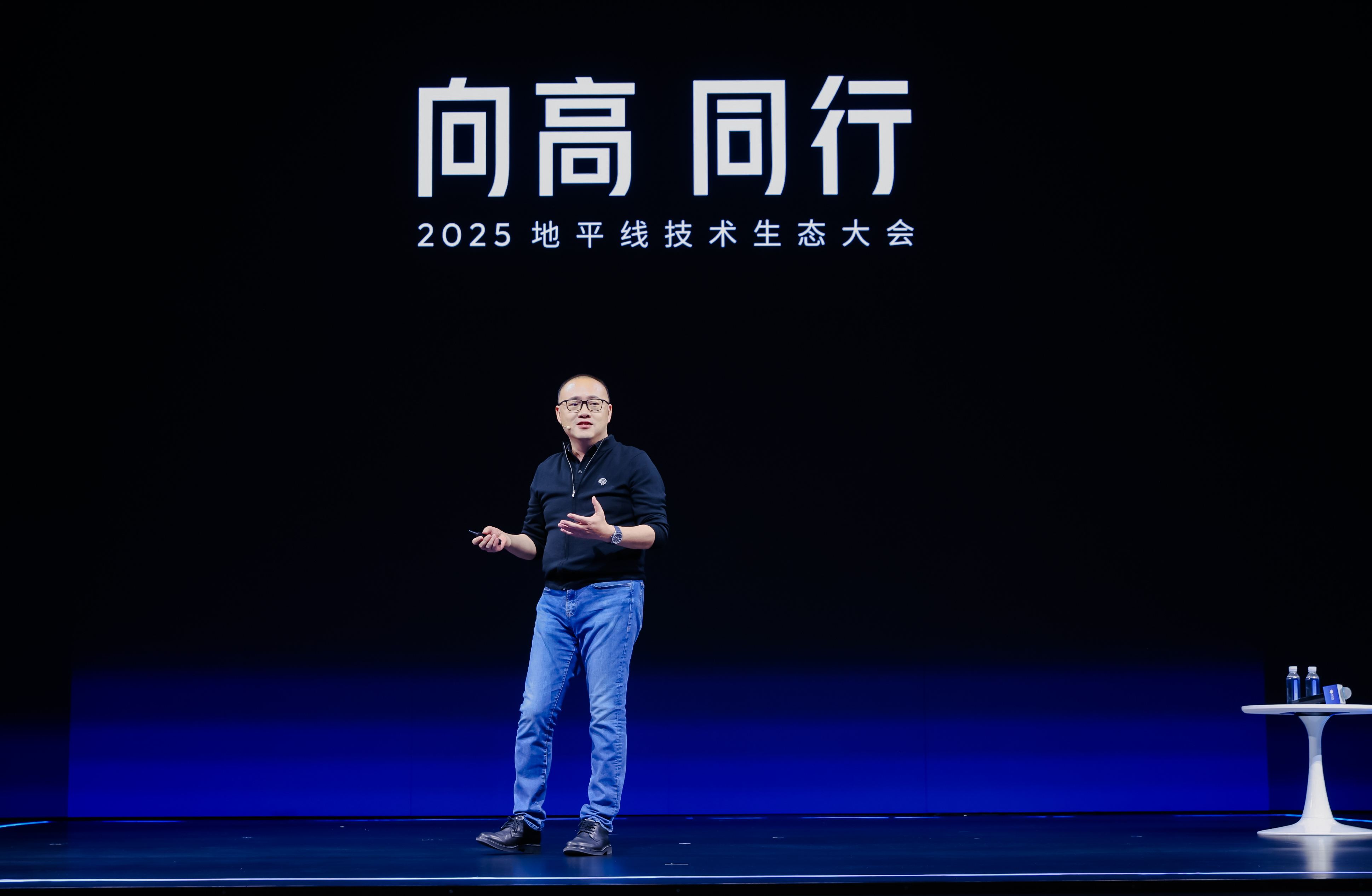
Yu Kai, CEO of Horizon Robotics
Text | Xiao Man
Editor | Li Qin
"Don't the mainstream population in China, the vast majority of car owners, deserve the best urban assisted driving system? I think this is a big question mark," Yu Kai pointed out somewhat angrily at the Horizon Robotics Ecosystem Conference, and then immediately announced that Horizon Robotics would make urban assisted driving accessible to national models priced at 100,000 yuan.
In the first three quarters of this year, passenger cars priced above 200,000 yuan accounted for 30% of the market share, while those below 130,000 yuan accounted for 50%. However, most models in the latter category do not have urban assisted driving functions. Manufacturers such as Horizon Robotics and Momenta are accelerating their expansion in this market.
Although Horizon Robotics' HSD is a latecomer, relying on its established ecosystem, it is accelerating its market penetration. It has not only introduced a new algorithm service model, "HSD Together," but also opened up its Journey 6P chip, originally developed by Horizon Robotics for algorithm solutions, to manufacturers such as DeepRoute.ai and Bosch.
The intelligent driving track is rapidly converging into a head - on confrontation among a few leading companies.
With its intelligent driving capabilities, Huawei's Qiankun has established deep partnerships with many traditional vehicle manufacturers and has taken a firm foothold in the high - end vehicle market. Momenta has not only captured half of the joint - venture brand market but also won contracts from the "BBA" brands (BMW, Benz, and Audi). It will launch its self - developed chip next year to further control costs, indicating that it will enter the more mainstream price segment, and a price war is looming.
Algorithm companies lacking chip capabilities are quickly gathering around Horizon Robotics, hoping to share in the dividends of the popularization of high - level urban intelligent driving next year and resist the price storm brought about by Momenta's integrated hardware - software solutions.
As a result, Horizon Robotics' ecosystem has expanded rapidly. However, Horizon Robotics' dual focus on chips and solutions has also led to different voices within its cooperation ecosystem.
Horizon Robotics' Ecosystem: Aiming for Both Chip and Algorithm Businesses
"Horizon Robotics is no longer just a chip company; it has become a full - stack solution provider," an industry insider commented after the Horizon Robotics Ecosystem Conference.
At this conference, Horizon Robotics' ecosystem sent two important signals. First, it expanded its ecosystem model by introducing the new algorithm service model, "HSD Together," and established partnerships with Denso, CARIZON (a joint - venture between Volkswagen and others), and HCT (Intelligent Driving Continental) based on this model. Second, it brought in more ecosystem partners, including DeepRoute.ai and ZhuoYu.
Horizon Robotics has a clear goal: to promote its solutions based on the Journey 6 family to a larger market, gain more market share, and quickly occupy a position.
By the end of this year, Horizon Robotics' intelligent driving solution, HSD, has been installed in models priced at 130,000 yuan. Yu Kai revealed that next year, Horizon Robotics will install its urban assisted driving solution based on a single Journey 6M chip in vehicles with a minimum price of 70,000 yuan. Vehicles priced below 130,000 yuan account for nearly half of the sales volume in the Chinese passenger car market (data as of the third quarter of this year).
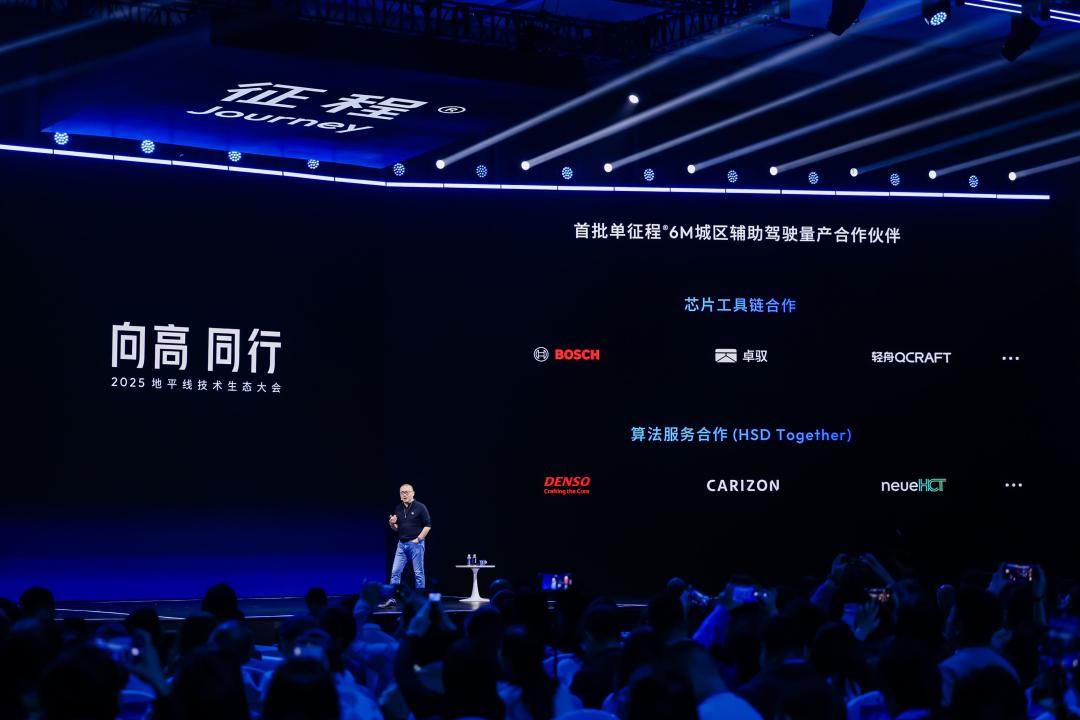
Horizon Robotics' New Algorithm Service Cooperation Model
The accelerating market competition has spurred Horizon Robotics' transformation and adjustment of its ecosystem model. During the Journey 2, Journey 3, and Journey 5 eras, Horizon Robotics focused on the role of a chip manufacturer, positioning itself as a Tier 2 supplier and forming ecological partnerships with Tier 1 manufacturers such as Bosch, Qingzhou, and Zongmu.
However, in the process of market competition, some of its original ecosystem partners have been gradually eliminated from the market, and the ecosystem originally built by Horizon Robotics has been shrinking. "Some algorithm manufacturers are not performing well, so Horizon Robotics has no choice but to step in and do it itself," an industry insider said.
During the Journey 6 era, Horizon Robotics began to develop HSD based on the high - performance Journey 6P chip. The advantage of this approach is that Horizon Robotics can leverage its integrated hardware - software capabilities to maximize the performance of its own chips, which is what Yu Kai calls "building a model room."
However, for Horizon Robotics' ecosystem partners, the company's involvement in both hardware and software has blurred the role boundaries. An ecosystem partner of Horizon Robotics told 36Kr Auto, "This has indeed created competition for many of us, and it may be a strategic issue that Horizon Robotics needs to deeply consider in the future."
Another leading supplier also told 36Kr directly, "We've all discussed this potential competitive relationship with Mr. Yu, and we hope there can be a clear boundary."
The boundaries of Horizon Robotics' ecosystem are also becoming blurred. In the Journey 6 family, originally only Horizon Robotics' HSD used the Journey 6P chip, and ecosystem partners developed algorithms based on Journey 6M, 6H, and 6E. However, with the expansion of the ecosystem, the Journey 6P chip has also been opened to manufacturers such as DeepRoute.ai and Bosch. The algorithm framework of HCT's solution based on Journey 6M is similar to that of HSD, making the relationship between Horizon Robotics and some of its ecosystem partners delicate.
As the number of partners increases, so does the competition. A solution provider that has collaborated with Horizon Robotics for many years was initially dissatisfied with Horizon Robotics' introduction of more partners. 36Kr Auto learned that this solution provider is also in contact with chip manufacturers such as NVIDIA to develop solutions with higher computing power.
While embracing Horizon Robotics, new suppliers are also collaborating with other chip manufacturers. DeepRoute.ai announced its cooperation with Horizon Robotics and then immediately launched a strategic partnership with Black Sesame Technologies. Even players deeply involved in Horizon Robotics' ecosystem are not fully committed to it.
Horizon Robotics' long - term goal is to achieve L4 - level autonomous driving. However, all these long - term plans are based on the stable growth of its core business. Horizon Robotics' top priority is to quickly occupy a position in the L2+ market.
The Final Battle in Intelligent Driving: Momenta and Horizon Robotics to Face Off
Today's intelligent driving competition is a "final battle," and there will be few new entrants. In this competition where giants compete for resources and their fortunes rise and fall, the technical development is more difficult, requiring greater resource investment to create standardized products and accumulate more resources and data.
"The competition in automotive assisted driving will end in 2026, and only three players will emerge victorious in the domestic market," Cao Xudong, the founder and CEO of Momenta, predicted.
Since Huawei's Qiankun has established a firm position in the high - end market, Horizon Robotics will inevitably face off against Momenta, another leading intelligent driving company, if it wants to capture more market share.
Momenta is entering the chip field, which Horizon Robotics is familiar with. 36Kr Auto reported that Momenta's first - generation assisted driving chip (codenamed BMC) has started on - vehicle testing and is expected to be mass - produced next year, at which time Momenta will directly compete with Horizon Robotics.
According to 36Kr Auto, Momenta's first - generation chip has won contracts from several automakers, including General Motors and Nissan, covering more than a dozen models. Horizon Robotics' HSD has won contracts for more models. During the Guangzhou Auto Show, Horizon Robotics revealed that it has won contracts from more than 10 automotive brands, including Changan and Chery, for more than 20 models.
An industry insider revealed that both Momenta and Horizon Robotics are in contact with Great Wall Motors, competing for orders for models on different platforms.
The ultimate competition in intelligent driving lies in who can achieve higher performance at a lower cost and who can achieve higher mass - production efficiency.
Among the existing chip solutions, although the computing power of Horizon Robotics' Journey 6M is lower than that of NVIDIA's Orin Y (a single Journey 6M chip has a computing power of 128 TOPS, while a single Orin Y chip has a computing power of 200 TOPS), it has a certain cost advantage. A single Orin - Y chip costs about $150, $60 more than the Journey 6M chip.
Although Momenta's chip has not been mass - produced yet, according to 36Kr Auto, the BMC is a dedicated chip with built - in underlying algorithms and cannot be supplied externally. However, it offers extremely high cost - performance, and the cost of its integrated hardware - software solution can be as low as approximately 2,500 yuan.
An industry insider told 36Kr Auto that driven by the "de - Americanization" of the supply chain and the need to ensure chip supply, some automakers are more likely to choose Horizon Robotics' solutions. Horizon Robotics occupies a scarce niche in the domestic chip market.
However, at present, Horizon Robotics has not pulled a significant gap from its competitors. As multiple models are mass - produced and launched next year, the direct confrontation between Horizon Robotics and Momenta in the market for vehicles priced below 150,000 yuan will officially begin.
The battle for market share in the domestic intelligent driving market is approaching its end, but the overseas intelligent driving battle is just beginning. With the accelerating overseas expansion of automakers in recent years, the overseas expansion of intelligent driving manufacturers is also gradually being put on the agenda.
In the first phase of the "HSD Together" model, Horizon Robotics has opened up cooperation with overseas partners, including Denso, CARIZON (a joint - venture between Volkswagen and others), and HCT (Intelligent Driving Continental). Through the global customer network of Tier 1 suppliers, Horizon Robotics can "take out" the capabilities of HSD without directly dealing with the complex SOPs of overseas automakers. Tier 1 suppliers will handle regulations, after - sales service, and project management.
According to Li Biao, the CEO of HCT, HCT has partnerships with companies such as ZX Auto Technology, Freetech, and Lianchuang Automotive Electronics. HCT provides algorithm capabilities, and Tier 1 suppliers are responsible for mass production and delivery.
Momenta has been a "global algorithm company" from the start, using a unified algorithm model to directly enter the intelligent driving systems of global automakers. "This is one of the reasons why joint - venture automakers choose Momenta," an industry insider said.
In the short term, the gap between the two is not significant. The real difference will be shown in the efficiency, cost curve, and ecological synergy capabilities demonstrated during the long - term mass - production process.
For Horizon Robotics, opening up its ecosystem is both an opportunity and a constraint. With more partners, the decision - making power is more dispersed; with more responsibilities, the boundaries are more blurred. How to strike a balance between "getting directly involved" and "giving space to partners" will directly affect its position in the final outcome.
The battle for market share in the domestic intelligent driving market is entering its final stage. As intelligent driving moves towards standardized competition, fewer and fewer players will remain in the game.