60 million or 100 million? A robotics company spends heavily on the Spring Festival Gala: showing off to the capital.
Multiple media outlets have reported that the competition among sponsors for the Spring Festival Gala has begun, and many robotics companies have bid for it. Among them, the competition between Zhipu and Unitree is the fiercest. Zhipu offered 60 million yuan first, while Unitree raised the bid to 100 million yuan.
But don't be too surprised just yet. These figures haven't been officially confirmed. Zhipu vaguely responded that "it's not true," but didn't specify what part was false. Unitree didn't respond.
After inquiring from multiple sources, I found that the competition for robot advertising slots in the Spring Festival Gala has indeed started. However, it's hard to say if the amounts are that exaggerated.
I think it's a good thing, indicating that the robotics industry is really profitable. According to industry analysis, in the first nine months of 2025, there were 610 investment transactions in the Chinese robotics industry, with a total value of about 50 billion yuan, a growth of over 250% compared to the same period last year.
I'm just a bit curious: Do the investors in these robotics companies feel pained when they see their projects spending millions or even hundreds of millions on the Spring Festival Gala? If they don't feel any pain, I guess no one will have an issue.
Actually, there's only one question I want to discuss in this article: Why do robotics companies spend so much money on the Spring Festival Gala at this time?
- 01 - Do the investors feel pained?
First of all, who would have an issue? The Spring Festival Gala definitely won't. More sponsorship means more resources, which will make the shows more interesting and the audience happier.
Robotics companies won't have an issue either. My intuition is that their main purpose isn't to sell products, but to send a signal to investors and the government: "I'm the leader in the industry. Invest in me if you have money and give me resources. If I want to go public in the future, give me the green light."
If we compare this sponsorship battle to a horse race, it's not about whose robots can move faster, grasp more steadily, or work better. Instead, it's about who can seize the high - ground of perception first and attract the attention of investors more quickly.
Some people may ask, how do you know they aren't aiming to sell products?
In a B2B scenario, such as industrial robots, their customers can be clearly listed in an Excel spreadsheet. There's no need to acquire customers through the Spring Festival Gala.
In a household scenario, even if they want to sell, there won't be many buyers.
Robots aren't smart enough and lack dexterity. Who would buy them? Take the dexterous hand as an example. Industry insiders told me that it probably won't enter ordinary households for 15 years. It has too little strength, even struggling to carry a courier. Its lifespan is short, and frequent repairs would be unbearable for household users.
So, from the perspective of selling products, it may not be the best choice for robotics companies to spend a fortune on the Spring Festival Gala. The Spring Festival Gala is a perfect channel only if your product is for the general public.
Take WeChat for example. In 2015, WeChat officially became the exclusive new - media partner of the Spring Festival Gala for the first time, investing about 53 million yuan and distributing 500 million yuan in red envelopes. That year, the total number of WeChat red - envelope interactions reached 1.01 billion times. Within a few days, the number of WeChat Pay users soared from less than 8 million to 200 million.
Therefore, it's highly likely that robotics companies spend money on the Spring Festival Gala for capital and resources: to establish their national market position, lay the foundation for financing and going public, and also to boost some product orders.
That's why I asked the investors earlier if they feel pained. If they don't, no one else will have an issue. After all, when these companies conduct subsequent financing or go public, the investors can also reap great benefits. Everyone is in the same boat.
- 02 - Is it sustainable?
From a long - term perspective, I just want to remind everyone: Before the products have a large number of paying users, is this "carrying - sedan - chair" game of capital really sustainable?
What is the "carrying - sedan - chair" game? I invest in the angel round, you invest in the A round, and he invests in the B round. We keep pushing the company towards an IPO, which has little to do with the product, market, and revenue. There's no need for users to vote with their money.
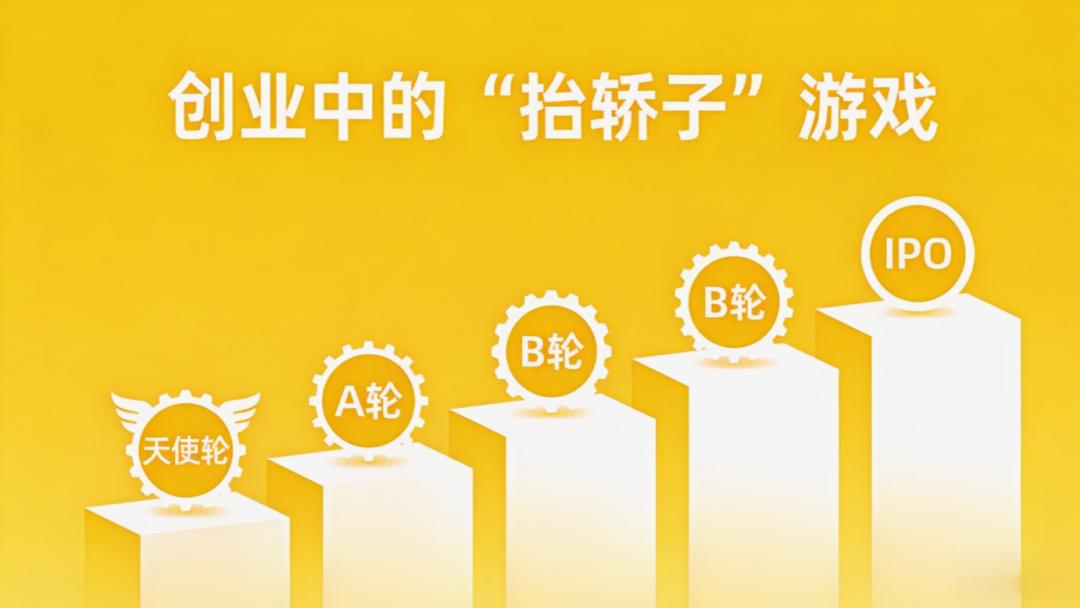
How long can this game last? I'm not asking rhetorically; I really don't know the answer.
Recently, the head of a VC firm told me that in the past 10 years, most equity investors haven't made money. A key reason is that they invested in a bunch of companies that only have "carrying - sedan - chair" value, and their products don't have enough market demand.
I won't name the specific companies. Take the self - driving car industry as an example. Isn't it in this situation? The "carrying - sedan - chair" game has created a lot of unicorns with low differentiation, low revenue, and high losses, crowding at the IPO door. It really pains me to see this.
Looking back at history, similar situations have occurred in the AI, mini - program, and sharing - economy industries: investment frenzy but uncertain returns, making later investors and participants more cautious.
Will the robotics industry follow in their footsteps? I hope not.
The popularity of the humanoid - robot industry is supported by factual data, but these data don't equal commercial success; in fact, they're still far from it.
On the one hand, humanoid robots have indeed started to receive real orders and contracts:
Zhipu and Unitree jointly won a humanoid - robot procurement project worth about 124 million yuan, covering full - size robots and accessory services.
Another company, Ubtech, also won an order for industrial humanoid robots worth nearly 100 million yuan and entered the production - line usage scenario of automobile manufacturers.
These cases show that robots are no longer just conceptual products; they have practical applications in vertical scenarios such as industry, logistics, and manufacturing.
On the other hand, the current stage is still "initial implementation," not "household popularization." Many robots still perform poorly in real - world scenarios, requiring strong technology and scenario adaptation. The "future scenario" where humanoid robots enter every household and replace human labor is still a long way off.
Since large - scale application is still far away, shouldn't the money be spent more wisely? It should be invested in technologies with real - world value, products that can truly reduce costs and generate profits, and those that can quickly enter real - world scenarios, rather than on flashy marketing.
Capital can boost the popularity in the short term, but the market and users are the touchstones of long - term value.
Let's look forward to the next few years when humanoid robots can not only appear on the Spring Festival Gala but also enter production lines, factories, hospitals, and households. Only then will this investment truly pay off.
This article does not constitute any investment advice.
This article is from the WeChat official account "Pencil News" (ID: pencilnews). The author is Pencil News, and it is published by 36Kr with permission.