Review of AI glasses in 2025: Focus and differentiation of hundreds of products
The players in the AI glasses industry are almost "crowding out" the market.
In the past November, several companies such as Xiaodu, Quark, and Rokid released new AI glasses products. With the influx of big manufacturers, the entire industry is in fierce competition. In 2026, Dreame will also join the battle.
Even Li Auto, a car - making company, can't hold back and wants to get a share of the pie.
On December 3rd, Li Auto's AI glasses, Livis, were officially released with a starting price of 1,999 yuan, and they were sold out on the same night. Many consumers complained that "they couldn't get their hands on versions above the standard one."
Li Auto's Livis is a pair of smart audio glasses that integrates Li Auto's own MindGPT large - model and is used for its own vehicle control. Rather than being a smart terminal to "replace" the mobile phone, Li Auto views AI glasses more as a peripheral product for smart cars. Considering it as a pair of sunglasses for the driving scenario, the price is quite reasonable, as it also costs over a thousand yuan to get a pair of sunglasses with Zeiss lenses offline.
The emergence of Li Auto's AI glasses means that there is a player with a clearer positioning in the AI glasses industry.
Looking back at the new AI glasses products in 2025, it's not hard to find that finding a clear positioning is a major theme for major AI glasses manufacturers when launching new products.
Based on the basic capabilities of AI glasses such as AI, battery life, hardware parameters, software implementation, and display, we can see that Quark wants to focus on shooting, Thunderbird emphasizes display effects, and Rokid is good at software iteration. The capabilities and preferences of manufacturers have injected more differentiation into the AI glasses industry, but they have also brought some difficulties for consumers in choosing AI glasses.
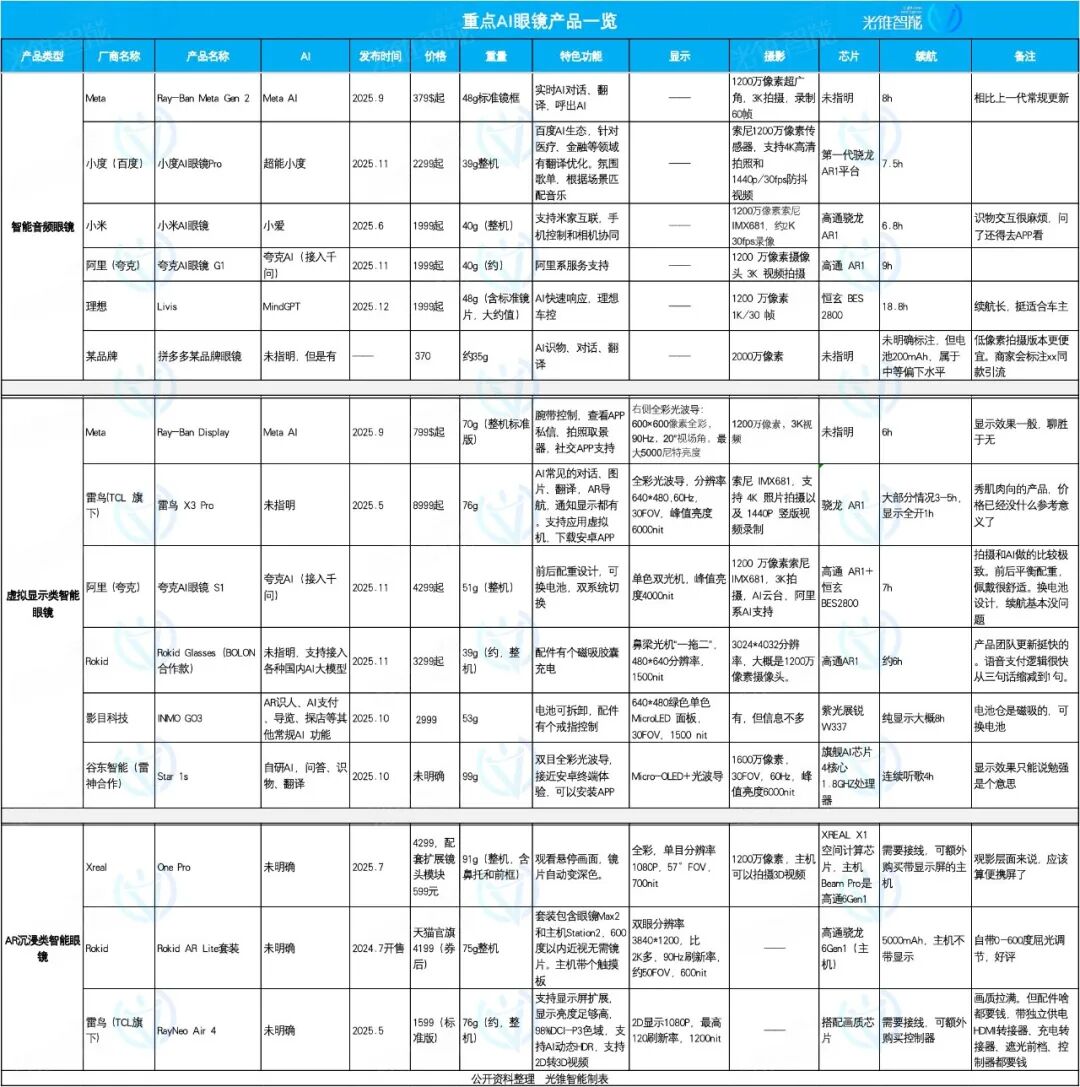
What kind of AI glasses are there on the market? Which directions do different types of AI glasses focus on in terms of functions? Where exactly are AI glasses smart? How should one choose AI glasses? With these questions in mind, Guangzhui Intelligence selected more than a dozen important AI glasses products from major manufacturers on the market to find out.
Generally speaking, based on the display angle of the glasses, we divide AI glasses into three categories: AI audio, virtual display, and AR immersive. We also focus on the wearing comfort, AI capabilities, entertainment features, and sustainable usability of AI glasses.
Smart audio glasses: Focusing on affordable AI?
Smart audio glasses are a type of AI glasses that have no display function and are the closest to ordinary glasses.

The wearing effect of Li Auto's Livis glasses is almost the same as that of ordinary glasses.
This type of AI glasses mainly features audio interaction and can be basically understood as a combination of glasses, headphones, and a sports camera. These products mainly provide AI capabilities by collaborating with the mobile phone's AI assistant, aiming at the capabilities of common mobile phone AI assistants, such as long - text conversation, object recognition, and translation.
In terms of shooting effects, it's well - known that the number of pixels is not the most important factor in determining the picture quality. Since AI glasses have very limited space, it's quite difficult to integrate a "large - sensor", physical image stabilization, and physical aperture. Therefore, the overall shooting level of AI glasses is weaker than that of mobile phones. In addition, there is a relatively obvious drawback in the shooting of AI glasses, which is that they can't record continuously for too long. This is due to the heat dissipation and battery - life issues caused by the small space.
In other aspects, the weight of each pair of glasses is around 40g. When fitted with myopic lenses, they are basically the same as normal myopic glasses (about 30g), allowing for a seamless switching experience. In terms of battery life, except for Li Auto's glasses with "extra - long" battery life, other glasses can't reach 12 hours of continuous use, which basically can't support all - day continuous use. Users need to change glasses or recharge them halfway.
From a horizontal comparison, the differences between these AI glasses come from the different capabilities that manufacturers are good at. For example, Li Auto's glasses can directly access its own large - scale AI model and control cars, Xiaodu's AI can provide professional knowledge in specific fields where the Wenxin large - model excels, Quark has native support for Alibaba's ecological apps, and Xiaomi can support interconnection with the Mi Home ecosystem. However, there are also objective drawbacks in the software support of AI glasses. For example, the object - recognition function of Xiaomi glasses requires cooperation with the mobile phone. This turns a single - device operation into an operation involving two devices.
Finally, in terms of price, AI glasses are roughly five times more expensive than regular glasses. Take the author as an example. Buying a complete set of myopic glasses with photochromic lenses online with optometry data costs about 500 yuan. However, some consumers told Guangzhui Intelligence that "it also costs a fortune to get a pair of glasses with Zeiss photochromic lenses offline."
Finally, Guangzhui Intelligence specifically found a white - label AI audio glasses as a reference for "Huaqiangbei" products.
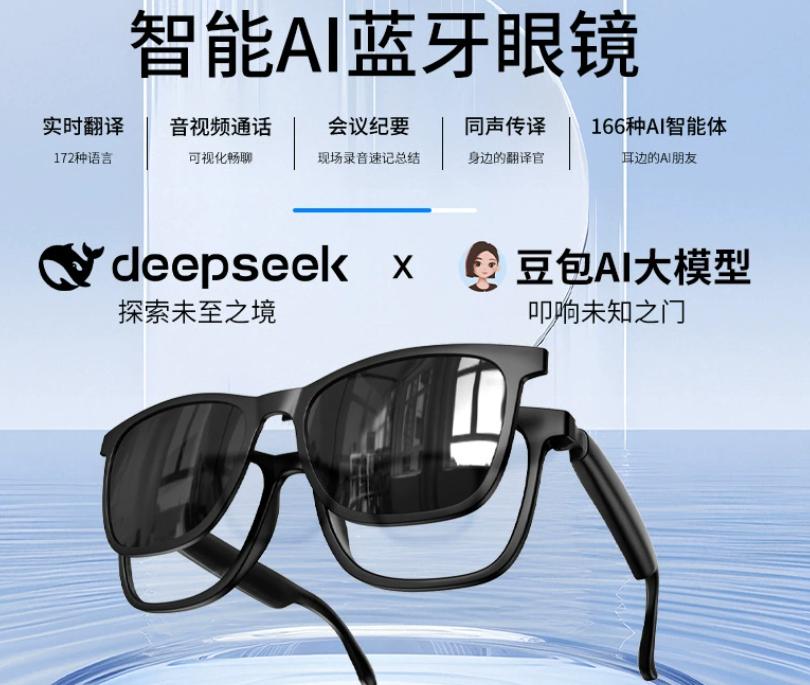
A certain white - label AI glasses
The biggest feature of white - label AI glasses is their low price. Their AI capabilities and battery life are weaker than other glasses products, but their basic parameters such as shooting and weight are still good. Regarding the price, white - label glasses (without lenses) are about one - fifth the price of well - known brand products. However, some merchants told Guangzhui Intelligence that such AI glasses can be even cheaper. "Bluetooth - enabled audio glasses cost only dozens of yuan, and those with a camera cost four or five hundred yuan."
Perhaps the low price is the reason why AI audio glasses currently have the largest market share. According to IDC statistics, the majority of the real sales of AI glasses are in the AI audio category, and this trend is unlikely to change in the short - term future.
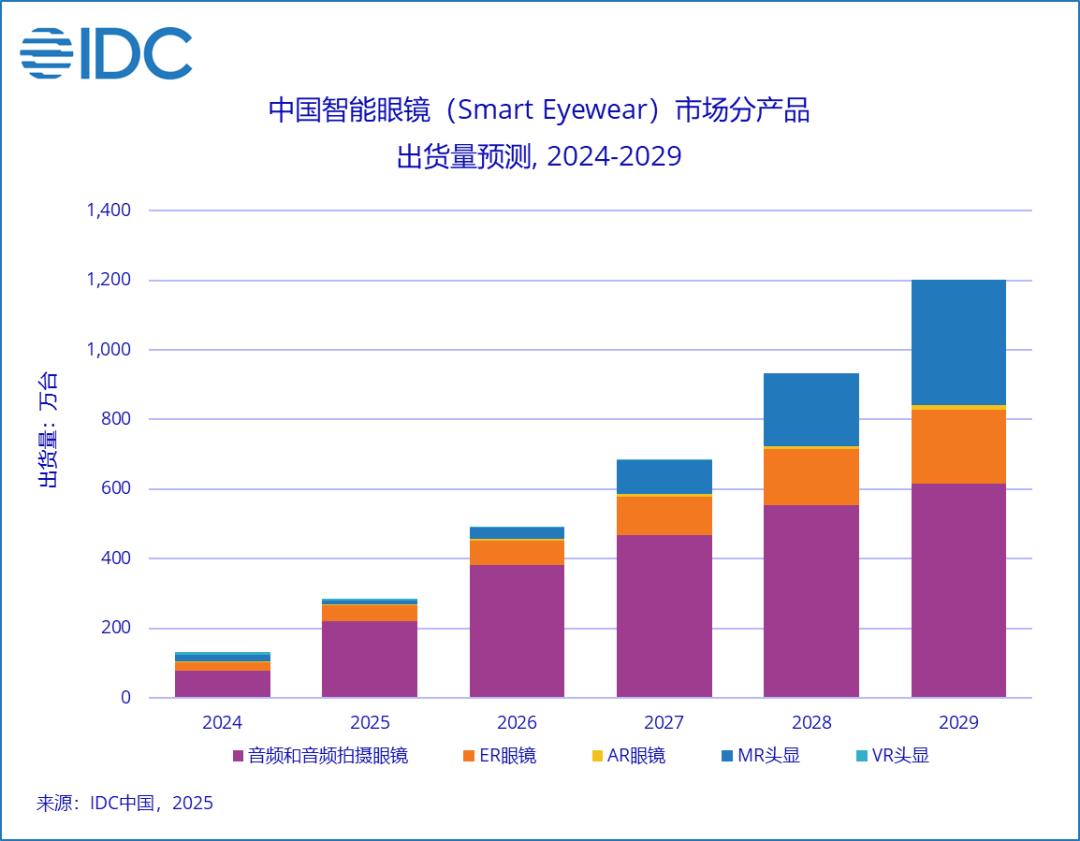
Overall, the product positioning of AI audio glasses is more about integrating smart terminal functions. Compared with using a mobile phone, AI glasses can achieve an operation process that is a few seconds faster. The intelligent part of the glasses is basically based on each brand's AI assistant. For consumers who have a strong need for real - time AI conversation and can accept the price premium, they can consider purchasing.
Virtual display AI glasses: A more "all - around" choice?
Virtual display AI glasses are characterized by the addition of an optical engine that provides display functions. Their main function is to provide simple superimposed information display on the real field of view. The relationship between these glasses and the user is more collaborative, similar to the HUD display in a car rather than an immersive experience. Borrowing IDC's classification standard, these glasses correspond to the "ER category" (Extended Reality glasses).
In terms of display technology, most virtual display glasses currently use the waveguide solution. The basic principle is that the optical engine emits light to a specific reflection area on the lens, and this part of the light can be seen by the human eye. Other minor solutions (such as Birdbath) won't be classified in detail. After all, the focus of consumer products should be on the effect and value.
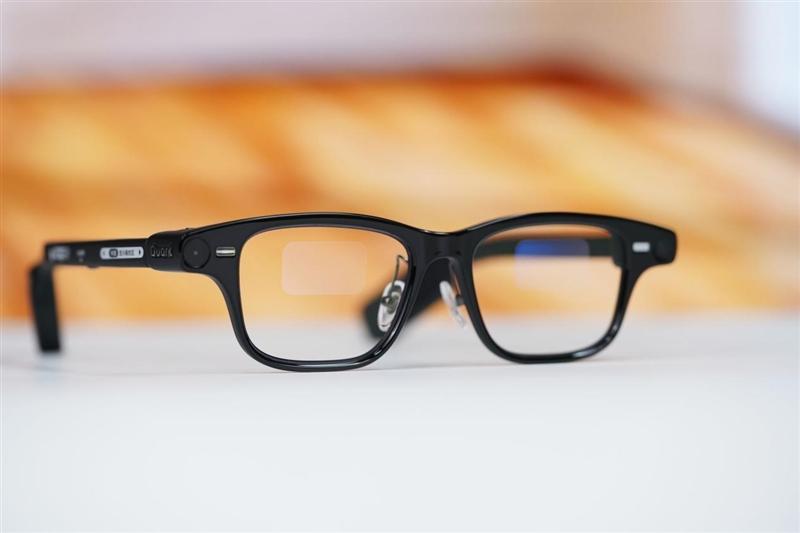
Quark AI Glasses S1
Virtual display glasses are more all - around in terms of functions, providing a comprehensive experience of audio, shooting, and simple display. Since their functions are more complete than those of smart audio glasses, many technology companies regard virtual display glasses as the "second terminal" for near - eye display.
In terms of basic hardware attributes, virtual display glasses are heavier than smart audio glasses due to the addition of the optical engine. The overall weight of most manufacturers' products is around 50g, and with the addition of lens weight, it will exceed 60g. Wearing discomfort begins to appear, and consumers need some time to adapt. From Guangzhui Intelligence's actual wearing experience, products from brands such as Rokid are not very friendly to people with round faces and low - bridge noses. Users may slightly feel a "tightening" sensation on the head and a lower display position. It's very necessary for consumers to have an in - store experience and test before purchasing.
In terms of chips, Qualcomm's AR1 chip is the flagship chip for this generation of virtual display glasses, mainly providing certain edge - computing capabilities, which can make the response speed of AI and applications faster. Some manufacturers sometimes install domestic chips in the glasses. Among them, the Hengxuan chip is mainly used to process Bluetooth audio, and the Unisoc chip focuses on low - power consumption. Currently, there are also some "dual - chip solutions" of Qualcomm + Unisoc on the market, which is equivalent to switching chips according to the usage scenario.
In terms of battery life, the battery life of this type of glasses is currently not very long. Six hours is a relatively average standard. There are not many effective solutions in the industry at present. A relatively good one is the "swappable battery" design supported by INMO GO3 and Quark AI Glasses S1. By continuously replacing the battery, the overall battery life of the glasses can be improved. In addition, Rokid has added a "power bank" that can be attached to the temple of the glasses. Although it makes the glasses heavier to wear, it can provide seamless battery life.
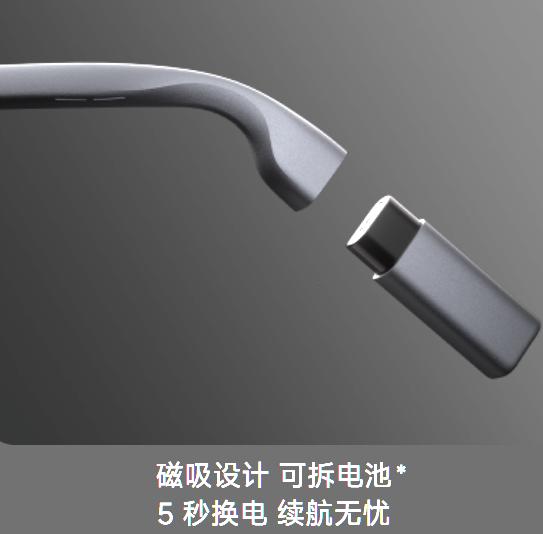
The swappable - battery design of INMO GO3
Display ability is the most important aspect of virtual display glasses. Currently, most manufacturers on the market use "single - green" display, and a few choose to provide full - color display. However, the current full - color display effect is just barely acceptable, as the resolution is very limited. The price of glasses that support full - color display is also relatively high. Take Thunderbird's X3 Pro as an example. Its product is priced at 8,999 yuan and above, which is not very referential.

Picture: The display effect of GUDONG Star 1s. Source: AR Circle
Focusing on the "single - green" display effect, brightness is the most important parameter affecting the display. Take Rokid Glasses as an example. This product supports a brightness of 1500 nits, which is sufficient for clear viewing under indoor lighting conditions. Higher brightness can ensure a better user experience outdoors (or in brighter environments).
However, there is a common problem with the visual effects of all virtual display glasses, which is the impact of the waveguide area on the real field of view. Since the waveguide area is in a fixed position on the lens, it will cause the display to be "a bit off - center". In terms of user experience, the display area of Quark glasses is a bit too high, while that of Rokid is a bit too low. Another common problem is that the waveguide area will interfere with external light sources. In an indoor environment, the field of view through this area looks yellowish. Under the illumination of lights, the waveguide area will also produce glare ripples, which are very uncomfortable to look at.
In terms of photography, the current shooting effects of most virtual display glasses are actually similar to those of smart audio glasses, mainly aiming at just being able to take pictures. Consumers can't expect the shooting effects to be comparable to those of mobile phones. Currently, Quark AI Glasses S1 performs relatively well. Quark has added an AI gimbal function (to enhance image stabilization) to the shooting function, while the recording effects of most other products are still quite shaky.

Demonstration of the video - recording effect of AI glasses
Focusing on the application level, the functions supported by current virtual display AI glasses are not very satisfactory, with a homogenization of features. For example, the AR navigation function was implemented in some products as early as 2023, but it is still a major selling point for many manufacturers today. Other functions, such as AI payment and real - time translation, are basically achieved through cooperation between glasses manufacturers and apps, and there is no "unique feature" in the software functions. Once a function is successfully adapted to one type of glasses, it may be implemented in other similar glasses the next month.
In terms of operation, currently, the interaction of most glasses is mainly through voice, supplemented by mobile phone app control and physical buttons. Some manufacturers also offer additional operation hardware that needs to be purchased separately. An external controller can provide a better interaction experience, but for wearable smart hardware, it's also an "extra burden".
In terms of other software functions, some glasses manufacturers have come up with ingenious functions. For example, INMO GO3's face - recognition function can help users remember some faces and list annotation information in the glasses, which is very friendly to "face - blind people". Rokid has a very fast software - update speed. Before the release of the 2025 Rokid Glasses in cooperation with BOLON, the AI payment function required saying "Leqi, scan for payment", but now the process has been shortened to just saying "Pay".
In terms of AI capabilities, currently, manufacturers with full - stack large - scale AI model capabilities (Meta, Quark) perform better and are more likely to optimize their own products. However, other manufacturers' AI capabilities are basically similar to those of mobile phone AI assistants. The teleprompter function is generally well - implemented by manufacturers, and most AI glasses can automatically turn pages according to the voice - over. Another useful function is real - time translation, which provides an experience of "translating what you see", a convenience that mobile phone AI assistants can't offer. In other aspects of AI functions, compared with smart audio glasses, the difference is that virtual display glasses don't require users to check information on the mobile phone screen.