The logic behind luxury purchases among today's young people has completely changed.

In 2020, the year she graduated from graduate school and started working, Zhao Guoning bought a classic Burberry bag at a boutique. She loved it so much that she updated her WeChat Moments on the same day: No girl can resist a Burberry.
Five years later, when she walked into a Burberry outlet, she found that bags with similar styles cost only one-third or even less of the boutique price. She also noticed that almost every bag came with an exclusive appraisal report from the China National Institute of Standardization (CNIS).
It was like opening a new world for her. She posted on Xiaohongshu that day with a sense of pride: "No one would buy several Burberry items at once unless they are both cost-effective and good."
This statement is, to some extent, like a dividing line between the old and new consumption eras: When buying luxury goods, young people no longer pursue eye-catching logos or think that the more expensive, the better. Instead, they start to look for discounts, seek appraisals and certifications from third-party authoritative institutions, and take "cost-effective and good" to the extreme.
Market news also confirms the consumption trend of "cost-effective and good" luxury goods: Bain's research shows that when the global luxury consumption is showing a slowdown trend, the sales of the outlet store channel have increased significantly, replacing the full - price stores as the preferred channel for consumers to buy entry - level luxury goods. Recently, the CNIS also announced that it will enter the luxury goods warehouse of VIP.com, a flash - sale e - commerce platform, to conduct full inspections on discounted luxury goods and gradually cover all products with appraisal reports.
The consumption logic of young people has completely changed.

Young people buy luxury brands: not for the logo, but for emotional value
Is the luxury consumption tide ebbing?
In a sense, yes. In the first half of 2025, the operating profit of LVMH, the world's largest luxury group, dropped by 15%, and the net profit dropped by 22%. Bernard Arnault, the group's CEO, also lost his throne as the richest man in France. The situation of Kering Group is also not optimistic. Its total revenue in the first half of the year decreased by 16% year - on - year, and the net profit dropped significantly by 46%. As the revenue pillar, Gucci's revenue in the second quarter dropped by 26% year - on - year, with sales declining for six consecutive quarters.
On the other hand, young people's interest in luxury goods has increased instead of decreasing. Xiaohongshu data shows that nearly 50% of its luxury goods users are post - 95s, and 62.3% of users started paying attention to luxury goods before the age of 22. Those who follow luxury goods content in daily life include both office workers and students. Generally speaking, highly educated people living in high - tier cities are the majority of Xiaohongshu's luxury goods consumers.
Different from the past, young people obviously prefer channels with greater discounts. A survey by Global Blue shows that among Chinese tourists returning to Italy for consumption, the proportion of high - spending young people is higher. According to the duty - free shopping data in the second quarter cited by the institution, among Chinese tourists visiting Italy, those aged 44 or younger accounted for 68%, and their spending on fashion luxury goods accounted for as high as 78%. Similarly, data from the discount e - commerce platform VIP.com shows that from January to September this year, its luxury goods sales increased by 30% year - on - year.
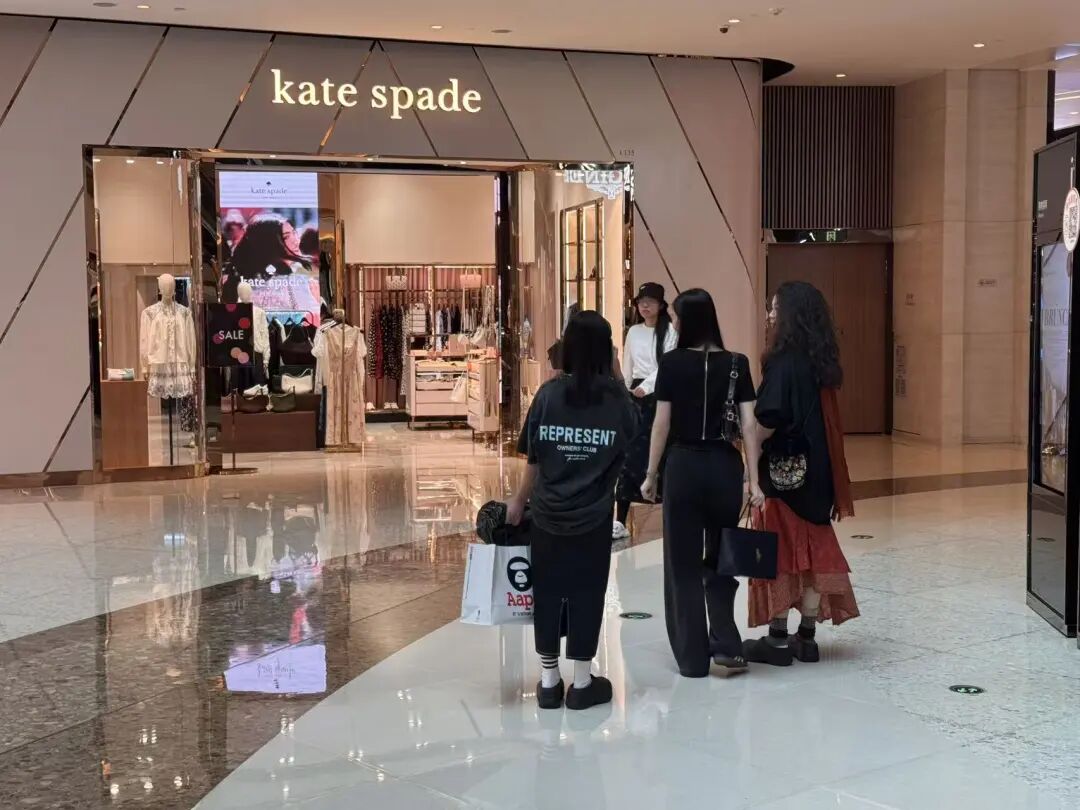
Young people are still the main force in luxury consumption
From Tiffany, which is associated with "wealthy bosses", to Van Cleef & Arpels, which is considered essential for "good luck", to Hermès full of LABUBU dolls - in the eyes of young people, luxury goods are no longer flamboyant symbols, but consumption choices that carry emotions and values. This also means that today, with an increasingly rich selection of luxury goods, young people still have exclusive emotional needs for luxury goods.
The logic of luxury consumption is undergoing a silent but profound change. Young people no longer blindly follow labels and price premiums, but more clearly pursue "value recognition" - both genuine products and emotional resonance.

Reduce the luxury goods premium
In fact, high - cost - performance luxury goods have always been the "sweet spot" for young people.
As the world's second - largest and fastest - growing luxury market, for a long time, two - thirds of China's luxury consumption has occurred overseas, which is largely due to the huge price difference between domestic and overseas luxury goods.
The price difference factor has directly given rise to a large group of purchasing agents. They buy products for people who cannot or are inconvenient to go abroad. According to a report released in 2020 by Pro Research, a Beijing - based consulting firm, in 2019 before the outbreak of the pandemic, the output value of the purchasing agent industry targeting the Chinese mainland reached 40 billion US dollars, approximately equal to the total revenue of LVMH that year. A report from Bain shows that the price difference of luxury goods between the Chinese mainland and the European market is generally as high as 20% - 40%. Taking a luxury luggage worth tens of thousands of yuan as an example, the price difference between the two places can reach about 25%.
This may be the origin of discounted luxury goods. Today, the luxury goods discount market in the Chinese mainland comes either from brand outlet stores or from buyers on e - commerce platforms. To some extent, this is an evolution of purchasing agents. Buyers search the world for the goods with brand authorization and the lowest price, and then stack various discounts such as bulk purchase and tax exemption. The selling price in China can even be as low as 30% of the price of similar styles in boutiques.
Luxury goods flash sales have also emerged in recent years. McKinsey predicts that the growth rate of the discount market between 2025 and 2030 is expected to be five times that of the full - price market.
However, there are still concerns in the discounted luxury goods market after leaving the boutiques.
On the one hand, the supply of goods is unstable. "Sometimes you need a bit of luck to get good deals at flash sales," Yumi, a post - 95 white - collar worker living in Shanghai, told us. "The feeling of 'first come, first served' is very exciting. I might just place an order without thinking. I'm used to searching for flash - sale information now. It's like opening blind boxes. You need to be very lucky to get a bargain."
On the other hand, in luxury consumption, consumers don't just pursue low prices. They want more: Even when switching from boutiques to flash sales, Zhao Guoning weighs luxury goods more carefully. She needs a clear guarantee of authenticity, suitable styles, and flawless quality, etc. In short, she desires "cost - effective and good" products.

Trust issues
Consumers need a third - party institution that is independent of platforms, the market, and consumers, with credibility, authority, and professionalism, to establish order, set standards, and re - define the quality of discounted luxury goods.

A third - party authoritative institution may be the cure for trust issues
In fact, in the discounted luxury goods market in recent years, appraisal has become a necessity. Zhao Guoning, who is used to going to flash sales, finds it most troublesome that after buying discounted luxury goods, she often has to send them to the CNIS for appraisal. Only when she sees the CNIS appraisal report can she completely relax.
In a sense, the CNIS is the initiator and pioneer of the luxury goods appraisal industry. "A good luxury goods appraiser needs to have a large database, update knowledge and information, and also improve efficiency," Li Lifeng (a pseudonym), who has been in the luxury goods industry for many years, told 36Kr. He believes that a qualified appraiser should have handled at least more than 100,000 genuine luxury goods, memorized tens of thousands of appraisal points, and keep a 20% annual knowledge update. For luxury goods appraisers, only by contacting more products and accumulating more experience can they ensure the accuracy of appraisal results. In his opinion, there are "less than a thousand" senior and professional luxury goods appraisers in China, and most of the most experienced appraisers in China come from the CNIS system.
The CNIS is not only the only central enterprise focusing on "inspection, testing, certification, standards, and metrology". Moreover, in judicial and market practices, the authority of the CNIS has also been verified. Whether it is a dispute over authenticity on a second - hand platform, a case of customs cracking down on smuggling, or a court's compensation judgment, the CNIS appraisal report is accepted as an important basis. This dual status of "judicial recognition + market trust" makes it a third - party that consumers, enterprises, and regulators are willing to rely on.
Perhaps from this, we can see the important significance of the CNIS entering the e - commerce platform warehouse: Previously, the cooperation between the CNIS and e - commerce platforms was either spot - checking or after - sales verification. This time, the CNIS conducts full pre - sales inspections on e - commerce luxury goods and gradually attaches appraisal reports to all products. The authoritative institution is trying to re - establish a quality coordinate for discounted luxury goods.
Zhuang Shuai, an expert in the retail e - commerce industry and the founder of Bailian Consulting, said that in the volatile market environment, luxury goods are re - positioning in terms of both price and quality. The real problems that the luxury goods industry needs to face are not only "how to sell more" and "how to sell more expensively". Instead, luxury brands and platforms need to meet consumers' needs for high cost - performance, high - quality, and emotional value. Such needs are reshaping the industry.
A gentle breeze at the start is now howling through the most prosperous consumer market.