Level 3 autonomous vehicles are ready to hit the road.
Before 2026, Level 3 autonomous vehicles have been approved for road use without any warning.
The Ministry of Industry and Information Technology (MIIT) announced that it has approved the access applications for two intelligent connected vehicle products with Level 3 conditional autonomous driving functions.
One is from a southern automaker and the other from a northern one. They are the Changan SC7000AAARBEV pure - electric sedan declared by Chongqing Changan and the ARCFOX BJ7001A61NBEV pure - electric sedan declared by BAIC.
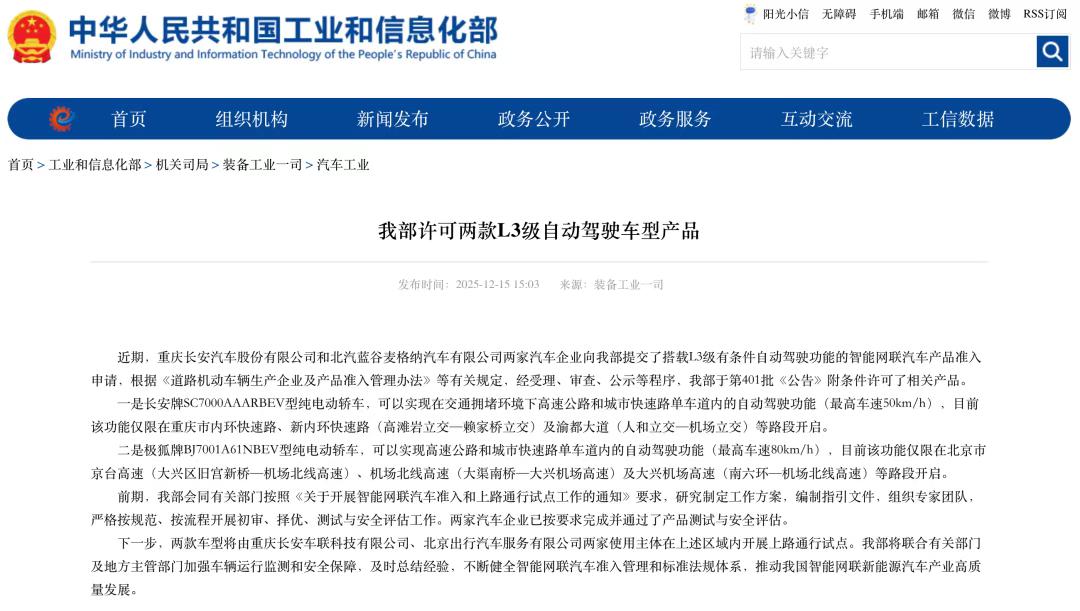
These two models are respectively adapted to real - road scenarios in congested urban areas and on highways, and are approved to conduct road - use pilots in designated areas of Beijing and Chongqing. Simply put, they can finally be on public roads.
This also means that China's autonomous driving vehicles have finally entered the "licensed era", moving from road tests to a new stage of obtaining official access and being allowed to drive under specific conditions.
More importantly, the commercial implementation of Level 3 autonomous driving is just around the corner, and it is no longer an unattainable concept.
01 Genuine Level 3 Vehicles on the Road
It should be clear that this "product access permit" is quite different from the previous "test licenses" and is more valuable.
Since 2023, the MIIT has successively issued road - test or demonstration licenses related to Level 3 to various automakers, mainly for conducting technical tests and function verifications under public - road conditions.
However, such permits are mainly for road tests and demonstration verifications, and do not equal the access permits to the MIIT's product announcement system. According to incomplete statistics, the number of automakers that have previously obtained Level 3 test licenses has exceeded double - digits.
In contrast, the product access permit means a higher - level institutional recognition, and it is also the first time that China's national - level policies have clearly supported the production access of Level 3 autonomous driving vehicles.
If the former is mainly for R & D and test verification, the latter means that the vehicle models have the autonomous driving ability to operate under real - road conditions, but they will still be subject to continuous operation monitoring and safety - guarantee requirements in the future.
More importantly, there is a clearer determination in terms of law and liability: if an accident occurs during operation, the automaker will be responsible.
Judging from the announced conditions, this access is not a "full opening" but a road - use pilot promoted under strictly limited conditions.
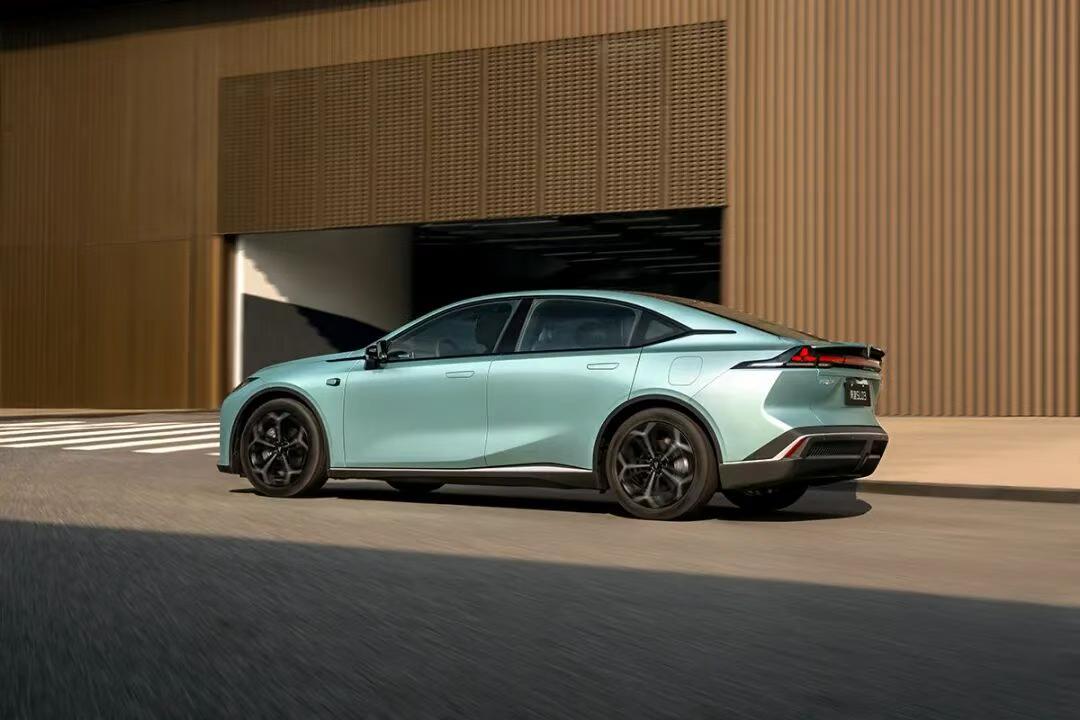
Specifically, one of the two vehicles first "released" by the MIIT is the Changan SC7000AAARBEV pure - electric sedan, and the corresponding model after inquiry is Changan Deepal SL03; the other is the ARCFOX BJ7001A61NBEV pure - electric sedan under BAIC, and the corresponding model is the ARCFOX Alpha S6, three - lidar version.
The road environments and ranges for the pilots of the two models are also different. For the Deepal SL03, it corresponds to the autonomous driving function in a single lane on highways and urban expressways in congested traffic environments, and the maximum speed is limited to 50 km/h.
Moreover, the Level 3 function is also restricted to be activated on sections such as the Inner Ring Expressway in Chongqing, the New Inner Ring Expressway (from Gaotanyan Interchange to Laijiaqiao Interchange), and Yudu Avenue (from Renhe Interchange to Airport Interchange).
As for BAIC's ARCFOX Alpha S6, it is restricted to drive on some roads in Beijing. For example, it can activate the function on sections such as the Beijing - Taiwan Expressway in Beijing (from Jiugong New Bridge in Daxing District to the Airport North Line Expressway), the Airport North Line Expressway (from Daqunan Bridge to the Daxing Airport Expressway), and the Daxing Airport Expressway (from the South Sixth Ring Road to the Airport North Line Expressway).
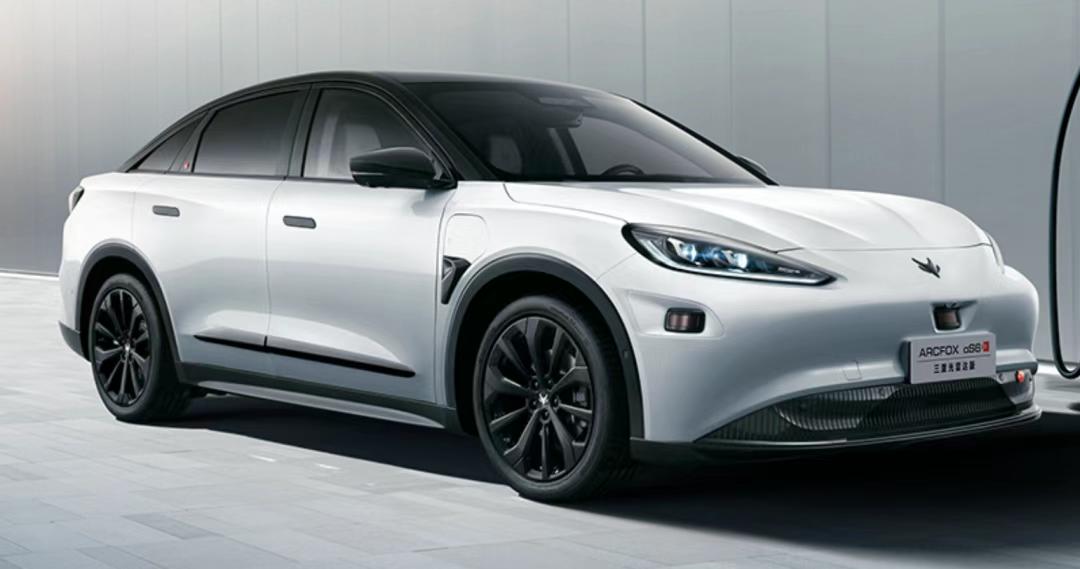
It is not difficult to see from the road sections that they are obviously adapted to the autonomous driving function in a single lane on highways and urban expressways, but the maximum speed is limited to 80 km/h.
Although the restricted ranges and scenarios of the two vehicles are different, they still have some common features. For example, they are both open in highway and urban expressway scenarios. Such scenarios are characterized by no pedestrians crossing, few intersections with non - motor vehicles, and stable road structures and signs over a long period.
In addition, both models are only allowed to activate the autonomous driving function in a single lane, which means that automatic lane - changing is not allowed, and the maximum speeds are not very high.
From this perspective, the release of these Level 3 vehicles this time seems not "Level 3" enough, and there is still a gap compared with the point - to - point assisted driving of many current models' so - called highway Navigation on Autopilot (NOA).
However, this "release under limited conditions" is also consistent with the definition of Level 3 autonomous driving in the national standard GB/T 40429 - 2021. According to this standard, Level 3 belongs to "conditional autonomous driving". When the system meets the designed operating conditions, it can undertake all dynamic driving tasks, but when the system makes a request, the driver still needs to take over in time.
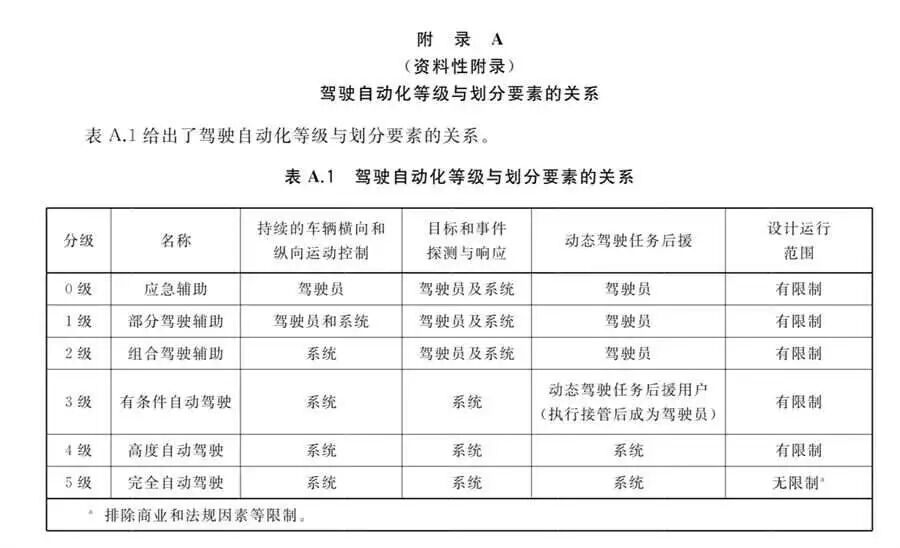
Different from the Level 2 systems that mainly play an auxiliary role, Level 3 has a clearer determination in terms of the division of the responsible subject and safety requirements. That's why the regulatory authorities have set stricter scenario and speed thresholds in the access stage.
Next, the two models will be used by Chongqing Changan Vehicle - Connected Technology Co., Ltd. and Beijing Chuxing Automobile Service Co., Ltd. respectively to conduct road - use pilots in the above - mentioned areas.
This combination of "automaker + user" also shows that the regulatory authorities hope to reduce the uncertainties in the initial implementation of Level 3 through professional fleet - based management.
02 In 2026, All Rush towards Level 3
Although the access approval is a bit "unexpected", looking back at the autonomous driving policy path over the past three years, it is a very obvious gradual process.
In November 2022, the MIIT released a draft for soliciting opinions on the pilot work of intelligent connected vehicle access and road use. For the first time, it clearly proposed to conduct access management and pilot projects for Level 3 and Level 4 autonomous driving vehicles.
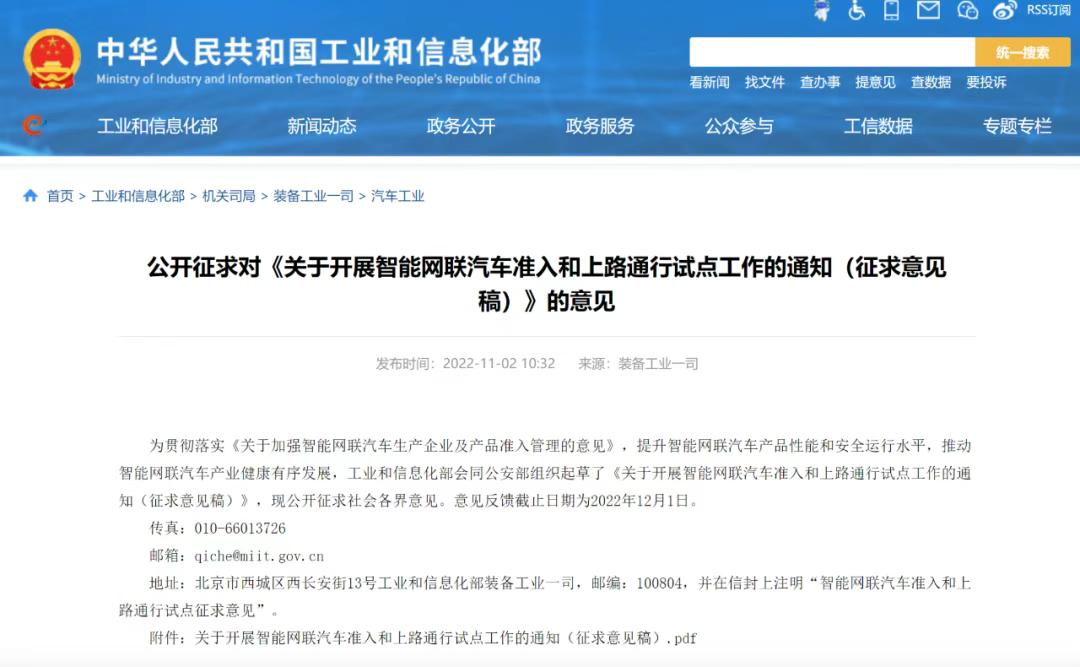
After a year of soliciting opinions and improving the system, in November 2023, the MIIT, together with multiple departments, officially issued a pilot notice, clarifying that Level 3 and Level 4 autonomous driving vehicles can conduct road - use pilots under limited conditions, and clearly stating that autonomous driving vehicles must be declared in the form of a consortium of "automobile manufacturers + users", which laid the foundation for the subsequent operation model.
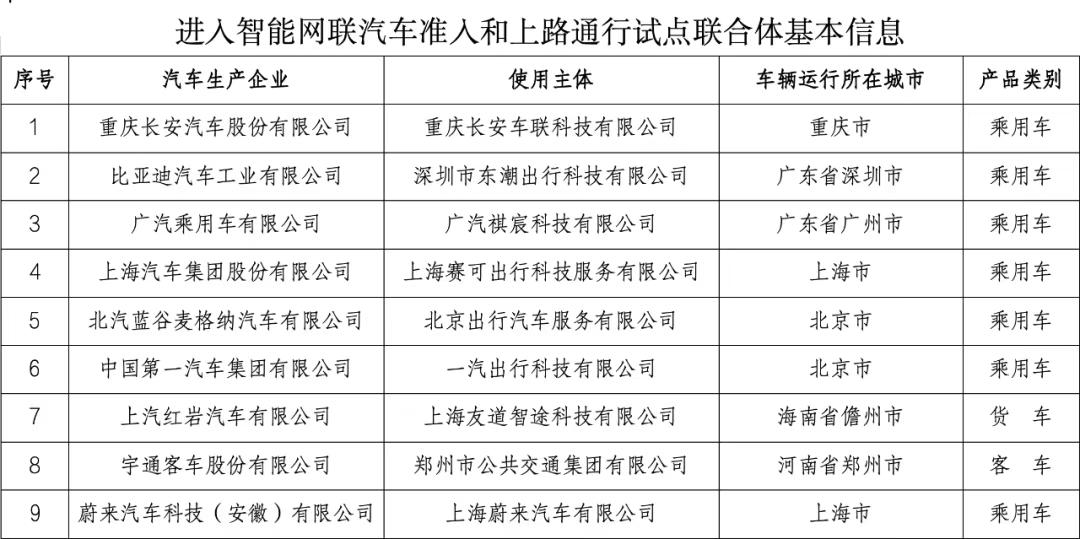
In June 2024, the MIIT officially announced the list of intelligent connected vehicle access and road - use pilots. Nine automakers were selected: Changan, BYD, GAC, SAIC, BAIC BluePark, FAW, SAIC Hongyan, Yutong Bus, and NIO. At that time, being "selected" only meant obtaining the qualification for the next - stage test, rather than a real road - use permit.
On September 13 this year, eight departments including the MIIT issued the "Automobile Industry Steady - Growth Work Plan (2025 - 2026)", clearly proposing to promote the pilot work of intelligent connected vehicle access and road use, and for the first time including the statement "conditionally approve the production access of Level 3 models". Now, Changan and BAIC are the first two automakers to pass the selection process from the list and cross the threshold of "product access".
It is not difficult to see that while the policies are becoming clearer, the pace is also accelerating significantly. You know, in the past year, most automakers have clarified their Level 3 autonomous driving schedules, designating 2026 as the first year of autonomous driving.
First, Changan Automobile released the "Beidou Tianshu 2.0" plan in February, proposing to achieve full - scenario Level 3 autonomous driving in 2026 and upgrade to Level 4 in 2028. This time, Changan was also the first to obtain the Level 3 access permit.
Then, GAC also announced in March that it would mass - produce and launch its first Level 3 autonomous driving passenger car in the fourth quarter, and launch more Level 3 products in the following year. During the recent Guangzhou Auto Show, it also obtained the first national license for high - speed Level 3 tests at a speed of 120 km/h.

Yu Chengdong clearly stated not long ago that 2026 will officially enter the era of Level 3 and Level 3+ autonomous driving, and will advance to Level 4 in 2027. Yu Chengdong's view already represents the attitudes of many automakers cooperating with Huawei.
He Xiaopeng has also said more than once that 2026 will be a turning - point year for autonomous driving. He will achieve the mass - production and implementation of Level 3 autonomous driving capabilities by the end of this year, and will launch three Robotaxis in 2026 and start trial operations.
This Level 3 access permit is a signal. Although it still needs pilot operations, it has set a start. As more access permits are issued in the future, there will be more and more Level 3 vehicles.
When the second and third batches of approvals come in a concentrated manner, the wave of commercialization is not far away.
This article is from the WeChat public account “SuperEV - Lab”, author: Wang Lei. It is published by 36Kr with permission.