GGV Capital Interviews Qunhe Technology: Let AI Serve Reality, Spatial Intelligence is the Necessity from Digital to Physical World — Investment Notes, Issue 240
As 2025 is coming to an end, we recently successfully held the 2025 annual meeting of GGV Capital's RMB fund. This year, we gathered many investors, well - known enterprise founders, and important partners to engage in in - depth dialogues and sharing around cutting - edge fields such as AI, intelligent manufacturing, digital healthcare, and embodied intelligence. 👉2025 GGV Capital RMB Fund Annual Meeting: How to Find Long - term Competitiveness?
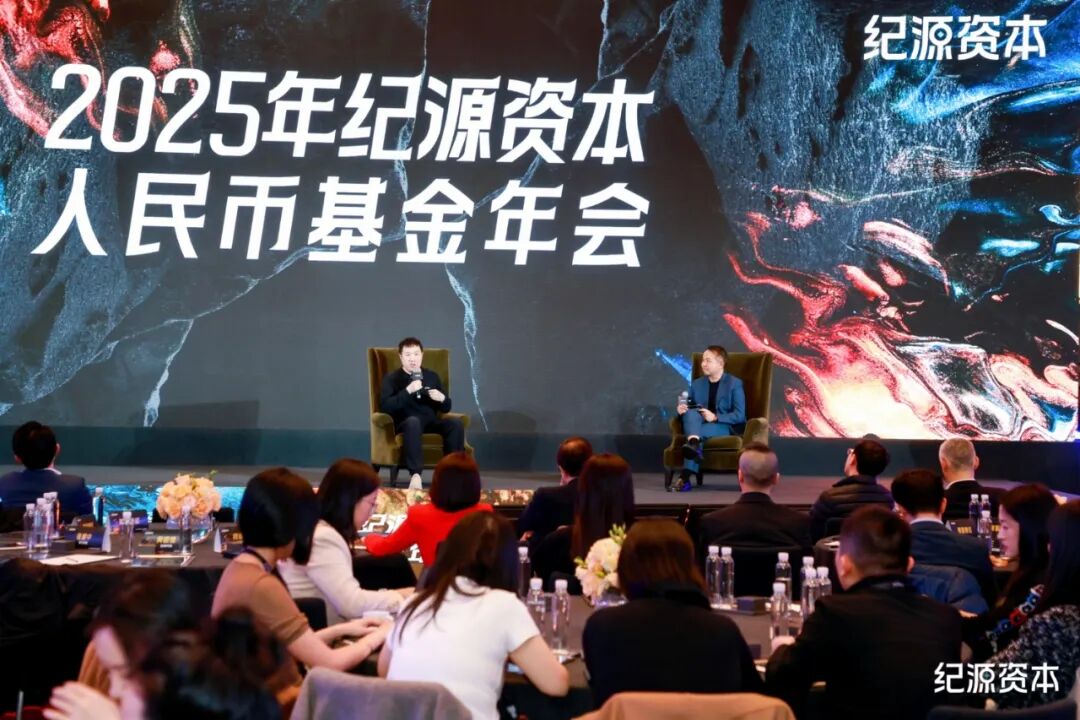
The following is a dialogue between Fu Jixun, Managing Partner of GGV Capital, and Huang Xiaohuang, Co - founder and Chairman of Qunhe Technology:
Fu Jixun: Today, I hope to let everyone know more about Qunhe Technology through this dialogue with Xiaohuang. As we all know, Qunhe Technology made its mark in the market with "CoolHome", a cloud - based indoor space design product. Now, what Qunhe does is no longer limited to indoor design and rendering but has entered the field of spatial intelligence.
I still remember more than a decade ago when I first met Xiaohuang and his core team in Hangzhou. I remember the scene of listening to their entrepreneurial ideas in a hotel by the West Lake. I also remember that not long after that, we made the decision to invest in Qunhe.
Xiaohuang, do you still remember your thoughts when you first entered this industry?

Huang Xiaohuang: Before starting my business, I worked at NVIDIA for a year. It was 2010, and I was involved in the development of the CUDA language at NVIDIA. At that time, on the one hand, we were continuously developing CUDA, and on the other hand, we were looking everywhere for companies to use it, but we couldn't find suitable application scenarios. During my work, I found that it could greatly accelerate graphic rendering. However, at the same time, the corresponding manual speed didn't increase, making people feel that "maybe we don't need such a fast thing". So, I thought of putting this technology on the cloud to realize its value of speeding up. After that, I really returned to China with this idea to start my business.
My thought at that time was: "Instead of persuading others to use the company's GPUs every day, why not start my own business and use them?" So, as soon as I started my business, I targeted GPU cloud services, which was quite pioneering at that time.
After that, it's a story that Jixun knows. At that time, we were also looking for application scenarios for our technology. After meeting Jixun, he pointed out that the home furnishing markets in both China and the United States were booming, which might be a good application scenario for cloud - based GPU technology. Soon after, we launched the "CoolHome" product, moving space design and rendering from local to the cloud, which doubled the number of people we could serve at the same time. Maybe we just caught up with the right rhythm of the era. With this simple idea, after the product was launched, we quickly entered the market and maintained high - speed growth for several years, largely replacing traditional local software and occupying about 80% of the domestic home furnishing CAD market.
Fu Jixun: In a market already dominated by local software, breaking through with a cloud - based approach, I believe it wasn't easy for you during this process, and you also went through various trials and errors. Looking back on this entrepreneurial experience now, what do you think you did right or wrong at that time?
Huang Xiaohuang: Looking back now, I think at that time, I should have been clearer about one thing: we need to focus on both technology and the market at the same time. In fact, I once had an illusion that technology wasn't that important. Since we entered the home furnishing industry, we should focus on expanding the market. However, in recent years, I've clearly realized that "technology is the moat".
However, we've always been investing in technology for the spatial intelligence we're doing today. Since 2018, we've vaguely felt that we could conduct model training with a large amount of 3D data. Although we didn't know what to train at that time, we still continued to invest within our capabilities in exploring spatial intelligence.
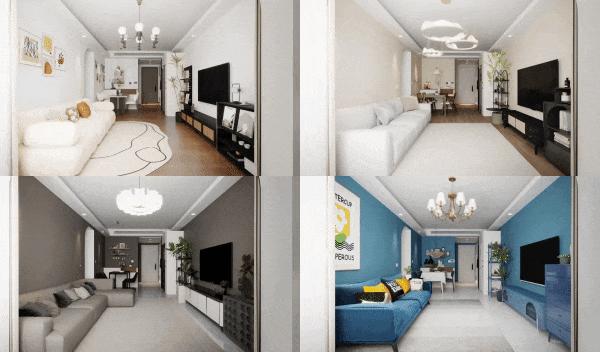
A few years ago, we saw the need for spatial understanding, reasoning, and generation capabilities in spatial intelligence. So, before this market boomed, we set up a team in advance and recruited senior professionals from the United States. These investments in technology have paid off today.
How to combine the cutting - edge technologies discussed in academic papers with the rapidly growing market is an important issue we've always faced during the entrepreneurial process. When the company was making money, we might have underestimated the importance of technology. Fortunately, in recent years, we've managed to balance both aspects.
Fu Jixun: Let's discuss spatial intelligence. Qunhe started from spatial design, and the "CoolHome" spatial design product is quite mature, and you've found a good subscription - based business model. Especially in China, many spatial designers, whether engaged in home decoration or commercial decoration, are using your products in large numbers. In recent years, Qunhe has gradually expanded overseas and has also achieved revenue in Southeast Asia and some other countries.
In this new field of spatial intelligence, I know you'll get a large amount of new data. For example, the papers published by Google used the 3D scene data you provided. So, how do you make the data generate value? What's the business logic you've built in this new field?
Huang Xiaohuang: When I first started my business, my understanding of GPUs was just "acceleration". This is also an obvious reality: the tools we designed could enable people to complete a week's work in a day or even a few hours.
However, with the development of large AI models, we found that the previous "acceleration" was actually not enough - those were just tool - level accelerations. When it comes to understanding, imagining, and creating spaces, it still depends on humans, and humans still need to pay a lot of mental and physical labor. So, we wondered: Is it possible to let AI take over this level of work?
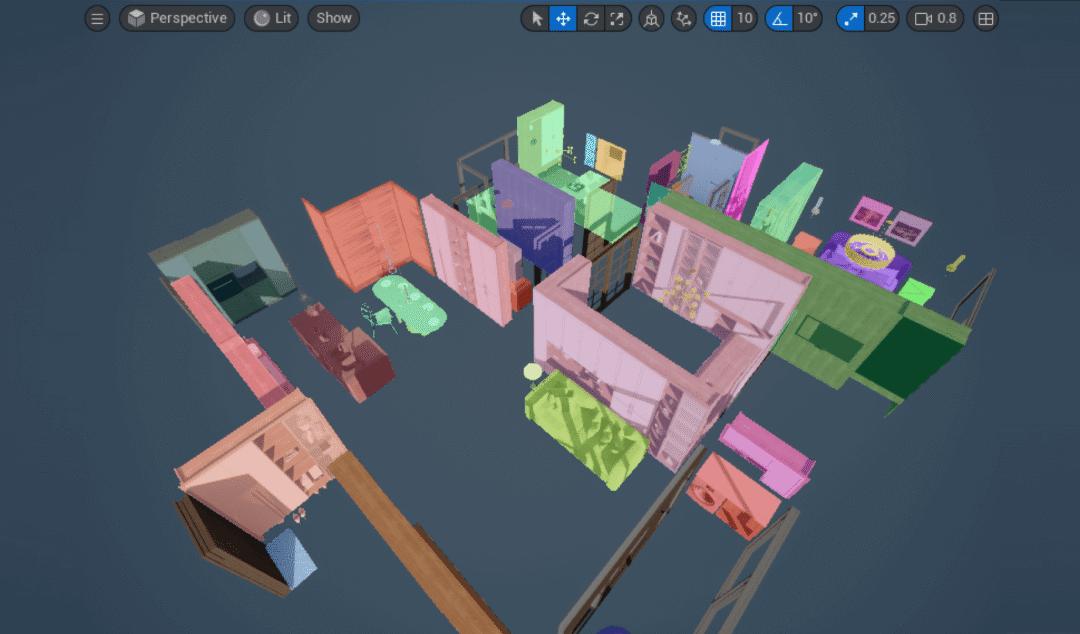
In the past, when we didn't know that intelligence would emerge when the data volume was large enough, we conducted various trials and errors and wrote many small algorithms to try to achieve spatial intelligence, but the results weren't good. After 2022, OpenAI demonstrated the qualitative change brought about by continuous stacking of data and computing power. After trying, we found that when the data reached a certain amount, the trained model had some capabilities that previous tools didn't have. Generally, they can be summarized into three parts: spatial understanding, spatial reasoning, and spatial generation.
Regarding spatial understanding, for example, if there is a table in front of us, no matter how we change the perspective, we can recognize it as a table, and we'll remember its complete three - dimensional appearance in our minds. This is a very basic ability for humans, something a one - year - old child can do. However, when we want to train AI to understand this, it's actually a huge challenge.
Spatial reasoning is an ability that goes a step further on the basis of understanding. Still taking this table as an example, when it's in our walking path, we'll instinctively bypass it. This is a very natural thing for humans. For a computer, making it have this kind of human intuitive behavior is also a huge challenge.
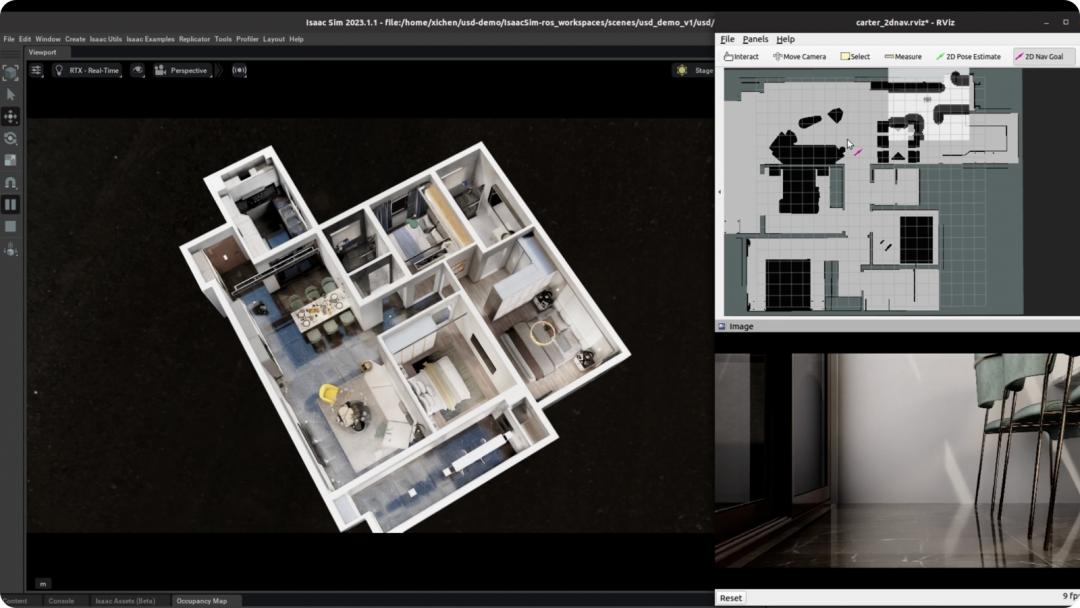
When it comes to spatial generation, different from the previous 3D modeling method, spatial intelligence doesn't use a mouse to draw the space in our minds stroke by stroke. Instead, through the input of multi - modal information such as text, images, and videos, the computer can generate the space we need imaginatively. This is different from the video results generated by Gemini or Sora recently - once the perspective of the space in their videos changes, it often changes greatly, and the room we see is no longer the same. The environment constructed by spatial intelligence is very stable. Different from the concept of large - model images, it truly has a spatial concept. In fields such as intelligent warehousing and logistics, unmanned driving, and automated intelligent surgery, as long as it involves affecting the real physical space, this spatial generation technology is very important. If it's not done well, we might see absurd scenes like scalpels floating in the air in an operating room.
We believe that if we want AI to serve the real physical world, spatial intelligence is a necessary path from the digital world to the physical world.
In terms of the business model, actually, we want to refer to OpenAI - gradually shifting from the previous per - person charging model to selling computing power. In the future, as the number of people actually involved in work decreases, only by selling computing power to machines can we receive more fees as the usage volume increases. This is also a business model change driven by technological innovation.

In addition to spatial design, our existing business also includes some industrial - level business lines. For example, we recently launched SpatialTwin, an industrial digital twin platform. At the same time, we're also doing robot training and providing synthetic data for it. Moreover, we're also entering the e - commerce field with spatial intelligence technology. The imagination and opportunities this technology brings are quite broad.
Fu Jixun: Next, let's talk about globalization. Currently, more than 10% of Qunhe's revenue comes from overseas. What kind of development have you experienced in going global in the past few years? What are your feelings?
Huang Xiaohuang: Before actually going global, we always regarded China as one market and overseas as another market, as if they were two corresponding wholes. But in practice, we found that each overseas country is an independent market. Even in the United States, the East Coast and the West Coast are completely different in every aspect, and their market attributes are very different. In the markets we've entered, such as Southeast Asia, Japan, India, and the United States, the problems we need to solve are all different.
The business models in Southeast Asia are very similar to those in China in many fields, but the problem is that the local people's payment ability is very limited. However, in Southeast Asia, there is an advantage: the local people generally believe that Chinese technology and products are very advanced. So, when we sell our products, they'll say that they can learn from how the Chinese use these products and services. As long as we can do a good job in localization and train our local employees to use the products, they're willing to buy.
In Japan, we felt the opposite extreme: the Japanese will say that no matter how well a product is used in China or the United States, they only care whether it can be used well by large companies in Japan - they'll even call to confirm whether the large companies they trust are really using the product. Our Japanese partner said that we only need to serve one customer well this year. If our product can be successfully implemented for this customer, we can open up the market. If we mess up with this customer, then we don't need to do business in the whole market. So, Japan seems to be a market that requires a lot of caution and patience.
In India, it's a completely different situation. Previously, due to geopolitical considerations, we were very cautious in India. As a result, we found that once we were cautious, the local people had more space to sell our products randomly. So, we realized that to do business in the Indian market, we need to recruit a large number of people, make a lot of online promotions, and expand in a rather rough way. This approach actually greatly increased our market share. And the Indians are also quite rough with us: sometimes, to bargain with us, they'll claim to buy 100,000 products, but after the price is negotiated, we find that they only need to buy 10 - we've gradually got used to it.
The US market is in contrast to the Indian market. Although the US market is very large, the labor cost is extremely high. Although I've worked in the United States, I still can't figure out the proper way of hiring local people.
It can be said that during these years of going global, we've been learning in each country and doing different types of localization. We've encountered many different problems and also gained different experiences in different places.
For Chinese enterprises going global, I think we mainly can't be too hasty. Maybe many people, like me, started their businesses during the years when the Chinese market was booming and are used to an annual economic growth rate of over 10%. But overseas, we generally need to slow down. Recently, we talked with a German customer. It took one or two years from the initial contact to the customer's final decision. Even for the customer's boss to visit our company, he needs to arrange the time well in advance. The wild business approach we're familiar with in China is hard to replicate in other countries. So, now we're gradually convincing ourselves to adapt to the overseas growth rhythm.
Fu Jixun: Qunhe has the title of "One of