On the eve of its IPO, why did Unitree spend 100 million yuan to secure a spot in the Spring Festival Gala?
The Spring Festival in 2026 is approaching.
Recently, CCTV released the theme of the "2026 Spring Festival Gala", which will welcome the upcoming Year of the Horse with the slogan "Galloping forward, irresistible".
As the most-watched TV gala globally, the Spring Festival Gala has created a new ratings myth with the support of new media. According to official data, the 2025 Spring Festival Gala reached a new high in ratings, with a total of 16.8 billion media exposures. The overall TV ratings share reached 78.88%, the highest in the past 12 years.
With its strong ratings and a stable audience base, the Spring Festival Gala obviously has great commercial value and is an important medium for commercial companies to strive for huge exposure.
In the past, sponsors and exclusive partners were often concentrated in industries such as beverages, the Internet, and technology manufacturing, such as Wuliangye, Wahaha, Taobao, and Huawei. In 2026, more embodied intelligence companies and robots may be seen.
According to several insiders, many robot companies have participated in the bidding for the Spring Festival Gala recently. Among them, Unitree Technology (hereinafter referred to as "Unitree") and Zhipu Innovation (hereinafter referred to as "Zhipu") are in the most intense competition.
It is reported that in order to compete for the sponsorship rights, Unitree directly offered 100 million yuan, far exceeding Zhipu's offer of 60 million yuan.
After the news spread, the media asked Zhipu and Unitree for verification. Zhipu responded that "it's not true", while Unitree has not responded yet.
The year 2025 is known as the first year of commercialization of humanoid robots. A large number of enterprises have flocked to the industry, with new products, exhibitions, and robot competitions throughout the year, making the entire industry highly concerned.
As the most well-known and highly exposed brand in China, Unitree started its IPO process this year, successively completing share reform, name change, and IPO counseling.
At this juncture, it is quite meaningful for Unitree to bid a large amount of money for the Spring Festival Gala.
100 million yuan bid: Industry insiders say it's too exaggerated
Actually, Unitree is a regular guest on the Spring Festival Gala. It has appeared on the stage twice, both in the form of program performances.
In 2021, 24 Unitree robot dogs participated in the song and dance performance "Let's Go, Ox!", becoming one of the most creative programs of that year. What really made Unitree well-known was the performance "Yangge BOT" at the 2025 Spring Festival Gala. Unitree H1 robots wearing festive cotton-padded jackets danced the yangge, integrating modern technology with Chinese folk culture and winning the love of the audience.
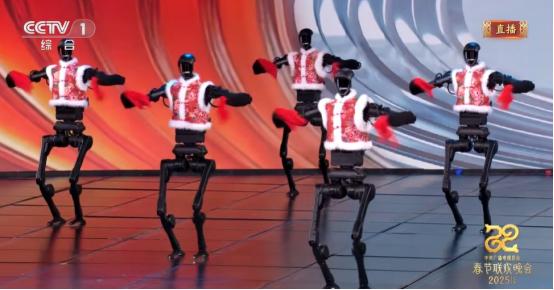
Of course, there was also a "famous scene" where a robot was helped off the stage by a staff member. Unitree's founder, Wang Xingxing, joked in an interview with CCTV: "Actually, it was just for fun."
So, what level does a sponsorship or advertising fee of 100 million yuan represent in the Spring Festival Gala?
According to a CCTV advertising agent, the price for an advertising slot close to the beginning of the Spring Festival Gala reaches more than 40 million yuan, with an exposure time of about 15 to 30 seconds.
According to media reports, in 2011, Midea Group paid 57.2 million yuan for the countdown advertising of the Spring Festival Gala. In 2018, Taobao spent 300 million yuan to become the exclusive interactive partner of the Spring Festival Gala. In 2020, Kuaishou's budget for participating in the Spring Festival Gala was close to 3 billion yuan (including exclusive cooperation, advertising fees, and 1 billion yuan in red envelopes).
Perhaps for Internet giants like Alibaba and Kuaishou, a budget of hundreds of millions or even billions is not a big deal, as they have huge revenues and profits to support it. However, for the emerging industry of embodied intelligence, a sponsorship fee of 100 million yuan is undoubtedly sky-high.
The person in charge of a consumer-grade robot brand said in an interview with the media: "These figures are too exaggerated for the industry. If the money is used for R & D, it may generate greater value."
Behind the big marketing move: Building momentum for IPO
Undoubtedly, Unitree has gone to great lengths in marketing to enhance the company's reputation and gain more attention from the capital market, which will help it successfully go public. In addition, considering the new products launched by the company this year, it may also be considering expanding into the consumer market. After all, the audience of the Spring Festival Gala is very extensive.
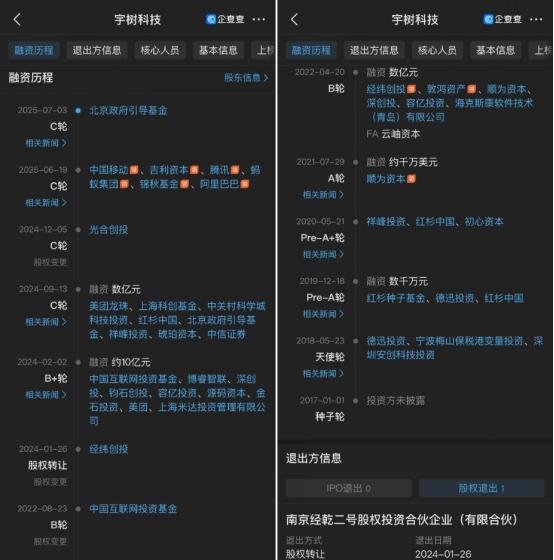
First of all, going public is Unitree's top priority. According to Qichacha, Unitree has completed its fourth round of Series C financing. The investors and their shares include state-owned assets such as the Beijing government-guided fund, China Mobile, and the Shanghai Science and Technology Innovation Fund, as well as Internet giants like Tencent, Alibaba, and Meituan, and veteran VCs like Sequoia Capital China. The end goal of financing is obviously an IPO, as investors need to see returns.
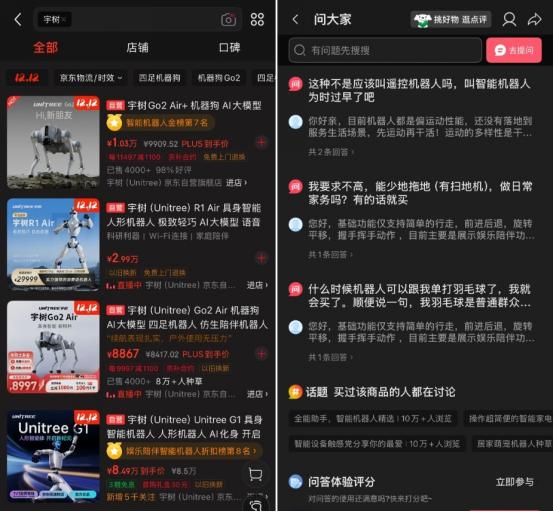
On the other hand, Unitree launched its R1 series of humanoid robots with the lowest price this year, starting at 29,900 yuan. It is widely considered in the industry to be a key move for the company to enter the consumer market. The robot is about 1.23 meters tall and weighs about 29 kilograms. Its relatively lightweight body is more suitable for the home environment and the early education market.
However, the sales of the R1 robot in the consumer market seem to be mediocre. On the official JD.com store page of Unitree, all 66 purchase reviews are from the G1 and G1 EDU versions. Instead, the long - launched Unitree Go2 series of robot dogs are more popular, with sales exceeding 4,000 units.
According to media reports, after the Unitree H1 appeared on the Spring Festival Gala, the Unitree G1 was launched for sale and was very popular in the rental market, even selling out. However, this rental boom quickly subsided after the "mystery" of humanoid robots was broken. The rental price dropped from 10,000 yuan per day at the beginning of the year to 2,000 - 3,000 yuan per day, which may have had a certain impact on Unitree's sales.
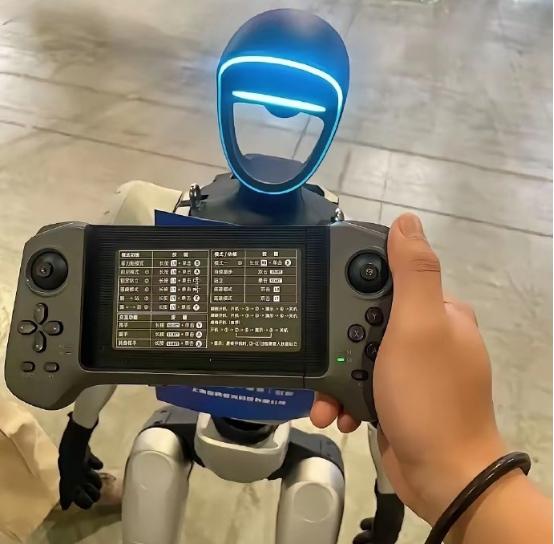
In addition, the G1 still needs to be operated with a remote control in the market. Short videos of it often falling have spread across the Internet, dispelling the mystery of Unitree in the eyes of the public.
Moreover, competitors such as Zhongqing, Songyan Power, and JoyIn Technology have successively launched new products this year. Among them, Songyan Power's Bumi is the first to bring the price of humanoid robots below 10,000 yuan, making it more acceptable to families than Unitree's R1.
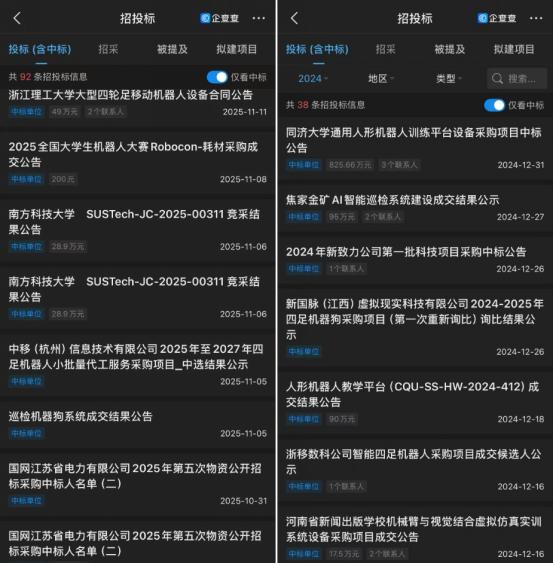
Of course, thanks to its leading position in the field of embodied intelligence in China, Unitree still has a large number of customers in the business - to - business (B2B) market, ensuring the company's income. From the bidding data on Qichacha, it can be seen that its robot dogs are widely used in power line inspection and other fields, while humanoid robots are commonly used in scientific research, and most of the purchasers are universities and research institutions.
Although Unitree has not disclosed its prospectus, according to incomplete statistics, there were 92 winning bid announcements in 2025 alone, 2.4 times that of 2024 (38). The amounts range from hundreds of thousands to millions of yuan, and the improvement in sales is very obvious. Although we cannot attribute all the growth to marketing activities such as the Spring Festival Gala, we also cannot ignore their role.
Generally speaking, after a company completes IPO counseling, it still needs to go through processes such as submitting an application, review and inquiry, passing the review, and registration and effectiveness, which usually takes 6 to 9 months. After registration is approved, the company can be listed on the stock exchange. If Unitree successfully bids for the Spring Festival Gala, whether as a sponsor or still in the form of a program, it will be helpful for both promoting sales and the IPO.
Frequent "failures" of humanoid robots: Investors pour cold water
At the same time when Unitree is spending hundreds of millions on marketing, on the other side of the ocean, there is a wave of doubts and discussions about the "fraud of humanoid robots". This time, the well - known Tesla humanoid robot Optimus has "failed".
The incident started with the strange behavior of Tesla Optimus at an event: A Tesla Optimus that was handing water to a guest suddenly raised its hands above its head, seemingly trying to remove a VR headset, and then lost its balance and fell to the ground. The video quickly spread and sparked a lot of online discussions, with most of them blaming Tesla's founder and CEO Elon Musk, saying that he "lied about the R & D level".
As a leading global humanoid robot company, Tesla has repeatedly released videos of Optimus operating independently without a remote control through the FSD large - model, moving freely, and even working in the factory. Elon Musk himself also retorted on social media when facing doubts from netizens, saying: "This is AI, not remote control." Obviously, this incident has shattered the myth of the leading position of American humanoid robots in the industry.
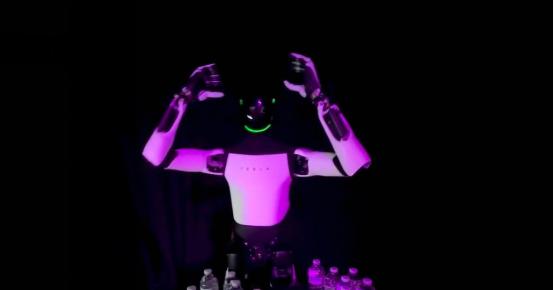
Tesla Optimus made a "headset - removing" gesture while handing water to a visitor.
Compared with Tesla, another American robot startup, 1X, is more down - to - earth. The company launched a household robot, Neo, this year, claiming to adopt a "human remote control + AI learning" mechanism. The robot can perform simple operations such as walking and talking, while complex actions need to be achieved through the "expert mode" of remote operation. Therefore, in addition to paying 20,000 US dollars (about 141,100 yuan) to purchase the robot, users also need to pay a monthly service fee of 499 US dollars (about 3,520 yuan).
Back to Unitree, Unitree's technical route has always been "emphasizing movement and de - emphasizing models". Wang Xingxing has also expressed this view on many public occasions. For example, at the 2025 World Robot Conference held in August this year, Wang Xingxing thought that the VLA model (Vision - Language - Action) was a "relatively stupid architecture" and said that he was "quite skeptical".
On the product page of the Unitree R1, it is marked that "move first, then work. The diversity of movement is a prerequisite for work", which also shows that humanoid robots are still far from being truly applicable in the work environment.
Therefore, Unitree's robots that need to be operated with a remote control have also been ridiculed on the Internet, such as "Buy one for families without the elderly to take care of", "Is this really an intelligent robot? Isn't it just a remote - controlled toy?" etc.
Behind the ridicule is actually the public's disgust with some opaque marketing in the humanoid robot industry. For example, in various videos of robots doing somersaults, dancing, or practicing kung fu, either engineers are operating them off - camera, or a single action algorithm is trained for months before the performance. What the public really expects is a robot that can walk, communicate, and even do simple housework on its own, rather than a remote - controlled toy.
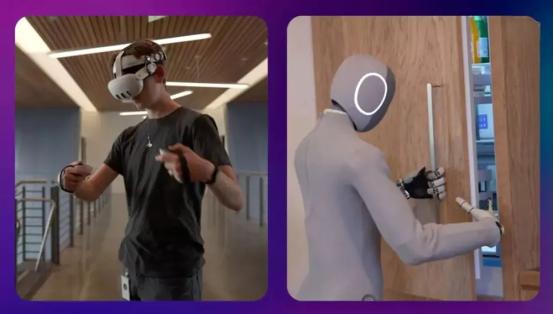
Regarding Unitree's future technology plan, based on Wang Xingxing's recent speech at the 2025 Tengchong Scientists Forum, it should be to continue to improve movement and at the same time add VR remote - control functions. "Maybe at next year's Tengchong Scientists Forum, I don't have to be present in person. I can send a robot to represent me." He said that he could remotely control the robot from Hangzhou and achieve interaction through synchronized movements and speech.
Looking back at the year 2025 for humanoid robots, it has gained the attention of consumers, the favor of capital, and initial commercialization. However, the doubts are no less than those about the "AI bubble", and have even triggered disputes among capital - market giants.
At the beginning of the year, Zhu Xiaohu of GSR Ventures said that he was not optimistic about the humanoid robot industry and was withdrawing in large numbers. At the end of the year, Cai Hongping of Hande Capital once again criticized the industry at the "Hexun Finance China 2025 Annual Conference", calling it "a big bubble and a false proposition."
Similar to Zhu Xiaohu's view, Cai Hongping believes that humanoid robots do not have the ability to act autonomously at present. He even said bluntly: "It's all a show now. They have no brains and are all remotely controlled. Why doesn't anyone expose this trick? I don't know if it's driven by business."
On the other hand, represented by Zhang Ying of Matrix Partners China, there is a view that the robot field is booming and full of vitality. It's normal to have some bubbles, and big companies will definitely emerge in the humanoid robot track. In fact, Matrix Partners China led Unitree's Series B financing in 2022. Currently, two of its affiliated institutions hold a total of 5.7312% of Unitree's shares, making it the fifth - largest shareholder. The "big company" Zhang Ying mentioned is obviously Unitree.
Perhaps just as AI still needs to overcome many difficulties to become AGI, the humanoid robot industry is also waiting for a real technological revolution.