Deep Intelligence Connect's real estate is AI-ready, and real estate intelligentization has entered the "delivery moment".
At the "2025 Global Developers Pioneer Summit (GDPS2025) · Real Estate Industry Artificial Intelligence Conference", Sun Xiaozhen, the National Managing Partner of Deloitte China's Digital and Intelligent Engineering Services, stated in his speech that currently, artificial intelligence has attracted a large amount of investment and is the most widely - concerned topic globally. On the other hand, there are also extensive discussions about whether artificial intelligence is a bubble. Deloitte conducts a quarterly survey on the actual implementation of AI applications among 2,400 global clients. From the actual situation, although some enterprises report that their investment in artificial intelligence has not yielded the expected returns, no enterprise has stopped its continuous investment in artificial intelligence due to this gap. Instead, they attach more importance to it. There are four key characteristics:
First, enterprises realize that the speed at which artificial intelligence impacts an enterprise is not determined by the pace of technological development. Although the development of artificial intelligence technology, large - model technology, and agent technology is extremely rapid, the speed of an enterprise's AI application depends on the speed of its own transformation.
Second, the core focus is on the key role of artificial intelligence in enterprises. In the early stage, enterprises would apply artificial intelligence in relatively easy - to - implement fields. However, to transform artificial intelligence into "AI +", the key lies in applying it to their core business.
Third, there is a general lack of awareness of the risk management of artificial intelligence. This is crucial for applying artificial intelligence within an enterprise and even across the business's upstream and downstream. When it is provided to consumers or partners, a comprehensive assessment and management of AI risks are of great significance.
Fourth, enterprises are facing a transformation in their roles. Not only will the composition of an enterprise's future human resources change, but more importantly, there will be changes among management. The attitude of management towards artificial intelligence determines the intensity and speed of AI development.
Sun Xiaozhen believes that for the real estate industry, the AI transformation of enterprises has not yet reached a mature stage. In the future, more enterprises need to implement AI applications in core areas. Currently, there are five major trends:
- In terms of technology selection, domestic real estate enterprises tend to prioritize localization and cost - effectiveness. There is no right or wrong here; it simply reflects the current situation.
- Currently, the most common application scenarios are in the marketing stage, where relatively obvious and direct value can be seen. In the engineering stage, most applications are for predictive maintenance, with opportunities mainly explored in safety and protection aspects.
- The deployment architecture is mainly private.
- Although agents are widely recognized, in terms of the depth of their application, they are still in the early stage. However, this does not mean that no enterprise has achieved in - depth application of agents. For example, Shendu Zhilian can generate a 30,000 - word report. The length of the report indicates that it involves multiple agents rather than just one, and requires significant collaboration.
- Data quality will become the biggest obstacle to the implementation of AI in the real estate industry. This is not only a challenge for individual enterprises but also a common issue that the entire real estate industry will face in the next one to two years.
During the development of artificial intelligence in the real estate industry in the future, these five trends may change, including the current deployment and scenario selection. Once the leading applications gain influence and a small number of excellent application cases emerge, they will have a very positive follow - up effect.
01
At the critical juncture of the industry's transformation from traditional development experience to the AI technology era, Shendu Zhilian officially launched the "Real Estate AI - Ready" strategy, systematically introducing the "AI - Exclusive Space" based on the "Four Core Libraries" and a complete product portfolio covering three types of business scenarios. For the first time, it presented a systematic solution of "1 exclusive space, 4 core capabilities, and 3 - layer application scenarios". This marks that the intelligentization process of the real estate industry has officially entered the "ready" stage of full - chain, systematic deployment and delivery from the scattered "tool - empowerment" stage. At the same time, it provides a feasible path for the intelligent upgrade of the real estate industry.
By building four core capabilities, namely data asset management, intelligent decision - making support, process automation, and knowledge intelligence, Shendu Zhilian helps enterprises achieve in - depth integration of AI in key areas such as marketing, engineering, and operation, promoting the industry's transformation from experience - driven to data - and - algorithm - driven, and accelerating the entry into a new stage of intelligent collaboration in the critical year of 2025.
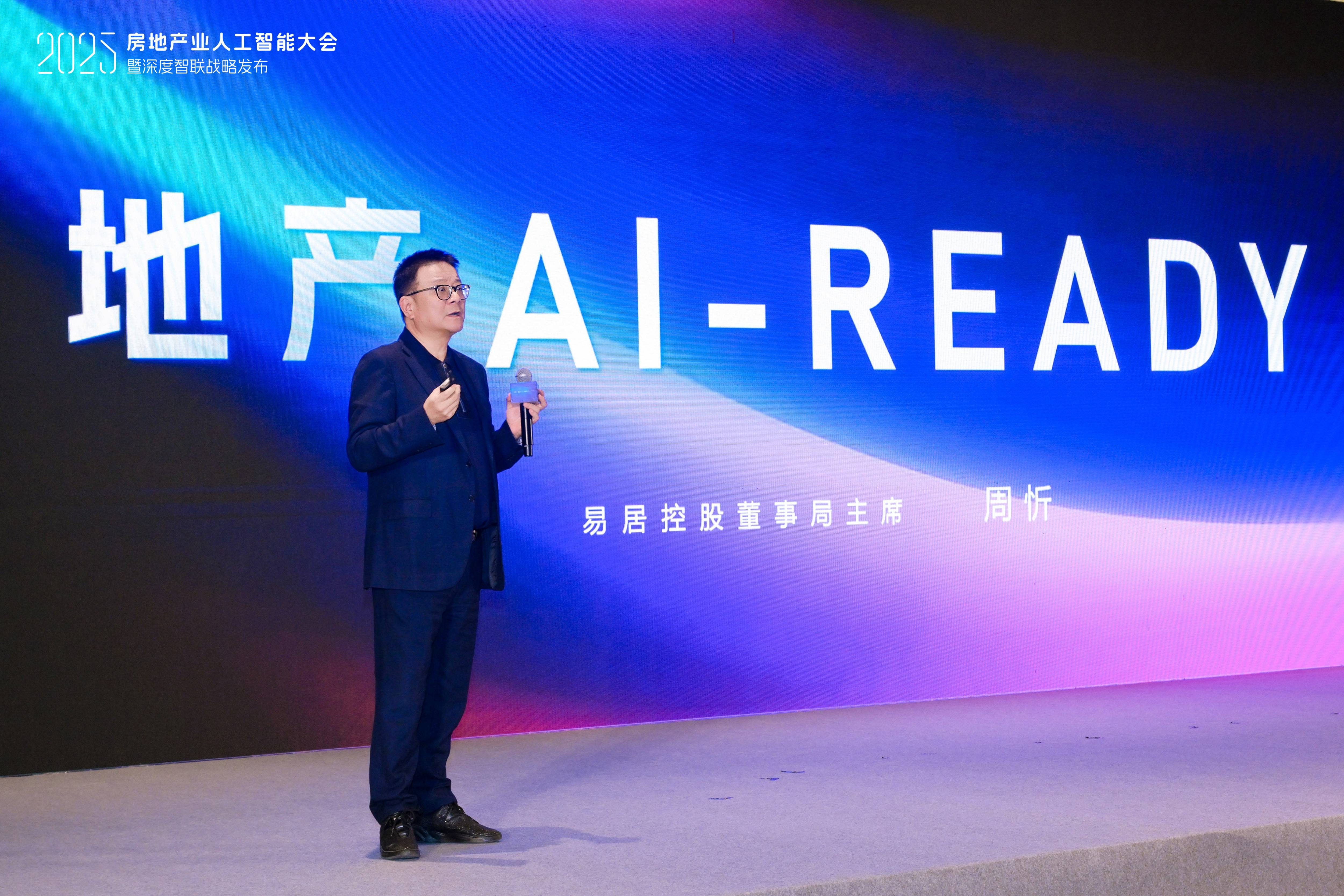
Shendu Zhilian officially launched the "Real Estate AI - Ready" strategy
Currently, Shendu Zhilian is aligning its product capabilities with the most realistic application scenarios in the industry and benchmarking them against the competency standards of mid - and high - level professional positions.
In a horizontal comparison with general and vertical AI platforms, Shendu Zhilian shows significant advantages in terms of knowledge depth, data breadth, policy coverage, and scenario - application capabilities in the real estate field. In a vertical comparison of job competencies, its core product portfolio generally reaches the level of mid - and high - level employees in the industry. Products like "CRIC • Decision - making Expert" can handle professional tasks of the complexity level equivalent to that of a director (L4).
Shendu Zhilian builds an exclusive AI space for the real estate industry with four core capabilities: the database, knowledge base, expert base, and engineering - capability base.
- Data moat: It systematically upgrades the massive and multi - dimensional data accumulated by CRIC over the past twenty years into a "systematically structured database" readable by AI large models, providing reliable "data fuel" for all intelligent decision - making.
- Knowledge moat: It transforms unstructured knowledge into a "martial - arts manual for the industry" that is traceable, verifiable, and inferable, ensuring that every output of AI is in the "professional language of real - estate people".
- Industry moat: This is the most breakthrough part. By encoding the thinking of experts into the model, it injects the thinking models and judgment logics of top experts into AI, achieving large - scale inheritance of professional wisdom and enabling AI to have expert - level business understanding.
- Technology moat: It ensures that the most cutting - edge AI capabilities, such as the Agentic architecture that emerged in April this year, are stably and efficiently integrated into specific products. It encapsulates the capabilities to bridge the "last mile" from the model to the scenario with AI - native capabilities.
02
Shendu Zhilian also unveiled a full - series of eight products covering three major application scenarios in the real estate industry, based on the AI - exclusive space. These include CRIC2025, which reconstructs the decision - making and consulting work model with AI, "CRIC • Digital Employees", which promotes the intelligentization of the talent structure in real - estate enterprises, and "CRIC • Good Housing Review Network", a new - type media platform that discovers and promotes high - quality Chinese houses with AI.
- From "providing data" to "delivering results", reconstructing the decision - making and consulting workflow
The AI - native real - estate investment decision - making platform CRIC2025, the Asia real - estate finance and RWA & REITs vertical AI investment - advisory platform DeepHouse, and the first vertical AI data - intelligent platform for the senior - care industry, Silver - haired Digital Intelligence, together form Shendu Zhilian's industry - intelligent decision - making application portfolio. They all share the same feature: changing the traditional "querying data + manual analysis" model. They enable users to obtain answers to both "data - related" and "knowledge - related" questions through natural conversations, and complete the complex task of delivering in - depth analysis reports by automatically planning workflows, independently invoking data and knowledge, and using intelligent agent tools.
- The man - machine collaboration revolution, reshaping the future organization
After a year of intensive training, Shendu Zhilian's first batch of real - estate "CRIC • Digital Employees" officially started work. They are: the "Decision - making Expert" who can help you complete tasks such as market analysis, strategic evaluation, and trend prediction; the "Private - domain Chief Editor" who can write marketing copy and professional articles; the "AI Sales Champion", a right - hand assistant for real - estate marketers; and the "Gold - medal Sales - site Team" rooted in new - house sales sites, capable of automatically completing multiple tasks such as market monitoring, customer reception, marketing decision - making, and private - domain promotion throughout the process. When these digital employees take up their posts, it also marks the formation of a new organizational form of efficient collaboration between "humans + digital employees" in the real - estate industry. In the future, the job positions, talent structure, and management models of real - estate enterprises will also change accordingly.
- Discovering and promoting high - quality Chinese houses with AI, and building real - estate brand assets in the GEO era
"CRIC • Good Housing Review Network" reconstructs the traditional property evaluation, search, and recommendation models with AI, enabling homebuyers to obtain one - stop professional and intelligent home - buying and house - selecting services through natural Q&A in various scenarios such as checking locations, reading reviews, and comparing lists. For real - estate enterprise marketing, effectively reaching home - buying users, customizing solutions to meet user needs, and establishing AI trust in the GEO era have become top priorities. Based on this, "CRIC • Good Housing Review Network" will become a new - type media platform to help real - estate enterprises build brand assets in the GEO era.
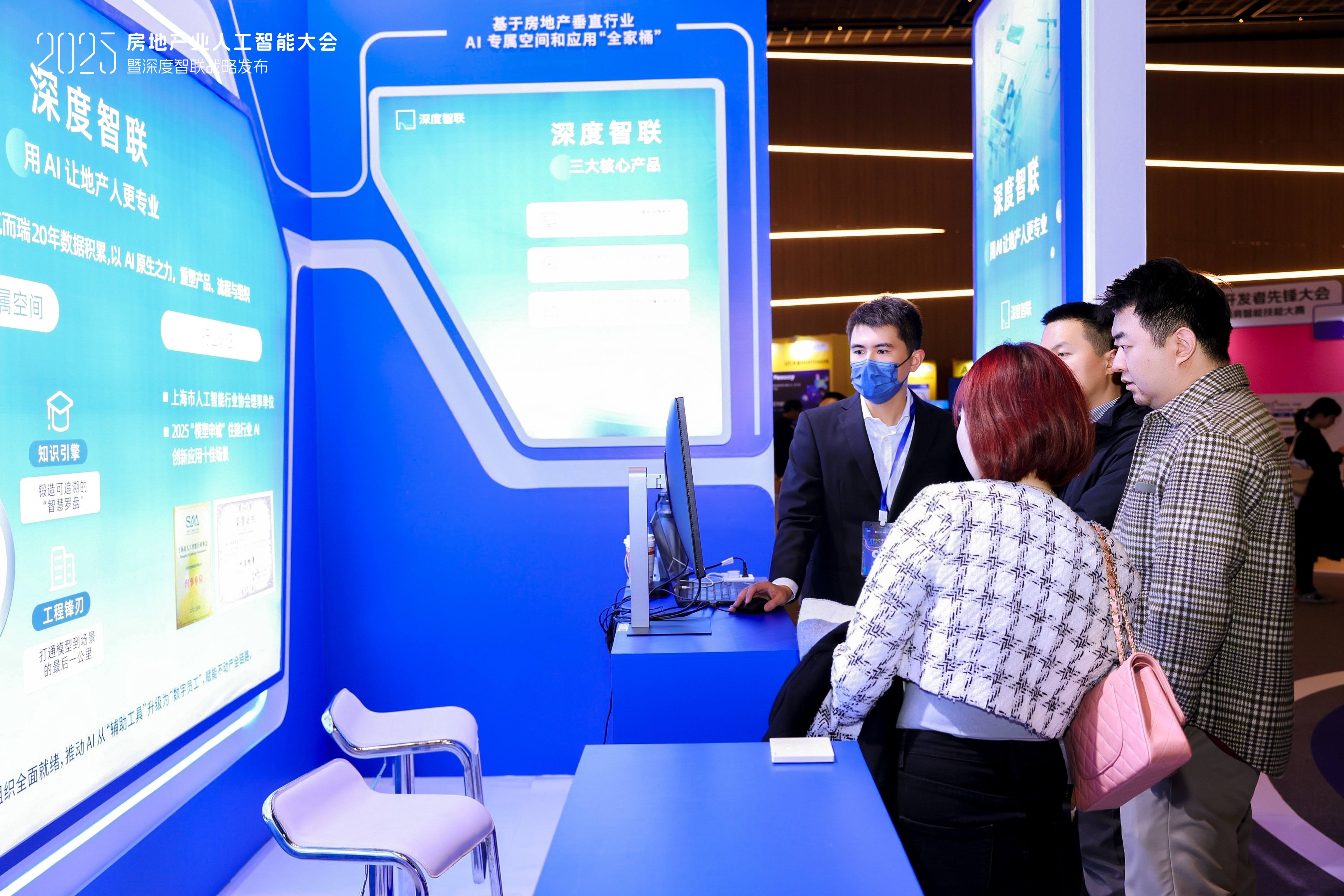
Shendu Zhilian
It is worth noting that at the morning's on - site AI tool practical workshop, the Shanghai real - estate marketing managers present jointly launched "CRIC • Good Housing Review Network". In just a few hours, evaluation reports were generated for 276 on - sale properties in Shanghai, and the "Good Housing Neighboring Champions List" and "Good Housing Multi - dimensional PK List" based on professional AI evaluations were also released.
Meanwhile, Shendu Zhilian released these lists at the conference and guaranteed to the entire industry and a large number of home - buying users that they will never be commercialized in the future.
Zhong Junhao, the Secretary - General of the Shanghai Artificial Intelligence Industry Association, said that the shift from discussions about "what AI can do" to the practice of "what AI is doing" has occurred faster than we expected. Not long ago, relevant tests on AI tools in the real - estate field were conducted within the industry. In some specific scenarios, their performance is even sufficient to partially replace existing professional positions. This is not an alarmist statement but a true reflection of the productivity leap brought about by technological progress. Today, existing industry players are already in the industrial end, having formed a complete commercial closed - loop for all industries, with positive cash flow and profits, which can sufficiently support continuous investment in current technologies. The real opportunity brought by artificial intelligence lies in the existing industrial end. Only when everyone embraces artificial intelligence technology can there be an overall take - off and transformation of technology. A new era is always achieved by the two - way interaction between technology and industry, and today we are standing at the intersection of this historical transformation.