Either take on DJI or go home: The Shenzhen derby of drones
This is Shenzhen, and this is hardware entrepreneurship. Insta360 chose a high - risk game, directly challenging the giant and initiating a full - scale war in terms of products, talents, marketing, and public opinion.
Go big or go home.
On the eve of the InstaA1 press conference, Liu Jingkang, the founder and CEO of Insta360, typed a paragraph of English on Weibo. Translated, it means: Either go all out or just quit.
Although Liu Jingkang didn't say it explicitly, those who understand know that what he meant by "going all out" is to take on DJI.
This is December 2025 in Shenzhen, and this "Shenzhen derby" is already full of hostility.
The Public Opinion War on the Surface
A hot air balloon rose to an altitude of 1,500 meters, and a Douyin blogger demonstrated the InstaA1 in the air.
On December 4th, Liu Jingkang chose the most high - profile way to launch Insta360's first global panoramic drone. With body - sensing remote control, VR headset, and panoramic view, the drone can fly wherever you look. He wants to redefine drones, just as Steve Jobs redefined mobile phones back then.
However, on the day after the press conference, Insta360's stock price plunged at the opening, with a decline of up to 8% at one point. The capital market poured cold water on it quickly and harshly. Third - party data monitoring showed that only 1,000 units of the InstaA1 were sold online within 16 hours of its release, far from the previously circulated target of "300,000 annual sales" on the supply - chain side.
Meanwhile, a large amount of self - media content highlighting the "poor sales" of Insta360's drones flooded the Internet. It seemed that overnight, the challenger's first expedition was about to be declared a failure.
In response, Liu Jingkang issued an internal letter to refute the rumors, saying that Insta360 had suffered "public opinion attacks" and that "the content of many articles did not conform to the facts" - implying that there were trolls or masterminds behind these articles. He also released the key data that the InstaA1 achieved sales of more than 30 million yuan within 48 hours of its release in the Chinese market to fight back.
In the internal letter, Liu Jingkang positioned Insta360 as a "young challenger company" and further pointed out that the "report card" of the InstaA1 was achieved under the "special attention" of certain industry giants. He divided this "attention" into two levels: one was the concentrated negative public opinion on the sales of the new product, and the other was the "exclusive" suppression in the supply - chain link.
Interestingly, at the InstaA1 press conference, Liu Jingkang also expressed his respect for the industry leader in the consumer - grade drone category (implicitly referring to DJI), acknowledging that it had laid the industry foundation for the birth of panoramic drones. He gracefully said that Insta360 might not be the one who "laughs last" in the panoramic drone industry, but the company had no regrets about getting involved in this category.
There was an indescribable emotion in these words. He didn't mention DJI at all, but every word pointed to DJI.

Liu Jingkang
In the past few years, Liu Jingkang often mentioned DJI. From "the greatest luck and misfortune are both because DJI is in the same field" to "Wang Tao (the founder of DJI) is awesome. Those who please themselves are invincible. I really respect him." These high - profile statements clearly aimed to shape Insta360 as "DJI's rival" and build momentum for panoramic drones.
Insta360's entry into the drone market was not a whim. As early as five years ago, Insta360 had secretly set its eyes on DJI. At that time, although Insta360 applied for several drone - related patents in a row, it tried to keep a low profile. They had to be low - key. Although Insta360 dominated the panoramic camera market, it was just a "small - scale player" in front of DJI.
In 2022, an interviewee received offers from both Insta360 and DJI. DJI's HR told the interviewee: We know about Insta360, but they are just small - scale players and can't be compared with DJI's large platform at all.
Finally, the interviewee didn't choose the "large platform" but the "small - scale player". The reason was simple. No matter how much salary DJI offered, Insta360 would always offer a little more. In addition, there were rumors that Insta360 was going to be listed at that time, and he thought there might be an opportunity for internal stock purchase, so he chose Insta360.
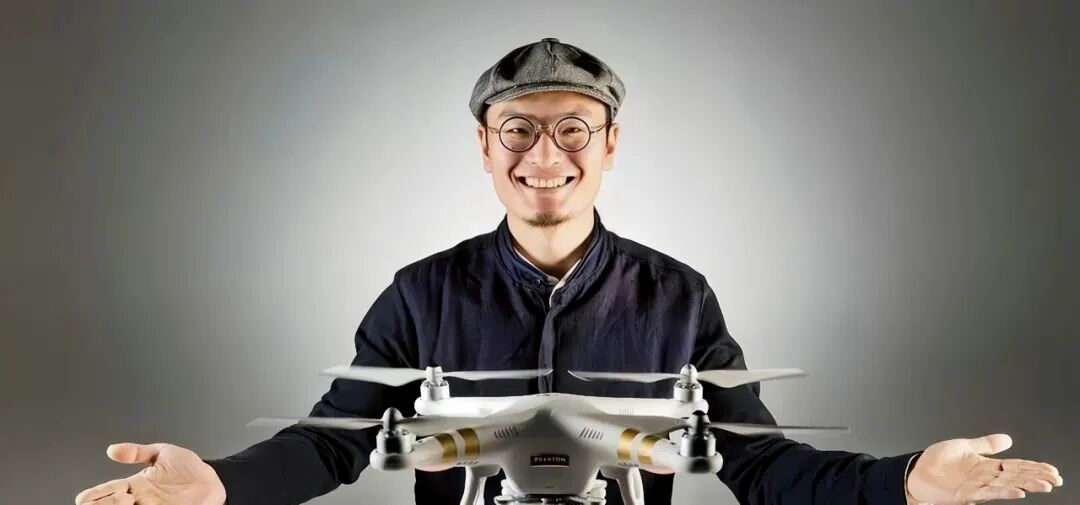
Wang Tao
Perhaps DJI didn't expect that the "small - scale player" Insta360 would become the most worrying enemy for Wang Tao in the future. Wang Tao's words back then came true: "We can't let competitors find a gap to make money. Once they have money, they will compete with you for talents, and that will be the biggest trouble."
Last year, Wang Tao was worried that once Insta360 went public and counter - attacked and succeeded in making drones, it would become a strong competitor for DJI. Now, Insta360 has gone public, and its first drone has been launched. Regardless of the sales data and product reputation, DJI has finally faced this strong competitor.
The Price War at Close Quarters
The headquarters of DJI and Insta360 in Shenzhen are only 13 kilometers apart. When an employee leaves DJI, Insta360's HR will be waiting downstairs. And those who leave Insta360 can reach DJI for an interview within half an hour by subway.
In the early years, Insta360's talent cultivation system was not yet mature, and it preferred to quickly build a team through social recruitment. It especially liked candidates with DJI backgrounds, and many members of its R & D team came from DJI. Insta360's talent - poaching strategy was simple and crude: refer to DJI's salary level and then add a little more. Some people who jumped to Insta360 found that the team was composed of the same people from DJI before. Some people who jumped to DJI also found many former colleagues from Insta360.
One company makes drones, and the other makes panoramic cameras. They had no intersection before. Why do they have to poach each other's talents? Perhaps it was because of a rumor: In 2022, Insta360 planned to research and develop drone technology and polish the prototype. The news spread quickly, so DJI also made a decision to launch a panoramic camera project.
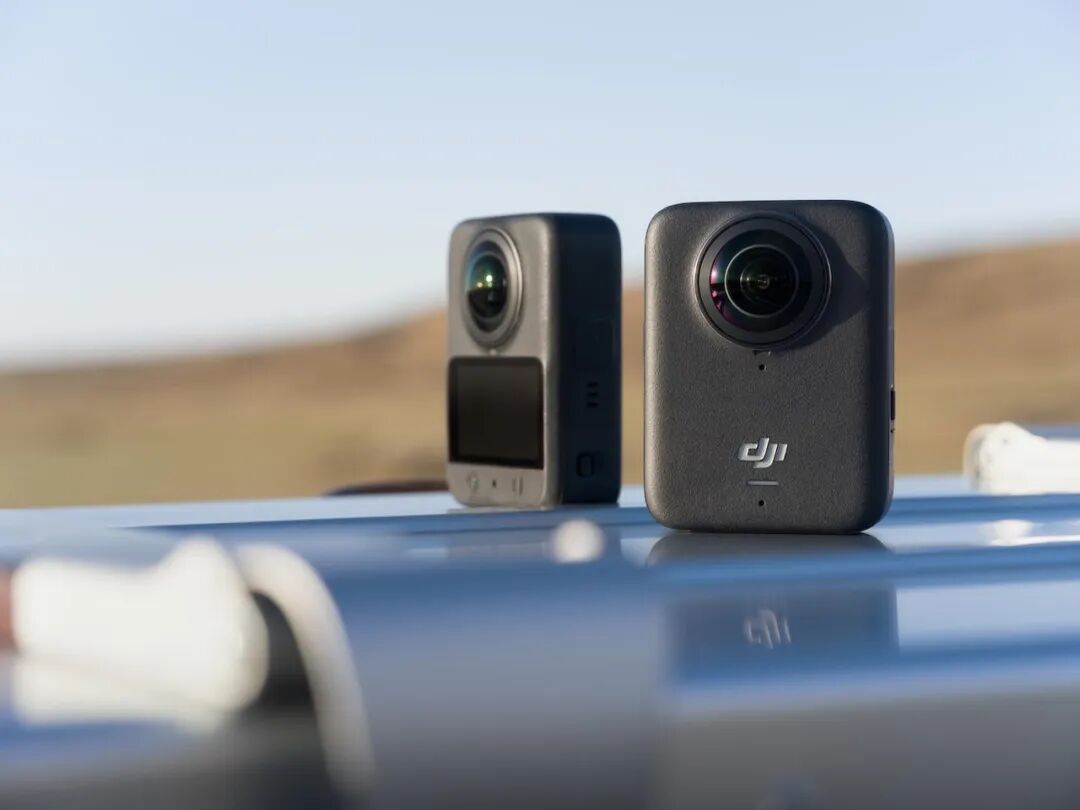
On July 23rd this year, Insta360 publicly announced its entry into the drone industry. The next day, DJI released a trailer, also publicly announcing that it was about to launch its first panoramic camera, the Osmo 360.
At the end of July, the Osmo 360 arrived as scheduled. Its performance parameters were fully comparable to Insta360's X5, but its price was 800 yuan lower than that of the X5. On the day of its release, the front - line sales staff of DJI had a unified sales pitch: Our product is comparable to Insta360's X5. In this way, the two sides were completely at odds.
For Insta360, the scary thing about DJI is that it can quickly replicate the brand influence and supply - chain efficiency accumulated in the drone field to the panoramic camera market, directly attacking Insta360's long - held dominant territory.
Facing DJI's sharp blade, Insta360 of course wouldn't sit idly by. Just one hour before the Osmo 360 press conference, Insta360 announced that the price of its flagship product, the X5, would be directly reduced by 500 yuan to fight closely with DJI.
The price war intensified. In September, DJI launched the Osmo Nano, which was comparable to Insta360's GO Ultra. After the national subsidy, its price was 900 yuan lower than that of the GO Ultra. At the end of October, just two days after Insta360 launched the new X4, DJI unveiled the omnidirectional obstacle - avoidance palm - sized drone Neo2, pre - empting the track that Insta360 planned to enter. To fight against DJI, during the Double 12 promotion, Insta360 directly lowered the price of the X4 in its flagship store to 2,998 yuan, determined to win at all costs.
Using low prices as a weapon, the Osmo 360 sold 290,000 units within just three months of its launch, raking in 860 million yuan in revenue. Insta360 was not to be outdone and responded with "more than 90% year - on - year revenue growth in the third quarter".
Liu Jingkang also came out to "save face": DJI's entry and the subsequent price war objectively promoted the expansion of the market. These words were decent but a bit sour. When the war reached its own backyard, decency was worthless.
After saying the polite words, he then engaged in opportunistic marketing. When users reported that the Osmo 360 had a lens fogging problem, he immediately came out to "clarify": "The fogging of DJI's product is just an isolated case. Please purchase with confidence." Later, when the Osmo 360 had a significant price adjustment, which dissatisfied early users, he posted on Weibo to "apologize", saying that it was because of Insta360 that DJI had lowered the price, and he was willing to provide Insta360 vouchers as compensation to users who felt "stabbed in the back" by DJI.
This series of reverse operations was, well, a bit abstract and hard to evaluate, but it was in line with Liu Jingkang's consistent style: risk - taking, high - profile, and not playing by the rules.
But as a "young chaser", like an ant trying to shake a big tree, he seemed to have no choice. Taking the revenue in 2024 as an example, DJI's revenue exceeded 80 billion yuan, while Insta360's was only 5.6 billion yuan, just a fraction of DJI's. So Liu Jingkang realized early on that a direct confrontation with DJI was inevitable, "but my original intention was that the later this confrontation came, the better."
Although he said so, the most effective method was still the old - fashioned one: poaching talents.
This year, two key DJI employees, Zhang Bo and Lin Dejun, jumped to Insta360 one after another. Among them, Zhang Bo had witnessed the whole process of DJI's reform of its agent system. DJI was generous and did not set non - compete agreements for core employees, so Zhang Bo directly copied DJI's model to Insta360 and comprehensively reformed Insta360's channel strategy.
So far, this same - city derby has evolved into an all - around competition involving products, prices, channels, talents, and public opinion. On one side, the giant is building defenses on multiple fronts. On the other side, the rookie is closely challenging with its products. The once - dull panoramic camera and drone markets have suddenly become lively.
Conflicting Data and the Off - line "Rashomon"
Before Insta360 officially launched its panoramic drone, the public opinion war between Insta360 and DJI had already started in advance.
Insta360's core strength lies in its absolute dominance in the panoramic imaging field. Data shows that in 2023, its global market share of panoramic cameras reached 67.2%, ranking first in the industry. By 2024, this share had further climbed to nearly 80%. In the action camera market, Insta360 ranked second globally, second only to the industry leader, GoPro.
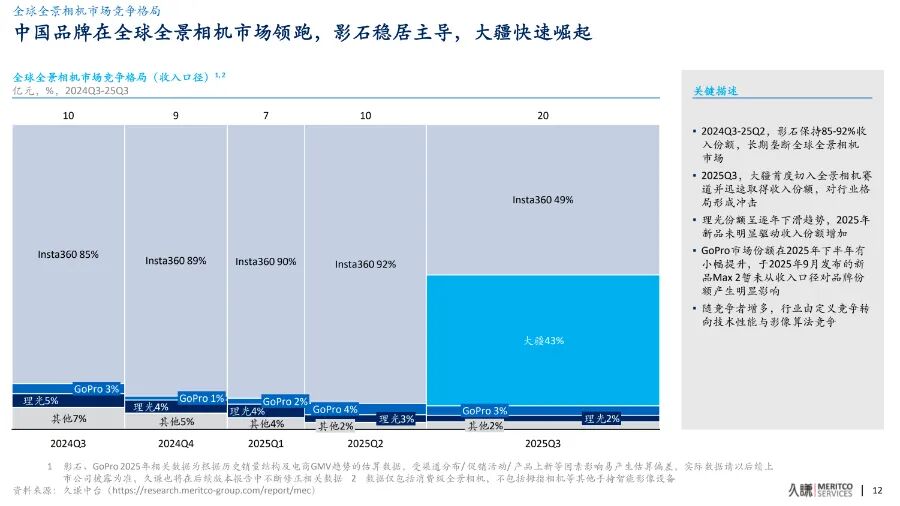
However, at the end of October this year, a report from Jiqian Consulting showed that just one quarter after DJI's panoramic camera was launched, its market share soared to 43%, approaching Insta360's 49%. In response, Insta360 directly "lashed out" at the earnings conference, questioning the accuracy and authority of this data. Meanwhile, a report from Sullivan claimed that Insta360 still held an absolute share of 86.7%. More intriguingly, this report was taken down twice after its release, adding more doubts.
In the consulting industry, conflicting data is not strange, but such a huge difference in conclusions, almost diametrically opposed, is really outrageous. This also means that the war between the two companies has spread from the product and marketing battlefields to the competition for third - party data and industry discourse power.
While the market data was still in a tug - of - war, there was another "Rashomon" off - line. Last month, the signboard of an Insta360 store in Changsha was removed overnight. Insta360's sales manager publicly stated that the company would bear all the losses, implying that it had suffered a "choose - one - between - two" situation from DJI, and the public opinion quickly fermented. Then, a "Situation Explanation" circulated online, saying that the removal was done by the store owner himself after illegal decoration, and there was no so - called "forced removal" or "brand persecution".
The removal and the explanation made it difficult to distinguish the truth, but it completely put the off - line channel war between Insta360 and DJI on the table.
On the day when Jiqian Consulting released that report, Liu Jingkang angrily posted on his WeChat Moments: "Wang Tao is awesome. Those who please themselves are invincible. I really respect him." He also said in the reply that DJI was "the only king in the consumer electronics field that can achieve a monopoly".
