Everyone is eyeing DJI's market share.
At the end of October, DJI Pocket 3, known as the "electronic Moutai" in the industry, unexpectedly cut its price by 900 yuan. While consumers were in an uproar, Insta360 quickly issued an "apology", claiming that DJI's price - cut was due to the overwhelming strength of its own products and took full responsibility for the incident. Subsequently, it offered a 100 - yuan no - threshold voucher, an obvious act of provocation.
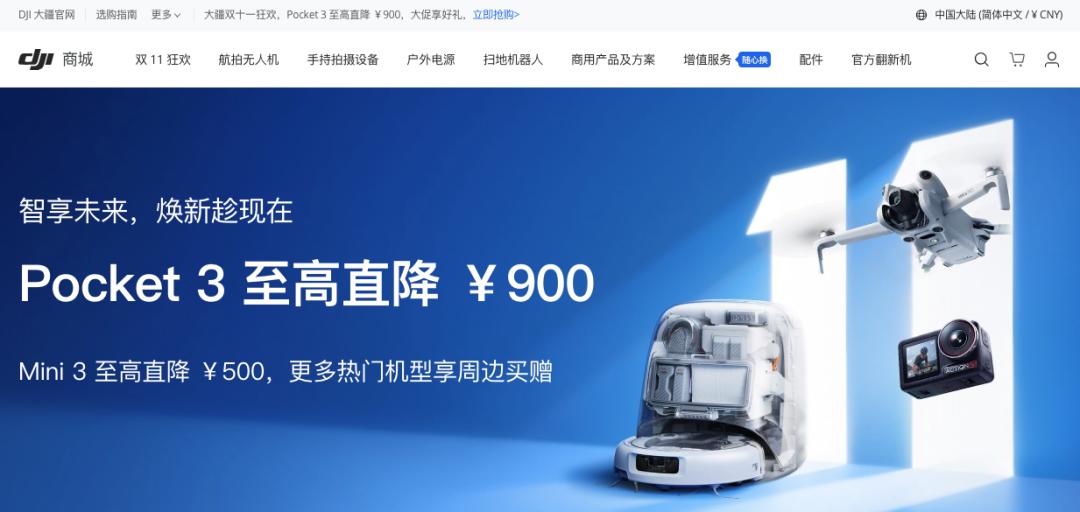
DJI officially announced the price cut of Pocket 3
Although both companies produce handheld imaging devices, their products have different functional focuses and have long coexisted without interfering with each other.
In July this year, DJI launched the panoramic action camera Osmo 360, directly targeting Insta360's core product line. In response, Insta360 launched its drone brand Antigravity, aiming to fight back. This led to a series of verbal confrontations.
DJI's Pocket 3 and Osmo 360 and Insta360's Insta360 Ace Pro all belong to the category of "handheld imaging devices", which have become popular new toys in the consumer electronics market in the past two years. They are mainly designed for handheld shooting scenarios, featuring portability and stable shooting.
These are typical niche products for niche scenarios, yet they have caught the public's attention from the capital market. The reason is simple: the consumer electronics market has been stagnant in recent years.
In the traditional market, the growth of the three major categories - mobile phones, tablets, and PCs - has stalled for years. One brand after another has given up the fight. In the emerging market, even Apple has failed to boost the VR/AR headset market, and AI glasses are still in the stage of wild claims.
Only handheld imaging devices such as action cameras and gimbal cameras are among the few categories with relatively significant growth.
However, as the latest institutional report announced that DJI's action camera has taken the top spot globally, this not - so - large market has attracted more attention. Before the price cut of Pocket 3, OPPO and vivo, two mobile phone brands, had informally announced that they would launch similar competing products.
As the saying goes, "The mantis catches the cicada, unaware of the oriole behind." After smartphones dominated the market and DSLR cameras declined steadily, the imaging device market has finally become lively again.
DJI is an imaging company
The technological origin of gimbal cameras represented by Pocket 3 is actually drones.
In the early 2010s, American advertisers began using drones to shoot advertisements. At that time, drones did not come with cameras and had to be purchased separately and modified before use.
DJI developed a detachable interface for drones, enabling cameras to be plug - and - play. The first - generation product Phantom was compatible with GoPro's HERO 3, significantly lowering the threshold for aerial photography. In this process, DJI solved a major problem - image stabilization.
Drones rely on gimbals to solve the problem of image shaking. DJI developed the brushless motor direct - drive gimbal control technology and launched a dedicated gimbal product line - Zenmuse. Before collaborating with GoPro, DJI introduced the world's first high - precision civilian gimbal, the Z15.
Using the gimbal as a stepping - stone, in 2012, the Phantom 1 with a dedicated detachable interface for GoPro was launched. With the selling point of "ready to fly within an hour of unpacking" and a price of $679, it quickly captured the non - professional drone market.
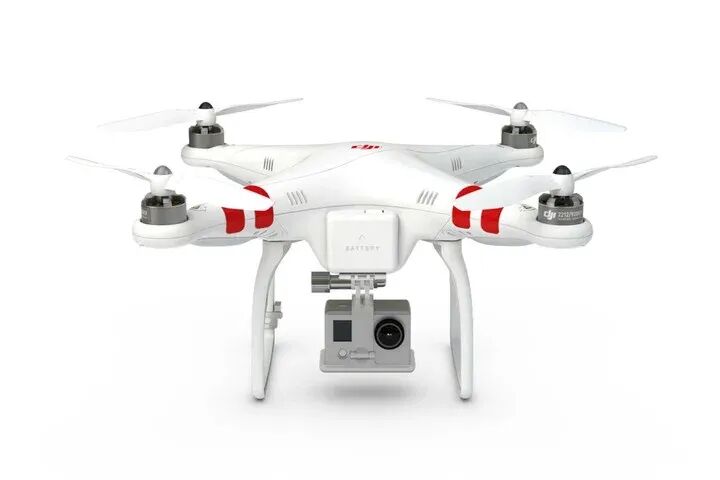
Phantom 1 equipped with GoPro HERO
In 2014, DJI's drone sales exceeded 400,000 units, and GoPro's Hero 3 became the company's best - selling product with 2.5 million units sold, which directly led to GoPro's IPO.
After tasting success, DJI hoped to integrate GoPro cameras into the next - generation Phantom for sale. However, GoPro made excessive demands on profit distribution, ruining the cooperation. This led DJI to start its own imaging system R & D project.
Considering GoPro's poor performance in the drone market, betraying its partner was clearly a bad move. It also shows that the huge commercial value of drones actually comes from the "imaging" scenario.
In the consumer market, there is not much demand for pure drone flight. Instead, the demand for "aerial photography" has greatly enhanced the commercial value of drone technology. DJI is a drone company, but also an imaging company.
In 2015, the Phantom 2 Vision integrated with DJI's imaging system was launched. In the same year, DJI invested in the high - end camera brand Hasselblad and became the controlling shareholder in 2017.
At that time, traditional camera brands were struggling against smartphones. They still had some brand influence, but their business was deteriorating. Although Hasselblad was on the verge of bankruptcy, its reputation and technical assets were still valuable, making it a good deal for DJI.
In 2016, DJI launched the 4K foldable drone Mavic Pro, which became an instant hit and gained wide popularity. With this product that features high - definition, stability, and portability, DJI established three major technical routes for its imaging devices: imaging technology, gimbal technology, and miniaturization technology.
If we consider cameras, smartphones, and drones as "imaging devices", we will find that in the process of smartphones dominating the imaging market, drones are one of the few categories still growing rapidly.
In 2018, DJI launched the first - generation Pocket gimbal camera, which pointed the way for the struggling imaging device market.
Finding a niche market
Despite the irreplaceable advantages of cameras in the professional field, the fact remains that the photography market is dominated by mobile phones. The global digital camera shipments peaked in 2010 and have been declining ever since. In the past decade, the camera market has shrunk by over 90%.
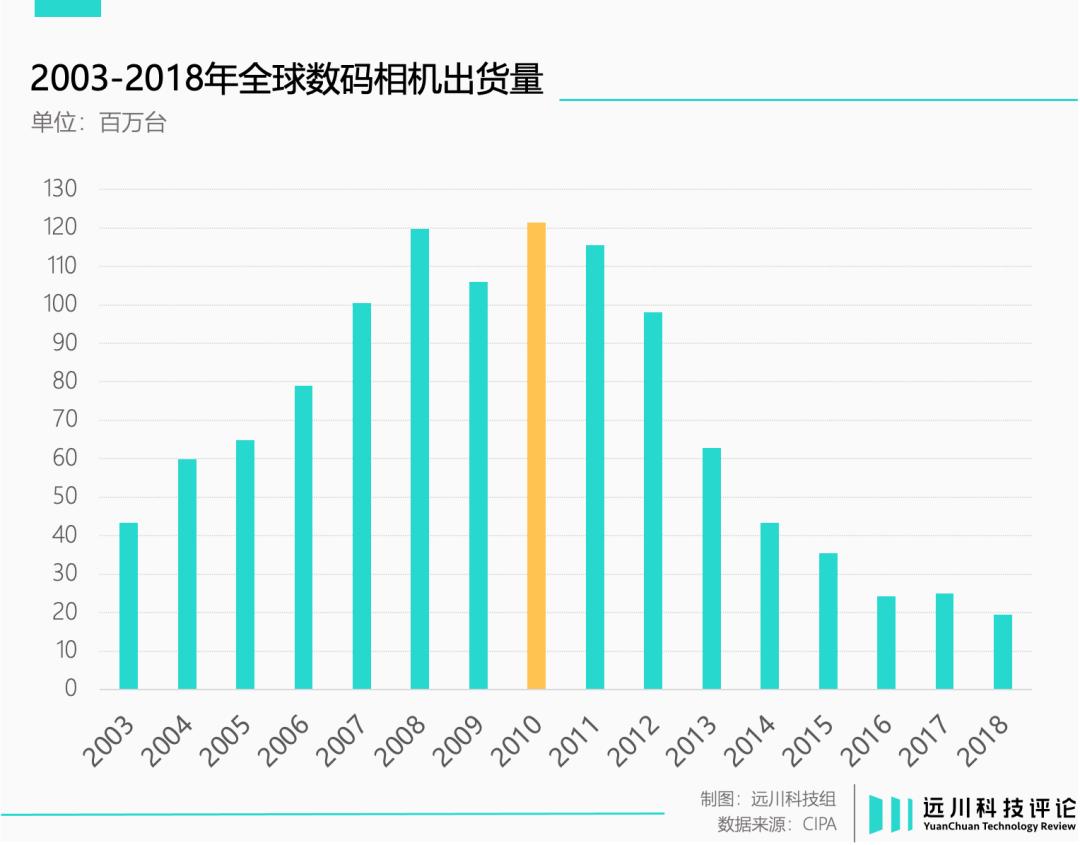
Facing the mobile phone market with an annual shipment of over 1 billion units, imaging devices aiming to "replace mobile phones" have all faded into obscurity after a short period of popularity.
The most typical example is Casio's "selfie stick". When the imaging modules of mobile phones were generally of low quality, Casio's TR600 had a competitive edge with its beauty - enhancement function and flip screen designed for selfies. However, as the imaging parameters of mobile phones improved and software algorithms were integrated, the selfie stick lost its uniqueness.
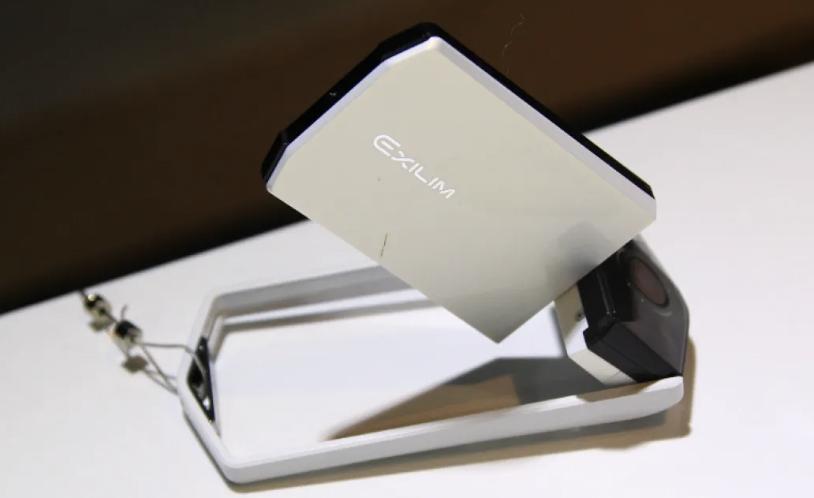
Casio TR600
Another approach is to "be compatible with mobile phones". Drones, gimbal cameras, and action cameras with good growth fall into this category.
Insta360's first product, Insta360 Nano, is a genuine "peripheral". It is compatible with iPhones via the Lightning interface and can be used plug - and - play, thus defining the panoramic camera category.
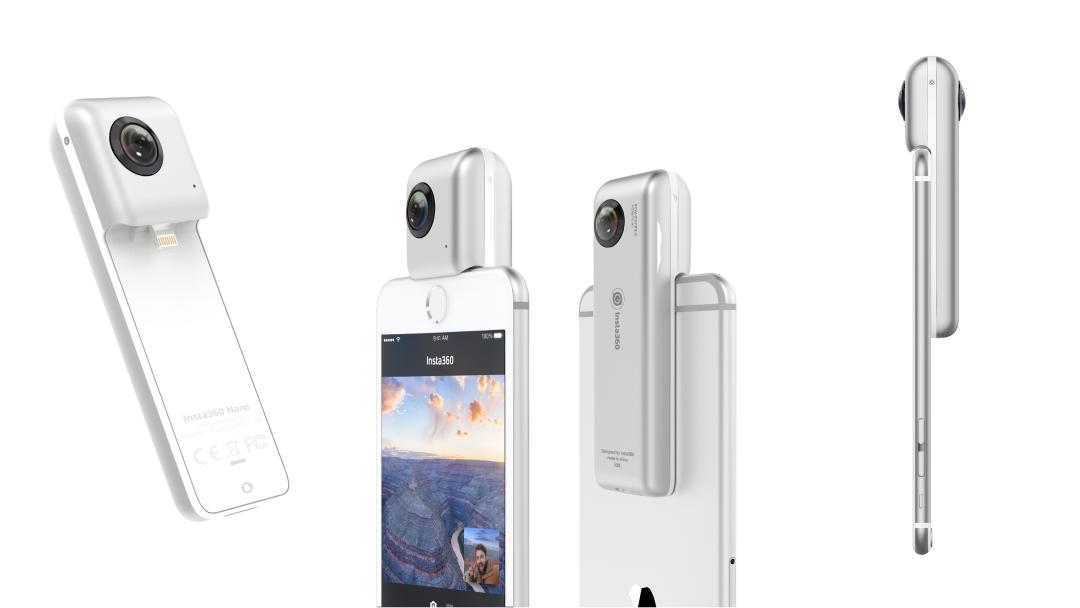
Insta360 Nano can be used plug - and - play on iPhones
Although the DJI Pocket series can shoot independently without a mobile phone, it still needs to be connected to a mobile phone for advanced operations such as exporting materials, post - production editing, and sharing on social media. DJI has also developed a dedicated mobile app.
Therefore, the survival rules for imaging devices in the smartphone era lie in two key points: first, differentiate from mobile phone photography in functional scenarios; second, accumulate technical capabilities different from those of mobile phones based on functional scenarios.
The first point is easy to understand. The key to GoPro's success was its waterproof feature, allowing users to shoot videos while surfing. Although mobile phones now have waterproof functions, as soon as water gets in, the Genius at the Genius Bar will tell you that an iPhone is only splash - proof.
The second point is crucial. If the core technology overlaps with that of mobile phones, imaging device companies' R & D investment is difficult to compete with that of mobile phone companies, resulting in a lack of technological differentiation. The once - popular Meitu mobile phone, which focused on beauty - enhancement functions, had highly similar hardware and software to ordinary mobile phones and failed to form a competitive edge.
In contrast, panoramic shooting has strict requirements for cameras. Given the limited internal space of mobile phones, it is difficult to achieve with current integration technology. This has allowed panoramic cameras to carve out a niche in the mobile phone market.
With the popularity of short videos/vlogs and social media, the market for dedicated photography devices has expanded again. DJI Pocket 3, equipped with a three - axis gimbal for professional image stabilization, has successfully broken into the mainstream market.
Seeing the market's enthusiasm for Pocket 3, mobile phone brands next door have all had the illusion that they can do the same.
We can do it too
Around 2018, the global smartphone sales growth stalled, and the market shifted to a stock - based competition. Mobile phone brands have mainly adopted two strategies in recent years: first, move upmarket to increase revenue per unit; second, explore new business areas.
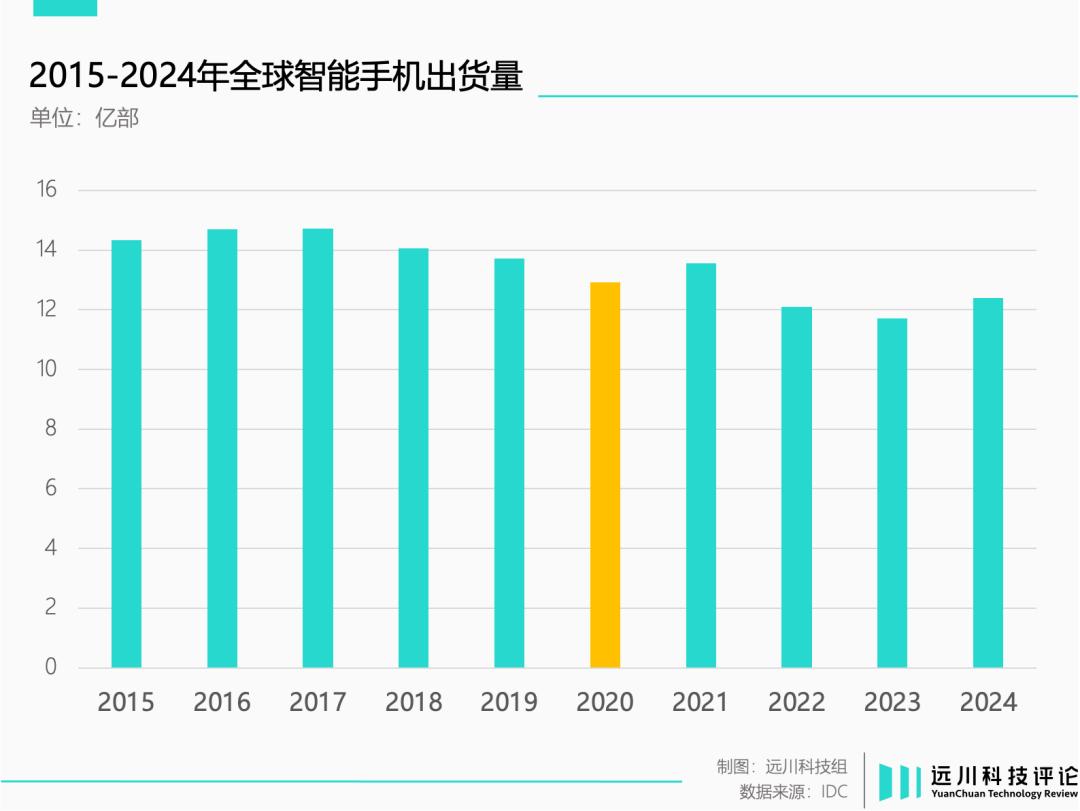
In 2019, OPPO launched a series of "mobile phone by - products" such as smart earphones and AR glasses, and also entered the TV and tablet markets. Vivo has a similar strategy, with its latest product being the vivo Vision, competing with Apple's Vision Pro. Xiaomi started early and is determined, with its AIoT business reaching a scale of tens of billions of yuan.
For mobile phone brands, the handheld imaging market, although not large, has a high overlap with their main business.
From the perspective of technological accumulation, on the one hand, thanks to the years of development by DJI and Insta360, the relevant upstream and downstream supply chains are highly mature. It would be a shame for Huaqiangbei if an order placed in the morning isn't delivered by evening.
On the other hand, the components of handheld imaging devices, such as image sensors, lenses, and chips, are highly similar to those of mobile phones. Moreover, "imaging" has been the area with the largest R & D investment and the most intense competition among mobile phone brands in the past decade. The technological accumulation of mobile phone brands in imaging algorithms and hardware customization can be easily reused.
The same logic applies to DJI's entry into the sweeping robot market. Since it has developed in - vehicle assisted driving technology, making sweeping robots is a piece of cake.
Mobile phone brands actually need to face two problems:
First, the core image stabilization technology. For example, DJI's gimbal, Insta360's FlowState, and GoPro's HyperSmooth have all gone through years of technological iteration and market verification. If there were no high - enough technological barriers, there would be more players in the market.
Second, the ability to optimize algorithms. For example, panoramic cameras need algorithms to stitch the images from different lenses into a single picture in real - time. Achieving a natural stitch requires real - world data and engineering experience.
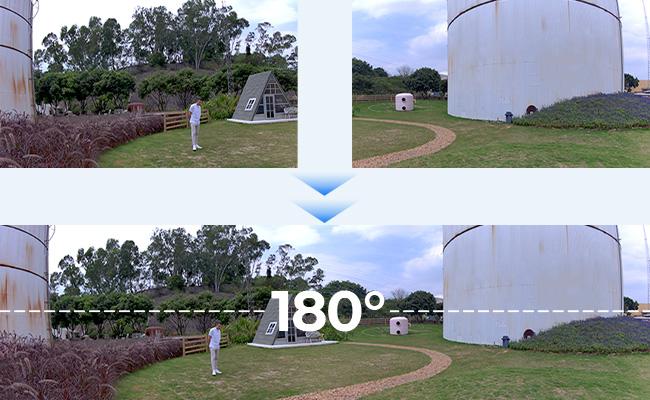
Panoramic cameras stitch the images from two lenses into a single picture; Image source: Reolink
According to Frost & Sullivan's estimate, as of 2024, the global market for handheld intelligent imaging devices has barely exceeded $6 billion, which is only about 3% of Apple's annual iPhone sales ($201.2 billion). That is to say, for OPPO and vivo, which have annual revenues in the tens of billions, this market may not seem very attractive in theory.
However, considering that mobile phone manufacturers have been struggling in the stagnant mobile phone market for years, the sudden growth of the handheld imaging device market with high profit margins is like a hungry cheetah spotting a lone antelope.
While other brands are preparing for battle, Apple has maintained strong strategic determination.
In 2018, when Insta360 launched the Insta360 One, Apple immediately introduced it into its retail stores and online mall, listing it under the "iPhone accessories" category.
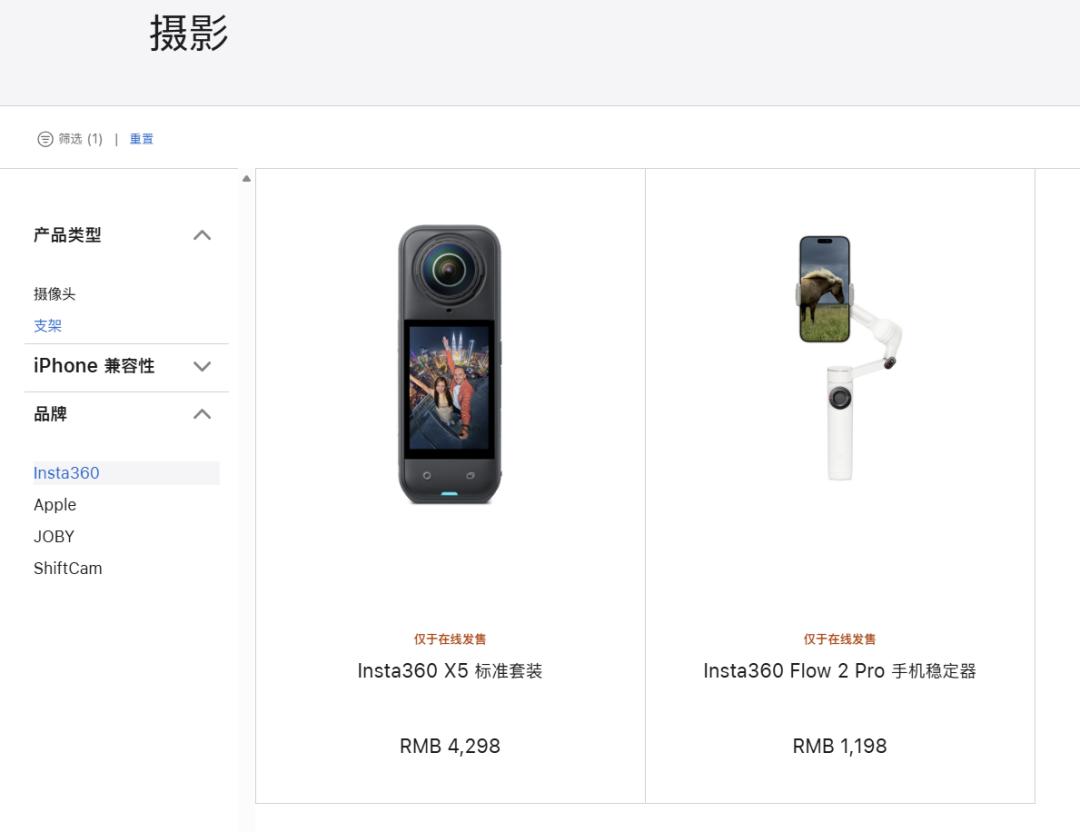
Apple probably didn't expect that this market, once considered a "peripheral", would become a new battlefield for its competitors a few years later.
References
[1] Huawei Pura Series: A Decade - long Journey and Technological Leap in Mobile Imaging, Xinhua Net
[2] Global White Paper on the Development of the Intelligent Handheld Imaging Device Market (August 2024), Frost & Sullivan
[3] The Imaging Era of "Made in China", Mingze Capital
[4] The Biography of Wang Tao of DJI Drones: Daring to Be Excellent - From Grassroots Manufacturing to Global Success, Zhao Rui
[5] DJI: Taking GoPro's Route and Leaving GoPro Nowhere to Go