50 kilometers: The distance from Silicon Valley to AGI
On the north-south central axis of Silicon Valley in California, USA, a "tech corridor" running through the core of Silicon Valley is quietly influencing the "competition" landscape of the entire AI era.
Starting from Santa Clara, passing through Mountain View, Palo Alto, and Menlo Park, and heading north all the way to San Francisco, this route is about 50 - 60 kilometers (30 - 37 miles) long.
Along this route, the world's most substantial capital converges and collides with the most top - notch wisdom, and trillions of dollars are invested like bets. Everyone is vying for the same goal - Artificial General Intelligence (AGI).
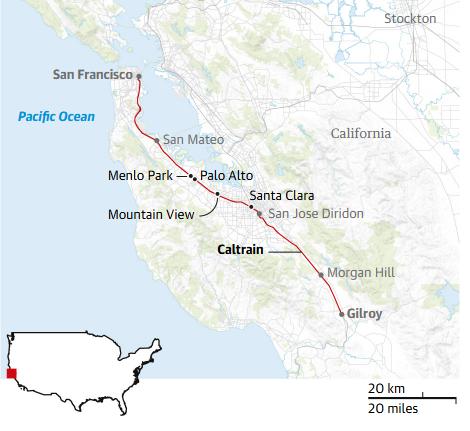
Image: Map of the Silicon Valley commuter train route, passing through cities such as Santa Clara, Mountain View, Palo Alto, Menlo Park, and San Francisco along the way
Capital, ambition, and young geniuses are surging forward along this corridor at an unprecedented speed. The key players, astonishing investments, potential risks behind this high - stakes gamble, and those profound questions that have to be faced are all scattered at each stop along this train route.
Silicon Valley Train: The Frontline to AGI
Every morning, the trains passing through Silicon Valley are crowded with young people buried in their laptops. They wear headphones and keep tapping on the keyboards. On most of these young people's computer screens, various work messages are blinking. No one appreciates the scenery outside the window. These commuters are rushing to the frontline of the global competition for Artificial General Intelligence (AGI).
A fierce competition among technology giants is taking place in Silicon Valley. This competition, aiming to master a technology that may reshape the world, is driven by the most powerful capital forces in the United States, and trillions of dollars have been wagered.
Along this Caltrain route, a panoramic view of the AGI competition unfolds, such as:
- Those who get off at the Santa Clara station head towards the headquarters of the chip giant NVIDIA;
- Those who get off at the Mountain View station rush to Google DeepMind;
- Those who get off at the Palo Alto station enter Stanford University, a cradle of talent;
- Those who get off at the Menlo Park station enter Meta - Mark Zuckerberg is recruiting AI experts with an average salary package of about $200 million per person to build his vision of "superintelligence";
- Those who get off at the San Francisco station head towards OpenAI and Anthropic. The combined valuation of these two AI startups has exceeded $500 billion - provided that the widely predicted AI bubble has not burst.
Why does the current competition feel so urgent and crazy?
This is a fierce competition driven by the strongest capital forces in the United States. Trillions of dollars have been wagered, aiming to master a technology that may reshape the world.
Dario Amodei, co - founder of Anthropic, predicts that AGI may be achieved in 2026 or 2027. Sam Altman, CEO of OpenAI, believes that the progress is too fast, and soon an AI that can replace him as CEO may be created.
Madhavi Sevak, an executive at Google DeepMind, said: "Everyone is always working, with extremely high intensity. There seems to be no natural stopping point, and everyone is actually a bit overdrawn. I haven't seen anyone change their lifestyle. No one takes a vacation. People don't have time for friends, hobbies, or the people they love."
These companies are competing to shape, control, and profit from AGI. Amodei describes it as a "nation of geniuses in the data center." They are accelerating towards a technology that could theoretically replace millions of white - collar jobs and pose serious risks in the fields of biological weapons and cyber security.
On the other hand, this technology may also open a new era of abundance, health, and prosperity. No one can be sure of the outcome, but the answer may be revealed soon. Currently, this uncertainty both drives and unsettles the Bay Area.
Behind all this is the large - scale investment of Silicon Valley venture capital. Related investments have more than doubled in the past year, which has sparked discussions about a dangerous bubble. Wall Street investment bank Citigroup raised its forecast for AI data center spending before 2030 to $2.8 trillion in September - more than the annual economic output of any country such as Canada, Italy, or Brazil.
However, amidst all the money and optimism, there are other voices that are not convinced. As Alex Hanna, co - author of "The AI Delusion," said: "Every time we reach the peak of 'Bullshit Mountain' (referring to the AI bubble and hype in this article), we find that worse is yet to come."
First Stop: Santa Clara, the 'Computing Power Heart' of the AI Era
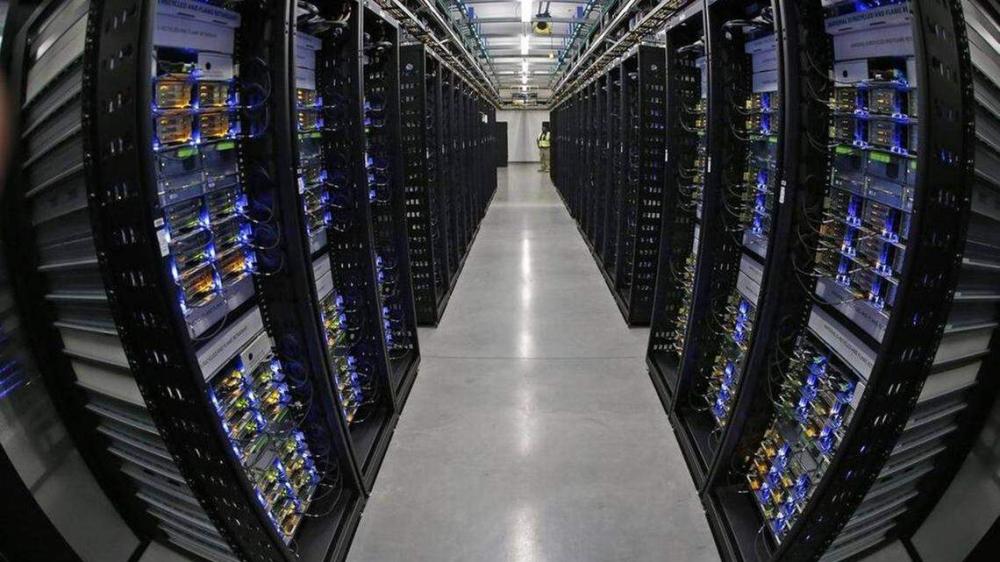
Image: Meta's data center in Texas
In an industrial building in Santa Clara, at the southernmost end of the Caltrain route, the racks of microprocessors enclosed in black steel cages are making a deafening roar.
This roar allows people to feel the brute force on which the development of AI technology depends deep in their skulls: just being exposed to it for five minutes will cause tinnitus to last for hours. The sound comes from the air - cooling systems that are cooling the sophisticated supercomputers rented to AI companies - these machines train models and process billions of queries every day.
This is the location of NVIDIA's headquarters. As the "arms supplier" of this AI revolution, NVIDIA's market value has soared 30 times since 2020, reaching $4.3 trillion. Near Santa Clara, AI data centers operated by giants such as Amazon, Google, Meta, and Microsoft are dotted everywhere.
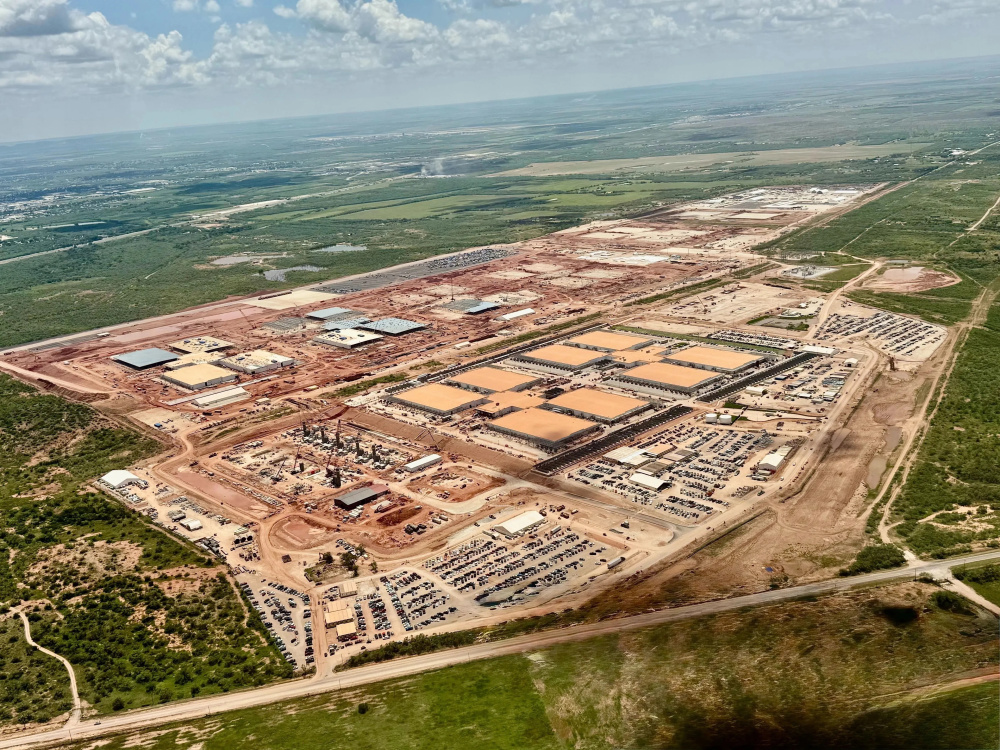
Image: The Stargate data center in Abilene, Texas, USA
This is just the tip of the iceberg. Meta is building a giant facility in Louisiana that can cover most of Manhattan; OpenAI is advancing a super - large - scale computing power project codenamed "Stargate" in Texas, with a total investment expected to reach up to $500 billion.
This boom in data center construction is sweeping the world. From China, India to Europe, larger - scale facilities are being continuously built. Google plans to invest $6 billion in building data centers in India and £1 billion in building new facilities in northern London, UK. And the next frontier is to send data centers into space.
Second Stop: Mountain View, the 'Thinking Center' of the AI Competition
Traveling north from Santa Clara to Mountain View, the environment gradually becomes quiet. The computer scientists working here are in a relatively peaceful working environment.

Image: Mountain View Station
The US headquarters of Google DeepMind is located here. Employees commute by Google's AI - driven Waymo self - driving taxis or bicycles provided by the company.
As one of the leading AI companies in the United States, Google DeepMind is both an explorer of the technological frontier and a thinker of industry rules. However, it is facing increasingly fierce competition: it has become normal for young AI experts to receive high salaries, and emerging competitors such as Elon Musk's xAI, Mark Zuckerberg's superintelligence project, and China's DeepSeek are constantly emerging.
Here, scientists and research experts are thinking not only about 'how to develop AI tools faster' but also about 'how to prevent them from getting out of control'.
In the spring of 2025, 30 core researchers at Google DeepMind publicly pointed out that AGI poses a risk of "causing serious harm to humans." In September, the company further discussed how to deal with AI models that "could be misused to systematically change people's beliefs and behaviors." Tom Lu, vice - president of Google and head of policy and security, admitted that the core challenge of the current work lies in "striking a balance between pursuing the speed of innovation and ensuring the safety and compliance of technology."
This growing awareness of the potential impact of AGI, however, the attitude of "accelerating while stepping on the brakes" also reflects the dilemma of the entire industry.
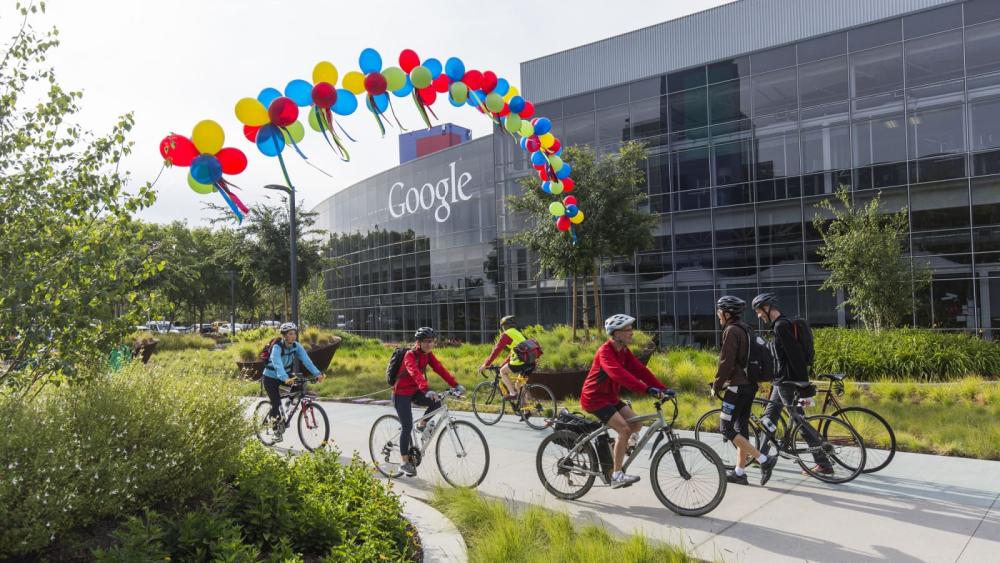
Image: Google's headquarters in Mountain View
The problem here is that neither the United States nor the United Kingdom has introduced comprehensive national AI legislation. Joshua Bengio, a computer scientist known as the "godfather of AI," once pointed out: "A sandwich is more regulated than AI." In this regulatory vacuum, industry participants need to establish the boundaries of technological development by themselves.
In this context, industry participants need to establish the boundaries of technological development by themselves. Tom Lu emphasized: "Our goal is not only to keep an eye on what other companies are doing but also to influence the development direction of this technology by maintaining our technological leadership and establish norms for society. Only by being in the leading position can we truly shape industry standards."
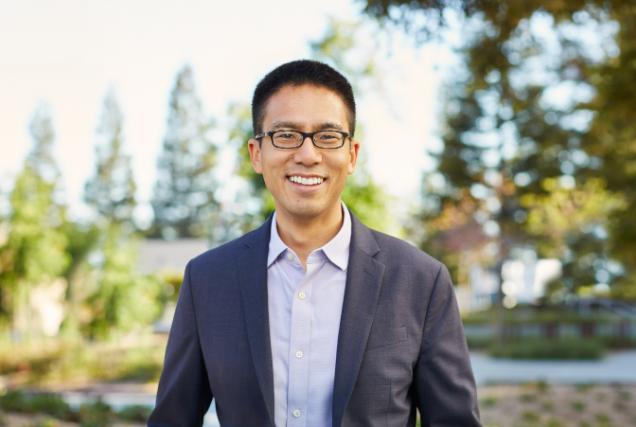
Image: Tom Lu, vice - president of Google DeepMind
But this raises a deeper question: Who will dominate the future development of AGI? Who is qualified to define the boundaries of AGI for all of humanity?
"If this is just a full - speed sprint without brakes, in essence, it is a race to the bottom, and that would be a terrible result for society," Lu said. He is committed to promoting coordinated actions between enterprises and the government.
However, strict government regulation may not be a perfect answer either. "We support regulations that help AI serve the world in a positive way," Helen King, vice - president in charge of ethics at Google DeepMind, pointed out. "The difficulty always lies in: how to implement regulations without slowing down responsible enterprises and at the same time avoid leaving opportunities for malicious actors."
This is a strategic dilemma: in a competition without a referee, the leading players need to maintain speed, self - restrain, and prevent opponents from using unscrupulous means.
Frontier AI companies are well aware that as the systems they develop get closer to AGI, their actions are like "playing with fire."
OpenAI is facing multiple lawsuits. ChatGPT is accused of playing the role of a "suicide coach" in some cases. Anthropic has also confirmed that its advanced AI programming system was used in "the first recorded large - scale, largely human - free cyber attack."
A US senator shouted on social media: "Wake up! This will destroy us, and faster than we think."
Tests on other frontier models have found that they sometimes break through the program restrictions designed to ensure that humans can interrupt their operation at any time. This characteristic, known as "shutdown resistance," is worrying.
However, as nearly $2 billion in venture capital has been continuously flowing into the generative AI field every week in the first half of 2025, the pressure to achieve profitability is rising sharply. Technology companies have long realized that although it has caused many social problems, huge profits can be obtained by monetizing human attention on social media platforms. What is worrying is that in the AGI era, the pursuit of profit maximization may lead to more severe negative consequences.
Third Stop: Palo Alto, the 'Cradle of Talent' for the AI Competition
Continuing north, the commuter train enters Palo Alto. Not far away is the vast campus of Stanford University. Donations from Silicon Valley billionaires are continuously promoting the rapid flow of young AI talents to the research departments of Google DeepMind, Anthropic, OpenAI, and Meta.

Image: Palo Alto Station
Elite Stanford graduates are promoted rapidly in Bay Area technology companies, which means that many young people in their twenties and thirties are already playing key roles in the AGI competition. Stanford alumni include Sam Altman, Brett Taylor, chairman of the OpenAI board, and Sundar Pichai, CEO of Google. Younger alumni such as 26 - year - old Isa Fulford have become one of the core research leaders at OpenAI, focusing on developing "agents" AI that can act on behalf of humans.
Fulford grew up in London, UK. After studying computer science at Stanford, she joined OpenAI and is now in a key area of the AGI competition: building models that can set goals autonomously, learn, and adapt. She participates in defining decision - making boundaries for these increasingly autonomous AIs so that they can handle instructions that may cause cyber or biological risks properly and avoid unexpected consequences.
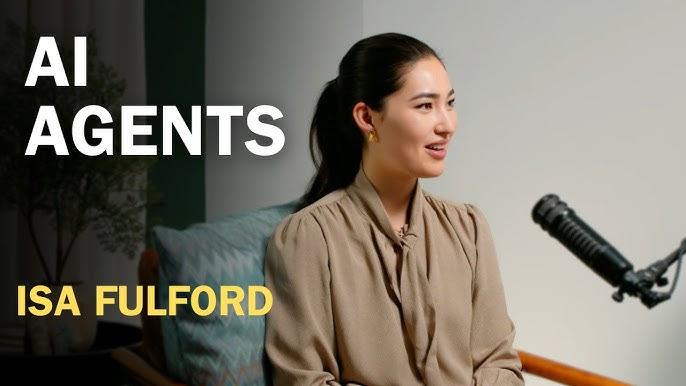
Image: Isa Fulford, one of the research leaders at OpenAI
Youthfulness is not an exception in this field. At Meta's Menlo Park campus, Wang Tao, who is in charge of promoting "superintelligence," is only 28 years old this year and was a former dropout from the Massachusetts Institute of Technology; its chief security researcher is 31 years old; Nick Terry, vice - president of the ChatGPT product at OpenAI, is only 30 years old.
The group of entrepreneurs is getting younger. Data shows that the median age of entrepreneurs funded by the San Francisco startup incubator Y Combinator has dropped from 30 years old in 2022 to 24 years old.
Silicon Valley has always been driven by young people, and when more experience is needed, a balance can also be found