Tiger Global Management Hits the Brakes: Fundraising Halved to $2.2 Billion, Returns to "Small and Beautiful"
Tiger Global has officially announced a major transformation of its venture capital strategy. In the face of the reversal in the private market, the company's new fund, PIP 17, aims to raise $2.2 billion, returning to its early "small and beautiful" model.
This move is a strategic adjustment led by founder Chase Coleman, aiming to replicate its historical best returns by slowing down the pace and making concentrated bets. Despite the explosive success of PIP 16 in the AI field, the company has shown rare "humility" towards the high valuations in AI.
P17 Expected to Raise $2.2 Billion
According to Jia Ban Xin Zhi Dian, on December 8th, Tiger Fund founder Coleman sent a fundraising letter to potential LPs, seeking to raise $2.2 billion for the new fund, Private Investment Partners 17 (PIP 17). This scale "is only a small fraction of the amounts raised by PIP 14 and PIP 15 and is closer to that of PIP 16."
The company stated that the strategy, scale, and structure of PIP 17 will follow the models of its early - stage funds and the recent generation of small - scale funds. Insiders at Tiger Global, including Coleman, will be the largest contributors to the fund, and the expected first closing date is March 18, 2026.
Facing the changes in the market cycle, Tiger Global is using PIP 17 to completely break away from its past aggressive "blitzkrieg" investment style and return to the "small and beautiful" high - return model, deploying capital in a more moderate and stable - paced manner. The letter reads: "This approach is opportunistic, guided by bottom - up, company - level underwriting, and informed by our in - depth research and accumulated insights."

The target scale of PIP 17 ($2.2 billion) is in sharp contrast to the previous two super - large funds, PIP 15 ($12.7 billion) and PIP 14 ($6.7 billion), returning to the early range where the single - fund scale is below $3 billion.
The letter points out: "We believe that funds within this scale range can bring us significant advantages, especially in terms of the impact that medium - sized investments can have." Coleman emphasized: "Throughout our history, we have found that smaller, more concentrated funds are correlated with our strongest returns."
PIP 17 will adopt a longer deployment cycle. "To achieve this, the capital deployment pace of PIP 17 may span several years. With time on our side and the accelerating pace of innovation, we will be patient - waiting for truly attractive opportunities to make high - conviction investments."
Since 2022, global venture capital has declined significantly. Rising interest rates have compressed the valuations of startups, forcing many VC firms in Silicon Valley to shift from pursuing larger fund sizes to ensuring the survival of their existing portfolios.
A person familiar with Tiger's fundraising situation said: "Since 2021, everything has changed. This is a completely different era and a different business. The focus is no longer on 'bigger is better' but on performance."
P16 Suffered a "Heavy Setback" in Fundraising
Tiger's private equity fund, the PIP series, was once one of the most influential technology investment funds globally.
However, against the backdrop of a sharply tightened macro - environment and a reset of the valuation system in the private market, the fundraising process of the flagship fund, PIP 16, was significantly hindered. Although the company set an ambitious target of $6 billion when it launched in 2022, it finally closed with only about $2.2 billion in committed capital, a fundraising scale that shrank by more than two - thirds compared to the target, marking the most obvious "fundraising slump" for the institution in recent years.
This result not only reflects the decline in LPs' risk appetite for long - term illiquid assets but also symbolizes Tiger's rapid transition from the extremely prosperous cycle of the pandemic era to a stage of reflection and adjustment.
During the fundraising period of PIP 16, Scott Shleifer, the head of Tiger's private equity business, announced his departure. People familiar with the matter said that Scott's departure was one of the reasons why Tiger's new fund could not close the fundraising earlier. "The fund had not been presented to investors for six months. (The extended deadline) was to give everyone time to digest the news about Scott."
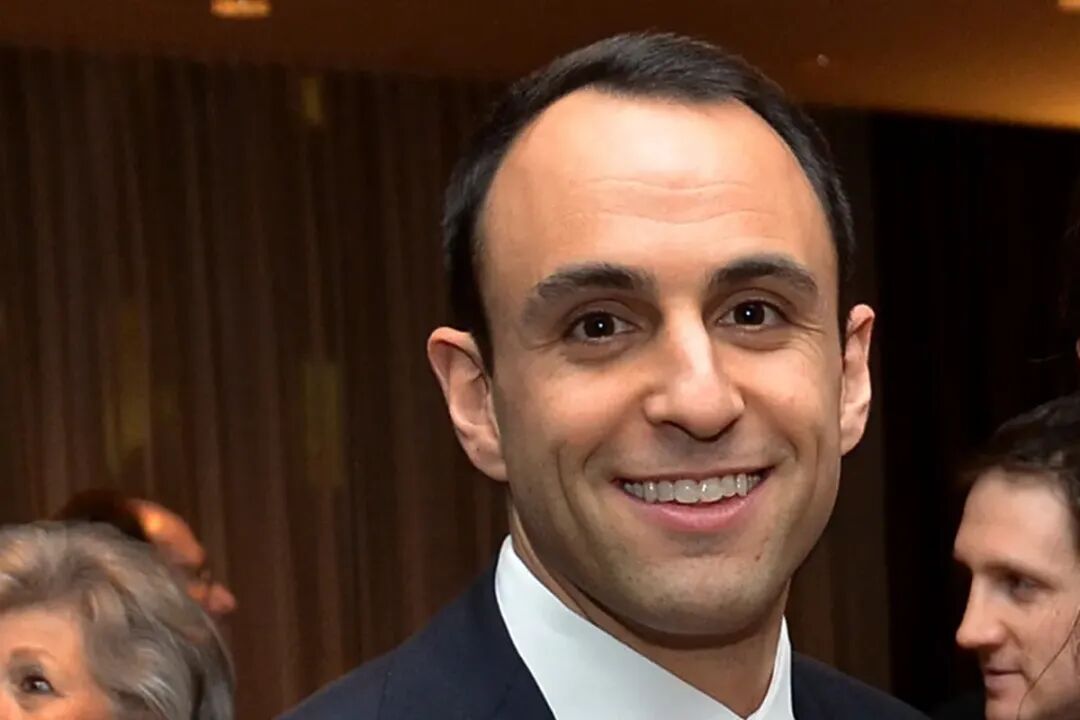
Scott Shleifer
Scott graduated from the Wharton School of the University of Pennsylvania. After graduation, he worked as an analyst at Blackstone Group for three years. In 2003, he co - founded Tiger's private equity investment business and played a key role in the company's development. He once led investments in rapidly growing Chinese technology companies, including JD.com, Meituan, Didi, and Ctrip.
In early 2024, Scott stepped down as the head of Tiger's private equity and became a senior advisor. As of December 10, 2025, Scott's real - time net worth on Forbes was $3.8 billion, ranking 1049th globally.
Despite the significant shrinkage in the fundraising scale, Tiger emphasized in the LP letter that smaller funds actually have advantages: "A smaller fundraising scale usually corresponds to a decline in investor interest, but Tiger believes that the scale of the new fund will be beneficial to those who decide to invest."
The "low - key closure" of PIP 16 directly shaped the new strategy of PIP 17. Tiger is no longer pursuing a project pool of tens of billions of dollars but is returning to a structure where "medium - sized investments can make significant return contributions," which is the range where its historical IRR performance was the best.
From "Spray and Pray" to "High - Conviction"
The investment performance of PIP 16 strengthened Tiger's confidence in the "small and refined" model.
The letter reveals: "The fund has invested 70% of its assets in 25 companies, and the largest 10 investments account for three - quarters of the total." Among these highly concentrated bets, leading AI companies such as OpenAI are the most representative, enabling PIP 16 to achieve a 33% paper gain during the valuation - rising cycle, becoming an important support for the company during market fluctuations.
However, such excellent performance did not make Tiger return to its past high - speed investment pace. Instead, the company emphasized: "When investing in PIP 16, we maintained strong discipline and selectivity." To understand this shift, we must go back to the aggressive era of "spray and pray" from 2020 to 2022.

During the peak of venture capital investment in 2021, Tiger was one of the most aggressive participants. PIP 15 raised $12.7 billion and made 315 investments throughout the year, leading a financing round almost every week. As interest rates rose rapidly, the "party was over," many startups could not maintain high valuations and went bankrupt, and funds such as PIP 15 also suffered significant drawdowns.
More importantly, after 2022, under the impact of simultaneous declines in public and private assets, Tiger suffered a loss of approximately $22 billion, setting a record for the largest drawdown in its history. This loss severely damaged the confidence of LPs and forced the company to comprehensively reflect on its high - leverage, high - frequency, and high - valuation strategy, becoming an important watershed for its subsequent significant contraction.
Meanwhile, there were also major internal adjustments: High - frequency investor John Curtius left to start his own business, private equity head Scott became a consultant, and founder Coleman regained control of investment decision - making. Some media pointed out: "After receiving complaints from clients, Coleman regained control of the venture capital business and led the strategy adjustment."
To cope with the cyclical pressure, Tiger sold more than 85 assets in PIP 15, cashing out more than $1 billion, and invested the funds in high - quality projects such as ByteDance and Revolut to improve the quality of its portfolio.
The company further stated in its annual letter that Stripe, Databricks, and ByteDance "are performing well and should have the opportunity to go public when the market is more favorable," and emphasized that in the future, it will "remain disciplined and wait for the 'fat pitch' to swing."
Jia Ban Xin Zhi Dian believes that this marks Tiger's shift from "winning by speed" to "winning by conviction." The company also cited its early - stage funds to support this direction: "The first 10 private funds all had a scale of less than $3 billion... achieving a total IRR of 34% and a net IRR of 23%, and their distributions exceeded the investors' contributions." This history once again became the basis for its strategy reconstruction.
For an institution that dominated global technology investment with the "spray and pray" approach from 2020 to 2022, now returning from chasing trends to focusing on fundamentals, from aggressive expansion to respecting risks and cycles, and actively hitting the brakes at the time of paper success, it is bringing discipline and long - termism back to the core.
Maintaining "Humility" towards AI
Despite the excellent paper returns of PIP 16 in the artificial intelligence track, Tiger showed a rare cautious attitude towards AI in the latest LP letter. Against the backdrop of rapidly inflating valuations, the company clearly warned investors that the future investment pace must be more disciplined and restrained.
The letter clearly states that the new fund will adopt a "more targeted strategy." Tiger pointed out that there are substantial risks in increasing investment in AI and that it is necessary to maintain "humility," warning: "Valuations are at a high level, and in our view, they sometimes lack the support of company fundamentals." In other words, although PIP 17 will still invest in AI, the company believes that there are signs of a bubble in the market and is reluctant to be the force that further drives up valuations.
This caution is not only reflected in judgment but also implemented in specific strategies.
The fundraising materials directly emphasize that when AI valuations are "too high," the valuations of some companies "do not match" their fundamentals, and investment requires "patience and discipline." Such risk warnings were extremely rare in the past few years, especially when Tiger itself achieved significant returns through AI.
The letter reveals that about two - thirds of the funds invested by PIP 16 in the past three years were in AI companies, including Waymo, OpenAI, Temporal, and Cerebras. These leading projects brought a "high hit rate." The letter states: "The fund shows signs of a 'high hit rate' and 'currently has no known impairments.'"
However, Tiger did not expand optimistically due to its achievements but instead sent a clear signal of restraint to LPs. When describing the era of artificial intelligence, the company wrote: "This is a unique historical moment." "We also recognize that it is crucial to maintain a certain degree of humility when dealing with technological changes of such a scale because there are still many unknowns today, and the speed of change is unprecedented."
History and Positioning
In 1980, Julian Robertson founded Tiger Management, which became one of the earliest and most influential hedge funds at that time. From its establishment to the peak of its asset size in 1998, the fund's annualized return after deducting fees was as high as 31.7%, while the S&P 500 index was only 12.7% during the same period.
During its 21 - year operation, it only had losses in 4 years, which is truly legendary. However, with the burst of the Internet bubble, the performance of Tiger Management declined sharply, and it finally closed in March 2000.
Robertson was not only an investment master but also a mentor. He trained and funded a group of top - notch investors, known as the "Tiger Cubs," including Ole Andreas Halvorsen, Stephen Mandel, Lee Ainslie, Bill Hwang, and Coleman, who later established Tiger Global.
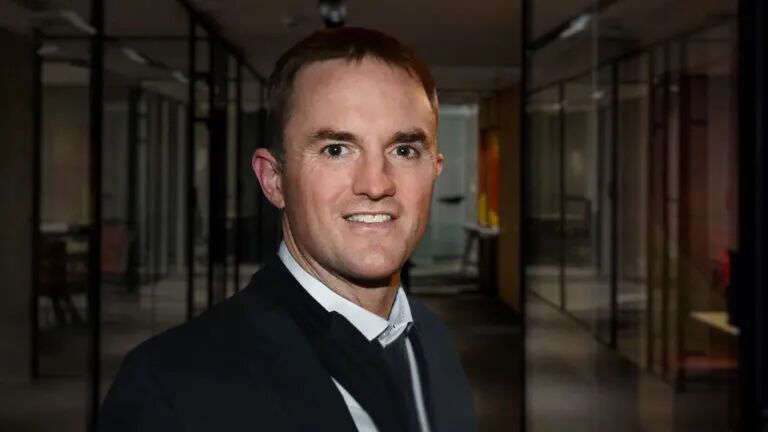
Chase Coleman
Robertson donated more than $2 billion to charity during his lifetime. He was a signatory of the "Giving Pledge" and had a net worth of $4.8 billion at the time of his death.
As Robertson's protégé, Coleman served as a technology analyst at Tiger Management from 1997 to 2000. In 2001, he founded Tiger Technology, which was later renamed Tiger Global. In 2003, Scott joined, promoting the fund to invest in both public and private markets (the PIP series).
According to Preqin data, from 2007 to 2017, Tiger was one of the institutions with the largest fundraising scale in the venture capital field. In 2020, Tiger earned $10.4 billion in profit for its clients, ranking first on the annual list. This list is released by LCH Investments, an authoritative institution that specifically tracks the real profit performance of global hedge funds.
In the early days, Tiger's investment approach was very clear, targeting the core leading companies in the wave of Internet and global consumer digitization. In the 2010s, under the leadership of Lee Fixel, Tiger entered the "golden age of global growth stocks," and its investment performance is still regarded as an industry benchmark today.
Its star investment cases include:
Flipkart, an Indian e - commerce company. This deal established Tiger's global position in technology investment in emerging markets.
Facebook, LinkedIn, and Spotify. The successful exits from these projects made Tiger a key promoter of the global consumer Internet.
Stripe and ByteDance. According to relevant information, these companies "are performing well and should have the opportunity to go public when the market is more favorable," and they are the core ballasts for the fund's future returns.
OpenAI, Waymo, and Databricks. These investments enabled the fund to achieve a 33% paper gain even in a sluggish market environment, becoming the key rebound force for Tiger after the drawdown.
Tiger was deeply involved in China's technological rise, investing in companies such as JD.com, Meituan, and Pinduoduo. Similar to the investment in Flipkart, these layouts are important parts of Tiger's global investment system.
(Jia Ban Xin Zhi Dian reminds: The content and views are for reference only and do not constitute any investment advice.)