When AI phones start to "overstep their bounds": Doubao's subversive experience, whose cheese has been moved?
"User experience supersedes all technical engineering."
In 2008, shortly after the release of the first - generation iPhone, Scott, then the senior vice - president of Apple, wrote this sentence on the blackboard when faced with engineers' doubts about the excessive difficulty of implementing a certain function. This sentence summarizes the essence of the competition in the mobile phone industry in the following decades.
The "Research Report on the Application Practice of Chinese Enterprise - level AI Agents in 2025" released by the First New Voice Think Tank in September pointed out that "Vertical Agents reconstruct business models, and General Agents reconstruct traffic models." This trend is clearly emerging - in the future, traffic entrances may be concentrated in a few general agents, and users will shift from "information acquisition" to "direct satisfaction of needs", and the value chain of the entire mobile Internet is facing reshaping. In this new competition centered on experience but fought on the battlefield of ecosystems and entrances, Chinese manufacturers are not absent.
Xiaomi's cost - effectiveness, Huawei's high - end experience, OPPO's fast charging, and VIVO's imaging are all the answers that Chinese manufacturers have given around the experience in more than a decade of development. This pursuit centered on experience has finally led to one in every three mobile phones sold globally being from Chinese brands.
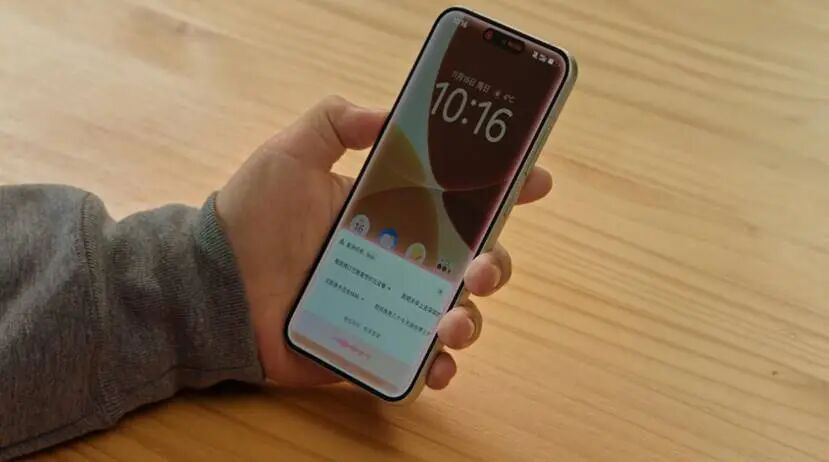
Now, with the birth of AI mobile phones, the experience related to mobile phones has been subverted again. On December 1st, the engineering prototype of the Doubao AI mobile phone Nubia M153, a cooperation between ByteDance and ZTE, became an instant hit on the hot search as soon as it was released. It was not only in short supply, but also a rare premium phenomenon occurred in the second - hand market.
However, in just one day, the Doubao mobile phone assistant went from being a popular product to a risk - controlled target. On the day after its launch, some users of the engineering machines received prompts such as abnormal login environment when using Doubao to perform WeChat - related operations, and their accounts were temporarily logged out or frozen. At the same time, frequent human - machine verification, app crashes, or forced exits also occurred in Alibaba - affiliated applications such as Taobao, Taobao Flash Sale, Xianyu, and Damai; some banking apps (such as Agricultural Bank of China and China Construction Bank) suspended the login and payment processes due to the determination of a risky environment.
Even though it currently faces some challenges, from the perspective of consumers, after removing the gimmicks and facing the real experience, we can firmly say:
In the competition of AI - driven experience reconstruction, Chinese mobile phone manufacturers have no reason to lag behind.
01 Farewell to the Dialog Box: AI Mobile Phones Enter the "One - Key Hosting" Era
When we talk about AI mobile phones, the mobile phone assistant is often the first function that comes to mind. In the past few years, although voice assistants such as Siri or Xiaoai have been continuously iterated, in essence, they still stay in the dialog box.
Since the explosion of large models, AI assistants have begun to be able to handle more complex multi - round conversations, understand more natural language expressions, and integrate with more third - party applications. However, at this stage, assistants still mainly operate at the application level and have not been deeply integrated into the core of the operating system.
The Doubao AI mobile phone breaks this barrier by embedding the intelligent agent into the bottom layer of the operating system.
Compared with other AI mobile phones on the market, the most significant breakthroughs of the Doubao AI mobile phone mainly lie in two aspects: one is the ability to handle cross - application operations, and the other is a simpler interaction mode.
In terms of operation, the entire experience process only requires a simple interaction. Press the physical button on the left side of the phone body, or just say a wake - up word, and Doubao will enter the standby state.
Compared with the previous operation process, the process of the Doubao AI mobile phone is a bit simpler. The traditional operation mode requires opening the AI software, sending a question to the AI, and waiting for the AI's answer, while the Doubao AI mobile phone only needs to be simplified to waking up and asking questions.
If you want to retouch a photo, just call out Doubao in the system photo album, and Doubao can help you process the picture without opening the AI program to upload and then process it.
The most noteworthy is the ability to handle cross - application operations.
For example, if a user gives Doubao an instruction to find the cheapest shampoo of the same model for purchase across all platforms. After the instruction is given, an icon will appear at the top of the screen indicating that Doubao has taken over the phone, and then it will enter the background interface of Doubao "operating the phone", where a cursor circle replaces your fingertip. It will automatically open the shopping app, scroll through the pages, filter the stores, and compare prices.
Throughout the process, the main screen can still be used normally, and users will only be notified to handle manually during high - sensitivity stages such as payment.
This has jumped out of the limitations of the traditional Q&A - style AI assistant and entered the execution level. This ability gives it the potential to handle complex cross - application processes and delayed tasks.
A user shared the experience of this function. The user gave an instruction: I'm taking a bullet train tomorrow morning. Help me set an alarm for getting ready to go out.
Doubao will initiate a whole set of actions on its own. It will first retrieve local text messages, emails, or software information to find the ticket - booking information and parse out the accurate train number and departure time; then it will ask the user about the travel mode and call the map application to calculate the best time from home to the railway station based on real - time traffic conditions and the user's historical commuting data; finally, it will set a personalized alarm with buffer time in the system.
Pushing this ability one step further will lead to the direction that all manufacturers are pursuing: a more personalized experience.
02 Your Mobile Phone is Having "Long - Term Memory"
In the smartphone industry, personalized functions are nothing new. Whether it is adjusting performance scheduling based on usage habits or pushing content based on browsing history, manufacturers have been trying to make mobile phones understand users better.
Most of these functions rely on the analysis of shallow - layer data and behavior patterns. The Doubao AI mobile phone introduces the end - side memory function on this basis.
Users can slide three fingers up on any interface or click the memory button that pops up after taking a screenshot to instantly store the information on the current screen, from a piece of text to a picture, into its "brain".
Compared with mobile phones on the market that mainly feature AI functions, the memory function of the Doubao AI mobile phone is highly personalized, and all memories are generated based on your personal device and behavior.
When you can't remember which coffee shop you mentioned when chatting with a friend last time, you can directly ask, and it will give you the answer based on the chat records; similarly, when you need to pick up a package, just ask what the pickup code is, and it can immediately retrieve the information from the saved text messages or records.
In addition to Doubao, Google's Pixel 10, launched in August this year, demonstrated an application path for the memory function with its core AI function, Magic Cue.
Magic Cue is like a highly integrated background assistant that can automatically scan and analyze applications, emails, text messages, screenshots, and schedules on the phone. When a user discusses a dinner location with a friend, Magic Cue will automatically find relevant addresses from past emails or chat records and generate reply suggestions, and the user only needs to tap to send.
Different from the semantic analysis and prompts of the Pixel 10, the Pro mode of the Doubao AI assistant deeply combines memory and execution ability. When faced with complex and vague instructions, the Pro mode shows an obvious thinking process, actively calls the memory library as a decision - making basis, and plans a series of operations.
For example, when a user requests "Help me prepare for next week's customer meeting", the Pro mode will first retrieve the past cooperation minutes of the customer from the memory library, then automatically retrieve the latest project progress emails, then open the calendar to check the time arrangements of all parties, book a meeting room, and finally generate a meeting draft containing historical background and current topics.
This in - depth planning ability enables memory not only to provide personalized background knowledge but also to transform knowledge into practical actions. For example, the Paris restaurant guide that a user has collected on Xiaohongshu can be automatically associated by the system. When the instruction "Organize and book museum tickets for 10 o'clock" is given, Doubao will generate the best route based on the collected content, book the tickets on Ctrip, and then synchronize them to the memo.
03 The Biggest Rival is Not Apple
After reading the function introduction of the Doubao AI mobile phone, do you think that the Doubao AI mobile phone is invincible in the industry?
Actually, it's not.
Even though it has subverted the user experience, the path of the Doubao AI mobile phone is not smooth. Surprisingly, the biggest obstacle in front of it is not Apple, nor any mobile phone manufacturer, but the Internet companies we are familiar with.
Currently, the Doubao AI mobile phone has been blocked by multiple software. Almost all applications related to Alibaba and Tencent cannot be logged in due to abnormal status, and applications such as banking apps are also joining the team of blocking the Doubao AI mobile phone.
The root of the conflict between the two sides lies in the opposition of two logics.
The first is the AI logic. As long as the user authorizes, the system can execute tasks across software, and the path is no longer determined by the platform but by the user's intention; the second is the platform logic represented by BTA. Services must be completed within their own applications, and the path, entrance, and revenue are all controlled by the platform.
In the AI era centered on user intention, user authorization may no longer be equivalent to platform authorization. Even if you authorize the AI assistant to operate your phone, service providers still have sufficient reasons to reject this access.
In terms of technical security, in the eyes of super - apps such as WeChat and Alipay, this behavior pattern of directly simulating clicks without going through the official API is almost indistinguishable from the automated scripts commonly used by black - gray industries in terms of data characteristics. The security risk - control system has no reason and no ability to distinguish whether the one clicking on the screen is a malicious robot or an AI assistant aiming to provide convenience.
From the perspective of commercial interests, today's mobile Internet is a system built by super - apps. Different software firmly controls users' attention and transaction entrances through carefully designed interfaces, processes, and recommendation algorithms. This is the core of their business models.
The cross - software function of the AI mobile phone will directly bypass all front - end pages (including advertisements, recommendation streams, and promotion entrances) and directly reach the final reservation or purchase button. And the cross - software operation of the AI mobile phone means bypassing the entire front - end link. It can directly reach the final purchase or reservation with one click, without going through advertisements, entering the recommendation stream, or exposing data behavior.
As the saying goes, advertising revenue is the barometer of the Internet. This is equivalent to downgrading the app from a traffic entrance to a pure service interface, cutting off the financial resources of Internet companies.
For platforms that regard traffic and entrances as their lifelines, this is no less than a fundamental challenge.
It's not that no company has launched a similar challenge to BTA. Honor Magic once made restaurant recommendations based on some behavior information of users in WeChat and Alipay. This practice immediately raised Tencent's concerns about privacy and submitted a situation report to the Ministry of Industry and Information Technology, and regulators also began to pay attention to relevant issues.
However, the trend of the tide cannot be changed. AI is destined to be the future of mobile phones. According to Techinsight, the average annual replacement rate of smartphones in 2024 was 23.7% (corresponding to a replacement cycle of about 51 months). The involution of parameters has lost its meaning for the general consumers, and new experiences can drive replacement.
Long before the release of the Doubao AI mobile phone, almost all leading manufacturers had bet on this route, but their strategies were more circuitous.
Honor, OPPO, and vivo chose the path of deepening scenarios and injected AI capabilities into imaging, office work, and system interaction to create a more personalized enhanced experience. For example, OPPO's one - click flash memory function can automatically convert WeChat payment records into bills; Honor Magic 8 can automatically execute more than 3000 life scenarios. While Huawei and Xiaomi bet on ecological synergy and position the mobile phone as the center of cross - device intelligence.
The industry penetration rate is also further increasing. According to Canalys, the penetration rate of global AI mobile phones accelerated further in 2025, pushing the global penetration rate to 32%.
In addition, people's yearning for a better life will never change, and there is no reason to give up the opportunity to pursue a better life.
All technological innovations are attempts to improve the way of life. Looking back at the development history of smartphones, from Nokia to iPhone, every transformation did not stem from the upgrade of hardware parameters but from solving the deepest pain points of users in a specific era.
The competition rule in the business world has long shifted from "winning by scale" to "prioritizing speed".
In today's era of accelerating technological iteration, those who can quickly connect the underlying layer and integrate the experience are often the ones who take the lead.
The competition of AI mobile phones follows the same logic. Whoever connects the underlying capabilities first and integrates the experience first will occupy the users' minds first.
The significance of the Doubao AI mobile phone does not lie in a certain function itself but in setting the industry starting line with system - level AI. Once the capabilities of memory, cross - application, and task planning start to be implemented on a large scale, the evaluation criteria of the entire mobile phone market will be forced to be refreshed.
When domestic manufacturers are ready to move towards the next round of experience reconstruction, it's time for overseas competitors across the ocean to worry.
This article is from the WeChat public account "First New Voice", author: Chen Jun, published by 36Kr with authorization.