Li Zexiang, Gan Jie, and GSR Ventures invested in a spatial intelligent hardware company founded by alumni of the Hong Kong University of Science and Technology | Exclusive from Yingke
Author | Huang Nan
Editor | Yuan Silai
Yingke has learned that Shenzhen Wuqiong Innovation Technology Co., Ltd. (hereinafter referred to as "Wuqiong Innovation") has successfully completed three rounds of financing in recent months, with a cumulative amount of tens of millions of yuan. Maple Pledge Capital has long served as its exclusive private financing advisor. We have summarized the information of this round of financing and several highlights of the company:
Financing Amount and Investment Institutions
Financing Rounds: Angel + round, Pre - A and Pre - A+ rounds
Financing Scale: Tens of millions of yuan
Investors: XBOTPARK Fund under the leadership of Professor Li Zexiang, Lingyi Venture Capital, Yuanhe Origin Guangzhou Fund, Yuanhe Origin Hangzhou Fund, GSR Ventures, Morningstar Venture Capital, and the Zhixing Fund under the leadership of Professor Gan Jie
Use of Funds: The funds will be mainly used for technology R & D investment, expansion of the core team, and global commercial expansion
Basic Company Information
Establishment Time: December 2020
Registered Address: Nanshan District, Shenzhen
Company Positioning: Wuqiong Innovation is a hard - tech enterprise focusing on spatial intelligent infrastructure. It focuses on the fully self - developed cross - ontology spatial intelligent general hardware MetaCam, providing perception and understanding capabilities for in - depth interaction with space for humans, robots, and intelligent systems.
Technological Highlights: Based on the dual - business layout of "general hardware + complete machine products", Wuqiong Innovation has built a complete spatial intelligent system from the algorithm layer, hardware layer to the complete machine layer.
At the algorithm level, the company has self - developed and open - sourced a multi - sensor fusion algorithm that covers aspects such as spatial positioning, environmental perception, semantic understanding, decision - making planning, and autonomous control. Through continuous training and optimization with a large amount of real - world scenario data, it has strong cross - scenario adaptability, good generalization, and robustness.
This algorithm has now been applied to the company's MetaCam spatial intelligent hardware platform. The platform integrates multi - modal sensors such as lidar, fisheye cameras, RTK modules, and IMUs. It has strong cross - platform adaptability and can be flexibly deployed on various land and air ontologies such as wheeled, legged, humanoid robots, and drones, meeting the needs of spatial cameras, robot spatial perception and understanding, real - world spatial data collection, and intelligent deployment of traditional robots.
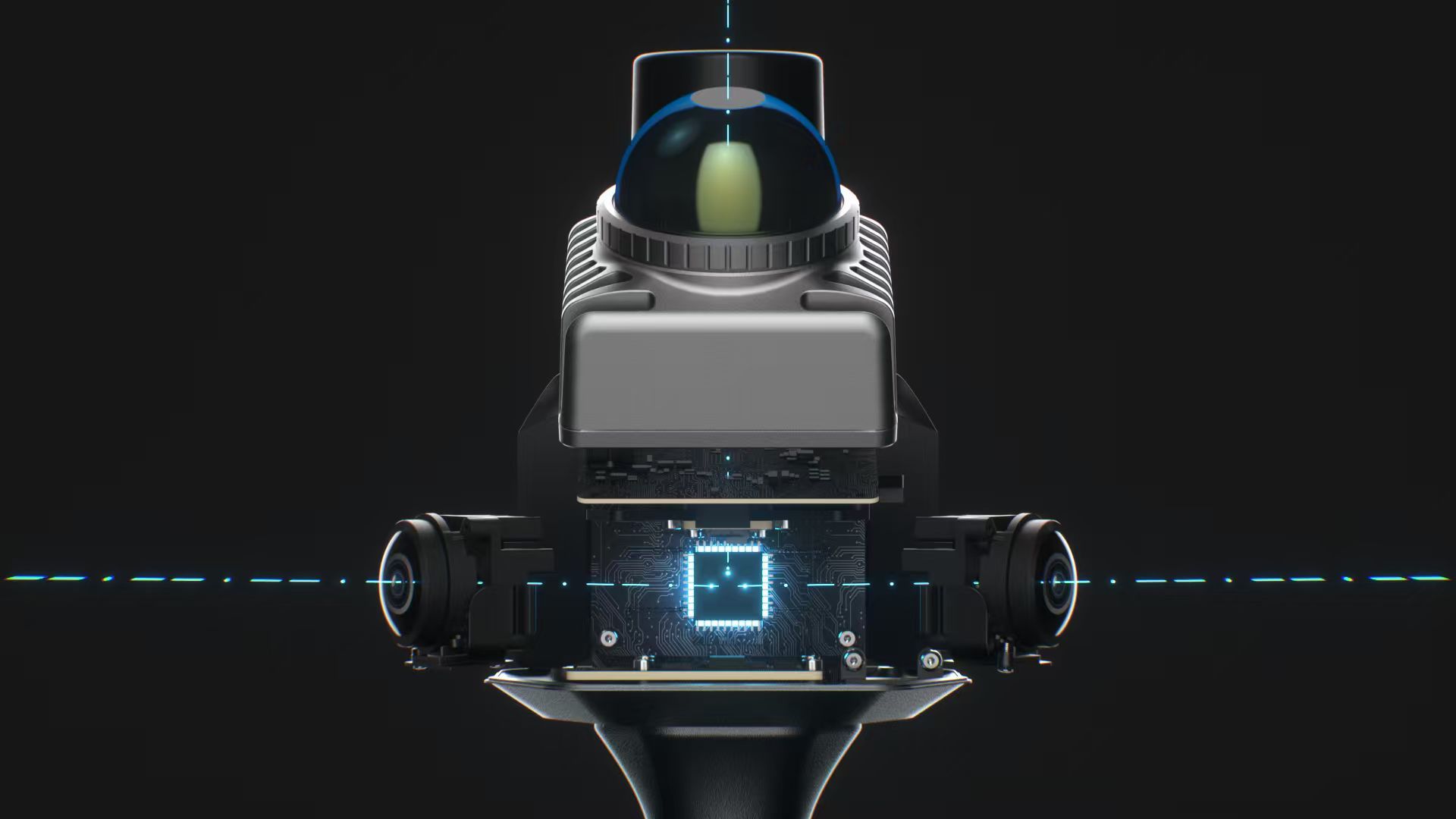
MetaCam Spatial Intelligent Hardware (Source/Enterprise)
It not only supports pre - installation integration for robot complete machine manufacturers but also is suitable for subsequent intelligent upgrades of existing equipment. The combination of this algorithm and the platform can significantly enhance the autonomous navigation ability of robots in GPS - free environments, enabling them to achieve high - precision positioning and intelligent path planning in complex and dynamic scenarios such as indoors.
At the complete machine level, Wuqiong Innovation's fully self - developed spatial camera, MetaCam Air 2, was officially launched at the INTERGEO exhibition. In addition to real - time high - precision real - world 3D reconstruction capabilities, combined with environmental understanding and semantic modeling capabilities, it can not only complete the reconstruction of the geometric environment but also understand the semantic information of the scenario, providing support for spatial intelligent applications.
Market Size
Data from Frost & Sullivan shows that by 2025, the global market size of the spatial intelligent solutions industry is expected to exceed 175.4 billion yuan, a year - on - year increase of 68%. Sectors such as intelligent transportation, intelligent manufacturing, and intelligent healthcare are showing rapid growth.
In terms of technological development trends, innovations such as AI autonomous navigation and cluster control are driving the evolution of drones towards intelligence and scenario - based applications. The global drone market targeted by Wuqiong's GPS - free autonomous navigation flying robots is expected to reach 380 billion yuan in 2025, according to data from Frost & Sullivan and others. Among them, consumer drones account for 35%, and industrial drones account for 65%.
Team Background
Founder Pan Jie is from the HKUST 3126 Laboratory and once received a full - scholarship from DJI. The core team members are all from top universities such as the Hong Kong University of Science and Technology and Tsinghua University. Many of them have participated in and won championships and runner - up positions in top - level robot competitions such as RoboMaster and have years of experience in intelligent hardware development and product implementation in large companies.
Business Progress
The company's perception module products are in contact with dozens of embodied intelligent companies for cooperation. They are being mass - produced and assembled in the products of leading customers in the field of land - based spatial intelligence, such as wheeled robots and quadruped robots. They have also been purchased by leading humanoid robot customers for verification. The GPS - free navigation kit customized for drone platforms has completed the verification of the engineering prototype and has received intent orders from dozens of customers. It is expected to be officially delivered in the second half of 2026.
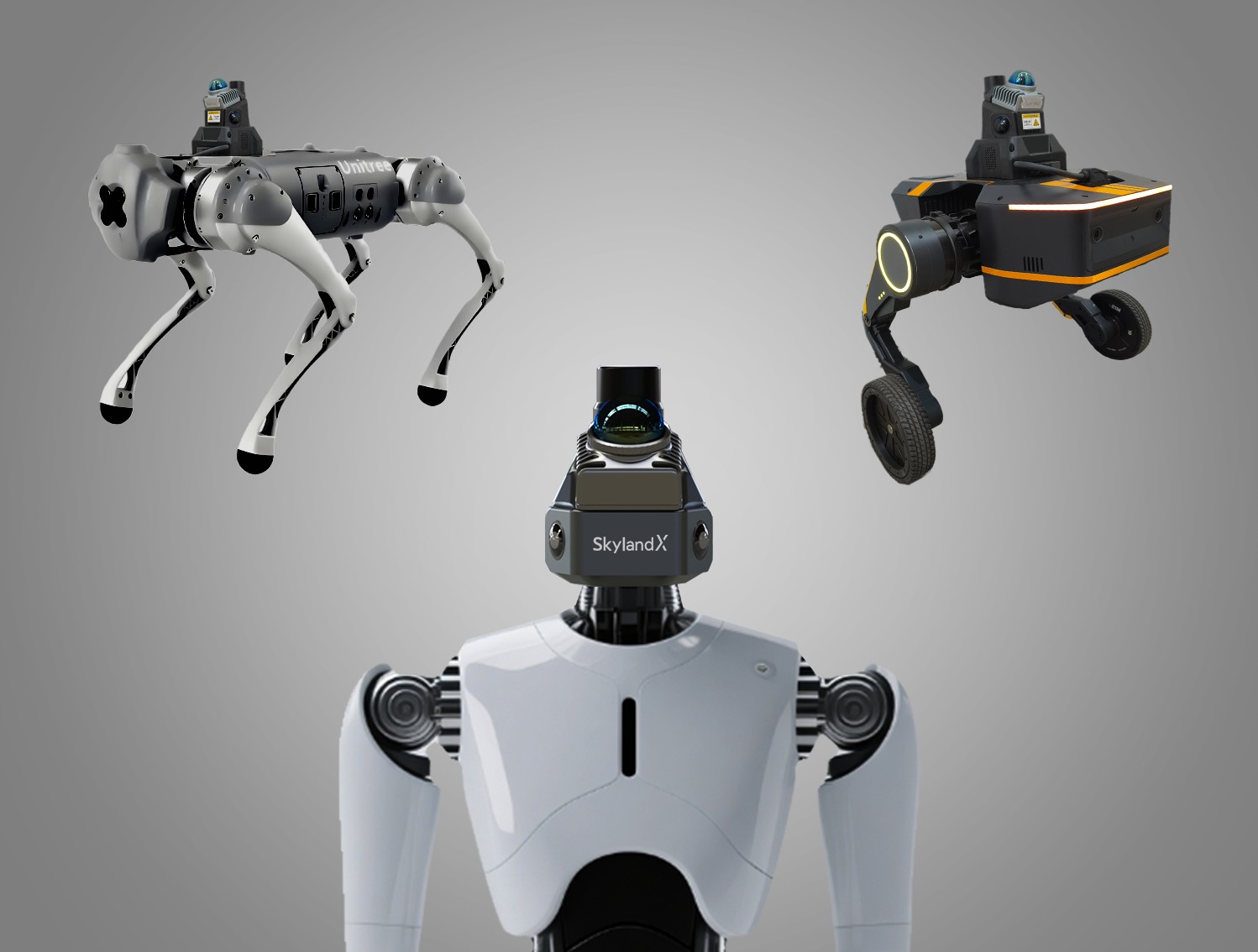
Deployable on Various Embodied Robots (Source/Enterprise)
In terms of complete machine products, the MetaCam Air series has delivered thousands of units in total, providing standardized spatial intelligent solutions for leading domestic and international industry customers.
Founder's Insights
Yingke: We know that the original idea of the Wuqiong team was to develop indoor drones. Why did you start the commercial application with handheld 3D scanning devices?
Pan Jie: Our technological starting point was fully autonomous indoor flight. However, around 2019, the team found that the complete machine solutions for drones faced three major real - world challenges. First, the large - scale downstream demand had not yet emerged. Second, the relevant supply chain and cost control were not mature enough. Third, the market channels and customer awareness needed long - term cultivation. This made it difficult for the product to be quickly launched and achieve a commercial closed - loop at that time.
Therefore, we decisively adjusted our strategy. We extracted the most core and general sub - module from the complex autonomous flight system - high - precision 3D spatial positioning and environmental perception capabilities. We productized it into a handheld 3D scanning device and entered an existing and mature market that provides data collection tools for fields such as architectural surveying and mapping, industrial digital twins, games, and VR content, enabling us to quickly complete commercial verification and establish cash flow.
This device is essentially a "robot's brain". It encapsulates the core spatial perception algorithm and can be integrated with various robot bodies, such as robotic dogs, wheeled, humanoid robots, and drones, through standard interfaces, providing them with positioning, environmental perception, and decision - making control capabilities. At the same time, by continuously operating the handheld device in real - world scenarios, we are also continuously accumulating real - world data.
Yingke: What specific quantifiable values does the MetaCam device bring in terms of "efficiency improvement"?
Pan Jie: There are two dimensions: direct efficiency and data value.
In terms of direct operation efficiency, taking traditional surveying and mapping and modeling work as an example, workers need to use rulers or laser rangefinders to measure single points in space, which is a cumbersome process and prone to errors. After using our MetaCam, the operator only needs to walk around the site with the device in hand to complete high - precision 3D reconstruction of the entire space and all its details, and the data collection efficiency can be increased by 15 to 20 times.
Secondly, it creates value in terms of data completeness and traceability. In the traditional way, measurements are often selective and goal - oriented. You may only measure the main structure and ignore the exact position of a piece of furniture or the hidden route of a pipeline. Once the missing detailed data is needed for later design or construction, it is necessary to return to the site for re - measurement at a high cost, resulting in rework.
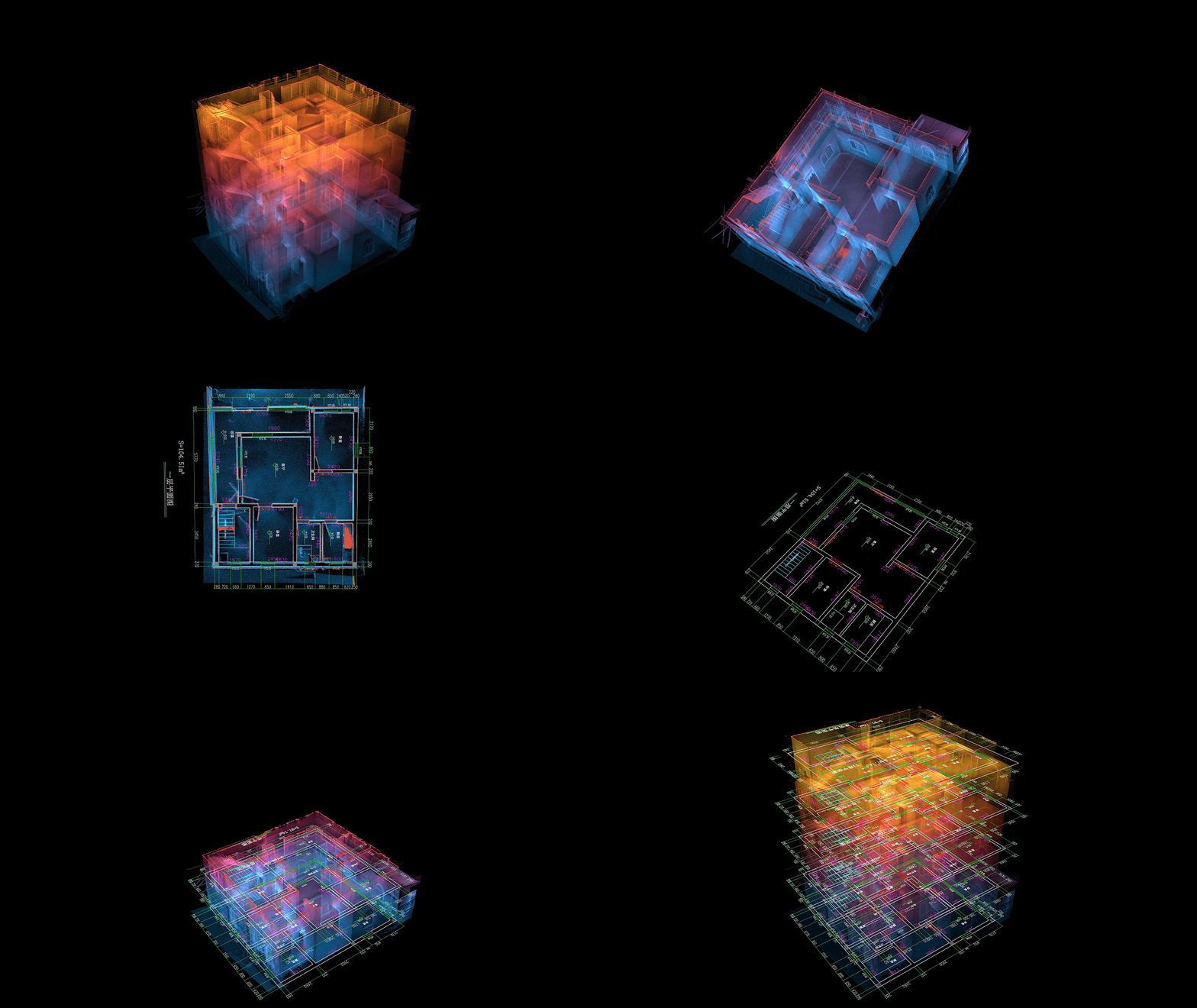
Providing Traceable Data (Source/Enterprise)
Our device provides full - scale (texture + 3D), non - discriminatory, and permanent data archiving of space. With a single scan, all detailed information is completely and accurately recorded. Customers can retrieve and measure data at any position in the digital model at any time, which is equivalent to establishing a "digital twin archive" for the physical space that can be queried at any time, achieving a qualitative change from "selective measurement" to "holographic recording".
Yingke: Now you are back to working on drones. What kind of demand have you identified?
Pan Jie: In many indoor scenarios, aerial robots have natural advantages over ground robots. There is a "go and see" demand in various industrial scenarios. However, for ground robots to solve such problems, in addition to solving the problem of crossing terrain, they also need to be equipped with mechanical arms, lifting platforms, etc. to solve the problem of "not being able to see", which makes the robot system face a series of problems such as non - standardization, high cost, and poor system robustness.
Aerial robots are completely different. Since they can move freely in 3D space, as long as the problems of positioning, perception, and obstacle avoidance are solved, we can equivalently consider all environments to be standardized for drones.
With the MetaCam module's ability for real - time 3D spatial positioning, perception, and decision - making, we provide indoor intelligent navigation upgrades for different drone platforms in both pre - installation and post - installation forms, enabling them to cover most indoor inspection scenarios.
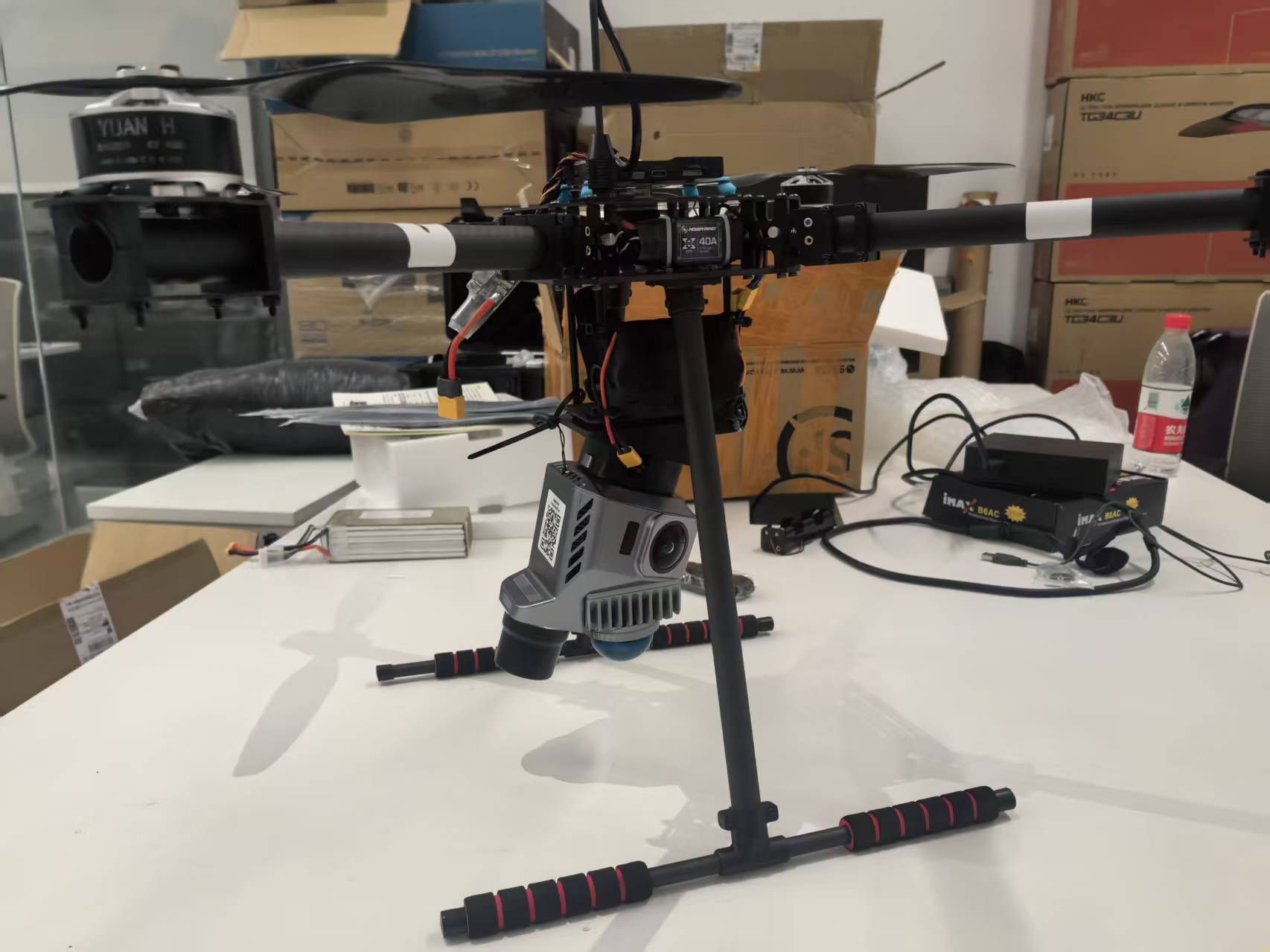
Drone Navigation Module (Source/Enterprise)
Yingke: How do you view spatial intelligence and embodied intelligence? What other things is Wuqiong working on?
Pan Jie: Spatial intelligence and embodied intelligence are all about more intelligent interaction between humans or robots and space. All of these rely on the perception and understanding of the 3D world, which is what Wuqiong Innovation has been focusing on.
In addition to being a 2B tool, MetaCam can also serve as a 2C spatial camera. In the past, our way of recording the world was two - dimensional, while in the future, it will be 3D or even 4D. The panoramic camera brought the subversive experience of "shoot first, frame later", while MetaCam brings a new experience of "record first, explore later", as we record all - around and all - time information.

See the World from a Different Perspective (Source/Enterprise)
Another pain point in embodied intelligence is the high cost of obtaining real - world spatial data and the lack of effective data. Training models based on real - world data has become a consensus in the industry. MetaCam can provide high - efficiency and low - cost data collection tools for such customers and support import into platforms such as Issac Sim to generate multi - view and multi - modal simulation data. It can provide cost - effective real - world data collection tools for both robot companies and data - generating companies.