The fierce competition in AI glasses: Big manufacturers are vying for the entry point. Are companies like Rokid feeling nervous?
In the recent AI smart glasses market, there have been more and more news about large companies venturing into this field.
Recently, Google announced that it is working on developing two different types of AI glasses: one type is equipped with a display, and the other focuses on audio functions. Google also stated that the first jointly developed AI glasses will be launched in 2026. According to an exclusive report by Zhineng Yongxian, Tencent has started small - scale research on the direction of AI glasses within the company; ByteDance launched two AI glasses projects last year...
The efforts of large companies are not just limited to spreading news. In recent days, two large companies have even launched new products.
On November 27th, Quark, which had been building up anticipation for a long time, officially released two series of AI glasses products; a few days later, on December 3rd, Li Auto officially launched its first artificial intelligence hardware product - the Li AI Glasses Livis.
The reason why large companies are so eager to enter the AI smart glasses market is related to the gradually clear iterative direction of this field and the gradual implementation of software and hardware technologies.
The market is increasingly aware that to create a good AI smart glasses product, it must be wearable by users throughout the day. Many companies already possess relevant technologies such as AI and display. It seems that as long as they make the right choices and make the product truly useful, it is easy to get a ticket to this track.
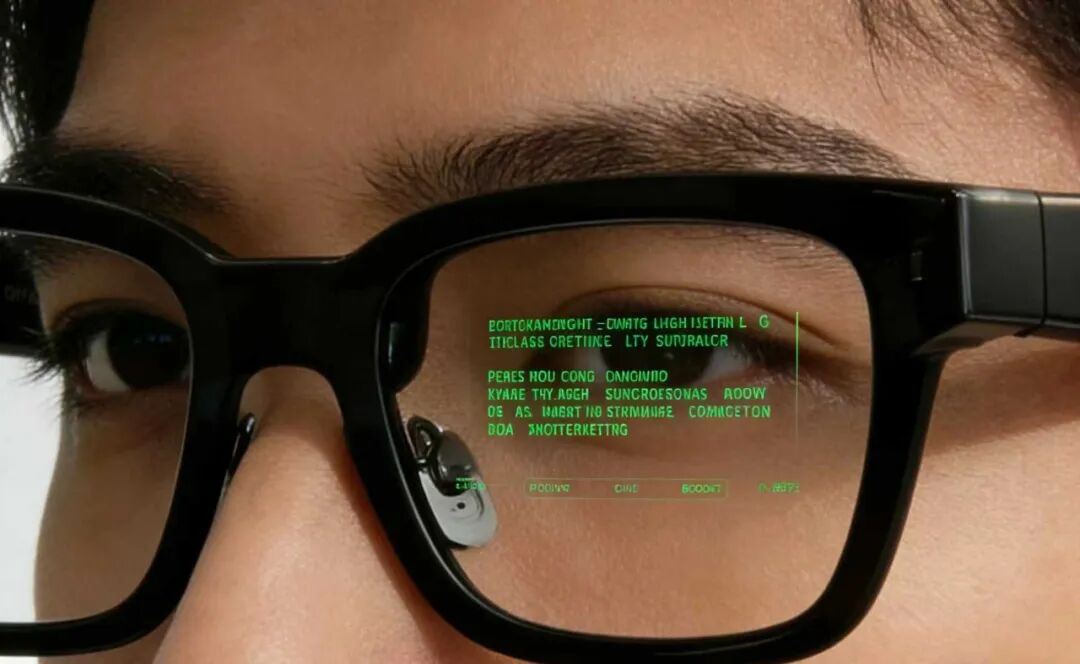
Of course, startup companies in the industry have also caught up with the trend. As the industry's popularity grows, smart glasses brands represented by Rokid, Thunderbird, and XREAL have accelerated their iteration speed and are gradually becoming more well - known to consumers.
However, challenges are also emerging one after another. With each new competitor being formidable, startup companies gearing up, and a price war in the industry on the verge of breaking out, it is foreseeable that a chaotic battle will erupt in the AI smart glasses industry.
The fact is that in the domestic AI smart glasses market, there hasn't been a blockbuster product like the second - generation Ray - ban Meta yet.
Therefore, every player has a chance, but every player still needs to work hard.
How do large companies compete for a share of the AI glasses market?
For large companies to compete for a share of the AI glasses market, finding a good breakthrough point is the key.
A research report released by Frost & Sullivan classifies AI smart glasses into three categories according to their functional characteristics: AI audio glasses, AI shooting glasses, and AI + AR glasses.
These three categories show a step - by - step progressive relationship, and the latter two are also the main directions targeted by current cross - border large companies.
The biggest difference in function between AI shooting glasses and AI + AR glasses is the presence or absence of a display function, which also leads to obvious differences in weight and price between products of these two categories.
The latter is more expensive and heavier, with most products priced around 4000 yuan and weighing about 50g, but they also have more comprehensive functions and a stronger sense of technology.
On the contrary, the former has the advantages of being cheaper and more portable, with most products priced around 2000 yuan and weighing less than 40g. However, their functions may be considered useless, and they need to be highly practical to attract users to make a purchase.
The two cross - border large companies that launched products successively in this round happen to belong to two different categories.
Quark launched two AI glasses. One is an AI shooting glasses without a display, focusing on being lightweight and fashionable, and the other is an AI + AR glasses with a display and more comprehensive functions. The former is priced from 1999 yuan, and the latter is priced from 3999 yuan.
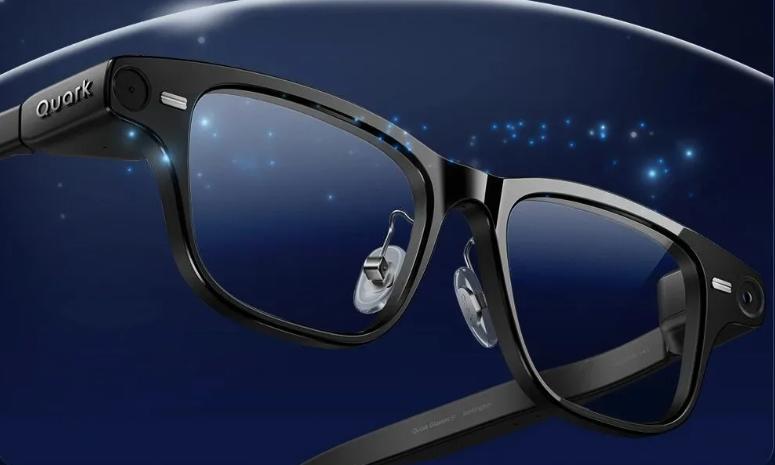
Quark AI Glasses S1, image source: Quark AI Glasses official WeChat public account
The Li AI Glasses Livis launched by Li Auto is an AI shooting glasses, with its starting point and focus on the "human - car - home" ecosystem. The lowest price after national subsidies for this product is 1699 yuan.
Regardless of which category they are in, the core of developing AI smart glasses is to allow users not to take out their mobile phones in specific scenarios and liberate their hands to the greatest extent.
However, it is not realistic to equip a product that weighs no more than 60g and needs to be worn on the nose daily with too many functions and accessories. Therefore, choices must be made in the development direction.
The choices made by Quark and Li Auto depend on their own advantages.
Quark, backed by Alibaba, can not only equip its products with the Tongyi Qianwen large - scale model but also link with Alibaba - affiliated ecological applications such as Gaode Map and Alipay. Developing AI + AR glasses can demonstrate more possibilities of "mirroring" mobile applications.
As an automobile brand, Li Auto knows more about car - related matters than other usage scenarios outside of vehicles. Therefore, its AI glasses products can directly control the car, enabling car owners to liberate their hands as much as possible in all aspects of the car - using scenario.
If we compare the Quark AI Glasses G1, which also has no display, with the Li AI Glasses Livis, the difference in their strategies to break the situation becomes more obvious.
Taking the voice assistant function as an example, the voice assistant of the Quark AI Glasses G1 can support functions such as knowledge Q&A, real - time news, general knowledge of life, navigation guidance, shopping price comparison, voice - command payment, and text translation.
The voice control function of the Li AI Glasses Livis is mostly related to the vehicle. Users can control the car's air - conditioning, refrigerator, flashing lights and horn, charging, trunk, charging port, windows, steering wheel heating, etc. through the glasses, and can also remotely turn on the air - conditioning and make the vehicle drive out of the parking space by voice.
In terms of hardware and accessory design, both sides have also developed new ideas.
For example, in terms of battery life, the Quark AI Glasses adopt a replaceable battery design, allowing users to quickly replace the main battery by plugging and unplugging the temples; Li Auto designed a wireless charging glasses case, which itself can support wireless charging, making it very suitable for driving scenarios.
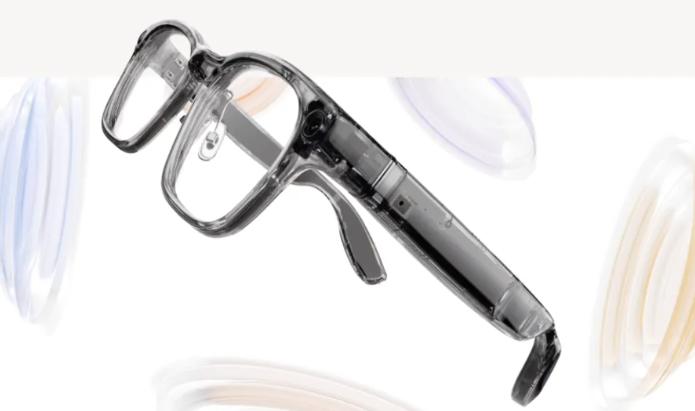
Li AI Glasses Livis, image source: Li Auto official WeChat public account
Actually, in the AI smart glasses market, it is a common practice for large companies not to blindly add functions to products.
Previously, Baidu launched the AI Smart Glasses PRO, which is also a glasses without a display function. Based on Baidu's AI ecosystem, its main selling points are shooting ability, AI translation, AI object recognition, AI memo, AI recording, etc.
Lenovo also launched an AI glasses. As an electronic product company, Lenovo has certain advantages in display. Therefore, the AI glasses it launched have a display function, and its main selling points are multi - language translation, AI Q&A, intelligent navigation, AI teleprompter, etc., but it cannot take pictures.
Overall, large companies start from their own advantages. Whether they develop more popular products or focus on niche markets, they are all good entry directions.
How can "Rokid and others" resist the invasion of large companies?
As more and more large companies enter the market, the competition pressure on startup companies in the industry has increased.
Before the market "boomed", most startup companies in the industry focused on AR and VR glasses technologies, and their technological advantages also lie in optical display.
Take the three brands of Rokid, Thunderbird, and XREAL as examples.
The highlight of the Rokid Glasses launched by Rokid is its display. It uses a single - green Micro - LED micro - display + diffractive waveguide solution, allowing users to clearly see virtual information while wearing it without obvious eye defocus or deviation.
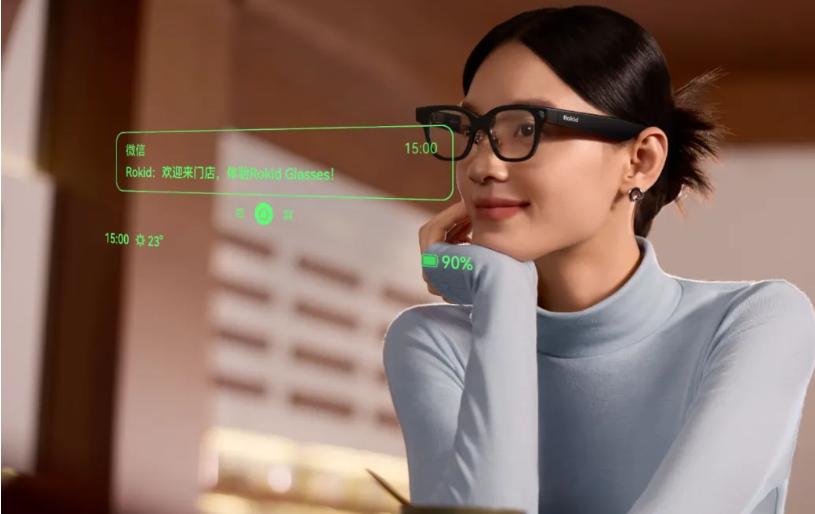
Image source: Rokid official WeChat public account
Currently, the products of Thunderbird and XREAL are still mainly consumer - grade AR glasses, and their R & D focuses on visual quality, full - color imaging, spatial display, and immersive experience.
Among them, the Thunderbird X3 Pro launched by Thunderbird on May 27th this year is the world's first mass - produced binocular full - color MicroLED + waveguide AR + AI glasses, which is equipped with Thunderbird's self - developed X - cube full - color MicroLED light engine and nano - lithography RayNeo waveguide technology;
The AR glasses product XREAL One Pro under XREAL is equipped with its self - developed X1 chip, which is customized for spatial display. It can solve problems such as computing power distribution, latency control, and bandwidth optimization between the glasses and the computing unit, and achieve an ultra - low latency of 3 milliseconds.
At the same time, the XREAL One Pro also achieved a 57° field of view for the first time, with the visible area increased by more than 63% compared with the previous generation product.
However, the key is that there is an essential difference between the AI smart glasses market and the AR glasses market.
The biggest difference between the two lies in market demand. Users of AI smart glasses hope that the glasses can be worn for a long time in daily life and help them liberate their hands. Therefore, whether the display is in color and whether the experience is immersive are not their key concerns. The weight and intelligence of the product are.
In this case, many AI smart glasses without a display or with only a monochrome display are welcomed.
Secondly, startup companies are inferior to large companies in terms of AI technology support and the linkage of software application matrices.
Behind several large companies entering the AI smart glasses market, there is a accumulation of AI technology. For example, Quark is backed by Alibaba's Tongyi large - scale model; Li Auto has technological foundations such as the AI Li Auto Assistant; Baidu has the Wenxin large - scale model, etc.
However, startup companies lack technological accumulation in AI large - scale models. Facing the aggressive entry of large companies, startup companies are under great pressure.
As Zhu Mingming, the founder of Rokid, once said in an interview, "We always have respect for large companies. They are not incapable; they are just observing or testing the waters on a small scale. So the competition will never be easy."
So, how can "Rokid and others" compete with large companies?
"Display" is a key part of smart glasses. Because it is closely related to the comfort of users when wearing the product. Even if an AI smart glasses can replace all the functions of a mobile phone, once the display of the product is not well - designed, users will easily get tired after wearing it for a long time, and the sales volume will also be greatly affected.
In addition, from the case of RayBan Meta, we can see that it is not the products with stronger AI technology that are more popular. Instead, being daily - usable, practical, and cost - effective are more important.
This market preference allows smart glasses startup companies, although not having an advantage in AI technology, to occupy a place in the highly competitive industry.
According to data officially released by Rokid, 40,000 units of Rokid Glasses were sold through all channels within 5 days of its launch.
The increasing popularity of AI + AR glasses does not mean that AR glasses will lose their market. AR glasses with the family as the main usage scenario will still be chosen by many consumers.
Thunderbird and XREAL have also recently achieved good sales results. According to Thunderbird's Double Eleven battle report, Thunderbird ranked first in AR glasses sales during the Double Eleven period from 2022 to 2025 for four consecutive years.
According to data released by IDC, XREAL's shipments in the second quarter of 2025 increased by 113.7% year - on - year, ranking second in the global AR + VR market, only after Meta. As of June 30, 2025, XREAL's cumulative shipments exceeded 700,000 units.
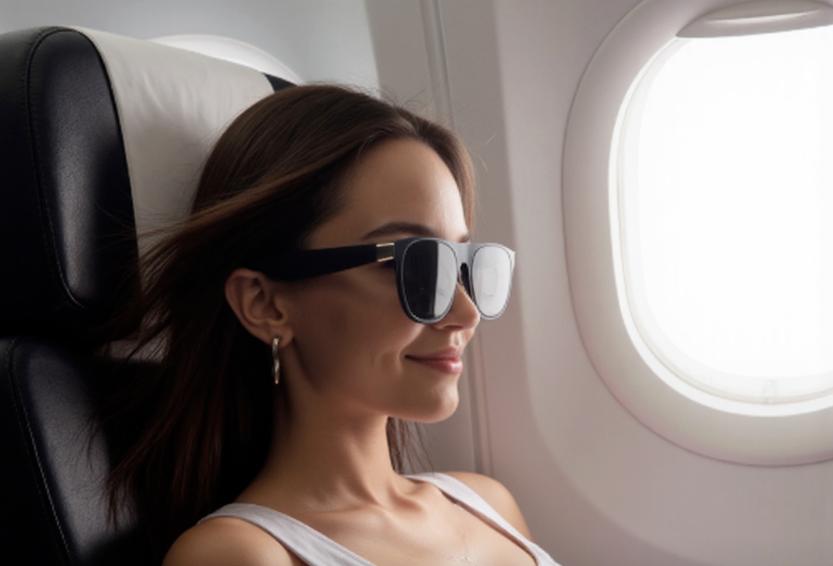
Image source: XREAL official WeChat public account
Overall, whether from the perspective of technological breakthroughs or market feedback, startup companies in the smart glasses market can still compete with aggressive large companies.
Is the entry point more important than profit? Will there be a price war in the AI glasses market?
Judging from the current sales situation of Quark and Li Auto, their performance is not bad.
Data from the Quark Smart Devices flagship store on Tmall shows that more than 8,000 people have paid for the Quark AI Glasses S1; according to an exclusive report by Zhineng Yongxian, an insider from Li Auto revealed that less than 2 hours after the product launch, "(the product) was out of stock, and most of the inventory was sold out."
There are two factors driving the sales. On the one hand, consumers in the industry are still in a stage of being curious about this product category. On the other hand, some products launched by large companies do not have a display function, so their prices seem very attractive.
In addition to the Li AI Glasses Livis and Quark AI Glasses G1 mentioned above, the official price of the Xiaodu AI Glasses PRO is 2299 yuan; the standard version of Xiaomi AI Glasses is only 1999 yuan; the price of the Huawei Smart Glasses 2 Titanium Round Frame Optical Glasses is 2299 yuan.
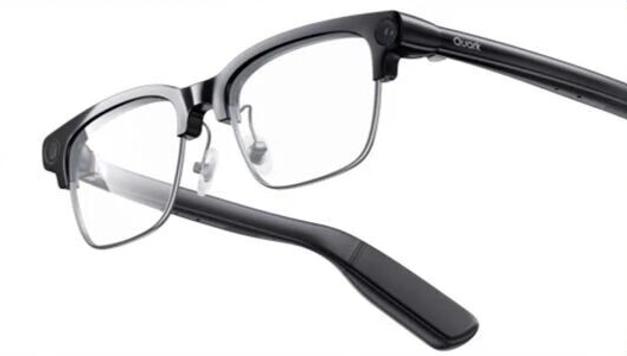
Quark AI Glasses G1, image source: Quark AI Glasses official WeChat public account
Looking at the Rokid Glasses under Rokid, its pre - sale price was only 2499 yuan, and it increased to 3299 yuan at the official launch. This may mean that after evaluation, Rokid thought that 2499 yuan could not cover the cost.
It is not just Rokid. "High - cost display technology" is a