Elon Musk has drawn global attention. Is the largest IPO in history coming?
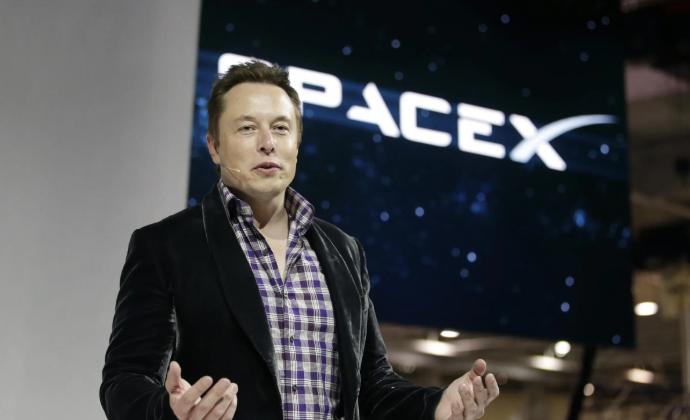
On December 10, media reports indicated that SpaceX, the space exploration company owned by Elon Musk, is advancing its plan for an initial public offering (IPO). The aim is to raise over $30 billion, with a valuation target of approximately $1.5 trillion.
This valuation of SpaceX is close to the market value that Saudi Aramco reached during its IPO in 2019. If this fundraising is successful, the amount raised by SpaceX in this IPO will exceed the $29 billion raised by Saudi Aramco at that time, potentially making it the largest IPO in history.
Some informed sources said that SpaceX's management and its advisors are striving to complete the listing between mid - 2026 and the second half of the year. However, the specific time of the IPO may be adjusted due to market conditions and other factors. One source even said that the listing could be postponed to 2027.
SpaceX is expected to have a revenue of about $15 billion in 2025, increasing to $22 - 24 billion in 2026. Most of this revenue will come from the Starlink satellite internet service. On December 6, Musk posted on his social media platform: "SpaceX has maintained positive cash flow for years and conducts two regular stock buybacks annually to provide liquidity to employees and investors."
It is reported that SpaceX plans to use part of the funds raised from the IPO to develop space - based data centers, including purchasing the chips required to operate these facilities.
As SpaceX's Falcon 9 rocket cuts through the night sky, it is also igniting the imagination of the global capital market. However, beneath the brilliant launch flames lies a tricky question - is the $1.5 trillion valuation just a capital frenzy?
"The Earth is the cradle of humanity, but humanity cannot forever live in the cradle." This famous quote by Tsiolkovsky is now being reinterpreted by SpaceX under Musk's leadership.
As SpaceX advances its IPO plan, this space exploration company that made rocket reusability a reality is quietly paving the way to the public market with an internal valuation of over $800 billion.

Space Capitalization: Controversial Valuation Logic
When SpaceX aims for an overall valuation of about $1.5 trillion in its IPO, this figure has exceeded Tesla's current market value of approximately $1.46 trillion. The global financial community has begun to wonder whether this is a rational valuation or a space bubble?
More notably, if 5% of the shares are sold as planned, the fundraising scale will reach about $40 billion, far exceeding the $29 billion record set by Saudi Aramco in 2019 for the largest IPO. This means that SpaceX could become one of the top 10 companies with the highest market value globally.
However, the price of about $420 per share set in internal share transactions values the company at "only" over $800 billion, showing a huge gap compared to the IPO target valuation.
This exposes a question: Is the market willing to pay nearly double the premium? A Wall Street analyst said bluntly: "SpaceX needs to prove not only the feasibility of space exploration but also the sustainability of its business model."
The shock of the $1.5 trillion figure lies not only in its enormity but also in its symbolic meaning.
SpaceX aims for an overall valuation of about $1.5 trillion in its IPO. This figure not only exceeds the current market value of Tesla, another company owned by Musk, which is about $1.46 trillion, but also approaches the historical record set by Saudi Aramco.
Analysts from investment banks pointed out that SpaceX's valuation logic is creating a new model: "Discounted future cash flow + strategic value premium." Traditional discounted cash flow models struggle to evaluate revolutionary projects like Starlink. Analysts have begun to introduce the concept of "strategic option value" - regarding SpaceX as the gateway for humanity to enter the space economy era.
Three Business Pillars Support the Trillion - Dollar Market Value Story
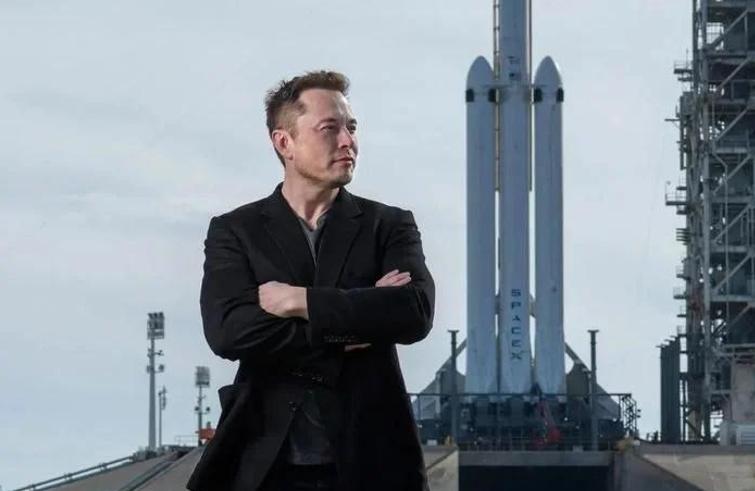
SpaceX's story is built on three major business pillars:
Rocket launch services, Starlink satellite internet, and future space data center plans. These three support each other, forming a unique business closed - loop.
The rocket business is transitioning from a "cost center" to a "profit center." The reusable technology of the Falcon 9 is mature, and the cost per launch has dropped to about $15 million, which has an absolute advantage compared to the $60 - 100 million cost of traditional rockets. This business provides stable cash flow for subsequent projects.
What really excites investors is Starlink. The revenue from approximately 8 million active users currently, combined with the under - developed maritime, aviation, and government markets, paints a promising growth prospect for SpaceX.
The space data center plan, although still in its early stages, is the most imaginative. The concept is to place data centers in Earth's orbit, taking advantage of the low - temperature environment in space to reduce cooling costs and transmitting data via lasers. A research report from Morgan Stanley pointed out: "If this idea becomes a reality, it will revolutionize the entire cloud computing industry."
Capital Changes in the Space Industry
When SpaceX enters the public market, it will change not only its own capital structure but also the entire industry's ecosystem and valuation system.
After the news of SpaceX's IPO spread, EchoStar, which agreed to sell spectrum licenses to SpaceX, rose by up to 12% during intraday trading, hitting a new high for the day.
The space transportation company Rocket Lab also saw a 3.6% increase. This ripple effect demonstrates the interconnection of the space economy concept.
However, not all space companies are looking forward to SpaceX's entry. The chief financial officers of some traditional aerospace companies privately expressed concerns: "SpaceX's valuation may distort the capital allocation of the entire industry."
SpaceX's IPO may lead investors to have unrealistic profit expectations for space companies, putting financing pressure on those still in the red but engaged in important technology R & D.
Analysts from international investment banks pointed out that the space economy is shifting from a "state - led" to a "private - capital - driven" model. According to JPMorgan's calculations, by 2040, the global space economy could grow from the current approximately $447 billion to over $1 trillion.
This growth will be mainly driven by commercial applications such as satellite internet, space manufacturing, and space tourism, and SpaceX has a presence in each of these fields.
Multiple Considerations Behind the Overall Listing
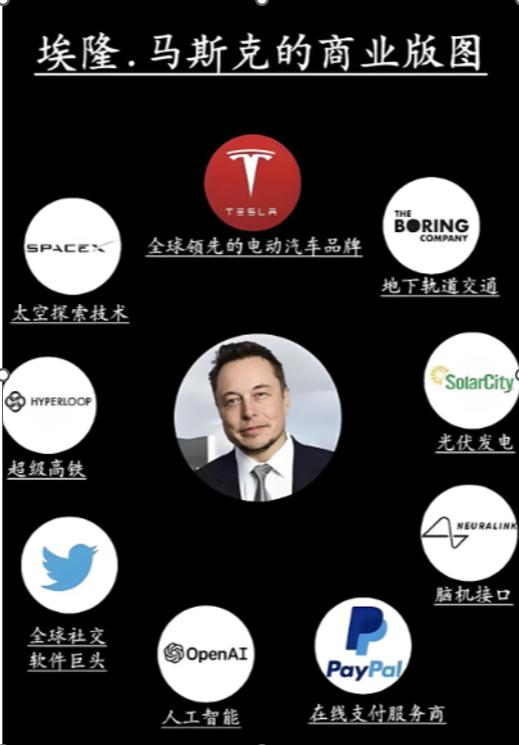
SpaceX's path to the public market is not a straight line but has undergone multiple strategic adjustments. This reflects the change in the company's development focus and the practical considerations of the capital market.
The early idea was to spin off the Starlink business for a separate listing. The logic of this plan was clear: to let the market evaluate SpaceX's traditional rocket business and the promising satellite internet business separately, thus maximizing the valuation.
However, as the profitability of the rocket business has increased and the synergistic effect between the two major businesses has emerged, an overall listing has gradually become a more attractive option. SpaceX's rocket launch capabilities provide a unique advantage for Starlink to deploy satellites at low cost, and Starlink's revenue, in turn, supports the R & D of the new - generation Starship.
This "self - sufficient" business model is exactly what Musk has been pursuing. He once said on social media: "SpaceX has maintained positive cash flow for years and conducts two regular stock buybacks annually to provide liquidity to employees and investors."
Financial self - sufficiency allows SpaceX to choose the listing time more calmly.
It is reported that the company may go public as early as the second half of 2026, but the listing could also be postponed to 2027 due to market conditions. This flexibility is particularly valuable in a volatile market environment.
Hidden Worries Behind the High Valuation
Behind the $1.5 trillion valuation lies great expectations, but there are also risks and challenges that cannot be ignored.
SpaceX currently expects its revenue in 2026 to be $22 - 24 billion. Calculated at a $1.5 trillion valuation, the price - to - sales ratio will be as high as 62.5 times. In contrast, the average price - to - sales ratio given to technology companies in the current market is much lower.
Another potential risk is the high dependence on Musk's personal charm and decision - making. Although SpaceX has established a professional management team, the company's development direction and major decisions are still closely linked to Musk. Some institutional investors are concerned about the "key - person risk."
Competition from traditional aerospace enterprises and emerging space companies is intensifying. Competitors such as Blue Origin and United Launch Alliance are accelerating their catch - up, while OneWeb and Amazon's Project Kuiper are also competing in the satellite internet field.
Regulatory risks also cannot be ignored. The allocation of space orbit resources and radio spectra is becoming increasingly tense, and regulatory authorities around the world are tightening their supervision of space activities. Starlink has already faced criticism from the astronomy community, claiming that its satellites affect astronomical observations.
Technical risks also exist. Although the Falcon 9 has proven its reliability, the full success and commercialization schedule of the new - generation Starship are still uncertain. New businesses such as space data centers are still in the early stages and face many technical challenges.
Capital Game: Disagreements Among Institutional Investors
Facing SpaceX's IPO, institutional investors have shown obvious differences in their attitudes. This divergence reflects different views and risk appetites in the market towards the space economy.
Growth - oriented investors, especially those funds focused on disruptive technologies, are highly interested in SpaceX. They believe that the space economy is the next growth frontier for humanity, and SpaceX is an undisputed leader in this field. These investors are more willing to pay a premium for long - term growth potential.
Value - oriented investors are more cautious. They point out that even according to the most optimistic revenue forecasts, SpaceX's valuation has already overestimated its growth for many years to come. A value - oriented fund manager said: "We prefer to wait and see if SpaceX can deliver on its growth promises."
International investment banks also have different attitudes towards SpaceX. Investment banks such as Goldman Sachs and Morgan Stanley, which actively promote the listing of technology companies, naturally favor SpaceX, while some traditional investment banks are more cautious.
Notably, sovereign wealth funds and Middle Eastern capital have shown particular interest in the space economy. Countries such as the United Arab Emirates and Saudi Arabia are actively investing in space - related industries, and this capital may become an important participant in SpaceX's IPO.
A first - stage Falcon 9 rocket that had completed a mission and was successfully recovered is hanging in the atrium of SpaceX's headquarters. The slogan on the fairing, "We were meant to leave," implies humanity's determination to venture into space.
At SpaceX's Starship base in Texas, Musk once pointed to the Starship prototype and said: "This ship will eventually take us to Mars."
Now, this ship will also take the Earth's capital into the vast black ocean of space.
This article is from the WeChat official account "Investment Banking Circle". Author: Senior Sister in Investment Banking. Republished by 36Kr with permission.