Tsinghua University is closing in on Google, ranking second in the number of papers at the AI conference NeurIPS, with China accounting for half of the total.
NeurIPS 2025 witnessed a historic divergence: Tsinghua University narrowly closed in on Google, and Chinese AI achieved a "qualitative leap" from quantity accumulation to innovation in underlying architectures. Between the dual venues in San Diego and Mexico City, visa barriers divided the physical space. This is a "tale of two cities" about computing power, talent, and the right to define technology.
As one of the largest annual academic events in the global AI field, this year's NeurIPS presented an unprecedented sense of fragmentation: one conference, two main arenas - on one side is the "backyard" of Silicon Valley, the holy land of computing power and capital, and on the other side is a "parallel universe" forcibly formed due to visa barriers.
Behind the rolling acceptance list on OpenReview, a more historically significant turning point is emerging: Tsinghua University, China's top - tier institution, is approaching the long - standing hegemon Google in an unstoppable manner.
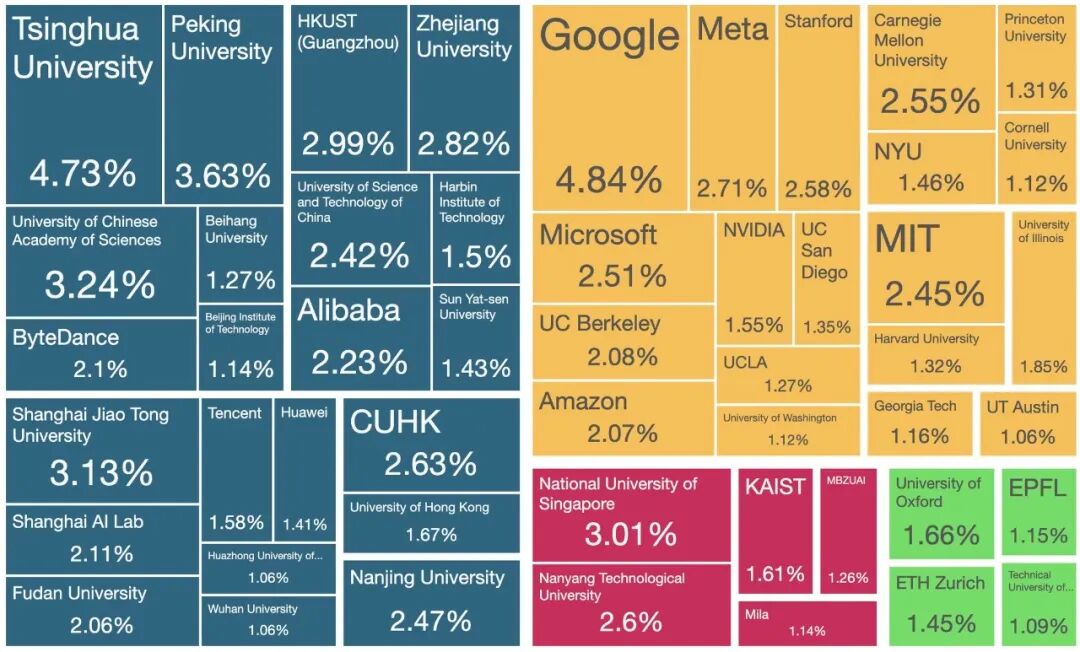
Sources of papers at NeurIPS 2025, Image source: AIWorld
Behind the numbers, two completely different scientific research ecosystems are meeting head - on in the deep waters.
Google is still number one, but Tsinghua is about to catch up
For a long time, the acceptance list of NeurIPS has been a wall of merit for Silicon Valley giants.
Google, Meta, and Microsoft. These names represent infinite computing power, top - tier salaries, and the right to define the future.
However, the data from 2025 indicates that this pattern is loosening.
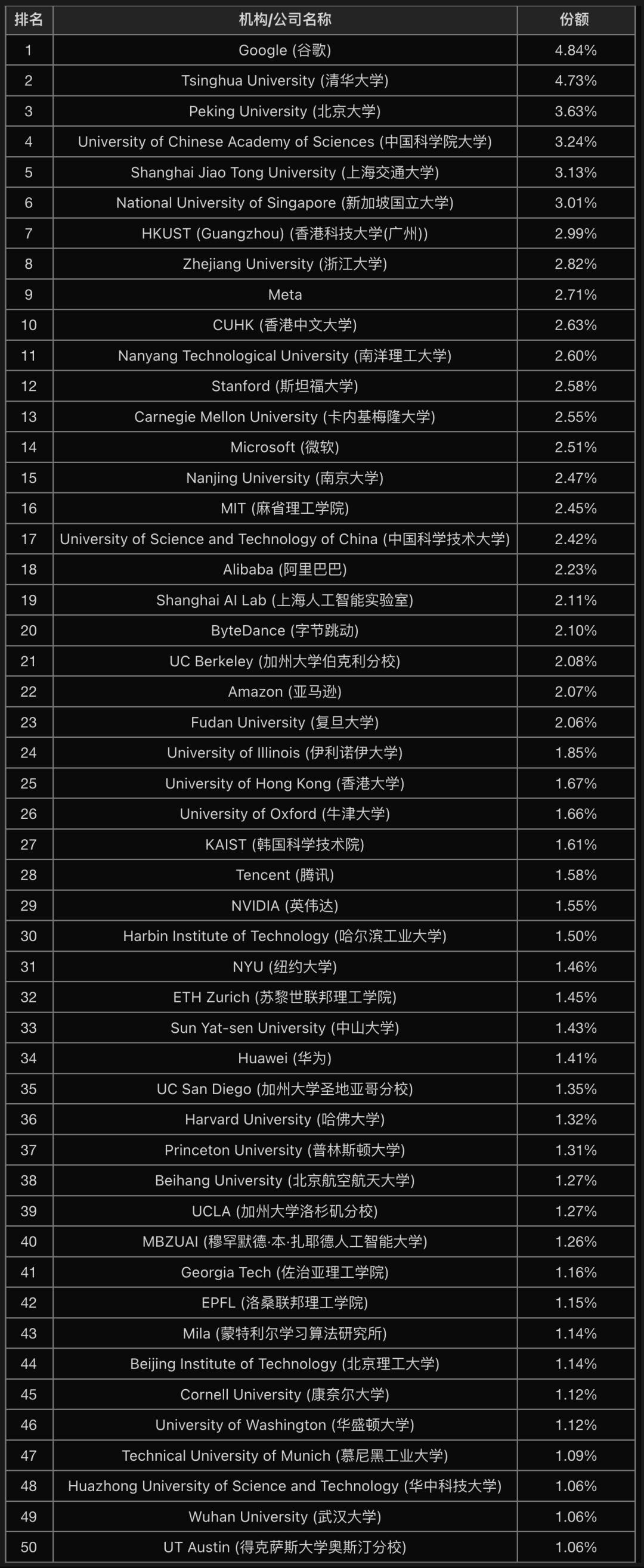
According to the dynamic data analysis of AI World, among the 5,526 papers accepted at NeurIPS 2025, the institutional landscape has undergone a violent upheaval:
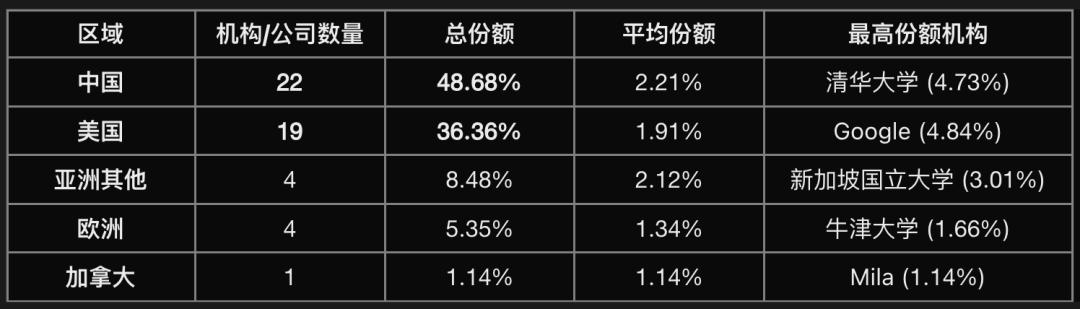
China has occupied half of the global share.
Google still barely maintains the top global share, accounting for 4.84%.
Tsinghua University follows closely with a 4.73% share, narrowing the gap to only 0.11%.
Peking University ties for third with 3.63%.
The four traditional top - tier universities in the computer world are: Stanford University (2.58%), Carnegie Mellon University (2.55%), Massachusetts Institute of Technology (2.45%), and University of California, Berkeley (2.08%).
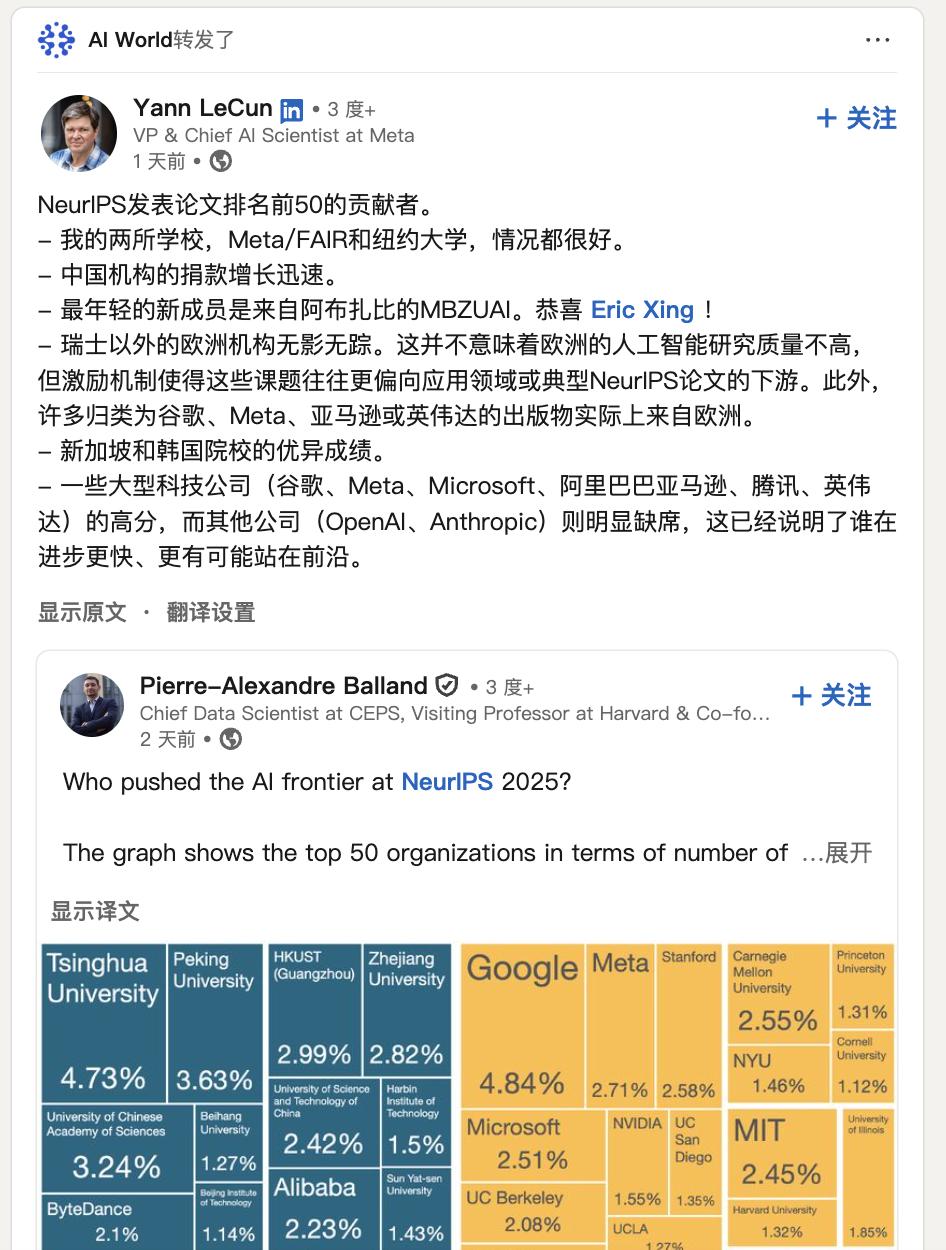
Turing Award winner Yann LeCun also reposted and published his interpretation and comments.
This is a highly symbolic moment.
In the final sprint of the marathon, the leading Silicon Valley giants can hear the heavy breathing behind them.
This sight of "universities surrounding giants" reveals the essential differences between the scientific research ecosystems of China and the United States:
AI innovation in the United States is highly concentrated in technology giants with trillion - dollar market values, forming a monopoly on computing power and data;
While China's innovation engines are distributed among top - tier universities and laboratories. Relying on a high density of talent and policy - driven resource allocation, China has achieved an amazing breakthrough.
The dividing line of the landscape is no longer just national borders, but city clusters. Global AI research is converging towards three core hubs: Beijing, Shanghai, and the San Francisco Bay Area.
The rise of Tsinghua and Peking Universities is an echo of decades of investment in basic education.
Although the San Francisco Bay Area is challenged in terms of quantity, it still holds the right to define "the next big thing".
Breaking through in quality, from "model training" to defining the underlying layer
In the past, the Western academic community often looked at Chinese AI papers with prejudice, believing that most of them were "padding" in model fine - tuning or application levels.
However, the award list of NeurIPS 2025 is like a heavy hammer that shatters this stereotype.
The accumulation of quantity has finally triggered a qualitative change at the critical point.
One of the most eye - catching Best Paper Awards at this conference went to the Tongyi Qianwen team of Alibaba.
This paper titled "Gated Attention for Large Language Models" carried out a surgical innovation on the core mechanism of Transformer.
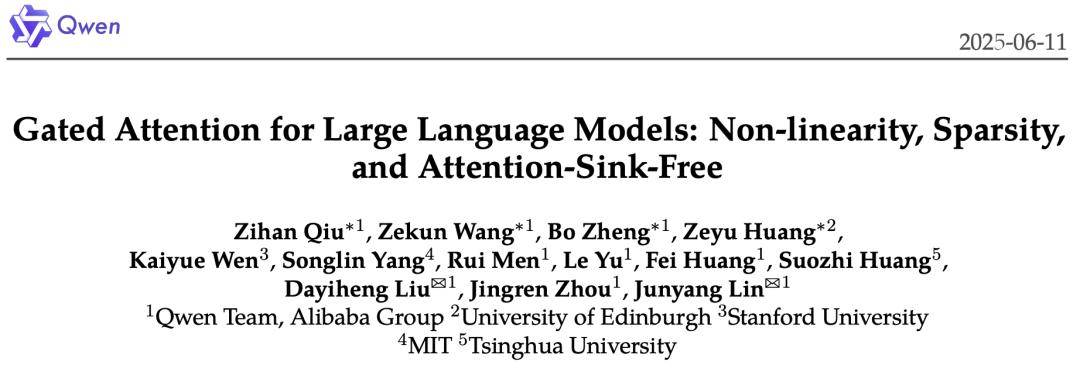
Against the backdrop of high LLM inference costs, the Tongyi Qianwen team proposed a gated attention mechanism with non - linearity and sparsity, which not only solved the "attention trap" in long - text processing but also significantly improved model efficiency.
Chinese technology companies are no longer satisfied with being "porters" of open - source models and have begun to involve themselves in the right to define the underlying architecture.
When the researchers of Tongyi Qianwen stood on the podium, they proved that Chinese industry has the hard power to compete with DeepMind in basic research.
Meanwhile, the Test of Time Award was given to the classic work "Faster R - CNN" from ten years ago, with the authors being Ren Shaoqing, He Kaiming, Ross Girshick, and Sun Jian.
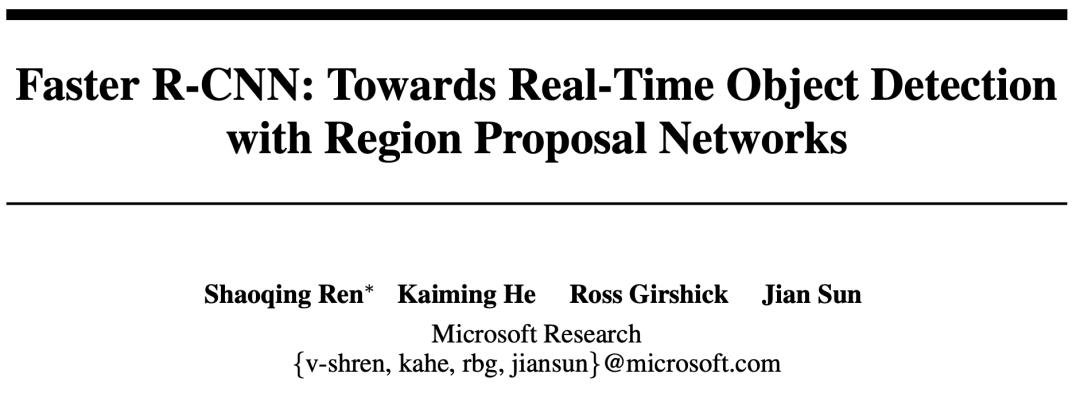
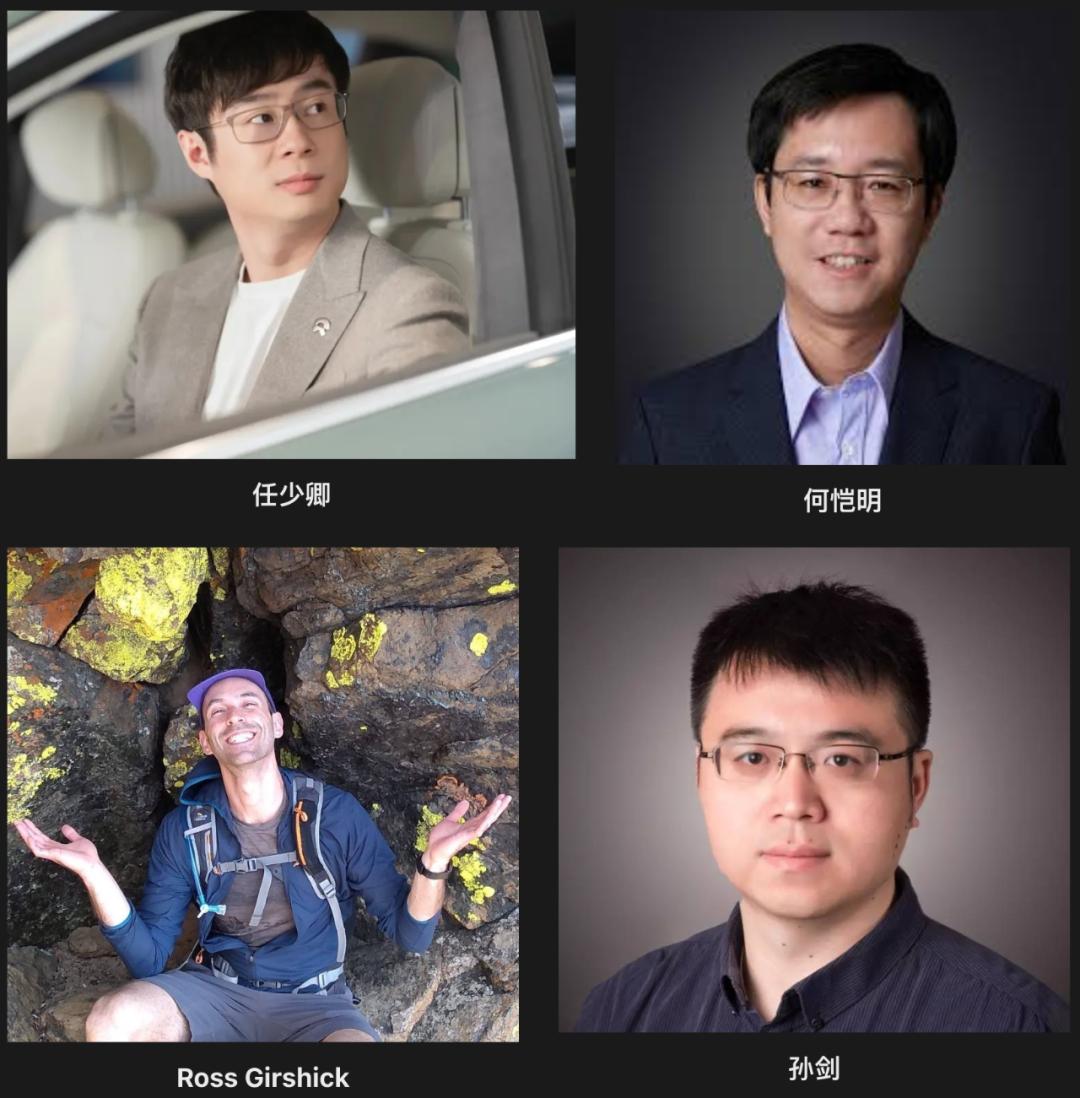
This award is like a lighthouse, reminding the world that the rise of Chinese researchers is not an overnight phenomenon.
As early as the early days of the deep - learning boom, institutions like Microsoft Research Asia, known as the "military academy" of AI, had sown seeds that still have an impact today.
The fragmented gathering, visas, satellite cities, and the return of talent
The epic feeling of NeurIPS 2025 comes more from the historical background in which it is set.
This conference is deeply marked by geopolitics.
In addition to the main venue in San Diego, the conference unexpectedly set up a parallel satellite venue in Mexico City.
This is a helpless compromise.
For many Chinese scholars involved in "sensitive technologies" such as chip design and large - model security, obtaining a U.S. visa has become a gamble with extremely low odds.
Thus, Mexico City has become a relay station connecting the two worlds.
Although it is only a wall away from San Diego in physical distance, these two parallel conferences seem to metaphorize the future of "two AI ecosystems".
Top Chinese brains that once "flew southeast" to the United States are now choosing to return due to the uncertainty of the U.S. scientific research environment.
The explosion of domestic research institutions such as Tsinghua University is largely due to this wave of talent return.
These institutions offer salaries comparable to those in Silicon Valley, vast computing resources, and more importantly - security.
Reference materials:
https://aiworld.eu/story/from - beijing - to - san - francisco - what - neurips - 2025 - reveals - about - ai - leadership
This article is from the WeChat official account "New Intelligence Yuan", author: New Intelligence Yuan. Republished by 36Kr with permission.