The overlooked "last mile"! After visiting eight major shopping malls in Guangzhou, I discovered the truth about AI glasses.
Recently, Google, the pioneer of smart glasses, re - entered the smart glasses market 13 years after the launch of Google Glass. At a small - scale event, Google showcased Project Aura, which was developed in collaboration with XREAL. This global first consumer - grade AR glasses product equipped with the Android XR platform and Gemini AI will be launched in 2026.
Before Google's return to the AI glasses market, tech giants such as Meta, Alibaba (Quark), and Baidu (Xiaodu) had already entered the arena. Lei Technology, which has been closely following the AI glasses market, even believes that if one has to select a category that best represents AI hardware in 2025, AI smart glasses (hereinafter referred to as "AI glasses") should be the top choice.
In the past year, AI glasses have repeatedly made it onto the hot lists of various platforms. The media and bloggers have rushed to experience them. On social platforms, people are discussing how to use them to record their lives, answer calls, and serve as personal AI assistants. Various brands have also been launching new products one after another.
Recently, even Li Auto, a company not typically associated with the tech circle, has launched its own AI glasses. The BOLON AI smart glasses jointly launched by Rokid and BOLON have also attracted significant attention.
Lei Technology recently published Six Smart Glasses Super Review: BOLON Becomes a Well - Rounded Contender, META Struggles to Adapt, which covers several AI glasses, including the newly launched BOLON AI smart glasses, Quark S1 smart glasses, and Meizu StarV Snap. Welcome to follow.
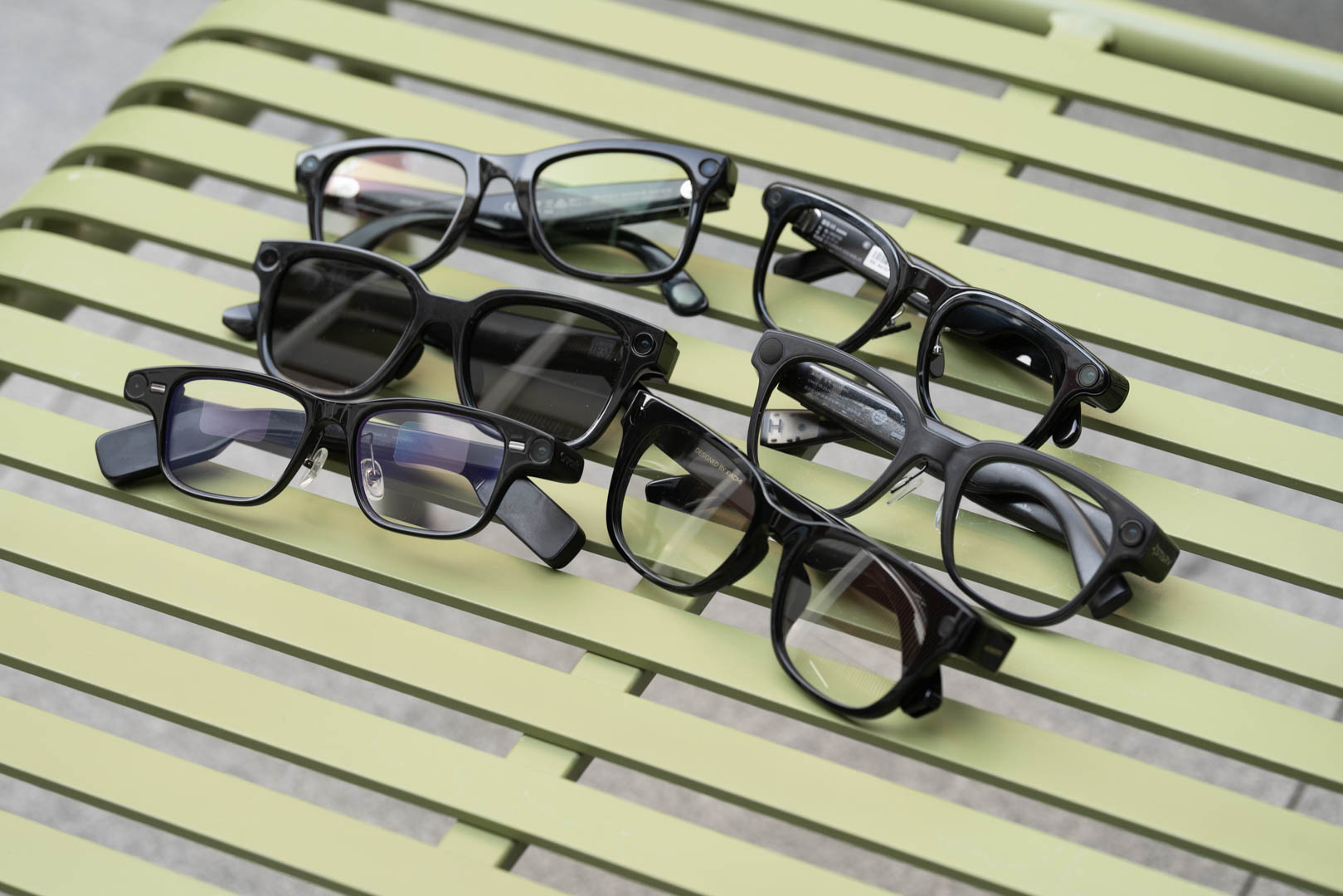
Image source: Lei Technology
To determine whether a technology category has truly matured, we only need to visit offline shopping malls. How are AI glasses selling offline? Are they everywhere or scarce? With this question in mind, Lei Technology spent a whole day exploring the core business district in Tianhe, Guangzhou. The answer was calmer and more realistic than expected.
AI Glasses Aren't Fully Ready in Guangzhou's "Huaqiangbei"
In Guangzhou, few places are more suitable for observing how new technologies and products enter people's daily lives than the Tianhe Road area from Gangding to Shipaiqiao and then to Tiyu Xi. This area was once known as "Guangzhou's Huaqiangbei," with dense shopping malls and a constant flow of people. From Brainworld to Taikoo Hui, WANLING MALL, and then from Zhengjia Square to Parc Central and Tee Mall, it can, to a certain extent, represent the consumption trends of a city.
Tee Mall, known as "China's First Mall," is located right outside the Tiyu Xi subway station (also known as "Hell West"). Even during non - peak hours on weekdays, there is a large flow of people. Next to it is Parc Central, which is often the first stop for many well - known brands entering Guangzhou.
In the past decade, this area has been the first stop for many new product categories. Logically, given the popularity of AI glasses, it should not be difficult to find offline experience points. However, when one actually arrives, the first thing noticed is their "absence."
Before coming, I saw online a store called President Optical (a high - end brand under Dr. Optical), which often promotes AI glasses and is located in Parc Central. However, in reality, this President Optical store has moved to another floor in Parc Central, and the storefront reads "Opening in November, Please Wait."

Parc Central, Image source: Lei Technology
It was already early December when I visited. A nearby clerk told me, "The renovation took longer than expected, and there has been no construction recently." The documents displayed on the facade also show that the store's construction period was from October 1st to October 31st.
This is just an example. In fact, even in Guangzhou's hottest business district, it is not easy to spot AI glasses.
At Tee Mall, even well - known eyewear retailers like Bright Eyes, which has collaborated with various brands, have not introduced AI glasses products. Another eyewear retailer, Optical 88 from Hong Kong, although it showcases a pair of "smart" glasses for cycling, only supports photochromic (light - induced color change) features and has no other smart functions.
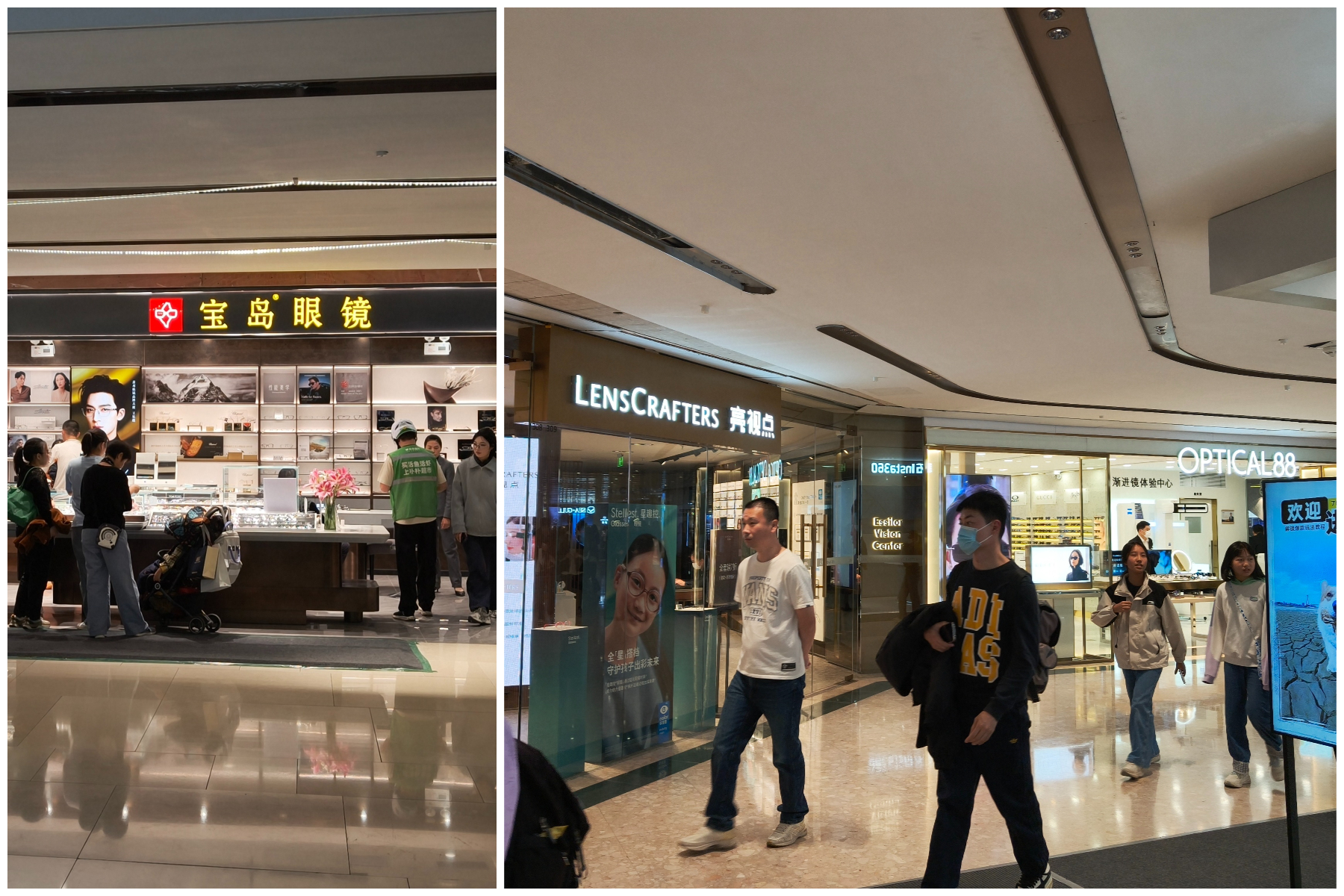
Tee Mall, Image source: Lei Technology
The same situation applies to WANLING MALL and Taikoo Hui, which is filled with high - end luxury brands.
In contrast, Zhengjia Square has a much stronger "AI glasses atmosphere." The Bright Eyes store here showcases Xiaomi AI glasses and the BOLON AI smart glasses jointly developed by Rokid and BOLON. Next door, there is also a BOLON brand store, which, as expected, displays the latest BOLON AI smart glasses.

Zhengjia Square · Bright Eyes, Image source: Lei Technology
Meanwhile, there is a newly opened Rokid experience store in Brainworld, which gathers various digital products. Here, one can experience Rokid Leqi glasses, BOLON AI smart glasses, and Rokid AR Lite (AR glasses). Compared to being a supporting role in other channels, AI glasses are the absolute stars here.
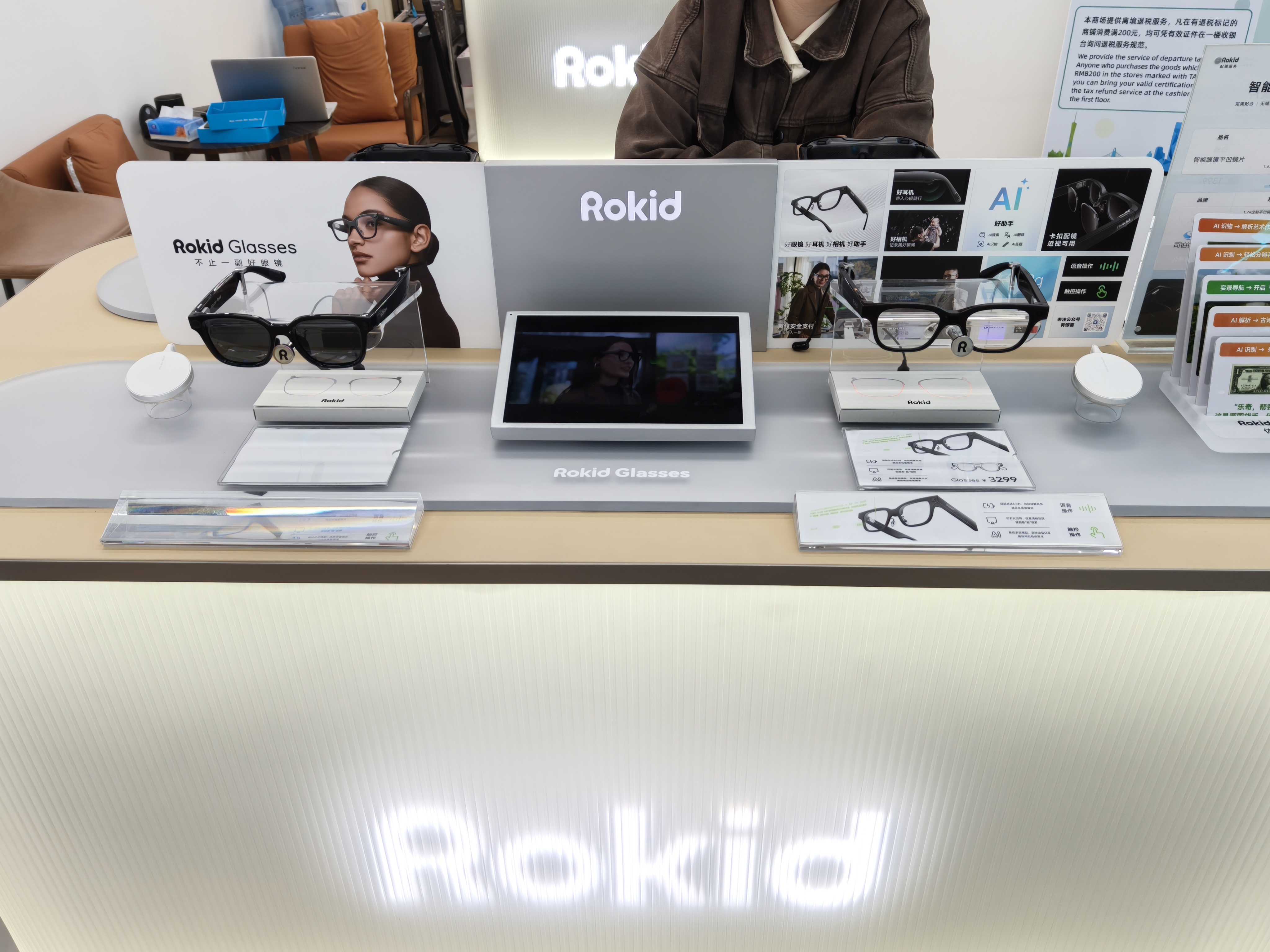
Rokid Experience Store, Image source: Lei Technology
Another advantage of Brainworld is that it attracts more digital product users, a group that is more likely to be interested in AI glasses. During the visit, people were attracted from neighboring stores. Similarly, the Xiaomi experience store at Tee Mall, as the only store in the vicinity displaying Xiaomi AI glasses, also attracted some consumers to inquire and experience.
It's also worth mentioning that a clerk at Dr. Optical in Zhengjia Square told me that the store originally displayed Xiaomi AI glasses, but currently only offers the glasses - fitting service in cooperation with Mingyue Lenses for Xiaomi AI glasses. The AI glasses are now mainly concentrated at Dr. Optical in Guangzhou Book Center.
However, during the on - site visit, there is no Dr. Optical at Guangzhou Book Center along Tianhe Road. The clerk was probably referring to the Dr. Optical store in Victoria Square next to the book center. This store does indeed have a collection of various AI glasses, including the latest Quark S1 smart glasses, BOLON AI smart glasses, Thunderbird V3, Meizu StarV View, and JIEHUAN AI audio glasses.
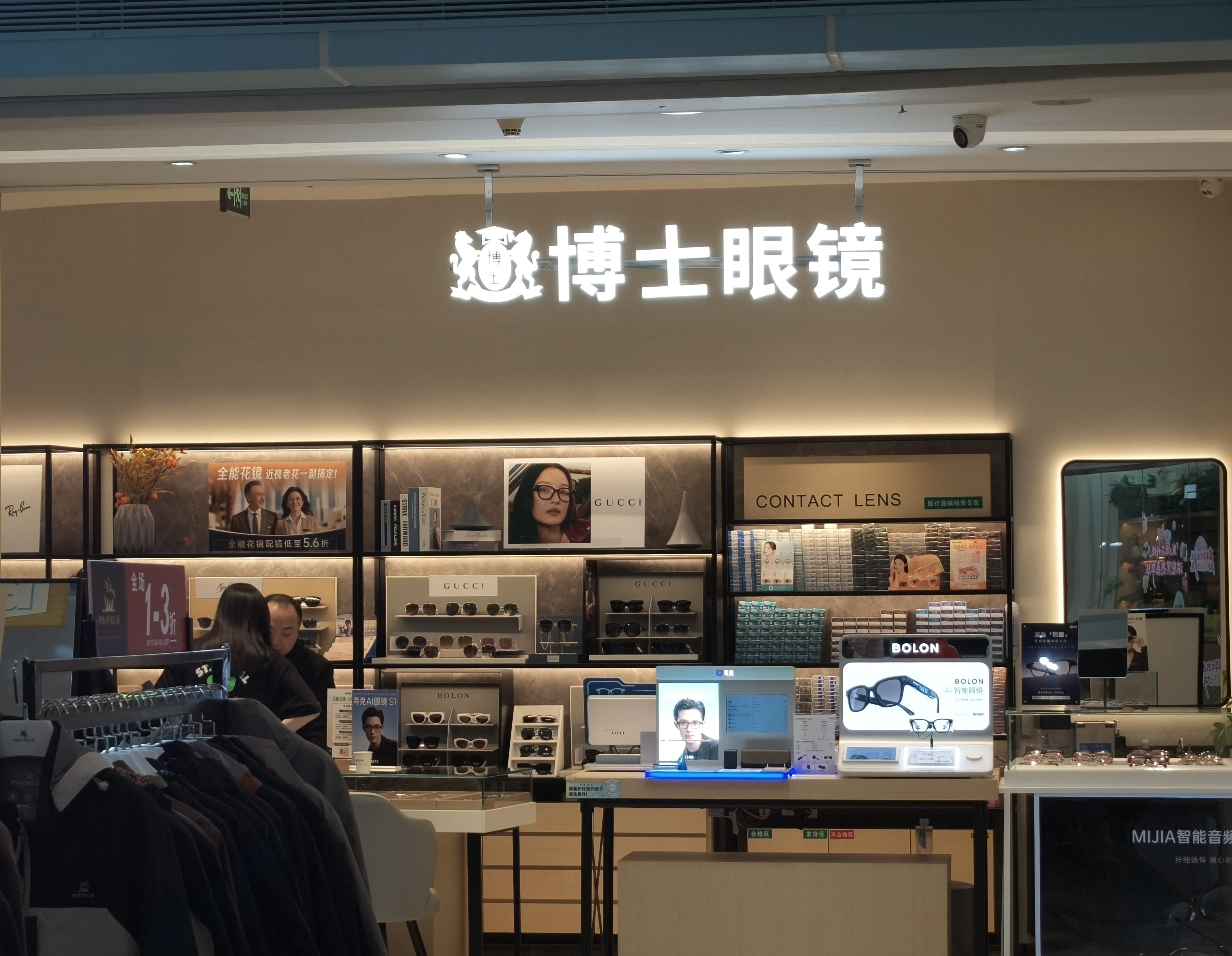
Image source: Lei Technology
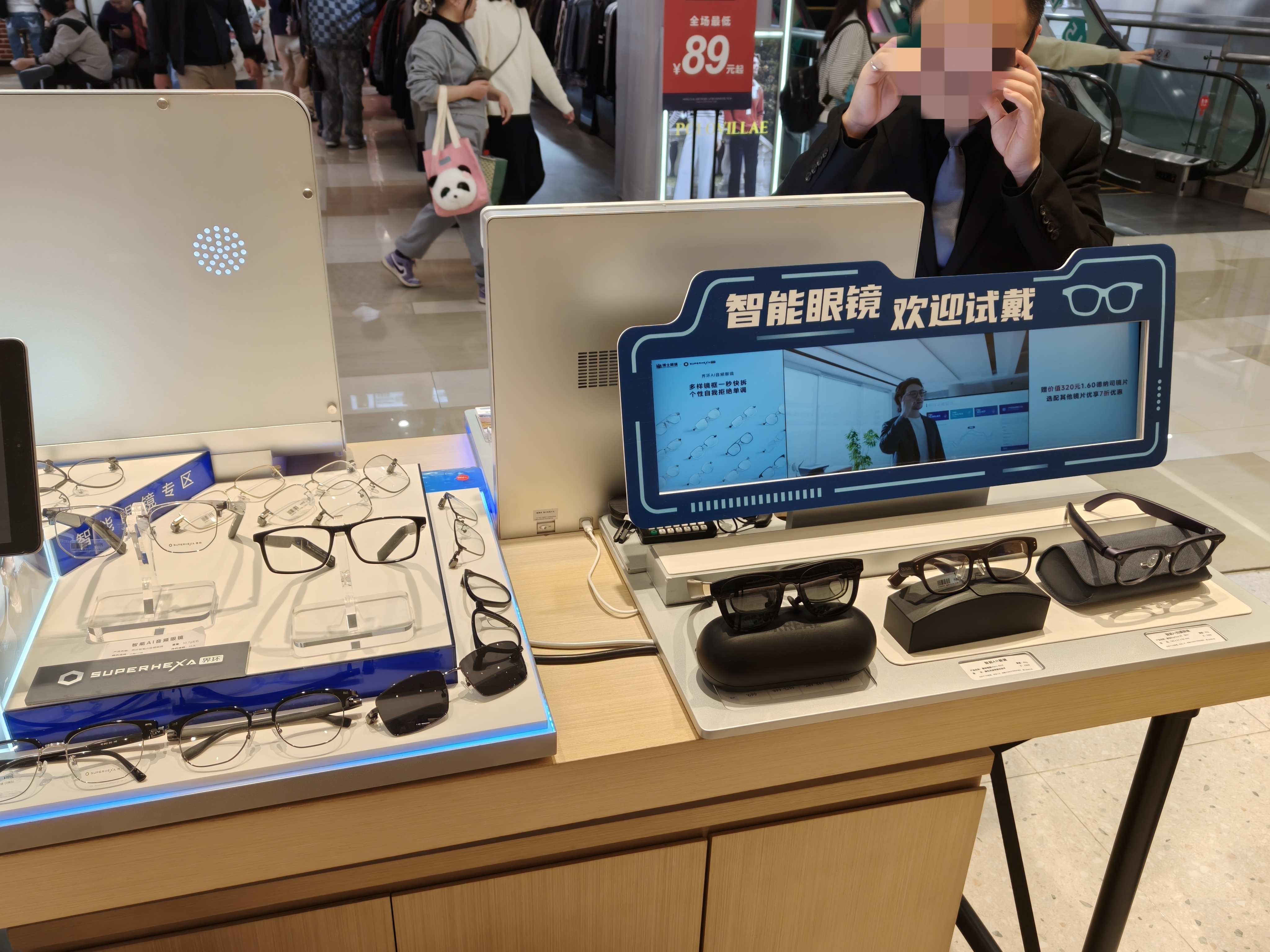
Another side of Dr. Optical, Image source: Lei Technology
Even so, as one explores further, a contrast becomes increasingly evident: This is one of the areas in Guangzhou with the highest consumer purchasing power and the most intense brand competition. However, the offline coverage of AI glasses is far from sufficient to match the online buzz. They are not completely absent, but their distribution is rather scattered.
Even for well - known brands like Xiaomi and Huawei, which have launched AI glasses, most of their experience stores don't even have a single display unit. When a clerk heard me ask about Xiaomi AI glasses, he was stunned for a couple of seconds before saying, "Our store hasn't introduced them. You can check online."
What does it mean when a product that is extremely popular online is hardly visible offline? At least in the core business districts of Guangzhou, AI glasses have not yet entered the "mainstream consumer channels." They are neither a competitor to mobile phones nor a must - see new product. They are far from being a technological experience that can attract users while they are out shopping.
Optical Retailers Lack Tech Know - How, and Digital Stores Struggle with Eyewear Fitting
It's not just about display and experience. Except for the Xiaomi and Rokid experience stores, where products need to be ordered from the official website, most traditional optical retailers offer on - the - spot purchase services (Quark S1 currently requires pre - ordering), allowing consumers to place orders and get the products right in the store.
In fact, there are significant differences in the overall experience between digital - oriented channels like the Xiaomi and Rokid experience stores and traditional optical retailers. There are two most obvious differences:
- Digital channels do not provide optometry and eyewear fitting services. Customers need to have their eyes tested at a third - party institution or channel. Although the official may offer customized lens services through partnerships, they cannot provide the one - stop eyewear fitting experience that traditional optical retailers can.
- In terms of store layout, most traditional optical retailers place AI glasses in a corner of the store. The BOLON brand store may pay more attention to its own products and place them in the most prominent position at the entrance, while the Rokid experience store mainly features its own products.
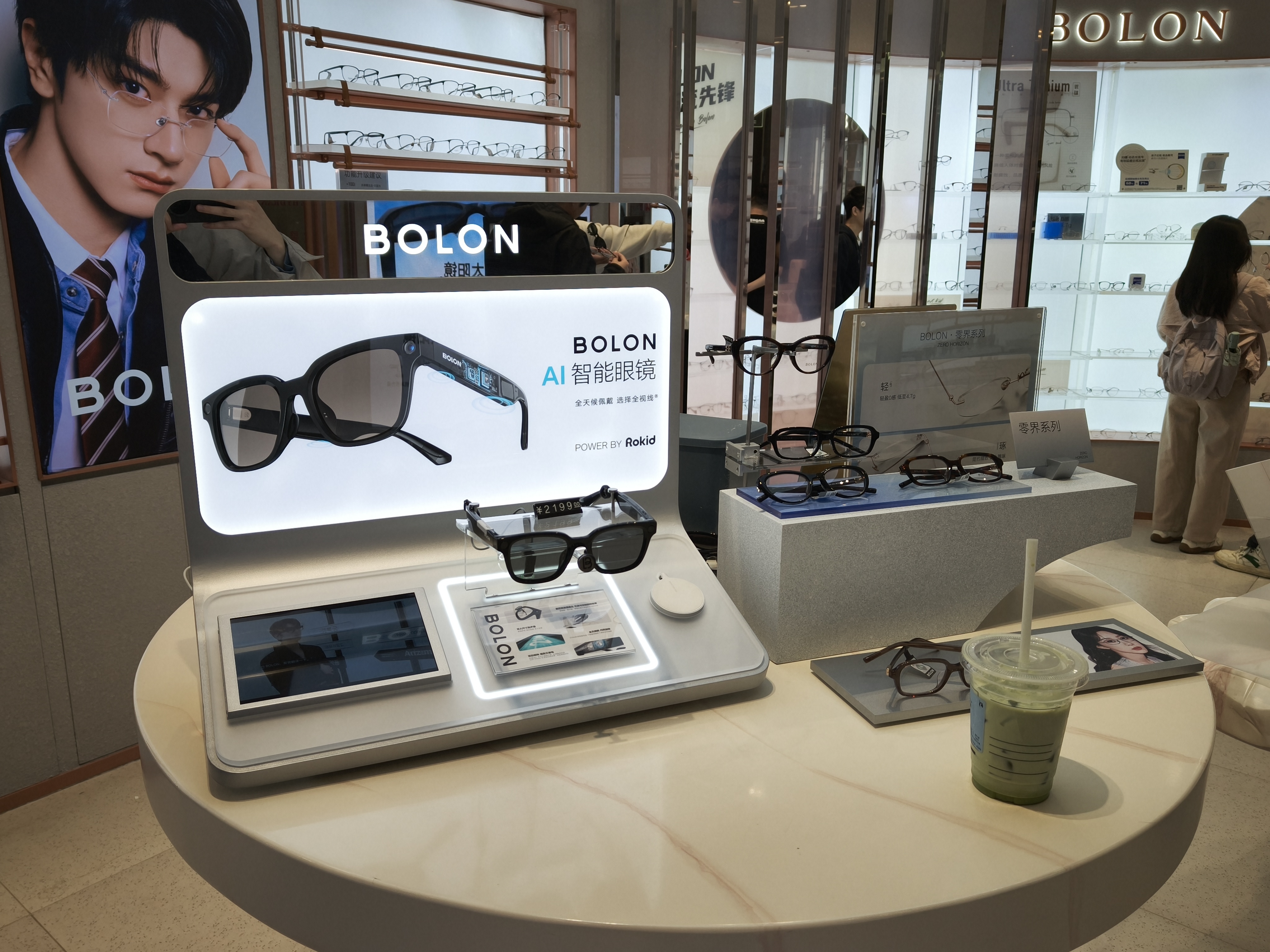
BOLON Brand Store, Image source: Lei Technology
Although AI glasses are labeled as "tech products," they also aim to be everyday eyewear. Therefore, when it comes to practical implementation, they cannot bypass the most traditional and practical aspect - eyewear fitting. Especially in the domestic market, AI glasses brands are mainly targeting the "upgrade" of China's 700 million myopic users. The key for myopic users to have an offline experience lies in professional optometry and eyewear fitting services.
This directly determines the "uniqueness" of domestic AI glasses in terms of product definition and channel construction. Most products, including Xiaomi AI glasses, Quark S1, Rokid Leqi glasses, and BOLON AI smart glasses, have included "all - day wear and use" in their product goals.
In this context, AI glasses should first be "glasses that can be fitted with prescription lenses." Only after meeting this requirement can they be considered for further discussion on intelligent experiences. After a comprehensive exploration, I have increasingly felt the subtle tension brought about by this "dual identity."
In traditional optical retailers, one can see the most familiar order in the eyewear industry. AI glasses are often regarded as special "new - style frames." When introducing the products, the clerks first mention comfort, weight, and ease of eyewear fitting, and then casually mention that they can also answer calls and take photos.
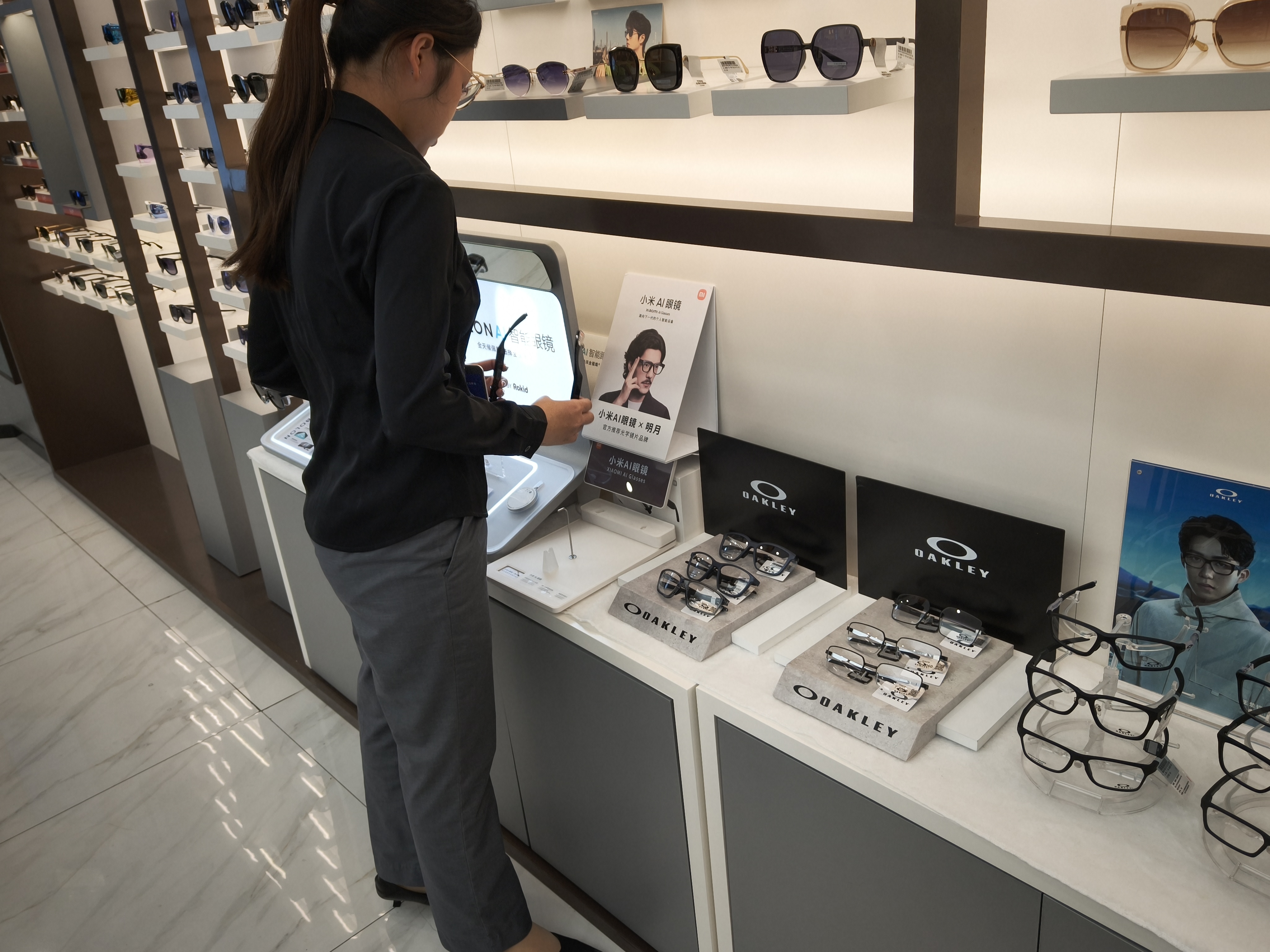
Bright Eyes, Image source: Lei Technology
When I asked about the functions, although the clerks would try to explain, they sometimes got the functions wrong or confused. If I wanted to have a further experience, some clerks would try to connect and pair the glasses with their phones for me to use, while others directly refused, stating that customers could only try them on but not experience functions other than taking photos and videos.
It's not that they are unprofessional. It's just that this is an intersection of two industries. Optical stores understand lenses, prescriptions, and wearing comfort, but they may not be well - versed in digital technology and AI. However, every AI glasses product that aims to be sold to myopic users cannot avoid optometry, eyewear fitting, and adjustment.
In contrast, the atmosphere and experience in the Xiaomi and Rokid experience stores are different. There are no optometry machines or large - scale advertisements for lens brands. Instead, there are more in - depth function experiences, such as demonstrating how to wake up the AI on Xiaomi AI glasses and how to recognize real - world objects, as well as highlighting the advantages of BOLON AI in daily shooting and life recording.
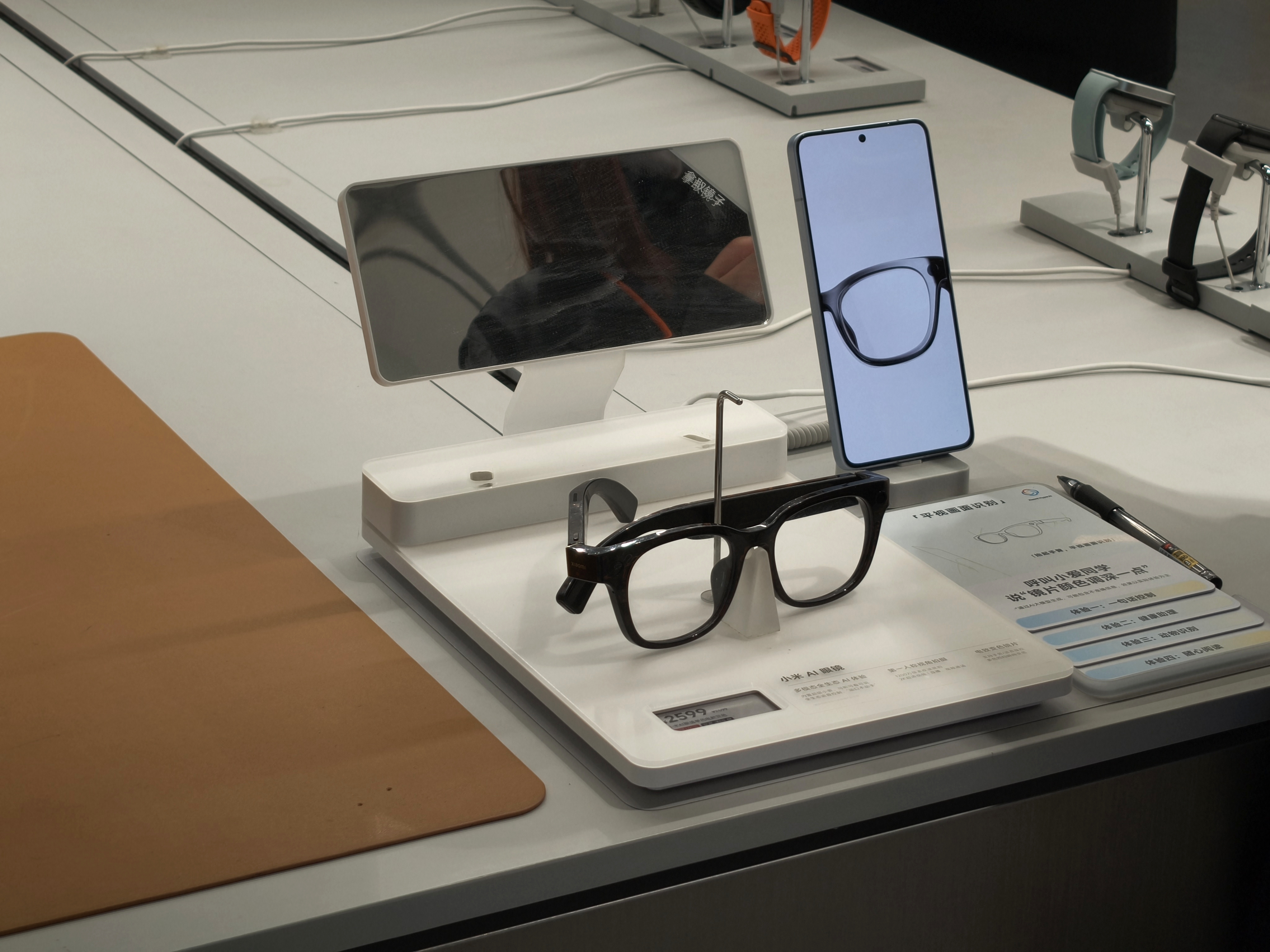
One of the few Xiaomi experience stores with Xiaomi AI glasses, Image source: Lei Technology
The clerks are very familiar with these explanations and can help customers go from curiosity to understanding within a few minutes. For those who come to browse digital products, this way