Die vernachlässigte "letzte Meile"! Nachdem ich in acht großen Einkaufszentren in Guangzhou herumlaufen bin, habe ich die Wahrheit über AI-Brillen entdeckt.
Recently, Google, the pioneer of smart glasses, re - entered the smart glasses market 13 years after the launch of Google Glass. At a small event, Google presented Project Aura, which was developed in collaboration with XREAL. This world's first consumer - oriented AR glasses product, based on the Android XR platform and Gemini AI, will be launched in 2026.
Before Google returned to the AI glasses market, tech giants such as Meta, Alibaba (Quark), and Baidu (Xiaodu) had already entered the market. Lei Technology, which has been continuously involved in the AI glasses market, even believes that if one had to choose a category that best represents the AI hardware of 2025, AI smart glasses (hereinafter simply referred to as "AI glasses") would be the undisputed winner.
In the past 12 months, AI glasses have repeatedly made it onto the trending lists of various platforms. Media representatives and bloggers have rushed to try them out. On social media, people are discussing how to document life, answer calls, and use a personal AI assistant with them. Various brands are also launching new products into the market.
Recently, even Li Auto, a company not usually active in the tech scene, has introduced its own AI glasses. The BOLON AI Smart Glasses, jointly developed by Rokid and BOLON, have also attracted enormous attention.
Lei Technology recently also published an article titled Six Super Glasses Comparisons: BOLON Becomes the Jack - of - All - Trades, META Adapts Poorly. This article includes a comprehensive evaluation of several AI glasses, including the latest BOLON AI Smart Glasses, the Quark S1 Smart Glasses, and the Meizu StarV Snap. We invite you to read the article.
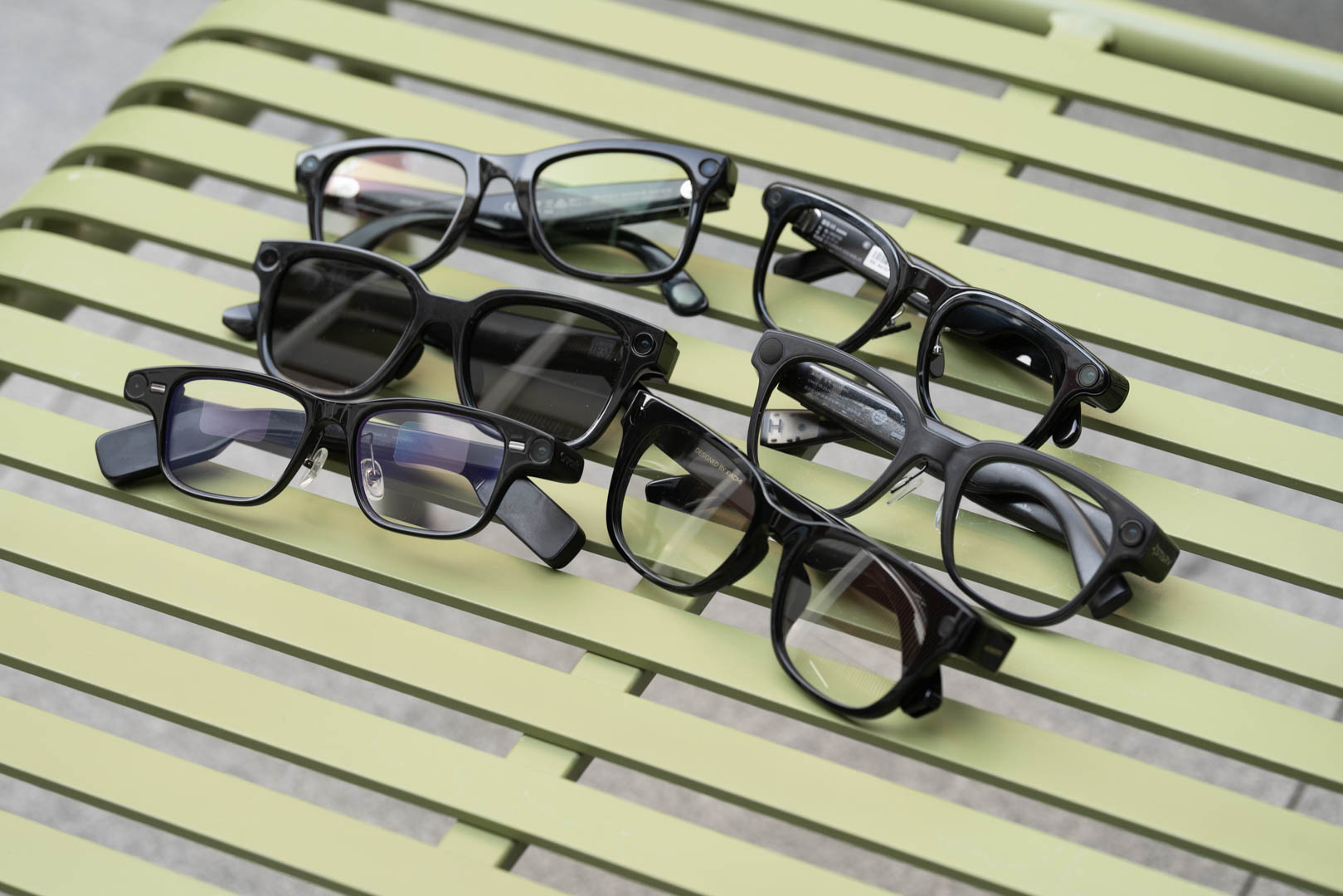
Image source: Lei Technology
To judge whether a technology category is really mature, we just need to go to local shopping malls. How are the offline sales of AI glasses? Are they everywhere, or are there only a few? With this question Lei Technology wandered around the core shopping street of Guangzhou Tianhe for a whole day, and the answer was calmer and more realistic than I expected.
In Guangzhou's "Huaqiangbei", AI glasses are not quite ready yet
In Guangzhou, there is hardly a better place to observe how new technologies and products penetrate people's lives than the street from Gangding through Shipaiqiao to Tianhe Road. This area is sometimes referred to as the "Huaqiangbei of Guangzhou", with densely packed shopping malls and a constant flow of people. From Brain Power Mall, Taikoo Hui, and Wanlinghui to Zhengjia Square, Paragon Plaza, and Tee Mall, this area can, to some extent, represent the consumption trends of a city.
Tee Mall, known as "China's No. 1 Mall", is right in front of the Tianhe Xi subway station (also known as "Hell West"). Even during non - peak hours on weekdays, the pedestrian traffic here is enormous. Next to it is Paragon Plaza, which is the first stop in Guangzhou for many well - known brands.
In the past ten years, this place has been the first stop for many new product categories. Given the popularity of AI glasses, it should actually be no problem to find offline experience stores. But when I actually came here, the first thing I saw was the "absence".
Before I arrived, I had read online about a President glasses store (a premium brand of Dr. Glasses), which often advertised AI glasses. It was supposed to be in Paragon Plaza. However, in fact, this store has moved to another floor of Paragon Plaza, and on the facade it said: "Opening in November, please wait."

Paragon Plaza, Image source: Lei Technology
When I arrived in December, an employee nearby told me: "The renovation took longer than expected, and I haven't seen any construction work recently." The documents displayed on the facade also showed that the construction work was planned from October 1st to October 31st.
This is just an example. In fact, even in Guangzhou's hottest shopping areas, it's difficult to see AI glasses.
In Tee Mall, including Paodao Glasses, which already cooperates with various brands, no AI glasses were introduced, and the same goes for other glasses retailers such as Orient Glasses and LensCrafters. Another glasses store called Optical 88 from Hong Kong showed an "intelligent" cycling glasses, but it only supports light - sensitive color changes (photochromism) and has no other intelligent functions.
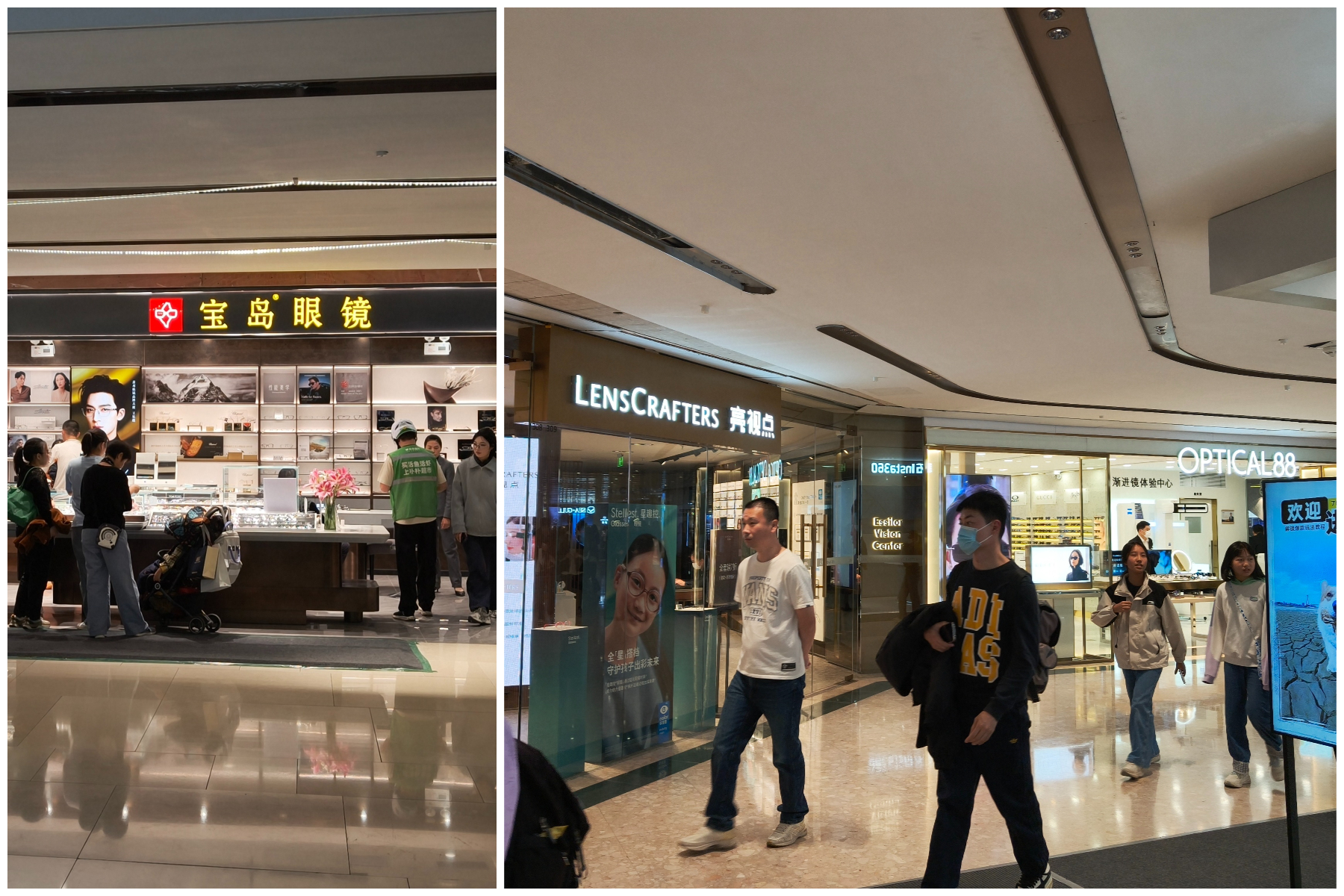
Tee Mall, Image source: Lei Technology
The same is true for Wanlinghui and Taikoo Hui, which is dominated by luxury brands.
In contrast, you can really feel the presence of "AI glasses" in Zhengjia Square. Here, Paodao Glasses shows the Xiaomi AI glasses as well as the BOLON AI Smart Glasses, jointly developed by Rokid and BOLON. Next to it, there is also a BOLON branch store, which, not surprisingly, also shows the latest BOLON AI Smart Glasses.

Zhengjia Square · Paodao Glasses, Image source: Lei Technology
At the same time, in Brain Power Mall, a place where various digital electronic products gather, there is a new Rokid experience center where you can test the Rokid Leqi glasses, the BOLON AI Smart Glasses, and the Rokid AR Lite (AR glasses). In contrast to other channels where AI glasses play a secondary role, here they are the absolute main players.
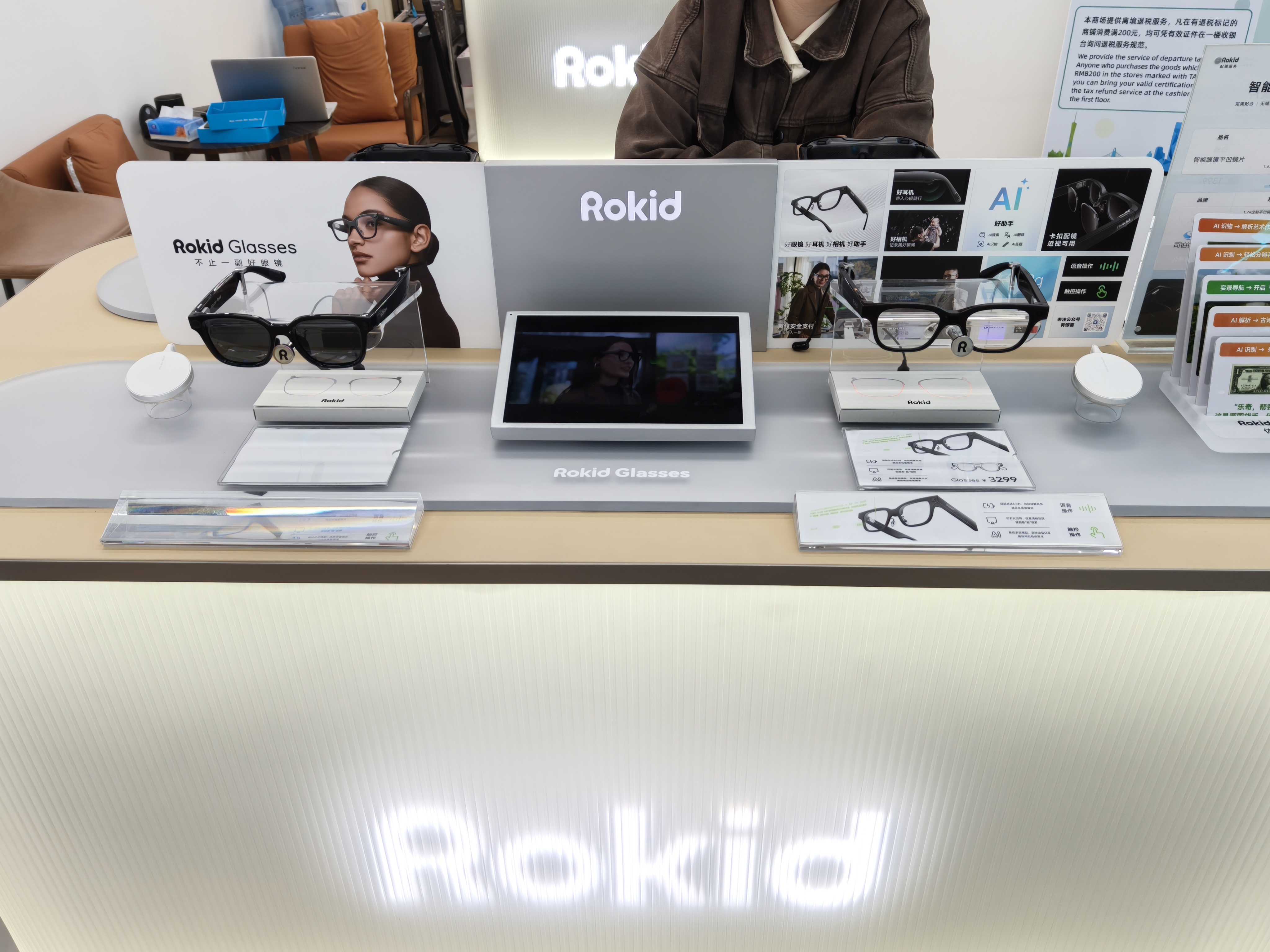
Rokid experience center, Image source: Lei Technology
Another advantage is that more digital users gather in Brain Power Mall, and this group is more likely to be interested in AI glasses. During my visit, someone was even attracted from a neighboring branch. The same goes for the Xiaomi experience center in Tee Mall. As the only store nearby that shows the Xiaomi AI glasses, it has also encouraged some consumers to inquire and try on the glasses.
By the way, an employee of Dr. Glasses in Zhengjia Square told me that the store originally showed the Xiaomi AI glasses, but now only offers the service of combining Xiaomi AI glasses with Mingyue lenses. The AI glasses are mainly concentrated in the Guangzhou Book Center (Dr. Glasses).
However, when I visited the place, I found that there is no Dr. Glasses in the Guangzhou Book Center, which is also located on Tianhe Road. Probably he meant the Dr. Glasses in Victoria Plaza next to the book center. In fact, several types of AI glasses are concentrated here, including the latest Quark S1 Smart Glasses, the BOLON AI Smart Glasses, the TCL V3, the Meizu StarV View, and the Jiehuan AI audio glasses.
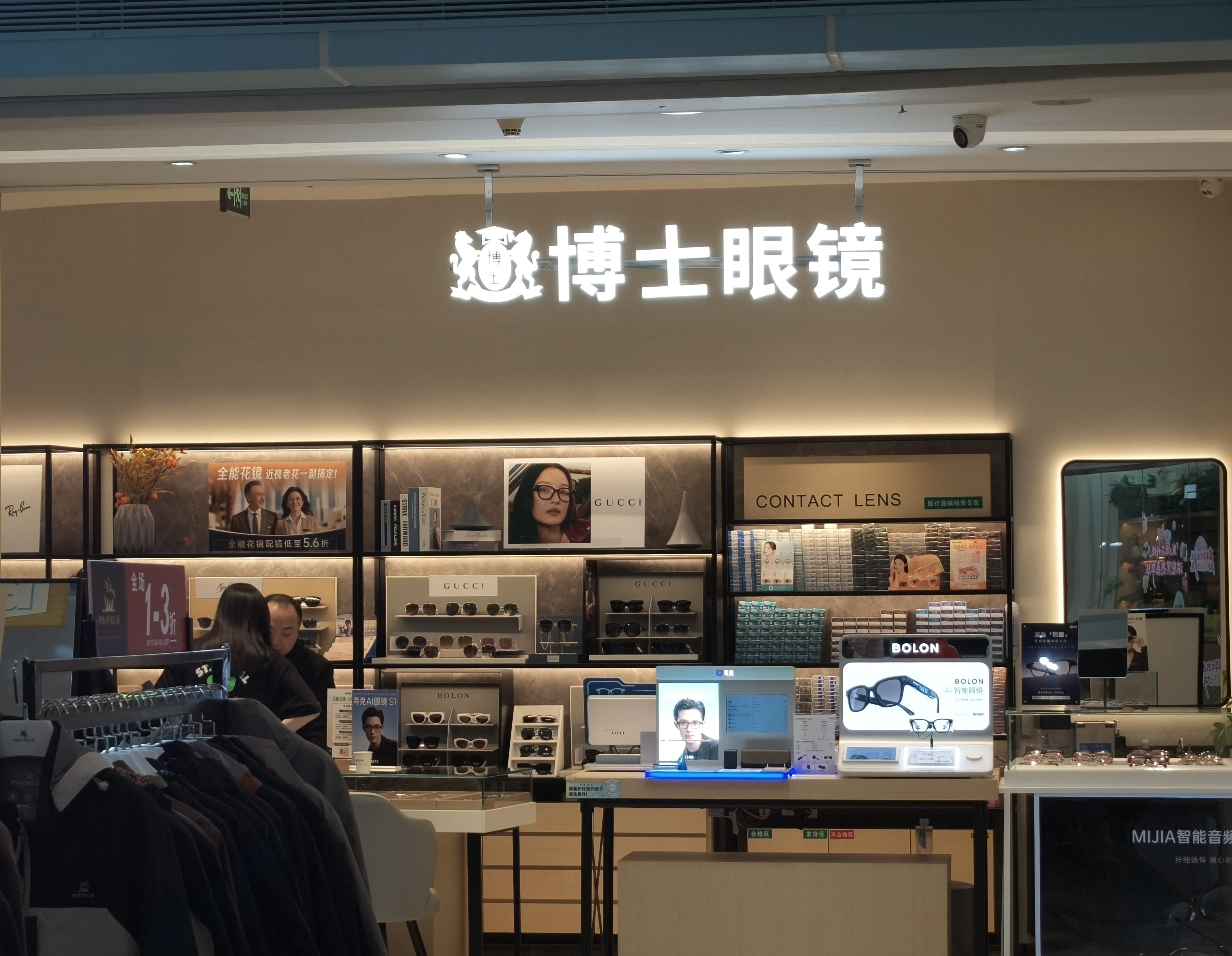
Image source: Lei Technology
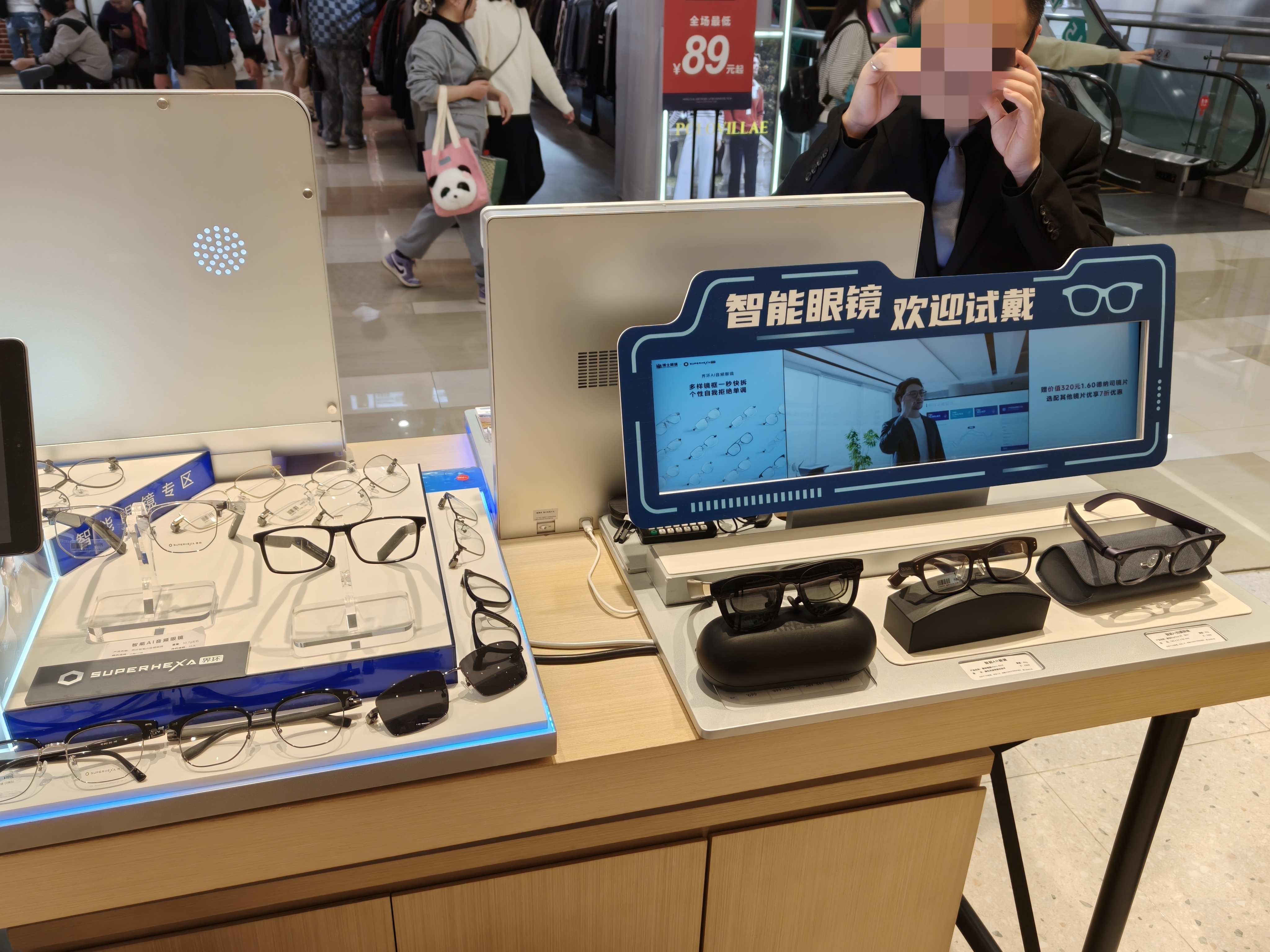
The other side of Dr. Glasses, Image source: Lei Technology
Still, when you walk around here, you can sense a certain imbalance: This is one of the places in Guangzhou with the highest purchasing power and the toughest market competition, but the offline supply of AI glasses is far from sufficient to justify the online discussions. They are not completely absent, but their distribution is quite patchy.
Even for Xiaomi and Huawei, which have launched AI glasses, there isn't even a single exhibit in most experience centers. An employee stared at me for two seconds when I asked about the Xiaomi AI glasses before he remembered and said: "We don't have these glasses in stock. You can check online."
What does it mean when a category that is so hotly discussed online is nowhere to be seen offline? At least in Guangzhou's core shopping areas, AI glasses have not yet reached the "main consumption channel". They are neither competitors to smartphones nor do they necessarily have to be regarded as a new product, let alone offer a tech experience that attracts customers while shopping.
Glasses retailers don't understand the technology, and electronics experts can't assemble glasses
Of course, it's not just about display and testing. Apart from the Xiaomi and Rokid experience centers, where you have to order through the official website, most traditional glasses stores offer direct sales (the Quark S1 still needs to be pre - reserved at present). Consumers can place an order directly in the store and get the glasses immediately.
In fact, there are significant differences in the overall experience between the more digital channels such as the Xiaomi and Rokid experience centers and traditional glasses stores. The two most obvious ones are:
- Digital channels do not offer eye exams or glasses assembly. Customers have to get their eyes checked at a third - party institution or through another channel. Manufacturers may be able to offer a service for customized lenses, but they cannot provide the one - stop service of a traditional glasses store.
- When it comes to store setup, in most traditional glasses stores, AI glasses are only placed in a corner. The BOLON branch store may place more emphasis on its own products and display them in the most prominent position. In contrast, in the Rokid experience center, its own products are in the spotlight.
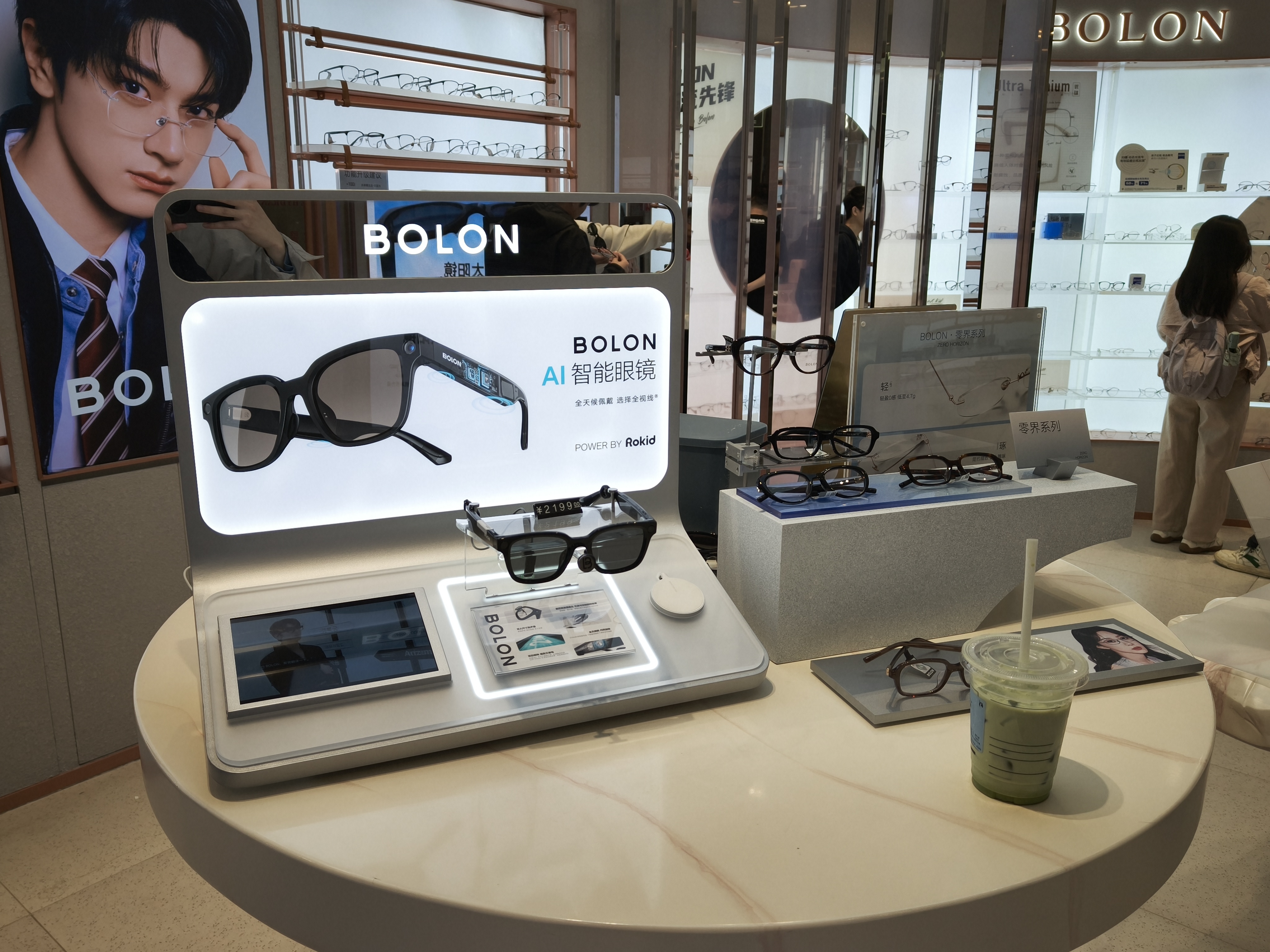
BOLON branch store, Image source: Lei Technology
Although AI glasses are labeled as "technology products", they are also supposed to be everyday glasses. Therefore, in practical implementation, they cannot bypass the most traditional and realistic step - glasses assembly. Especially in the Chinese market, AI glasses brands mainly aim at the "upgrade" of 700 million visually impaired Chinese consumers. The most important reason why visually impaired consumers rely on the offline experience lies in professional eye exams and glasses assembly.
This directly determines the "peculiarities" of Chinese AI glasses in product definition and channel development. Whether it's the Xiaomi AI glasses, the Quark S1, the Rokid Leqi glasses, or the BOLON AI Smart Glasses, most products have included "wearable all day long" in their product goals.
Against this background, AI glasses must first be "glasses with adjustable lenses". Only when they reach this threshold can we talk about their intelligent functions.