Autonomous driving in the siege of capital: the end of "storytelling" and the beginning of "focusing on implementation"
In November 2025, a notice stating "no need for all employees to report to work" triggered a chain reaction in the autonomous driving industry. Haomo.AI, a star startup that had raised over 2 billion yuan in cumulative financing and had a valuation exceeding 1 billion US dollars, thanks to the resource support from Great Wall Motors and a Baidu - affiliated technology team, exited the stage in an almost "silent" manner. From being a darling of the capital to a dismal exit, Haomo's trajectory not only reflects the company's own development dilemmas but also serves as a microcosm of the drastic changes in the financing environment of the autonomous driving industry.
In recent years, the autonomous driving field has experienced a frenzy of capital pursuit. In 2021, the total global financing related to autonomous driving reached a staggering 93.2 billion yuan, giving rise to numerous startup myths. However, 2023 became a watershed for the industry. The capital enthusiasm plummeted, and the total financing amount dropped precipitously to 20 billion yuan, a decline of 78%. Capital shifted from a "scatter - gun" approach to "precision investment", and different companies began to diverge at an accelerated pace. Haomo's exit was precisely a landmark event in this industry reshuffle.
Industry Cooling Amid the Switch of Capital Logic
In the early days of Haomo.AI's development, the autonomous driving industry was in the "golden age" of capital pursuit. The rise of new technologies filled the market with boundless imagination about its future. Capital rushed to make investments, and the industry's financing scale continued to climb. A large influx of funds provided fertile ground for the rapid growth of many startups, and Haomo.AI was a beneficiary of this wave.
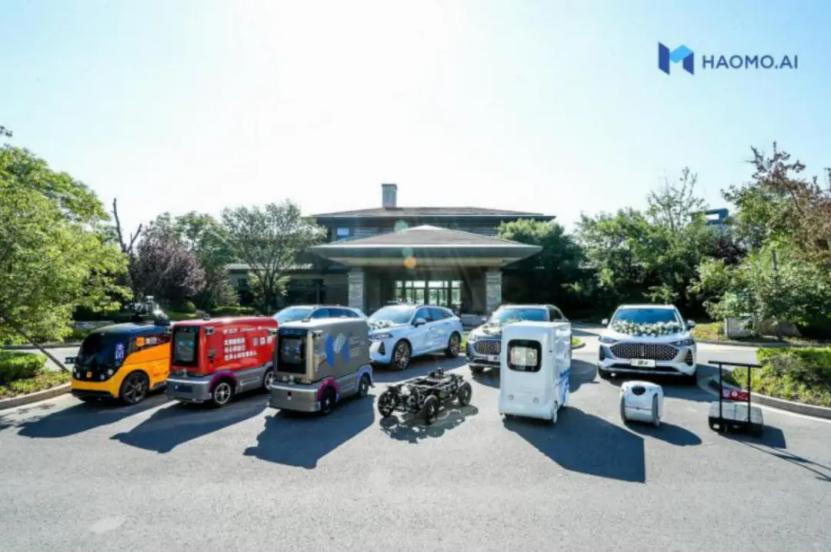
At that time, investors were full of enthusiasm for the imagination of technologies and scenarios and were willing to pay for algorithm models that had not yet been mass - produced or business models that had not yet been verified. As long as a company had a core technology team and a clear development direction, even if it had not achieved large - scale implementation and profitability, it could still win the favor of capital. Relying on the industrial endorsement of Great Wall Motors and the technological aura of the Baidu - affiliated team, Haomo.AI successfully secured multiple rounds of financing, enabling it to rapidly expand its team and advance technological R & D.
However, as the technology implementation cycle far exceeded expectations and the macro - economic environment changed, capital began to re - evaluate risks and returns. In 2023, it became an important turning point for financing in the autonomous driving industry. The industry's financing environment cooled down sharply. The total financing amount dropped precipitously from the peak of 93.2 billion yuan to 20 billion yuan in 2024, a decline of up to 78%. Capital's attitude towards the autonomous driving track shifted from "frenzied pursuit" to "rational prudence".
Behind this change were the combined effects of multiple factors. From a technological perspective, the implementation of autonomous driving technology was far more difficult than expected. To move from a laboratory prototype to large - scale mass - production and commercialization, it was necessary to overcome multiple challenges such as technological reliability, scenario adaptability, and cost control. Most companies failed to make breakthrough technological progress and large - scale implementation within the expected time, which made capital re - evaluate the technology maturity cycle.
From the perspective of the profit model, the current autonomous driving industry has not yet formed a clear and stable profit path. Most companies mainly rely on R & D revenue from cooperation with car manufacturers, and their commercialization and monetization capabilities are insufficient. The contradiction between long - term investment and limited returns gradually made capital lose patience.
Meanwhile, the change in the macro - economic environment also made capital more conservative. Investment strategies shifted from a "scatter - gun" layout to "precision focus". Capital began to accelerate its concentration on leading companies with mature technologies, strong implementation capabilities, and clear profit potential. The "Matthew effect" in the industry became increasingly prominent. In such a financing environment, small and medium - sized startups like Haomo.AI faced unprecedented financing pressure. In 2024, it only received 300 million yuan in financing, far from enough to support its continuous R & D investment and business expansion. By 2025, Haomo.AI was unable to "replenish its blood", and the pressure on its capital chain became an important trigger for its exit.
The Revelry of Leading Players and the Survival Dilemma of Small and Medium - Sized Players
The drastic change in the financing environment further exacerbated the pattern differentiation in the autonomous driving industry. The gap between leading companies and small and medium - sized players continued to widen, presenting a distinct situation of "revelry at the top, struggle in the middle, and elimination at the bottom".
Leading companies, with their mature technology systems, large - scale implementation results, and stable capital support, were not significantly affected by the ebb of financing. Instead, they accelerated their expansion with the concentrated investment of capital and continuously expanded their market share. Relying on technological barriers and ecological synergy, leading companies further consolidated their leading positions. For example, Huawei achieved the mass - production and implementation of map - less urban NOA through its full - stack capabilities of "chip + algorithm + cloud platform"; Momenta won cooperation with its "map - less end - to - end" solution, and its market share increased significantly. These companies not only received preferential financing but also formed a data closed - loop through in - depth cooperation with car manufacturers, with their financing scale and market share rising simultaneously.
Small and medium - sized players, on the other hand, faced the dual pressures of "difficulty in financing" and "high costs". They either focused on niche scenarios to avoid direct competition with leading companies or integrated into the ecological chains of leading companies through mergers, acquisitions, or cooperation. For example, some companies shifted to closed scenarios such as sanitation and mining areas or provided cost - effective hardware modules to seek survival space through differentiated strategies. However, this path depended on whether companies could quickly adjust their technological directions and form cost - control advantages.
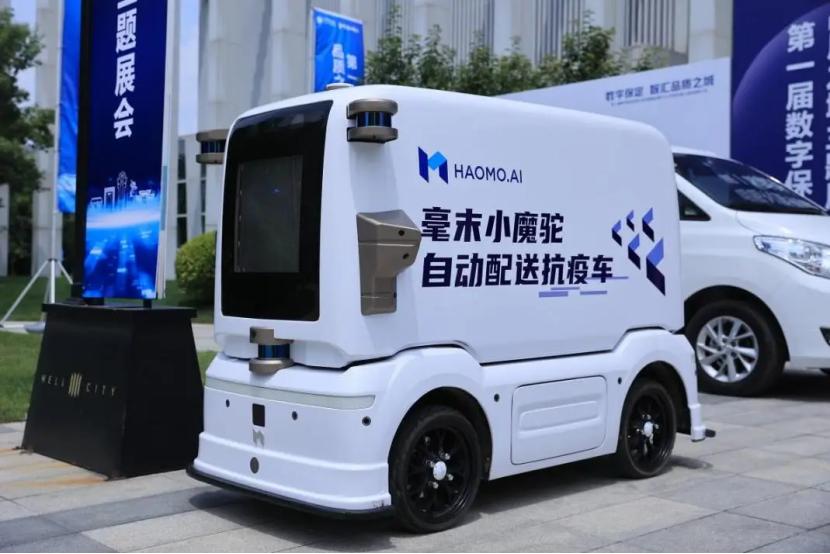
Take Haomo as an example. In 2024, it only received 300 million yuan in financing, just a fraction of its early - stage financing scale. What was more severe was that the cost of its hardware solution was as high as 8,000 yuan per set, while the industry average had been compressed to less than 4,000 yuan. The lack of economies of scale and cost - control capabilities quickly made it lose competitiveness in the price war.
Capital providers have also become more rational. The person - in - charge of an industrial fund pointed out: "The current investment logic has shifted from 'telling stories' to 'looking at results'. Companies must prove that their technologies can generate actual revenue, rather than remaining at the PPT stage." This criterion directly screened out two types of companies: one was the leading players that could quickly achieve commercial implementation, and the other was the vertical - field experts with extreme cost advantages.
Behind the "cooling down" of capital was also the industry's re - examination of the technology implementation cycle and profit model. The commercialization path of autonomous driving was still unclear: the daily order volume of Robotaxis was far lower than that of online car - hailing services, the legal risks of L3 - level functions had not been fully clarified, and the costs of sensors and computing power remained high. Investors began to require companies to show verifiable results - whether it was the installation volume of mass - produced models, commercial revenue in specific scenarios, or the moat of technological patents. This change in logic directly put pressure on the capital chains of small and medium - sized players, and Haomo's exit was a concentrated manifestation of this trend.
In the financing winter, the autonomous driving industry has not lost hope. Technological breakthroughs, policy support, and business model innovation may still be the keys to breaking the deadlock. First, technology must return to "scenario implementation". Leading companies are improving their ability to handle complex road conditions through an integrated "perception + decision - making" architecture. For example, Momenta's "one - stage end - to - end large model" has achieved a 60.1% market share in the urban NOA scenario. Small and medium - sized players need to focus on specific scenarios, such as low - speed park logistics or Robotaxis in specific areas, to reduce technological difficulty and costs.
Second, business model innovation is urgently needed. The one - time buy - out system has proven to be unsustainable, while the "hardware pre - installation + software subscription" or "pay - as - you - go" models can lower the initial investment threshold for car manufacturers and users. Finally, policy and industrial chain synergy will be key variables. In 2025, China launched a pilot program for L3 - level autonomous driving and promoted the construction of a high - precision map standard system. If companies can seize the policy window period and achieve technological implementation through compliant paths, they may open up new markets within the regulatory framework.
Haomo.AI's exit was a watershed for the autonomous driving industry as it shifted from "conceptual revelry" to "pragmatic implementation". The rational return of capital forced companies to abandon exaggerated narratives and face technological bottlenecks and the essence of business. For small and medium - sized players, the key to survival lies in either becoming ecological partners of leading companies or creating irreplaceability in niche scenarios.
Image source: Haomo.AI, Qiankun Intelligent Driving, Qianku.com
This article is from the WeChat official account "Automotive Market Insights", author: Yang Shuo. It is published by 36Kr with authorization.